Natural Flea Prevention for Dogs: What Actually Works (and What Doesn't)
Quick Answer
No natural flea preventative matches veterinary-grade products in effectiveness. Diatomaceous earth and cedar oil provide marginal repellent effects but should supplement, not replace, proven treatments like Seresto or Simparica Trio.
On this page6 sections
Our Verdict
No natural flea preventative matches the effectiveness of veterinary-grade products. Diatomaceous earth and cedar oil provide marginal repellent effects but should supplement, not replace, proven treatments.

How PawBench is paid: we earn an Amazon Associates commission on qualifying purchases. We don’t accept sponsored placements, paid reviews, or free products in exchange for coverage. Picks are ranked on documented owner outcomes and primary-source research, never on commission rate. Read the full methodology.
Every summer, the same question floods pet forums: Can I skip the chemicals and prevent fleas naturally? It's a fair question — especially if you have kids crawling on the floor with your dog, or a pet with sensitive skin that reacts to conventional treatments.
The honest answer: some natural approaches genuinely help. Most are myths. A few are actually dangerous. Here's what the science says.
What Actually Works
1. Environmental Control (Most Effective)
Here's the thing most flea articles don't tell you: 95% of a flea infestation is not on your dog. Flea eggs, larvae, and pupae live in carpets, upholstery, bedding, and yard debris. Killing the fleas on your dog while ignoring the environment is like bailing a sinking boat without plugging the hole.
Effective environmental strategies:
- Vacuum thoroughly and frequently — carpets, furniture, baseboards, under furniture. Vacuuming removes eggs, larvae, and pupae. Discard the vacuum bag immediately outdoors (larvae can escape).
- Wash bedding weekly in hot water — your dog's bed, blankets, and any fabric they sleep on. 130°F water kills all life stages.
- Keep grass cut short — fleas and ticks prefer shaded, humid areas. A well-maintained lawn is a much less hospitable habitat.
- Treat your yard if needed — beneficial nematodes (available at garden centers) are a genuinely effective, non-toxic yard treatment. These microscopic roundworms eat flea larvae and pupae in soil. Cedar oil sprays also have some evidence behind them for yard treatment.
2. Food-Grade Diatomaceous Earth
Food-grade diatomaceous earth (DE) works by physically damaging flea exoskeletons, causing them to dehydrate and die. It contains no chemical pesticides and fleas cannot develop resistance to it.
How to use it safely:
- Apply lightly to carpets, baseboards, and dog bedding — not to your dog's body
- Leave for 24–48 hours, then vacuum
- Do not inhale — wear a mask when applying, keep your dog out of the room until settled. The fine powder is an irritant to lungs.
- Does not work when wet — ineffective in humid environments or on damp surfaces
DE is useful as an environmental treatment but shouldn't be your only defense.
3. Regular Bathing and Grooming
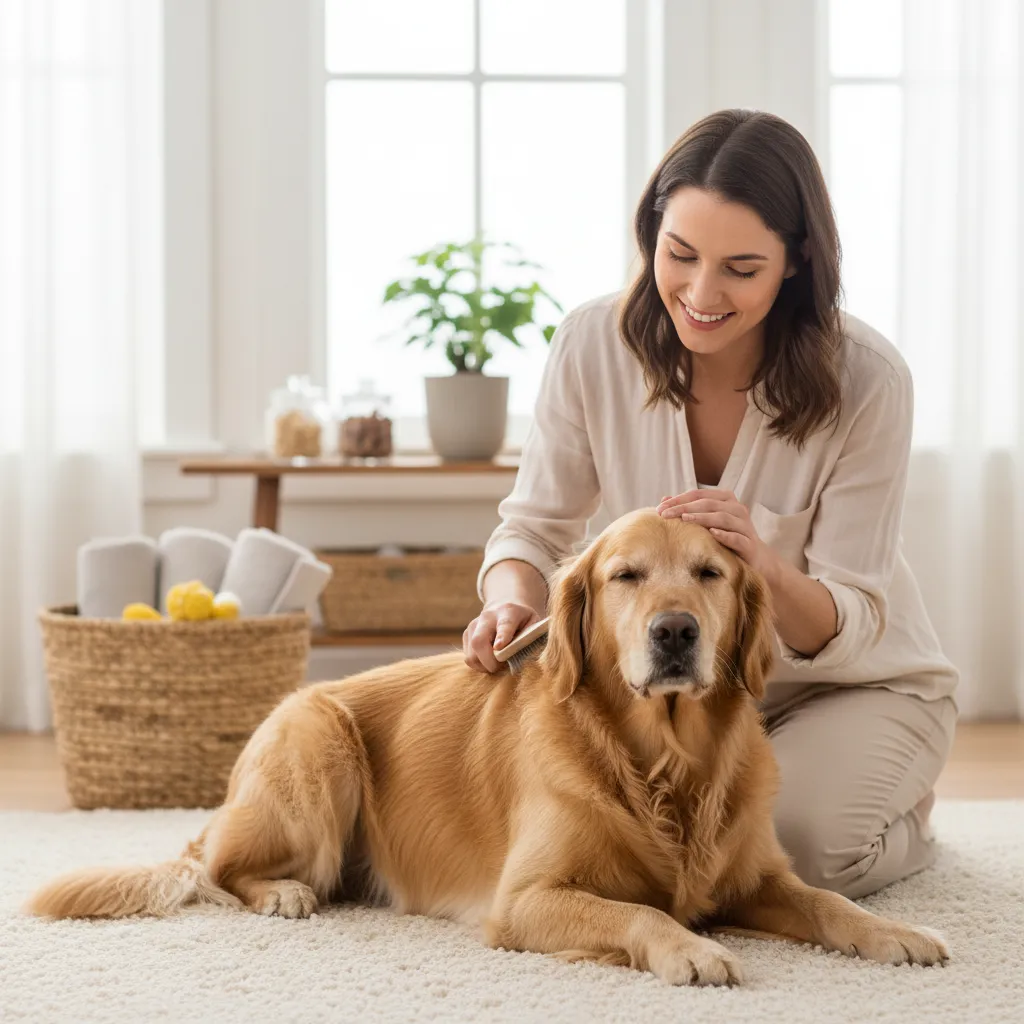
A regular bathing routine with a gentle dog shampoo will physically remove fleas from your dog's coat. Fleas can't survive being washed off and drowned. This doesn't prevent infestation, but it significantly reduces flea load and helps you spot problems early.
Use a flea comb after baths — it catches fleas and flea dirt (flea feces that look like black pepper). Drop combed-out debris into soapy water to kill anything alive.
What Doesn't Work (Despite What the Internet Says)
Apple Cider Vinegar ❌
One of the most-shared flea remedies online, with essentially no scientific support. The theory is that acidic skin is less appealing to fleas — but fleas are remarkably tolerant of pH changes, and topical ACV doesn't change your dog's skin chemistry enough to matter. Consuming it internally is even less likely to affect fleas. Skip this one.
Essential Oils ⚠️ (Some Are Dangerous)
This is where "natural" can mean genuinely harmful. Most essential oils are toxic to dogs:
- Tea tree oil — toxic even in small amounts; causes tremors and liver damage
- Eucalyptus — toxic to dogs and cats
- Peppermint — GI upset, potential neurological effects in concentrated form
- Pennyroyal — historically used as flea repellent; highly toxic to dogs and humans
Cedar oil is the least dangerous option and does have some limited evidence as a flea repellent — but it requires high concentrations that can still irritate skin, and provides nowhere near the protection of a proven product.
The ASPCA Animal Poison Control Center receives thousands of calls per year about essential oil exposure in pets. Unless a product is specifically formulated and tested for dogs, avoid it.
Brewer's Yeast and Garlic ❌
The idea that B vitamins or garlic make dogs smell unappealing to fleas is popular but unsupported. More importantly, garlic is toxic to dogs — it destroys red blood cells and can cause hemolytic anemia, even in small amounts. Never feed garlic intentionally.
Lemon Sprays ❌
Limonene (in citrus) does have some insecticidal properties, but the concentration in a homemade lemon water spray isn't sufficient to reliably kill or repel fleas. It also can cause skin irritation in some dogs.
The Pragmatic Middle Ground
For owners who want to minimize chemical exposure while still protecting their dog effectively, the best approach combines:
- Rigorous environmental control (vacuuming, hot-water washing, yard management)
- Regular grooming and bathing
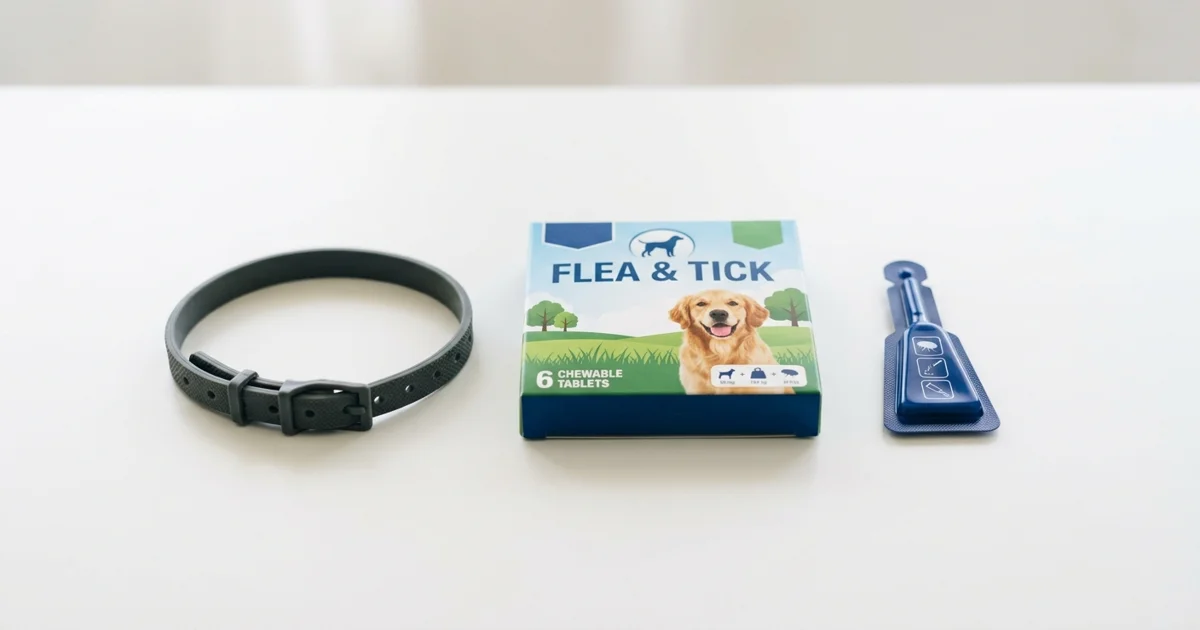
- A proven low-exposure prevention product — either Seresto (releases active ingredients at very low continuous concentrations) or an isoxazoline oral chewable like NexGard (no skin contact, no residue on coat)
The goal isn't zero chemicals — it's minimal effective chemical use while maintaining real protection. Natural approaches alone are rarely sufficient in areas where fleas are prevalent. An untreated flea infestation causes far more health harm (tapeworms, flea allergy dermatitis, anemia in puppies) than the low-level exposure from a properly used prevention product.
If You're Committed to Chemical-Free Prevention
For dogs in genuinely low-risk environments — apartment dogs with no yard access, dogs in dry climates where fleas are rare — rigorous environmental control plus regular grooming may be sufficient. Talk to your vet about your specific situation and geographic risk level.
For most dogs in most of the US, a proven prevention product combined with good environmental hygiene is the safest and most effective approach.
Related Reading
- Best Flea & Tick Prevention 2026 — complete comparison of all prevention methods
- Best Flea Collars for Dogs 2026 — Seresto vs Adams vs others
- Seresto vs NexGard vs Frontline — the top three brands compared
- Best Dog Health Supplements 2026 — what's actually worth adding to your dog's routine
Sources
- ASPCA Animal Poison Control Center — Essential oil toxicity reports. aspca.org.
- Companion Animal Parasite Council (CAPC) — Flea biology and environmental control strategies. capcvet.org.
- University of California IPM Program — Integrated flea management. ipm.ucanr.edu.
- Journal of Medical Entomology — Studies on efficacy of diatomaceous earth against Ctenocephalides felis.
Frequently Asked Questions
- Does apple cider vinegar repel fleas?
- Apple cider vinegar (ACV) does not kill fleas. It may temporarily make your dog's coat less hospitable due to the acidic pH, but no clinical studies support it as an effective flea repellent. Fleas are quite tolerant of acidic environments. ACV is often cited in natural pet forums, but vets and parasitologists do not endorse it as a standalone flea control method.
- Is diatomaceous earth safe for dogs?
- Food-grade diatomaceous earth (DE) is considered safe for dogs when used topically and is not inhaled. It works by physically damaging flea exoskeletons, causing dehydration. The critical caveat: the fine powder poses a respiratory risk if inhaled. Never apply it near your dog's face, and use it in well-ventilated areas. It's also messy and loses effectiveness when wet. DE can be a useful part of an integrated approach but should not be your only defense.
- Are essential oils safe for flea prevention in dogs?
- This is where natural remedies get genuinely dangerous. Concentrated essential oils — especially tea tree, lavender, eucalyptus, and peppermint — are toxic to dogs even in small amounts. Even oils sometimes marketed for pets can cause tremors, liver damage, or death in cats and small dogs. Cedar oil is the least dangerous option, but no essential oil has been clinically proven to provide reliable flea protection. The ASPCA Animal Poison Control receives thousands of calls annually related to essential oil toxicity in pets.
- What natural approaches actually reduce flea populations?
- Environmental control is the most effective 'natural' strategy: regular vacuuming removes flea eggs from carpets (discard the bag immediately), washing your dog's bedding in hot water weekly kills eggs and larvae, and keeping your lawn trimmed reduces outdoor flea habitat. Diatomaceous earth in carpets (applied carefully, avoiding inhalation) can reduce environmental flea loads. These methods work best in conjunction with a proven prevention product, not as a replacement.
- What's the safest chemical flea prevention option?
- If you want minimal chemical use with proven effectiveness, Seresto is often considered the best balance — it releases active ingredients at very low concentrations continuously, rather than the higher single-dose exposure of monthly topicals. Some vets also consider isoxazoline-class oral chewables (NexGard, Bravecto) safer overall because there's no skin contact and no risk of children or other pets touching a treated area.
Research Sources
- The Essentials of Essential Oils Around Pets — ASPCA
- ASPCA Animal Poison Control — ASPCA
- Safe use of flea and tick preventive products — American Veterinary Medical Association
- Flea and tick prevention — Cornell University College of Veterinary Medicine
- External parasites — American Veterinary Medical Association
- Parasite Control (2019 AAHA Canine Life Stage Guidelines) — American Animal Hospital Association

PawBench Editorial
Published by Hilly Shore LabsPawBench’s editorial team researches dog products from primary veterinary sources, manufacturer specifications and aggregated buyer sentiment, alongside the lived ownership of Maggie, an Australian Labradoodle. We do not run hands-on product tests.
254 dog products scored · 1,160,974 buyer review-aspect mentions aggregated · cites AVMA, FDA, AAFCO, Cornell, WSAVA, AKC, ASPCA.
Recommendations are based on published veterinary guidelines, manufacturer specifications, and verified customer feedback. See our editorial standards.