Start with eating speed, not bowl height
If your dog finishes a meal in under 60 seconds, the single highest-leverage change is a slow feeder. Slow feeders use molded maze patterns to physically separate kibble so the dog has to work pieces out individually. Research and AKC guidance both support this: slower eating reduces gulping, reduces aerophagia (swallowing air), and is one of the few daily-routine changes with a plausible bloat-risk reduction mechanism. The Outward Hound Fun Feeder is the canonical pick; JASGOOD is the budget alternative.
Match material to chew profile
- Stainless steel — the default safe choice. Non-porous, dishwasher-safe, doesn't harbor odors, and chewers can't damage the eating surface. Slight drawback: noisier, can slide on hardwood without a silicone base.
- Ceramic — good for non-chewers. Heavy enough to stay put, easier on the eyes. Verify lead-free glazing — FDA notes that traditional/imported ceramics can leach lead. Stick to US-made or explicitly food-safe certified.
- Plastic — only for non-chewers. Even "BPA-free" plastic scratches over time, and scratches harbor bacteria. Plastic dish nasal dermatitis is a real veterinary diagnosis caused by chronic contact irritation.
Water bowls: bowl vs fountain
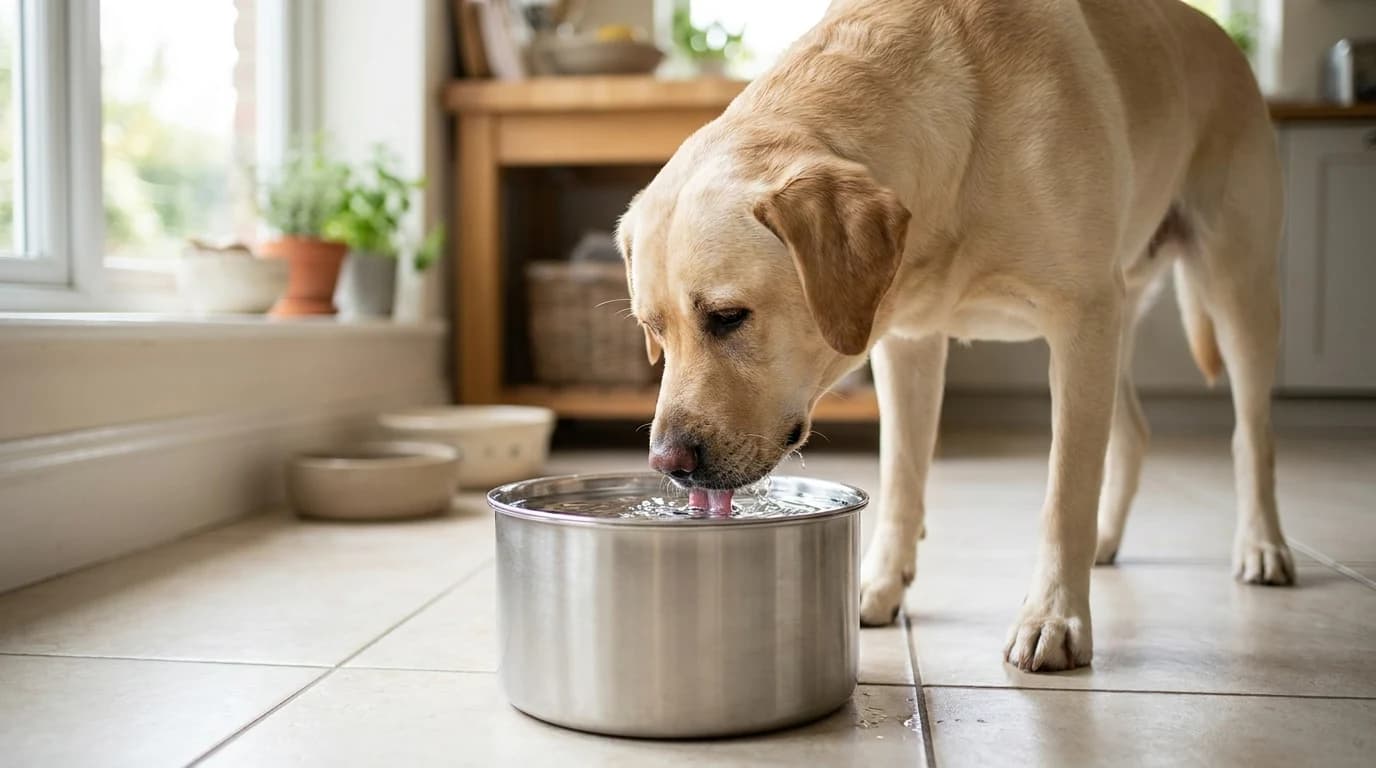
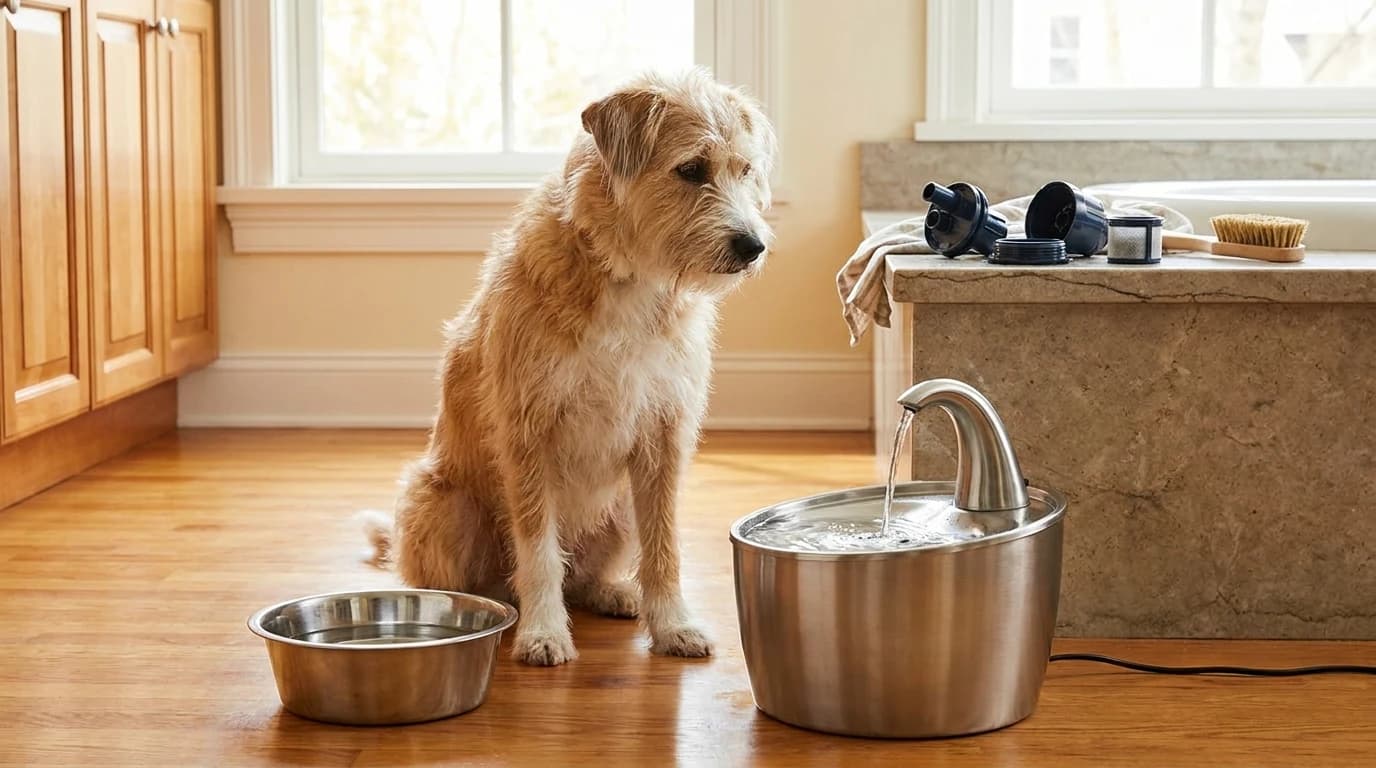
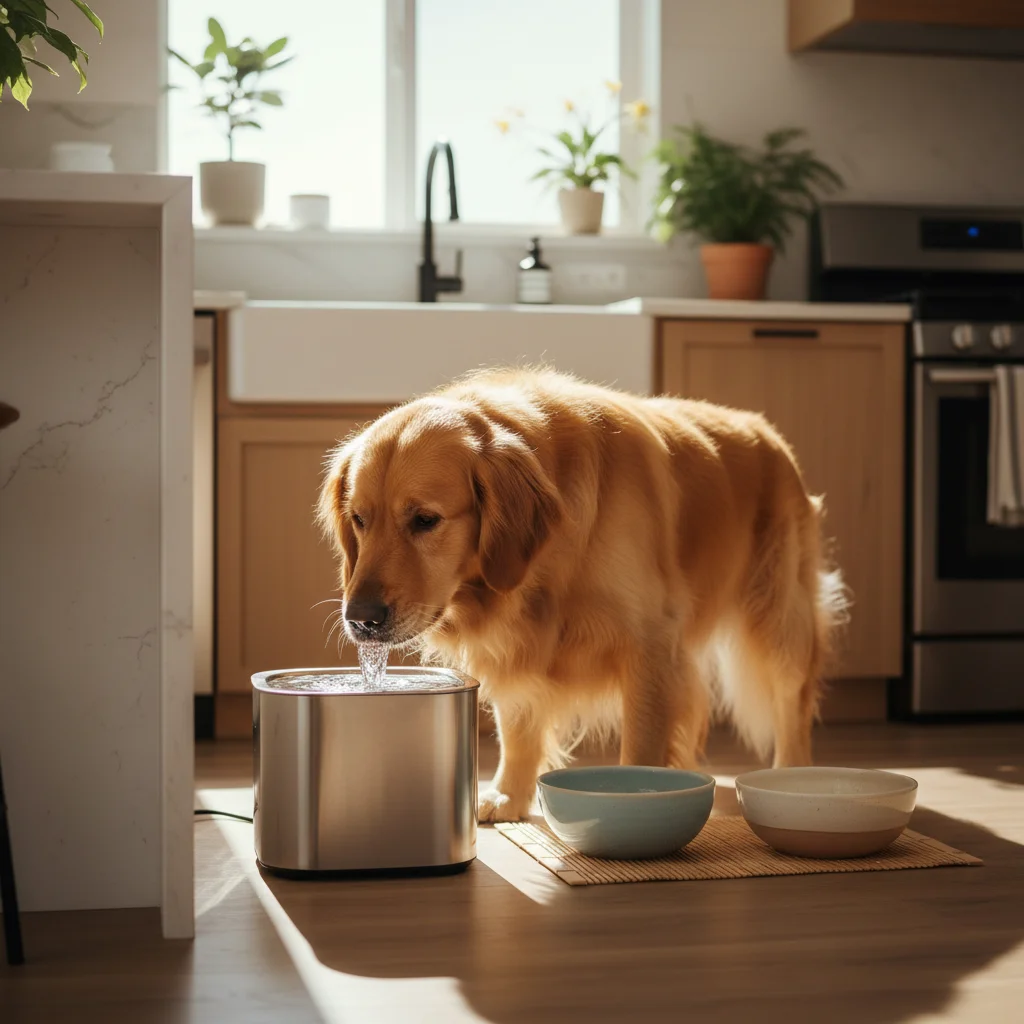
If your dog drinks from a still bowl without prompting and the bowl is washed daily, a stainless steel bowl is fine. A fountain becomes worthwhile when (a) your dog ignores still water, (b) you have a multi-pet household where bowls go dry, or (c) you're managing chronic kidney disease and need to encourage higher water intake. Stainless steel fountains (PetSafe Drinkwell 360, Veken) are easier to keep clean than all-plastic models like the Catit Flower. Filter replacement is a real ongoing cost — budget ~$30-50/year per fountain.
Elevated bowls: orthopedic only
Raised bowls should be used for orthopedic comfort in arthritic seniors or dogs with megaesophagus, ideally under vet guidance. They should NOT be used for bloat prevention in deep-chested breeds — published research suggests the opposite effect. If a senior dog has cervical arthritis and a vet recommends raising the bowl to neck height, the Neater Feeder Deluxe handles that role well. Otherwise, floor-level is the default.
Cleaning is the part most owners skip
CDC pet-supply hygiene guidance notes that pet bowls accumulate biofilm and harbor Salmonella, E. coli, and other pathogens when not washed daily with hot soapy water. The bowl matters less than the cleaning routine. Fountains need pump cleaning every 2-3 weeks and filter replacement monthly.