Runner Up · Editorial
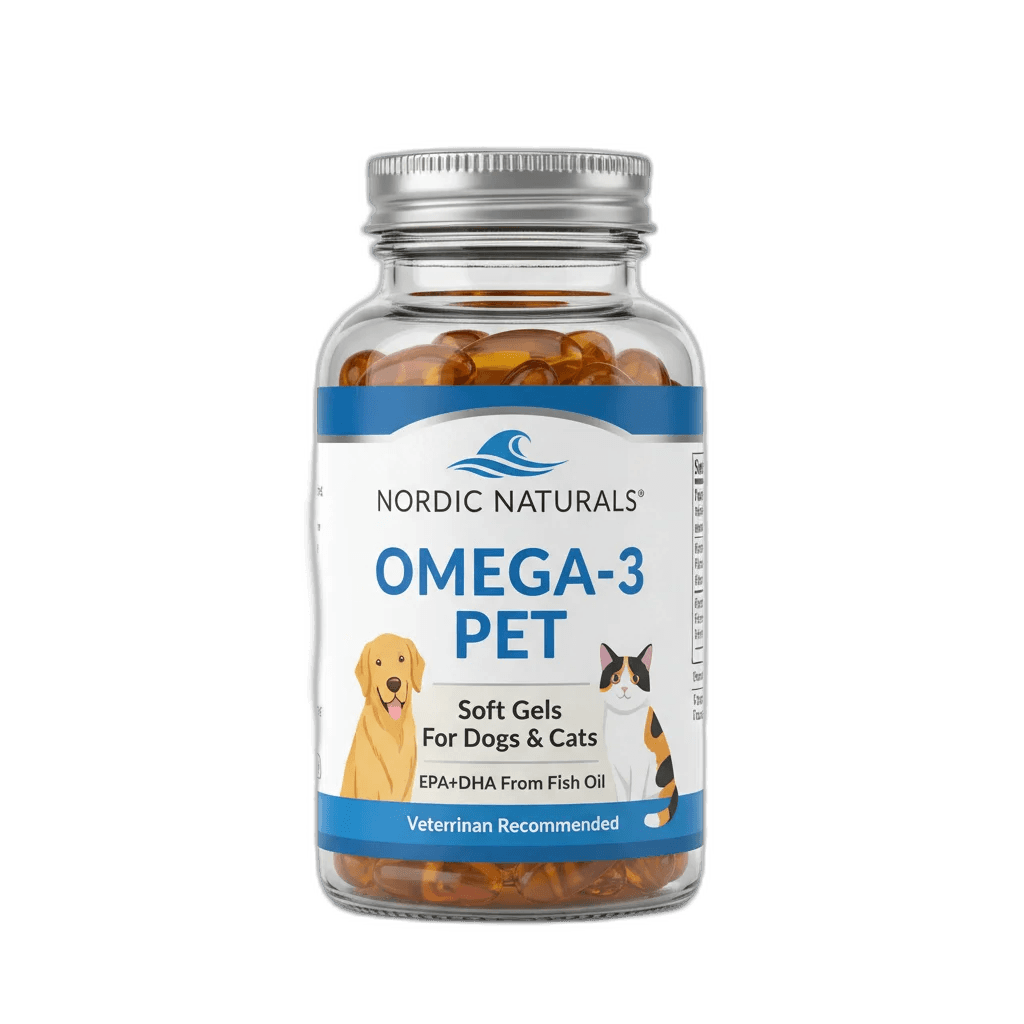
Nordic Naturals Omega-3 Pet Soft Gels
⭐ Best ValueOwner rating4.6
Nordic Naturals is the gold standard for omega-3 supplementation in dogs, and it's not close. The pharmaceutical-grade fish oil is third-party tested for purity, and you'll see coat and skin improvements within weeks. If your vet recommends fish oil — and most do — this is the brand to buy without hesitation.
Pros
- ✓Pharmaceutical-grade fish oil, third-party tested
- ✓No fishy aftertaste or smell
- ✓Easy-to-dose soft gel capsules
Cons
- ✗Only provides omega-3, not a multivitamin
- ✗Large dogs need multiple capsules per day
79B+PawBench
Score
Score
Effectiveness
74
Ingredients
86
Vet Endorsement
74
Value
77
Owner Satisfaction
84
Count
90 soft gels
EPA/DHA
330 mg combined per gel
Source
Anchovy and Sardine Oil
Third-Party Tested
Yes (IFOS certified)
Dog Size
All sizes (dose by weight)