Australian Shepherd Owner Guide: Energy, Training, and Gear Essentials
Quick Answer
Aussies need a minimum of 1-2 hours of vigorous daily exercise plus mental stimulation through training, puzzle toys, or herding work. Without a job to do, they become destructive and neurotic.
On this page8 sections
Our Verdict
Aussies reward committed owners with unmatched athleticism and intelligence. Match their energy with 2+ hours of vigorous daily exercise, mental stimulation, and positive reinforcement training. Get the MDR1 test before any medications.
How PawBench is paid: we earn an Amazon Associates commission on qualifying purchases. We don’t accept sponsored placements, paid reviews, or free products in exchange for coverage. Picks are ranked on documented owner outcomes and primary-source research, never on commission rate. Read the full methodology.
Australian Shepherds are one of the most capable working dogs in the world — extraordinary athletes, exceptional learners, and deeply bonded companions. They're also one of the most commonly mismatched breeds to first-time owners, who underestimate their physical and mental demands. An Aussie that doesn't get enough exercise and stimulation doesn't just become bored — they become destructive, anxious, and occasionally impossible to manage.
If you've chosen an Aussie, you've chosen well. But you need to go in with eyes open.
What "High Energy" Actually Means for an Aussie
When dog guides say an Aussie is "high energy," they don't mean a brisk 30-minute walk will do. They mean:
- 2+ hours of vigorous exercise daily — not casual walking but actual running, fetch, agility, or off-leash play
- Mental stimulation equivalent to physical exercise — puzzle toys, training sessions, and jobs to do
- A bored Aussie is a destructive Aussie — they will find their own entertainment, and you won't like it
Aussies were bred to herd livestock for 10–12 hours a day. Their energy and mental engagement needs reflect that origin. If your lifestyle can't support this, honestly consider a lower-energy breed.
Exercise Requirements by Age
Puppy (under 18 months): Keep exercise moderate — their growth plates are open and high-impact exercise causes long-term joint damage. The rule: 5 minutes per month of age, twice daily. A 4-month-old puppy gets two 20-minute sessions, not two hours.
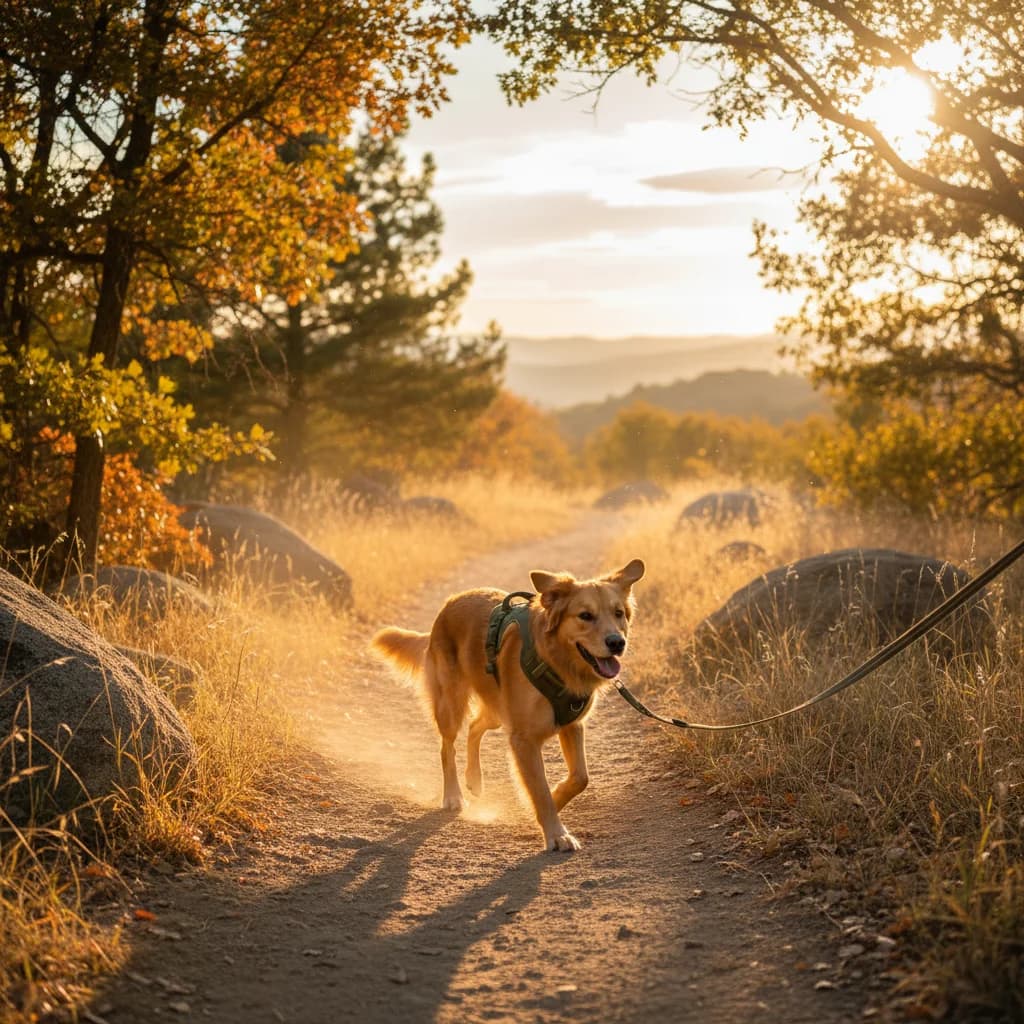
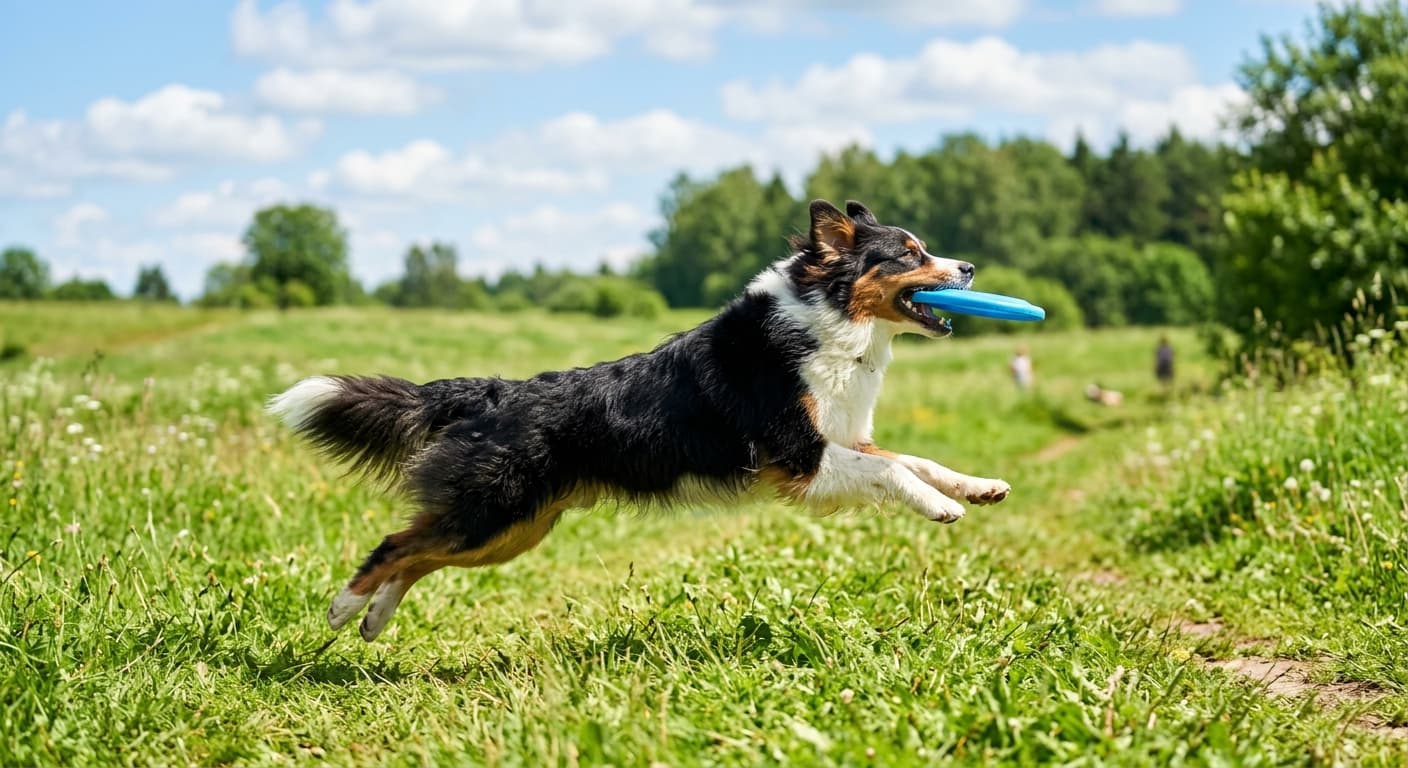
Adult (18 months – 7 years): 60–120 minutes of vigorous exercise daily. Off-leash running, fetch, frisbee, agility training, or herding are ideal. On-leash walks alone are insufficient.
Senior (7+ years): Gradually reduce intensity but maintain mental stimulation. Many Aussies stay athletic well into their teens with appropriate care.
Mental Stimulation: The Other Half
Physical exercise alone is insufficient. Aussies need cognitive engagement daily:
- Obedience training (advanced commands, trick training) — 15–20 minutes daily
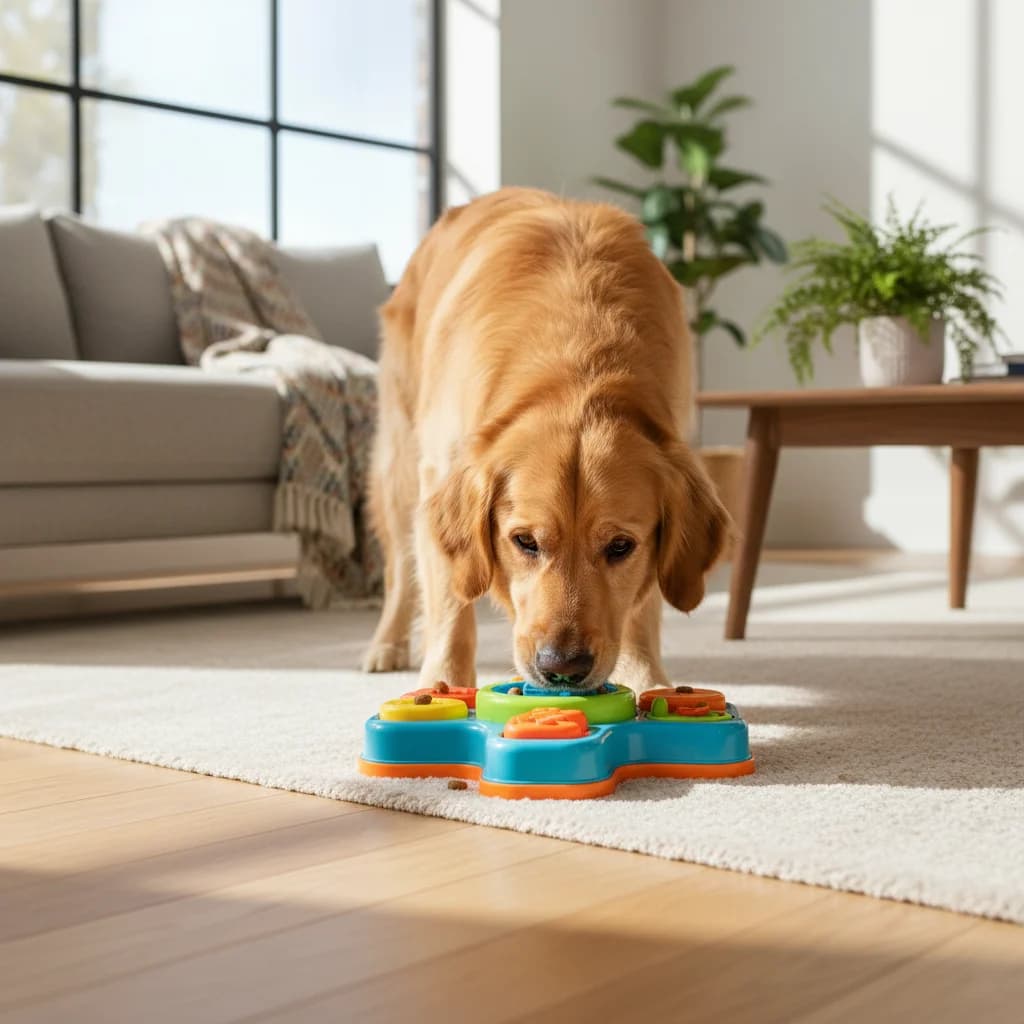
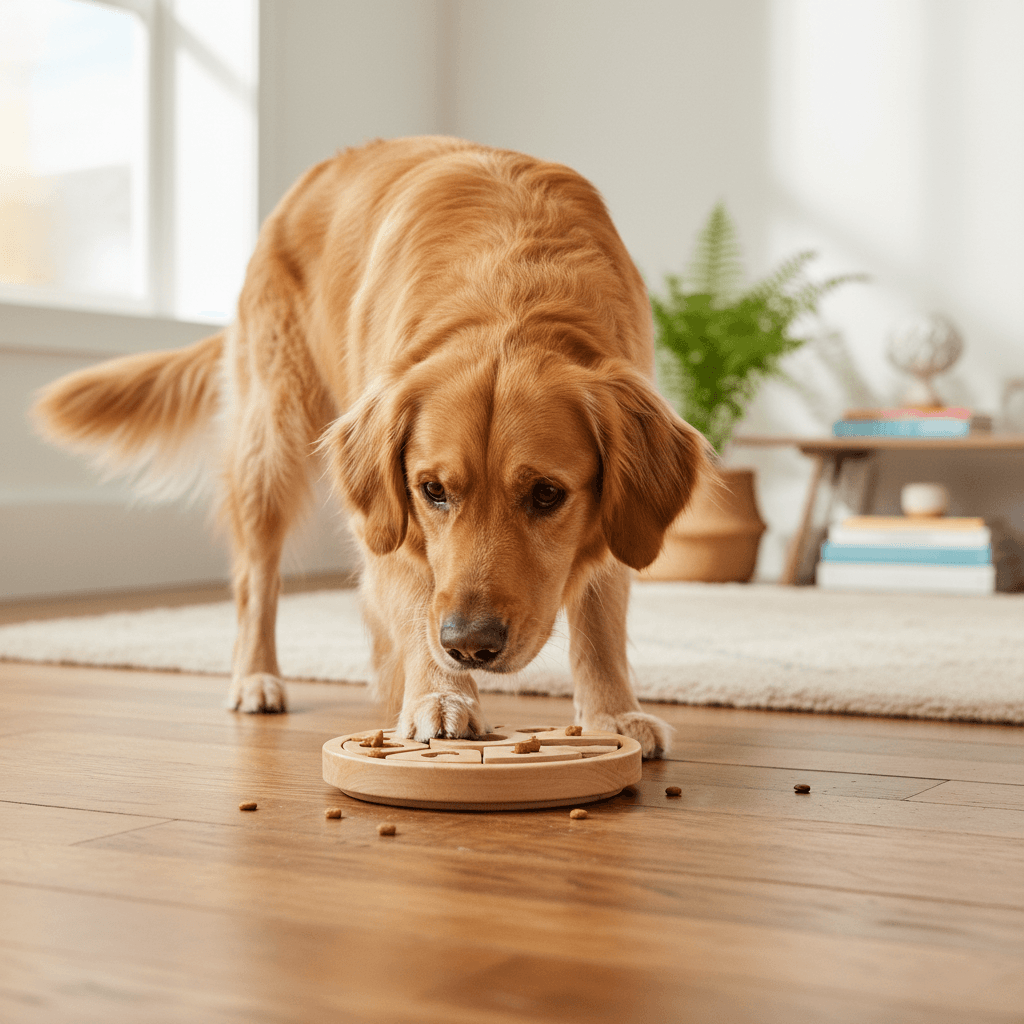
- Puzzle feeders — replace part of their meal with a puzzle toy; see our best dog puzzle toys guide
- Scent work — hide treats around the house or yard; nose work is mentally exhausting in the best way
- Agility — the ideal Aussie sport; combines athletic output with precise training
The Herding Instinct
Australian Shepherds have a strong herding drive that manifests as:
- Chasing and circling children, runners, bikes, and other animals
- Nipping at heels — herding behavior, not aggression, but painful
- Eye-stalk behavior — intense staring at moving objects before a "gather" movement
Managing herding instinct requires consistent training (not punishment — redirection). "Leave it," strong recall, and leash management in crowded environments are essential. If the herding drive is very strong, channeling it constructively through herding classes or organized agility is more effective than trying to suppress it.
Health Issues Specific to Australian Shepherds
MDR1/ABCB1 Gene Mutation: Approximately 50% of Aussies carry a mutation that makes them sensitive to certain medications, including common dewormers (ivermectin) and some antibiotics. Always tell your vet your dog is an Aussie before prescribing any medication. DNA testing through UC Davis Veterinary Genetics Lab or Embark confirms status. Our guide to which dog DNA test results actually change anything explains how to read the MDR1 line.
Hip and Elbow Dysplasia: Less common than in Goldens or Labs but still present. Buy from breeders who perform OFA hip/elbow certification.
Collie Eye Anomaly (CEA): Genetic eye condition. Reputable breeders DNA test breeding stock; confirm test results before purchasing a puppy.
Epilepsy: Aussies have an elevated epilepsy rate compared to most breeds. Know the signs: uncontrolled muscle jerking, loss of consciousness, paddling limbs.
Essential Gear for Aussies
| Item | Why | Pick |
|---|---|---|
| Long leash (20–30 ft) | Recall training while maintaining safety | Biothane long line |
| Durable fetch toy | Daily exercise tool | Chuckit! Ultra Ball |
| Puzzle feeder | Daily mental stimulation | Nina Ottosson puzzle toys |
| Front-clip harness | Managing pullers in training | Ruffwear Front Range |
| High-value training treats | Aussies are food motivated | Zuke's Mini Naturals |
For interactive toys, see our best interactive dog toys guide. For the right harness, see our dog harness guide.
Training Philosophy
Aussies respond exceptionally well to positive reinforcement training — they're motivated, quick learners, and genuinely enjoy the engagement. Harsh or compulsion-based training methods are counterproductive: Aussies shut down under harsh corrections and lose the enthusiasm that makes them great training partners.
Key principles:
- Short sessions, high frequency — 5–10 minute sessions 3–4 times daily outperform one 45-minute session
- End on success — always finish a session with something the dog knows well
- Keep it fun — Aussies disengage quickly if training becomes mechanical or repetitive
Enroll in an intermediate/advanced obedience class within 6 months of bringing your Aussie home. The structured environment and handler skill development are worth far more than the specific commands taught.
🏆 Bottom Line: An Australian Shepherd is one of the most rewarding dogs you can own — if your lifestyle matches their needs. 2+ hours of vigorous daily exercise, daily mental stimulation, and positive reinforcement training are non-negotiable. Get the MDR1 gene test early. The right gear (long line, puzzle feeders, durable fetch toys) makes management dramatically easier.
Sources
- American Australian Shepherd Association (ASCA) — Breed health and care guidelines. asca.org.
- UC Davis Veterinary Genetics Laboratory — MDR1 gene mutation testing and drug sensitivity list. vgl.ucdavis.edu.
- Orthopedic Foundation for Animals (OFA) — Hip and eye certification database. ofa.org.
- American Kennel Club — Australian Shepherd breed information. akc.org.
- Donaldson J — The Culture Clash: A Revolutionary New Way of Understanding the Relationship Between Humans and Domestic Dogs. James & Kenneth Publishers, 2005.
Research Sources
- Australian Shepherd Dog Breed Information — American Kennel Club
- Is the Australian Shepherd the Right Dog Breed for You? — American Kennel Club
- How to Train an Australian Shepherd Puppy: Timeline & Milestones — American Kennel Club
- MDR1 in Dogs — Washington Animal Disease Diagnostic Laboratory, Washington State University College of Veterinary Medicine
- Dog breeds commonly affected by MDR1 mutation — Program in Individualized Medicine, Washington State University College of Veterinary Medicine, 2021-10-19
- Hip Dysplasia — Orthopedic Foundation for Animals

PawBench Editorial
Published by Hilly Shore LabsPawBench’s editorial team researches dog products from primary veterinary sources, manufacturer specifications and aggregated buyer sentiment, alongside the lived ownership of Maggie, an Australian Labradoodle. We do not run hands-on product tests.
254 dog products scored · 1,160,091 buyer review-aspect mentions aggregated · cites AVMA, FDA, AAFCO, Cornell, WSAVA, AKC, ASPCA.
Recommendations are based on published veterinary guidelines, manufacturer specifications, and verified customer feedback. See our editorial standards.