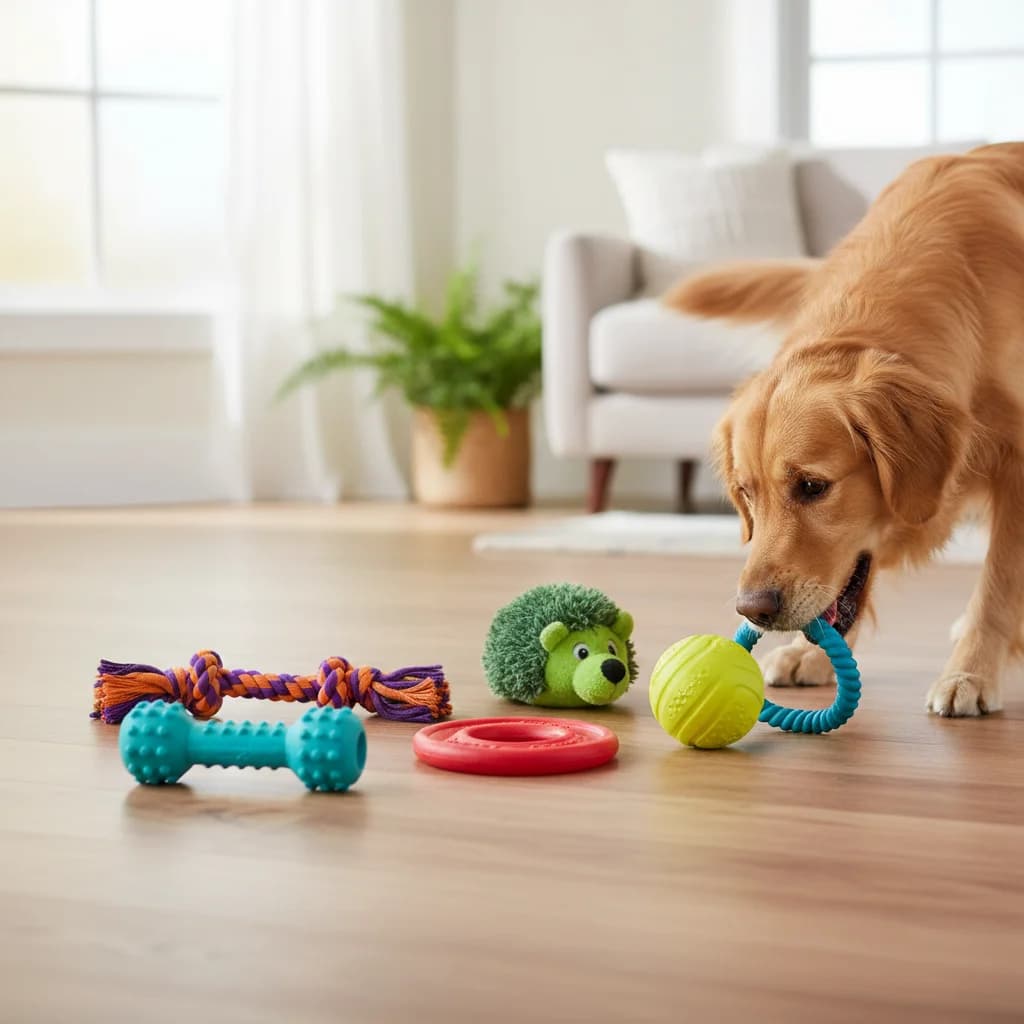
Best Interactive Dog Toys 2026: 5 Mental-Stim Picks
Kong Classic is the best interactive dog toy for most dogs, because it can be stuffed, frozen and left with your dog for unsupervised enrichment. Nina Ottosson Dog Tornado is the better puzzle feeder for clever, problem-solving dogs, and West Paw Toppl is the one to buy for heavy chewers.
Our #1 Pick
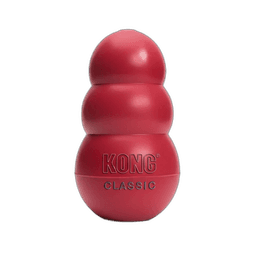
- Natural rubber built for average adult chewers
- Hollow center stuffs with kibble, treats or frozen peanut butter
- Erratic bounce keeps fetch unpredictable
The gold standard for unsupervised enrichment -- stuff, freeze, and let your dog work for their food.
Our analysis of 2,410 buyer mentions on Kong Classic (Large): buyers consistently praised chewability, suitable for dogs, value for money.
Also Great
Puzzle: Nina Ottosson Dog Brick ($20) — Best Level 2 puzzle that teaches problem-solving with sliding compartments
On this page8 sections
Our Verdict
The Kong Classic remains the gold standard for unsupervised enrichment, but puzzle feeders like the Nina Ottosson Dog Tornado offer the mental challenge that high-intelligence breeds genuinely need. Match toy complexity to your dog's problem-solving ability.
Kong Classic (Large) Owner rating4.6 Best overall | Nina Ottosson Dog Tornado (Level 2) Owner rating4.3 Best puzzle feeder | PetSafe Busy Buddy Tug-A-Jug Owner rating3.7 Best for solo play | West Paw Toppl Owner rating4.6 Best for heavy chewers | Furbo 360° Dog Camera Owner rating4.4 Best tech option | |
|---|---|---|---|---|---|
| Price | $13.95Buy on Amazon | $17.95Buy on Amazon | $20.95Buy on Amazon | $184Buy on Amazon | |
| Buyer sentiment | Chewability Suitable for dogs Value for money Pet pleasure Buyers praise chewability, suitable for dogs, value for money and pet pleasure. Based on 2,410 user mentions | Difficulty Suitable for dogs Construction Value for money Buyers praise difficulty, suitable for dogs and construction. Some flag value for money. Based on 2,140 user mentions | Engagement Quality Functionality Durability Ease of use Size Buyers praise engagement, quality and functionality. Some flag durability and ease of use. Based on 1,935 user mentions | Durability Entertainment Quality Ease of cleaning Value for money Buyers praise durability, entertainment, quality and ease of cleaning. Some flag value for money. Based on 2,033 user mentions | Quality Reliability Pet monitoring Picture quality Connectivity Value for money Buyers praise quality, reliability, pet monitoring and picture quality. Some flag connectivity and value for money. Based on 1,226 user mentions |
| Pros |
|
|
|
|
|
| Cons |
|
|
|
|
|
| Durability | High | High | High | High | — |
| Type | — | — | — | — | Treat-tossing camera |
* Prices are approximate and may vary. Please check the latest price on Amazon.
Interactive Dog Toy Spec Matrix
Material, difficulty, treat dispensing, and cleanability for top interactive toys.
| Product | Material | Sizes Available | Difficulty | Treat Dispensing | Dishwasher Safe | Age Range |
|---|---|---|---|---|---|---|
| Kong Classic (Large) | Natural rubber | XS / S / M / L / XL / XXL | Beginner | Yes | Top rack only | All ages |
| Nina Ottosson Dog Tornado (Level 2) | BPA/PVC-free plastic base | One size | Intermediate | Yes | No (hand-wash) | 6 months+ |
| PetSafe Busy Buddy Tug-A-Jug | Natural rubber + rope | S / M / L | Intermediate | Yes | No | All ages |
| West Paw Toppl | Zogoflex natural rubber | Small / Large | Beginner to intermediate | Yes | Yes | All ages |
| Furbo Dog Camera + Treat Toss | ABS plastic (electronic) | One size | Beginner | Yes (remote) | No | All ages |
Material, size, and safety specs from manufacturer product pages as of April 2026.
How PawBench is paid: we earn an Amazon Associates commission on qualifying purchases. We don’t accept sponsored placements, paid reviews, or free products in exchange for coverage. Picks are ranked on documented owner outcomes and primary-source research, never on commission rate. Read the full methodology.
A bored dog is a destructive dog. Chewed baseboards, shredded pillows, excavated backyards — these aren't behavioral problems.
Not a behavior problem: They're symptoms of a dog that doesn't have enough to do.
Interactive toys solve this by redirecting a dog's natural problem-solving instincts into structured play. Instead of figuring out how to open the trash can, your dog figures out how to extract a treat from a puzzle.
But not all interactive toys are created equal. Many are too easy (solved in 30 seconds), too fragile (destroyed in minutes), or too frustrating (dog gives up and chews the toy itself). We evaluated over 30 interactive toys by analyzing owner and trainer reviews across breeds ranging from Chihuahuas to German Shepherds to find the ones that genuinely engage dogs for meaningful periods without creating frustration or safety hazards.
Why Enrichment Matters More Than Exercise Alone
Most owners know their dog needs physical exercise. Fewer understand that mental stimulation is equally important — and for some breeds, even more so. A 30-minute puzzle session can tire a dog as effectively as a 60-minute walk because problem-solving engages cognitive resources that physical activity doesn't touch.
Research from the University of Bristol found that dogs with regular access to enrichment toys showed significantly lower rates of attention-seeking behavior, destructive behavior, and separation anxiety.
Why it works: The dogs weren't calmer because they were tired — they were calmer because their cognitive needs were being met.
This is particularly critical for:
- Working breeds (Border Collies, Australian Shepherds, German Shepherds) that were bred for complex tasks
- Dogs left home alone for extended periods
- Senior dogs whose physical activity is limited but cognitive function benefits from regular stimulation
- Dogs recovering from surgery who can't exercise normally
What to Look For in Interactive Toys
Adjustable Difficulty
The best interactive toys grow with your dog. A toy that's challenging on day one should have difficulty settings that keep it challenging on day thirty. Look for toys with removable inserts, adjustable openings, or multiple difficulty levels.
Appropriate Durability
Match the toy's construction to your dog's chewing strength. A puzzle feeder designed for a Poodle won't survive five minutes with a Pit Bull.
When in doubt, size up: Check manufacturer weight ratings and choose accordingly.
Food Motivation Compatibility
Most interactive toys are food-dispensing. If your dog isn't food-motivated, look for toys that use play mechanics (squeaking, movement, texture) instead of treats.
The challenge itself creates interest: Most dogs become more food-motivated when the food requires effort to obtain.
Easy to Clean
Treat-dispensing toys get disgusting quickly. Dried peanut butter in crevices, kibble dust in channels, slobber everywhere. If a toy can't be disassembled and either dishwasher-cleaned or hand-washed easily, you'll stop using it.
Safety Under Partial Supervision
No toy is completely safe unsupervised with every dog. But interactive toys should be safe enough for "in the other room" supervision, meaning:
- No small parts that detach
- No sharp edges exposed through normal use
- No risk of the toy closing on a tongue or paw
The 5 Best Interactive Dog Toys
#1 Best Overall: Kong Classic (Large) ($13.95)
Buy on Amazon · $13.95 →Why it's still the king: After decades on the market, nothing has dethroned the Kong Classic for good reason. The natural rubber compound is nearly indestructible for non-power-chewers, the hollow interior accepts dozens of filling combinations, and the unpredictable bounce pattern keeps fetch interesting.
The real power of the Kong is in the stuffing:
- Frozen peanut butter keeps most dogs engaged for 20-30 minutes
- Layer kibble, banana, and peanut butter, then freeze overnight — that's 45 minutes of focused licking and chewing
- New to Kongs? Start with easy-to-extract fillings (loose kibble), then gradually increase difficulty (frozen layers)
The Kong comes in multiple sizes and durability levels.
Read the color: The red Classic suits most dogs; the black Extreme is for power chewers. The puppy-specific blue and pink versions use a softer rubber for developing teeth and jaws.
Key specs: Natural rubber, multiple sizes, freezer-safe, dishwasher-safe
Best for: Every dog. This is universal enrichment.
#2 Best Puzzle Feeder: Nina Ottosson Dog Tornado (Level 2) ($13)
Buy on Amazon · $13 →Why smart dogs need this: The Dog Tornado is a three-layer rotating puzzle that requires dogs to spin compartments to reveal hidden treats. It engages sequential problem-solving — your dog must figure out not just that the compartments spin, but the order in which to spin them to access all the treats.
The Level 2 difficulty is the sweet spot for most dogs. Level 1 puzzles are typically solved within a session or two, while Level 3 can frustrate dogs new to puzzle feeding. The Dog Tornado uses bone-shaped locking covers that add an extra step — dogs must remove the cover before spinning.
The polypropylene construction is durable for supervised play (this is not a chew toy) and the smooth surfaces clean easily with soap and water. Nina Ottosson recommends supervised use only, which is appropriate — the small covers can be a choking hazard if chewed apart.
Key specs: BPA/PVC-free polypropylene, Level 2 difficulty, hand-wash, supervised use
Best for: Intelligent breeds, dogs that solve simple puzzles too quickly
#3 Best for Solo Play: PetSafe Busy Buddy Tug-A-Jug ($17.95)
Buy on Amazon · $17.95 →Why solo dogs love it: The Tug-A-Jug combines three play patterns — treat dispensing, tugging, and chasing — in one toy. Dogs pull the rope through the jug to dispense treats, creating a self-reinforcing play loop that doesn't require human participation.
The transparent jug lets dogs see the treats inside, which maintains motivation. The rope creates an unpredictable dispensing pattern — sometimes treats fall out easily, sometimes they don't.
Why it holds their interest: That's the same variable-reinforcement schedule that makes slot machines addictive. Your dog literally can't predict when the next treat will drop, so they keep playing.
It's available in multiple sizes and the jug is top-rack dishwasher safe. The rope needs periodic replacement (sold separately) as it frays with heavy use.
Key specs: Jug + rope design, variable treat dispensing, dishwasher safe, multiple sizes
Best for: Dogs left alone, self-directed players
#4 Best for Heavy Chewers: West Paw Toppl (~$21)
Buy on Amazon · $20.95 →Why it outlasts competitors: The Toppl addresses the biggest weakness of the Kong for power chewers — the opening. The Kong's narrow opening can frustrate bulldogs and mastiffs whose wide muzzles can't reach inside. The Toppl's wide opening allows easy access while still requiring effort to extract frozen fillings from the textured interior.
West Paw's Zogoflex material is guaranteed against dog damage (they'll replace it for free), BPA/phthalate-free, and dishwasher safe.
The difficulty upgrade: Two Toppls can be interlocked to create a sealed ball — dogs must figure out how to separate them to access the filling inside.
The soft material also bounces unpredictably on hard surfaces, adding a fetch dimension that the Kong matches but many other enrichment toys don't offer.
Key specs: Zogoflex material, guaranteed tough, interlocking design, dishwasher safe
Best for: Power chewers, brachycephalic breeds with wide muzzles
#5 Best Tech Option: Furbo Dog Camera + Treat Toss (~$150)
Why it's more than a camera: The Furbo combines a 360-degree camera with a treat-tossing mechanism that you can trigger remotely from your phone. This turns treat dispensing into an interactive, real-time game even when you're at work.
The AI-powered bark alerts notify you when your dog is distressed, so you can toss a treat at the exact moment they need redirection. The two-way audio lets you give verbal commands paired with treat rewards, maintaining training consistency when you're away.
This is the most expensive option on our list by far, but for dogs with separation anxiety or owners who work long hours, the ability to actively engage with your dog remotely is genuinely transformative. See our pet tech guide for a deeper review.
Key specs: 1080p camera, 360° rotation, app-controlled treat toss, bark alerts
Best for: Dogs with separation anxiety, owners who work away from home
Comparison Table
| Toy | Price | Type | Difficulty | Durability | Unsupervised? |
|---|---|---|---|---|---|
| Kong Classic | $13.95 | Treat-stuffing | Adjustable | Excellent | Yes |
| Nina Ottosson Tornado | ~$20 | Puzzle | Level 2 | Good (supervised) | No |
| PetSafe Tug-A-Jug | ~$12 | Dispensing | Moderate | Good | Mostly |
| West Paw Toppl | ~$21 | Treat-stuffing | Adjustable | Excellent | Yes |
| Furbo Camera | ~$150 | Remote dispensing | N/A | N/A | Yes (remote) |
How to Introduce Interactive Toys
Start Easy
If your dog has never used an interactive toy, don't start with a Level 3 puzzle. Begin with a loosely filled Kong or a simple treat ball. Let your dog experience success quickly — this builds the confidence and motivation to tackle harder challenges.
Show, Don't Tell
For puzzle toys, demonstrate once by manipulating the puzzle yourself while your dog watches, then let them try. Most dogs learn by observation faster than by trial and error.
Rotate Toys Weekly
Even the best interactive toy loses its appeal if it's available every day.
Rotate to keep it novel: Maintain a rotation of 3-5 toys, presenting only 1-2 at a time. When a toy reappears after a week's absence, it's novel again.
Match Complexity to Breed
- Border Collies, Poodles, and German Shepherds typically need Level 2-3 puzzles
- Bulldogs, Basset Hounds, and other less drive-oriented breeds do well with Level 1-2
There's no shame in easy puzzles — the goal is engagement, not frustration.
Frequently Asked Questions
Can interactive toys replace walks?
No. Interactive toys supplement physical exercise but don't replace it. Think of mental enrichment and physical exercise as separate nutritional requirements — your dog needs both. A puzzle session can substitute for a walk on days when weather or health prevents outdoor exercise, but it shouldn't become the norm.
Are puzzle toys safe to leave with my dog unsupervised?
It depends on the toy and the dog.
- Generally safe unsupervised: solid rubber toys (Kong, Toppl), with non-power-chewers
- Supervision only: plastic puzzle feeders (Nina Ottosson) — if a dog decides to chew the plastic instead of solve the puzzle, small pieces can break off
Always supervise the first few sessions with any new toy to assess your dog's interaction style.
How do I clean peanut butter out of a Kong?
Fill the Kong with warm water and a drop of dish soap, let it soak for 10 minutes, then use a bottle brush to scrub the interior. Alternatively, place it on the top rack of your dishwasher. For really stuck-on residue, soak overnight in a mixture of warm water and white vinegar.
My dog solves puzzle toys in minutes. What next?
Increase difficulty: freeze the contents, use stickier fillings, combine multiple puzzles (interlock two Toppls, hide a stuffed Kong inside a snuffle mat). You can also upgrade to Level 3 Nina Ottosson puzzles or multi-step puzzles from Trixie. Some owners create DIY puzzle courses by hiding multiple toys around the house for a scavenger hunt.
Are interactive toys good for senior dogs?
Excellent for seniors. Mental stimulation helps maintain cognitive function in aging dogs, potentially slowing the progression of canine cognitive dysfunction (doggy dementia). Choose softer toys that are gentle on aging teeth and avoid puzzles that require significant physical manipulation — a frozen Kong or lick mat is ideal for seniors.
The Bottom Line
Interactive toys aren't luxury accessories — they're essential tools for canine mental health. A $15 Kong stuffed with frozen peanut butter provides more genuine enrichment than a $50 plush toy that gets disemboweled in an afternoon. Start with the Kong Classic as your baseline, add a puzzle feeder for mental challenge, and rotate regularly to maintain novelty.
Your dog was bred to solve problems. Give them problems worth solving.
🏆 Bottom Line: The Nina Ottosson Dog Tornado is the best all-around interactive toy for most dogs — it scales difficulty, engages problem-solving, and keeps dogs occupied for 15–30 minutes per session. Pair it with a frozen KONG for home-alone enrichment that actually works.
Related Reading
- Dog Toys — Our complete toy rankings and reviews
- Dog Health — Anxiety solutions and calming products
- Pet Tech — Cameras, feeders, and smart enrichment tools
Frequently Asked Questions
- What are the best interactive toys for dogs home alone?
- The Kong Classic stuffed with frozen peanut butter is the best option for unsupervised enrichment -- it's nearly indestructible and keeps most dogs engaged for 20-45 minutes. The West Paw Toppl is another excellent choice, especially for dogs with wide muzzles. For tech-savvy owners, the Furbo camera lets you toss treats remotely.
- Do puzzle toys actually tire dogs out?
- Yes. Research shows that 15 minutes of mental stimulation can tire a dog as effectively as a 30-minute walk. Problem-solving engages cognitive resources that physical exercise doesn't touch. Dogs with regular access to enrichment toys show lower rates of destructive behavior, attention-seeking, and separation anxiety.
- How do I get my dog interested in puzzle toys?
- Start with easy wins. Use a loosely filled Kong with kibble or an open puzzle with visible treats so your dog experiences quick success. Demonstrate the puzzle yourself while your dog watches. Gradually increase difficulty as your dog builds confidence. Most dogs become more food-motivated when food requires effort to obtain.
- What can I stuff in a Kong for my dog?
- Layer kibble, peanut butter (xylitol-free), banana, plain yogurt, or canned pumpkin inside a Kong, then freeze it overnight for maximum engagement. For dogs new to Kongs, start with loose kibble for easy extraction. You can also use wet dog food, mashed sweet potato, or cream cheese as fillers.
Research Sources
- Brain Games for Dogs: When Can a Puzzle Be the Solution? — AKC, 2023
- Effects of Environmental Enrichment on Dog Behaviour: Pilot Study — NCBI / PubMed Central, 2022
- Which Dog Toys Are Right for Your Dog? — AKC, 2023
- Destructive Chewing — ASPCA, 2024
- Toy or Toxin: How to Identify Safe Products for Pets — VCA Animal Hospitals, 2023
- How to Tell If a Dog Toy Is Toxic or Safe — Preventive Vet, 2024
Your next step
Prefer a food puzzle or a simpler toy? Compare the options for your dog’s play style.

PawBench Editorial
Published by Hilly Shore LabsPawBench’s editorial team researches dog products from primary veterinary sources, manufacturer specifications and aggregated buyer sentiment, alongside the lived ownership of Maggie, an Australian Labradoodle. We do not run hands-on product tests.
331 dog products scored · 1,222,724 buyer review-aspect mentions aggregated · cites AVMA, FDA, AAFCO, Cornell, WSAVA, AKC, ASPCA.
Recommendations are based on published veterinary guidelines, manufacturer specifications, and verified customer feedback. See our editorial standards.