Best Dog Breeds for Apartments: 12 Breeds That Thrive in Small Spaces
Our #1 Pick
Low energy, quiet temperament, and small size make them the ideal apartment companion.
Also Great
Hypoallergenic: Bichon Frise (N/A) — Non-shedding coat and moderate energy perfect for small spaces
On this page5 sections
Our Verdict
Energy level and noise tendency matter more than size. Cavalier King Charles Spaniels, French Bulldogs, and Greyhounds are our top picks for apartment living.
The 12 apartment breeds, on the AKC's own trait scales
Scores are the American Kennel Club's 1-to-5 breed-trait ratings (5 = most), read from each breed's AKC page on 23 September 2026. They describe the breed, not your dog.
| Breed | Weight (AKC) | Energy | Barking | Adaptability | Grooming | Heat risk |
|---|---|---|---|---|---|---|
| Cavalier King Charles Spaniel | 13-18 lb | 3/5 | 3/5 | 3/5 | 2/5 | — |
| French Bulldog | Under 28 lb | 3/5 | 1/5 | 5/5 | 1/5 | Flat-faced: heat-sensitive |
| Greyhound | 65-70 lb M, 60-65 lb F | 4/5 | 3/5 | 4/5 | 1/5 | — |
| Bichon Frise | 12-18 lb | 4/5 | 3/5 | 4/5 | 5/5 | — |
| Shih Tzu | 9-16 lb | 3/5 | 3/5 | 5/5 | 4/5 | Flat-faced: heat-sensitive |
| Pug | 14-18 lb | 3/5 | 1/5 | 5/5 | 2/5 | Flat-faced: heat-sensitive |
| Basenji | 24 lb M, 22 lb F | 4/5 | 1/5 | 3/5 | 1/5 | — |
| Boston Terrier | 12-25 lb | 4/5 | 2/5 | 3/5 | 2/5 | Flat-faced: heat-sensitive |
| Havanese | 7-13 lb | 3/5 | 4/5 | 5/5 | 3/5 | — |
| Miniature Poodle | 10-15 lb | 4/5 | 4/5 | 4/5 | 4/5 | — |
| English Bulldog | 50 lb M, 40 lb F | 3/5 | 2/5 | 3/5 | 3/5 | Flat-faced: heat-sensitive |
| Whippet | 25-40 lb | 4/5 | 1/5 | 3/5 | 1/5 | — |
Source: AKC breed pages (Breed Traits & Characteristics). Heat risk marks the brachycephalic (flat-faced) breeds on this list; see the notes in each breed section.
How PawBench is paid: we earn an Amazon Associates commission on qualifying purchases. We don’t accept sponsored placements, paid reviews, or free products in exchange for coverage. Picks are ranked on documented owner outcomes and primary-source research, never on commission rate. Read the full methodology.
Living in an apartment doesn't disqualify you from dog ownership — but it does narrow your options. The best apartment dogs aren't necessarily the smallest ones. Size matters less than energy level, noise tendency, and adaptability.
A 70-pound Greyhound who sleeps 20 hours a day is a better apartment dog than a 15-pound Jack Russell Terrier who bounces off walls and barks at every sound in the hallway. Here's what actually matters and our top 12 picks.
What Makes a Good Apartment Dog
Four traits do almost all the work, and only one is about size:
- Low to moderate energy. Easier to satisfy without a yard. Every dog needs daily walks, but some breeds are content with 30–45 minutes while others need 2+ hours.
- Low barking tendency. Your neighbors will thank you. Alert barking, separation anxiety barking, and demand barking all create conflict in shared-wall living.
- Moderate size. Very large breeds fit physically, but they need room to turn around and stretch. Giant breeds (Great Danes, Mastiffs) can work in large apartments but struggle in studios.
- Adaptable temperament. Apartment dogs meet elevators, hallway noise, delivery people, and other dogs constantly. Naturally social, unflappable breeds handle that better than anxious or reactive ones.
Plan the potty logistics before the breed. Four flights of stairs at 6 a.m. in January is the thing that actually makes apartment dog ownership hard, not square footage. Many apartment owners keep a Fresh Patch real-grass potty on the balcony or by the door for early mornings and bad weather — real grass, so it doesn't undo outdoor training the way pads can. It matters most for the small breeds on this list, which have small bladders.
Rule of thumb: a quiet, sleepy big dog beats a small dog who treats every hallway footstep as an intruder. Energy and barking predict apartment success better than weight does.
Our Top 12 Apartment Dog Breeds
The table at the top of this page scores all 12 on the American Kennel Club's own trait ratings. Two of those scores are worth reading before the breed notes, because they cut against the usual apartment advice:
- Greyhounds and Whippets score 4 of 5 for energy. The AKC's scale measures exercise need, and sighthounds do need to run. What makes them workable in a flat is how that energy arrives: short sprints, then long sleeps, and a barking score of 3 or lower.
- The Havanese and Miniature Poodle score 4 of 5 for barking. Both are good apartment dogs on size and adaptability, but they are the two on this list most likely to answer the hallway. Budget training time for it.
The quietest on the AKC's scale are the French Bulldog, Pug, Basenji and Whippet, all at 1 of 5.
1. Cavalier King Charles Spaniel
Buy on Amazon →The quintessential apartment companion. Cavaliers are affectionate, quiet, and genuinely content curling up on the couch. They need a daily walk but won't destroy your apartment if they miss one. Downside: prone to heart conditions — budget for veterinary care.
2. French Bulldog
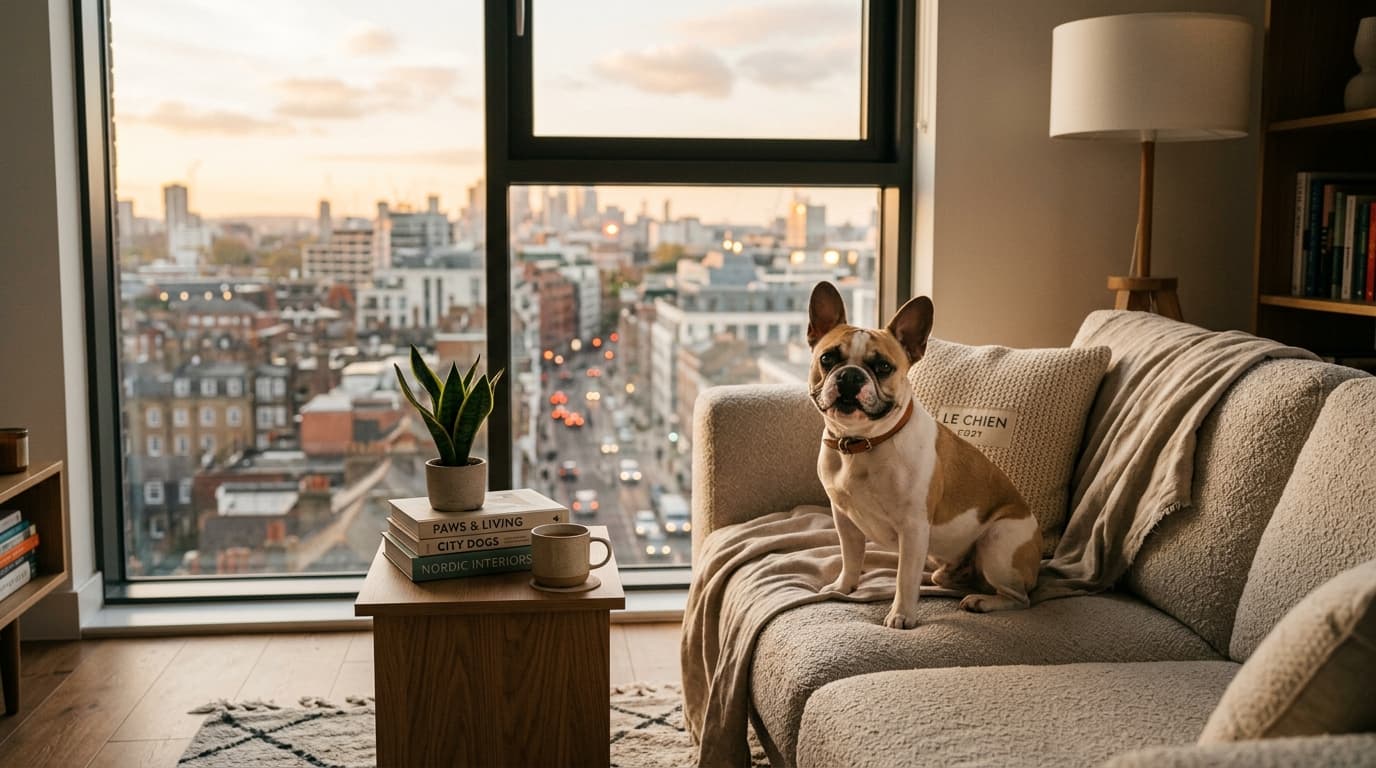
Frenchies are the most popular city dog in America for a reason: compact, low-energy, and content with short walks. They're also entertainingly weird. Note: brachycephalic breeds overheat easily — air conditioning is essential.
3. Greyhound
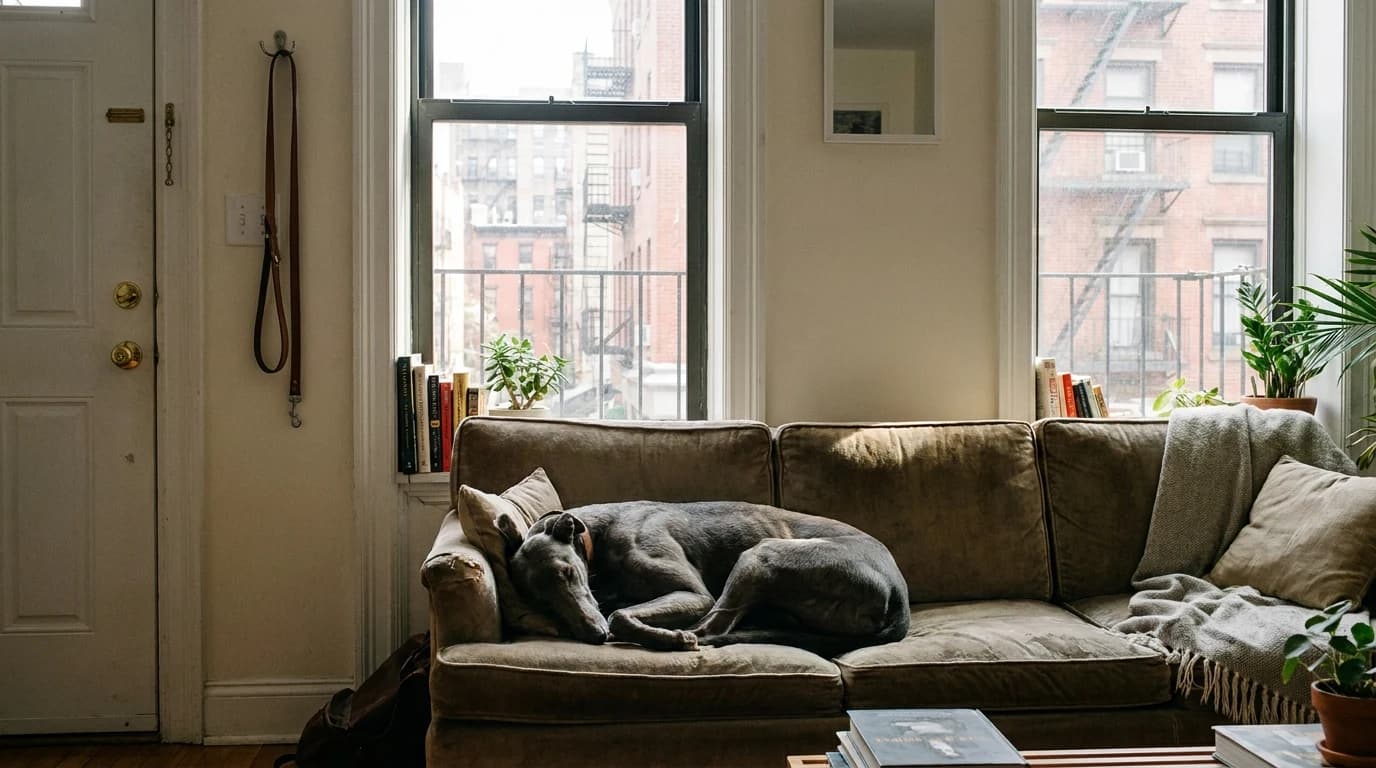
The couch potato of the dog world. Despite being built for speed, retired racing Greyhounds sleep up to 20 hours a day and are perfectly content in apartments. They're quiet, gentle, and low-maintenance. Adopt from a Greyhound rescue — thousands need homes.
4. Bichon Frise
Cheerful, hypoallergenic, and small enough for any apartment. Social dogs who do well with regular interaction. They need professional grooming every 4–6 weeks. Their moderate barking tendency can be managed with training.
5. Shih Tzu
Bred specifically to be indoor companions for Chinese royalty. Shih Tzus are affectionate, calm, and happy with short daily walks. Their long coat requires regular grooming but they shed very little — a bonus for small spaces.
6. Pug
Charming, adaptable, and naturally low-energy. They love people, handle apartment noise well, and are content with moderate exercise. Like Frenchies, they're brachycephalic — heat management is critical.
7. Basenji
The "barkless dog." Basenjis don't bark — they make a unique yodeling sound, and they don't do it often. They're clean, cat-like dogs that groom themselves. The trade-off: they're independent and need puzzle toys and mental stimulation to prevent mischief.
8. Boston Terrier
The "American Gentleman" is compact, well-mannered, and adaptable — social, relatively quiet, and easy to train. A moderate daily walk plus some playtime covers it.
9. Havanese
Cuba's national dog is a natural apartment dweller — they were bred to be city companions. Havanese are hypoallergenic, adaptable, and exceptionally social. They can develop separation anxiety, so they're best for owners who work from home or can take them along.
10. Miniature Poodle
Intelligent, hypoallergenic, and highly trainable. Miniature Poodles are athletic enough for weekend hikes but calm enough for weekday apartment living. Their intelligence means they need mental stimulation — puzzle toys and training sessions prevent boredom behaviors.
11. English Bulldog
Bulldogs are built for napping: minimal exercise, rare barking, and a calm, friendly temperament that handles apartment life well. Health considerations: prone to breathing issues, joint problems, and overheating.
12. Whippet
Like a smaller Greyhound. Whippets sprint in short bursts then sleep for hours — quiet, clean, affectionate indoor dogs. Give them a daily walk and an occasional chance to run, and they're happy.
Breeds to Think Twice About
These breeds can live in apartments but require significant commitment:
- Border Collies and Australian Shepherds — Need 2+ hours of physical and mental exercise daily
- Huskies — High energy, loud, and need extensive exercise
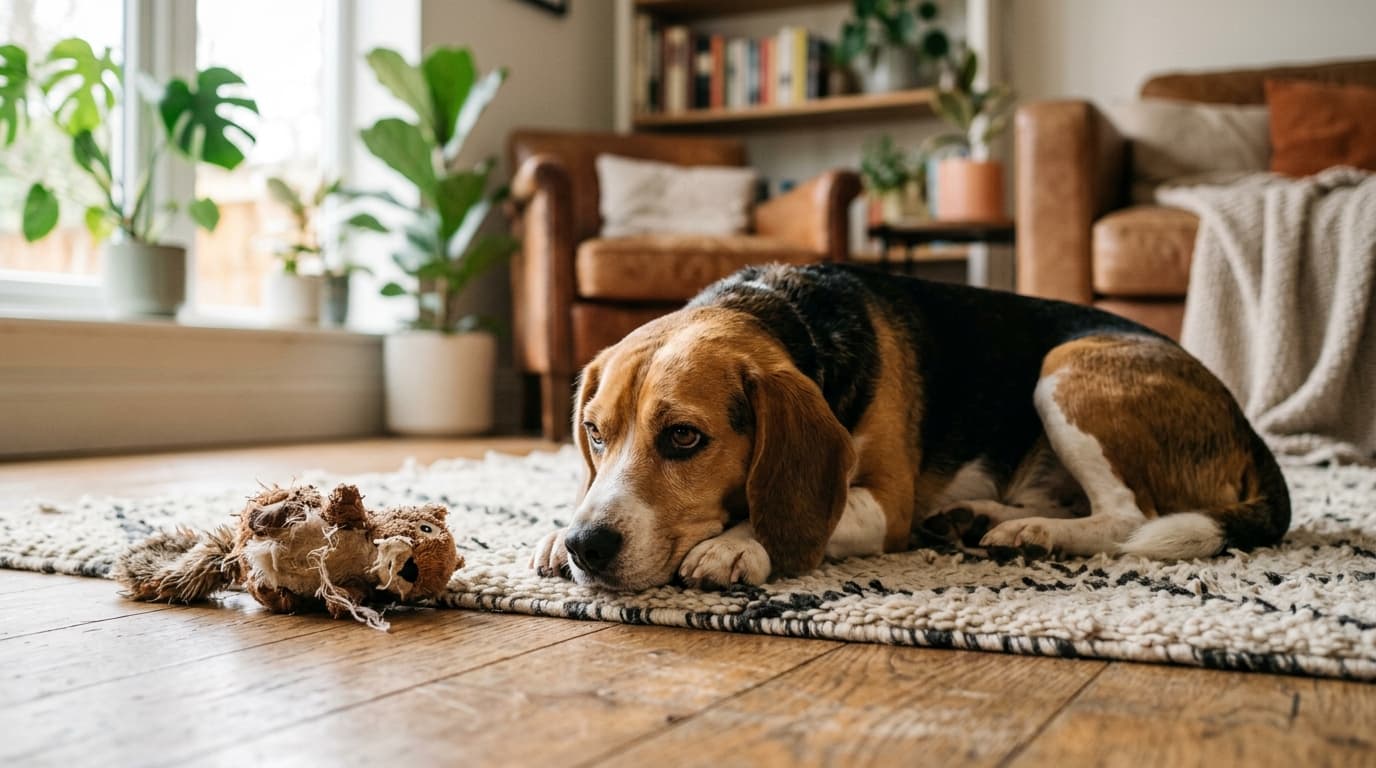
- Beagles — Bred to bay (howl) — neighbors will complain
- Dalmatians — Were bred to run alongside carriages — they need miles of exercise
- Jack Russell Terriers — Small but explosively energetic
Tips for Apartment Dog Ownership
Set this up in the first month:
- Establish a routine. Regular walk times help your dog predict when they'll go out, reducing anxiety and accidents.
- Crate train. A crate gives your dog their own space in a small apartment and prevents destructive behavior when you're out.
- Socialize early and often. Apartment dogs encounter more people, dogs, and stimuli than suburban dogs. Good socialization prevents reactivity.
Keep doing this every week:
- Invest in enrichment. Puzzle feeders, Kong toys, and training sessions compensate for limited space.
- Be a good neighbor. Address barking promptly, clean up immediately outside, and keep your dog leashed in shared spaces.
🏆 Bottom Line: The Cavalier is the safest all-round apartment pick, and the Greyhound is the one most people rule out for the wrong reason. In a warm building without reliable air conditioning, think hard before choosing a brachycephalic breed — Frenchies, Pugs, and English Bulldogs overheat easily.
Sources
- American Kennel Club (AKC) — Breed profiles and apartment suitability ratings. akc.org.
- American Veterinary Medical Association (AVMA) — Dog exercise requirements by breed. avma.org.
- The Kennel Club (UK) — Breed energy level and noise tendency data. thekennelclub.org.uk.
- ASPCA — Apartment living guidelines for dog owners. aspca.org.
Research Sources
- Best Dogs for Apartments — American Kennel Club
- Choosing the Right Breed for Your Lifestyle — American Kennel Club
- How Much Exercise Does a Dog Need — American Kennel Club
- Dog Breeds — Breed Traits & Characteristics (Cavalier King Charles Spaniel page shown; each breed page carries the same scales) — American Kennel Club

PawBench Editorial
Published by Hilly Shore LabsPawBench’s editorial team researches dog products from primary veterinary sources, manufacturer specifications and aggregated buyer sentiment, alongside the lived ownership of Maggie, an Australian Labradoodle. We do not run hands-on product tests.
254 dog products scored · 1,160,974 buyer review-aspect mentions aggregated · cites AVMA, FDA, AAFCO, Cornell, WSAVA, AKC, ASPCA.
Recommendations are based on published veterinary guidelines, manufacturer specifications, and verified customer feedback. See our editorial standards.