Best Dog Strollers 2026: Top Picks for Senior, Injured, and Small Dogs
Our #1 Pick
Zipperless walk-in entry so a stiff or short-backed dog steps in instead of being lifted, on a three-wheel frame the listing rates for up to 60 lb.
Also Great
Two small dogs: LPOTIUS Double Pet Stroller ($129.99) — Two detachable carriers on one frame, rated for 44 lb in total
City: Pet Gear No-Zip Excursion ($289.99) — Compact fold for apartment living
On this page6 sections
Our Verdict
Pet Gear No-Zip AT3 for most senior, post-surgery and short-backed dogs: the zipperless walk-in entry means nobody lifts a sore back. Get the LPOTIUS for two small dogs.
Pet Gear No-Zip AT3 Pet Stroller Owner rating4.5 The current, buyable No-Zip. The Expedition this post has recommended is no longer priceable on Amazon; the AT3 is the same zipperless walk-in design on a three-wheel all-terrain frame. | ROODO 3-Wheel Lightweight Pet Stroller Owner rating4.3 The budget entry, and the only stroller here under $100. Light and compact enough to actually get carried down apartment stairs, which is where heavier strollers stop being used. | PawHut 3-Wheel Foldable Pet Jogger Owner rating4.3 The jogging-specific option, sized for medium dogs. A jogger frame differs from a standard stroller in wheel size and suspension, which is what stops the ride jarring at running pace. | |
|---|---|---|---|
| Price | $223.88Buy on Amazon | $88.92Buy on Amazon | See price on AmazonNot sold on Amazon right now |
| Pros |
|
|
|
| Cons |
|
|
|
| Entry | Zipperless walk-in | — | — |
| Wheels | 3, all-terrain | 3 | 3 |
| Line | Pet Gear No-Zip | — | — |
| Weight | — | Lightweight, foldable | — |
| Position | — | Budget | — |
| Type | — | — | Jogging stroller |
| Dog size | — | — | Medium |
* Prices are approximate and may vary. Please check the latest price on Amazon.

How PawBench is paid: we earn an Amazon Associates commission on qualifying purchases. We don’t accept sponsored placements, paid reviews, or free products in exchange for coverage. Picks are ranked on documented owner outcomes and primary-source research, never on commission rate. Read the full methodology.
A dog stroller isn't a luxury for precious pups — it's a genuine mobility tool. Senior dogs with arthritis or hip dysplasia can still enjoy outings without the pain of a long walk. Dogs recovering from surgery or orthopedic injury need controlled movement restrictions. Small breeds with short legs get exhausted on long urban walks. And dogs with anxiety sometimes do better observing the world from a safe, enclosed space.
The stigma around dog strollers is misplaced. If it extends your dog's quality of life and lets them participate in outings they'd otherwise miss, it's the right tool.
Who Actually Needs a Dog Stroller
- Senior dogs (7+ years, large breeds; 10+ years, small breeds) with arthritis, hip dysplasia, or degenerative joint disease
- Post-surgical dogs on strict exercise restriction who still need mental stimulation and fresh air
- Small breeds (under 15 lbs) on long urban hikes, crowded city streets, or multi-dog walks with larger dogs
- Dogs with heart or respiratory conditions that limit exercise tolerance
- Multi-dog households where one dog can walk but another cannot
Short backs and IVDD-risk breeds: what a stroller is for
Dachshunds, Corgis, Basset Hounds, Pekingese and other short-legged, long-backed breeds come up constantly in stroller threads, including a recent r/dogs discussion about whether a stroller or wagon suits short-legged dogs. The reason is intervertebral disc disease (IVDD). The American College of Veterinary Surgeons notes that chondrodystrophic breeds make up most cases, with Dachshunds alone accounting for 45 to 70% of them.
The honest part is that a stroller is a recovery and restriction tool for these dogs, not everyday prevention:
- After a disc episode, it earns its keep. ACVS lists exercise restricted to "bed rest" for at least four weeks after surgery, and Cornell describes crate rest followed by strictly controlled exercise. With your vet's agreement, a stroller gets a confined dog outside without it walking or jumping.
- For a healthy short-backed dog, walking is the prevention. In the DachsLife survey of 2,031 Dachshunds, dogs exercised for under 30 minutes a day had higher odds of IVDD and dogs exercised for over an hour had lower odds. It is an observational study, but it points the same way as Cornell's advice: walking is safe for any dog; leaping is the risk. Use the stroller for the part of the walk the dog can't do, not the whole walk.
- Choose the entry for the back. A zipperless walk-in door, like the Pet Gear's, lets a short-legged dog step in on the flat. A top-loading stroller means lifting, so support the chest and hindquarters together and keep the spine level.
For the rest of the IVDD picture, see our Dachshund owner guide, and for the furniture and car side of it, ramps and steps.
Our Top Picks
Best Overall: Pet Gear No-Zip AT3 ($248.76)
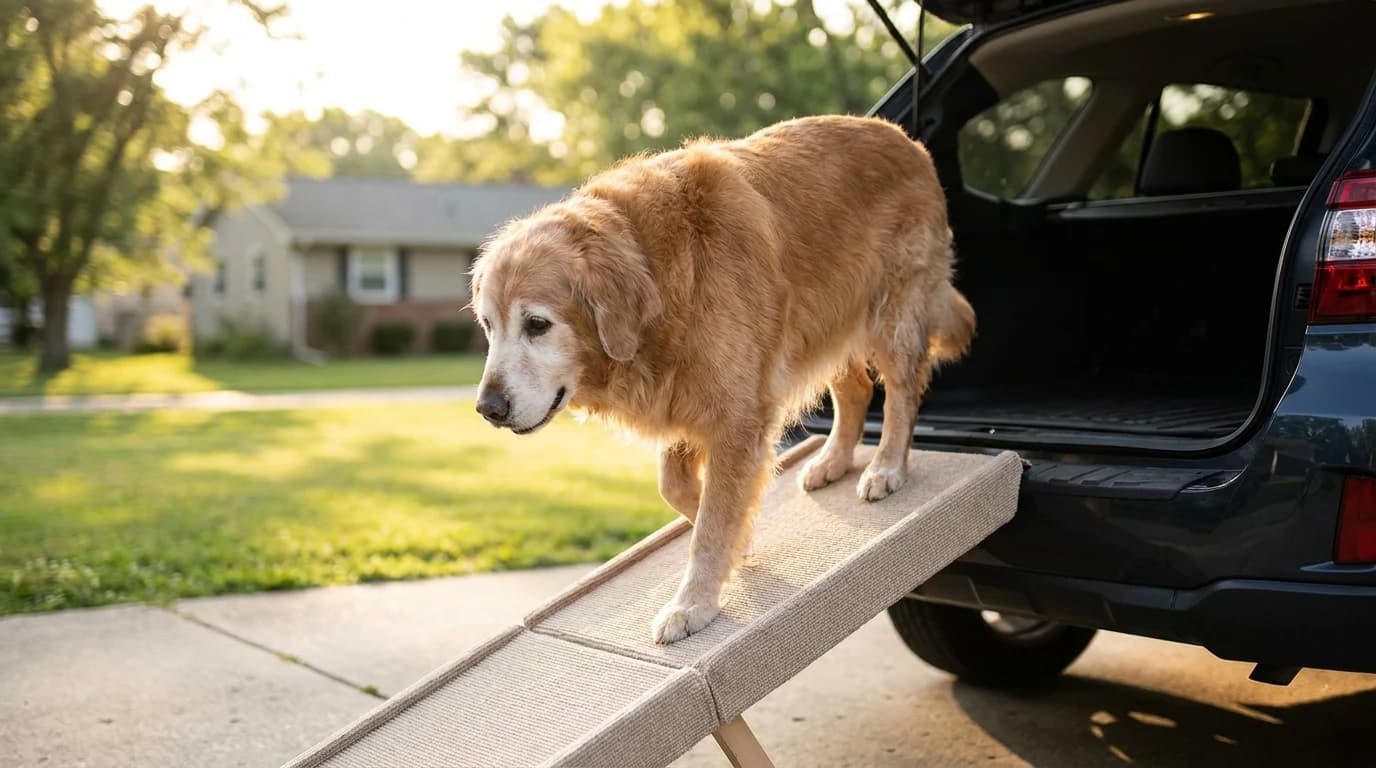
The Pet Gear No-Zip AT3 is the most popular dog stroller for a reason: the zipperless entry system lets dogs walk in and out on their own without being lifted, which is a game-changer for dogs with mobility issues. The push-button entry opens the front door wide, accommodating even stiff seniors with limited hip flexion.
The Amazon listing gives a maximum weight recommendation of 60 lb. Ventilation comes from top and front mesh windows, the fold is one-handed, and the 12-inch EVA tires handle sidewalks, gravel paths and light trails.
Best for: Senior and large dogs, urban and suburban use
Pros: Zipperless walk-in entry, 60 lb max per listing, one-hand fold, ventilated
Cons: Larger footprint than compact strollers, not ideal for rough trails
Best for Two Small Dogs: LPOTIUS Double Pet Stroller ($130)
For multi-dog households, the LPOTIUS Double Pet Stroller offers two detachable carriers on a quick-folding 4-wheel frame. It holds two pets up to 44 lbs combined, making it a practical option for households with two small or medium dogs where one or both need assistance.
It rides on a steel frame with front wheels that swivel 360 degrees and brakes on the rear wheels. The listing rates the frame for 44 lb in total, so it suits two small dogs rather than two medium ones.
Best for: Households with two small dogs, or one dog that walks and one that can't
Pros: Two detachable carriers, swivel front wheels, rear brakes
Cons: 44 lb combined limit, bulkier than a single stroller
Best Budget: ROODO 3-Wheel Lightweight Stroller ($96.98)
For city dwellers who need something that fits on crowded sidewalks and through apartment doorways, the ROODO 3-Wheel Lightweight Stroller is the light, narrow option. Its listing rates it for pets up to 30 lb, the wheels go on and off without tools, and it folds to about 18 by 6.5 by 33 inches. There is no zipperless walk-in door, so you lift the dog in.
Best for: City use, smaller dogs (under 30 lbs), apartment storage
Pros: Slim design, compact fold, tool-free wheels, cheapest here
Cons: 30 lb limit, top-loading so the dog has to be lifted in
Stroller Comparison
| Stroller | Max Weight (per listing) | Terrain | Key Feature | Price |
|---|---|---|---|---|
| Pet Gear No-Zip AT3 | 60 lbs | Sidewalk/light trail | Zipperless walk-in entry | About $249 |
| LPOTIUS Double | 44 lbs combined | Sidewalk/park | Two detachable carriers | About $130 |
| ROODO 3-Wheel | 30 lbs | City/sidewalk | Light, compact fold | About $97 |
What to Look For
- Weight capacity with margin: Buy for your dog's current weight plus 15–20% buffer for potential weight fluctuations or adding another small dog.
- Entry method: Top-loading vs. front/side walk-in makes a huge difference for mobility-impaired dogs. Zipperless or push-button entry is worth the premium.
- Cabin ventilation: Mesh panels on multiple sides prevent overheating — critical in summer. Look for UV-blocking mesh on the canopy.
- Folded dimensions: Measure your car trunk before buying. Most strollers fold but remain 2–3 feet long.
- Brake system: A rear foot brake is standard; a parking brake that locks both rear wheels is significantly safer on slopes.
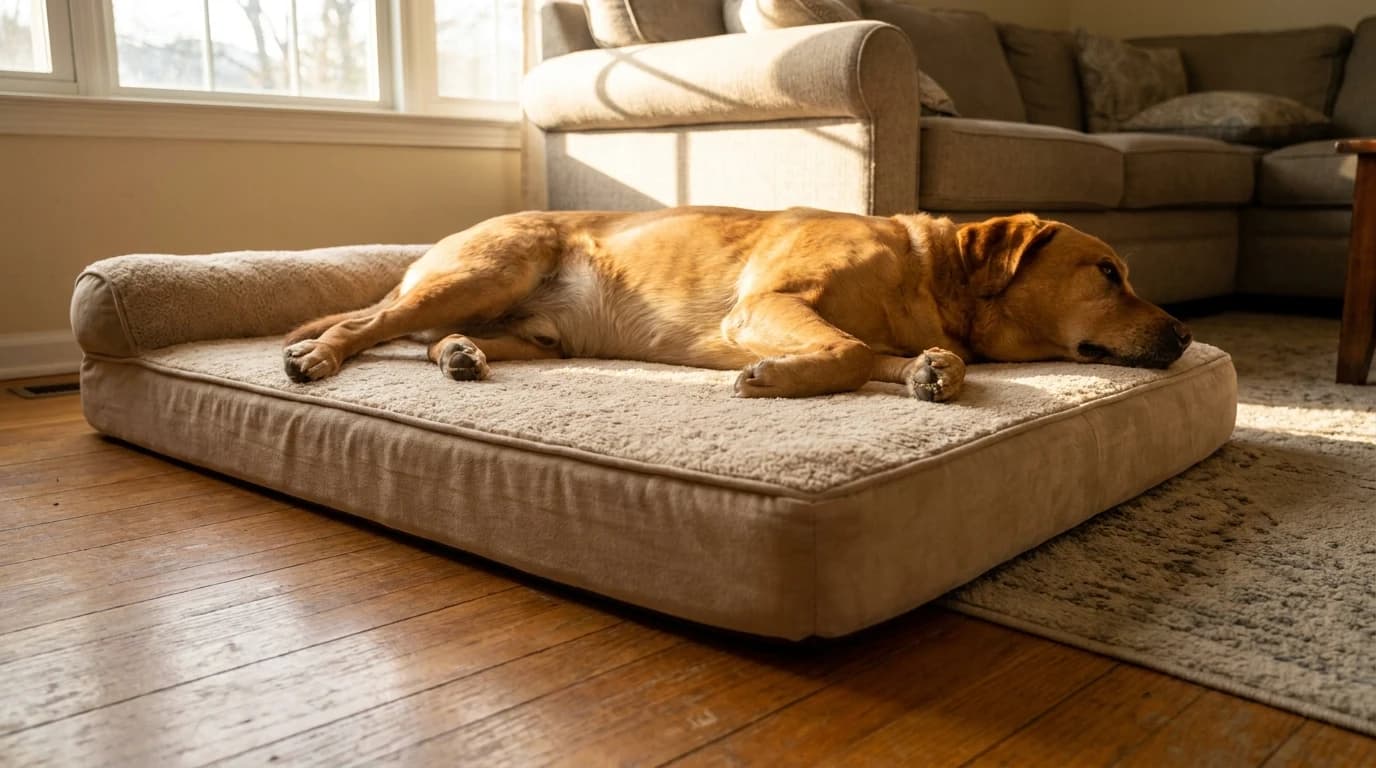
For senior dogs who need a stroller, pairing it with an orthopedic dog bed at home and a joint supplement creates a complete mobility support system.
🏆 Bottom Line: The Pet Gear No-Zip AT3 is the best choice for most senior, post-surgery and short-backed dogs, because the walk-in entry means nobody lifts a sore back. Go LPOTIUS for two small dogs, and ROODO for a light city stroller for dogs under 30 lb.
Sources
- American College of Veterinary Surgeons (ACVS) — Canine hip dysplasia and mobility management. acvs.org.
- Johnston SA — "Osteoarthritis: joint anatomy, physiology, and pathobiology." Veterinary Clinics of North America Small Animal Practice, 1997.
- Veterinary Partner/VIN — Exercise restriction guidelines post-orthopedic surgery. veterinarypartner.vin.com.
- Pet Gear — No-Zip stroller engineering specifications. petgearinc.com.
- ASPCA — Senior dog care and mobility support. aspca.org.
Research Sources
- Strollers for Dogs: Everything You Need to Know — American Kennel Club, 2024
- How to Make Your Home More Accessible for Your Senior Dog — American Kennel Club, 2024
- How to Provide Your Senior Dog With Proper Exercise — American Kennel Club, 2024
- Osteoarthritis in Dogs — Cornell Riney Canine Health Center
- Senior Dog Enrichment — Cornell Riney Canine Health Center
- Aging With Grace: How to Support Your Senior Pet — American Animal Hospital Association, 2024
- Intervertebral Disc Disease — American College of Veterinary Surgeons
- Intervertebral disc disease — Cornell Richard P. Riney Canine Health Center
- DachsLife 2015: an investigation of lifestyle associations with the risk of intervertebral disc disease in Dachshunds (Packer et al., Canine Genetics and Epidemiology 2016) — Canine Genetics and Epidemiology

PawBench Editorial
Published by Hilly Shore LabsPawBench’s editorial team researches dog products from primary veterinary sources, manufacturer specifications and aggregated buyer sentiment, alongside the lived ownership of Maggie, an Australian Labradoodle. We do not run hands-on product tests.
254 dog products scored · 1,160,091 buyer review-aspect mentions aggregated · cites AVMA, FDA, AAFCO, Cornell, WSAVA, AKC, ASPCA.
Recommendations are based on published veterinary guidelines, manufacturer specifications, and verified customer feedback. See our editorial standards.