Best Hiking Dog Leashes 2026: Hands-Free & Bungee Picks
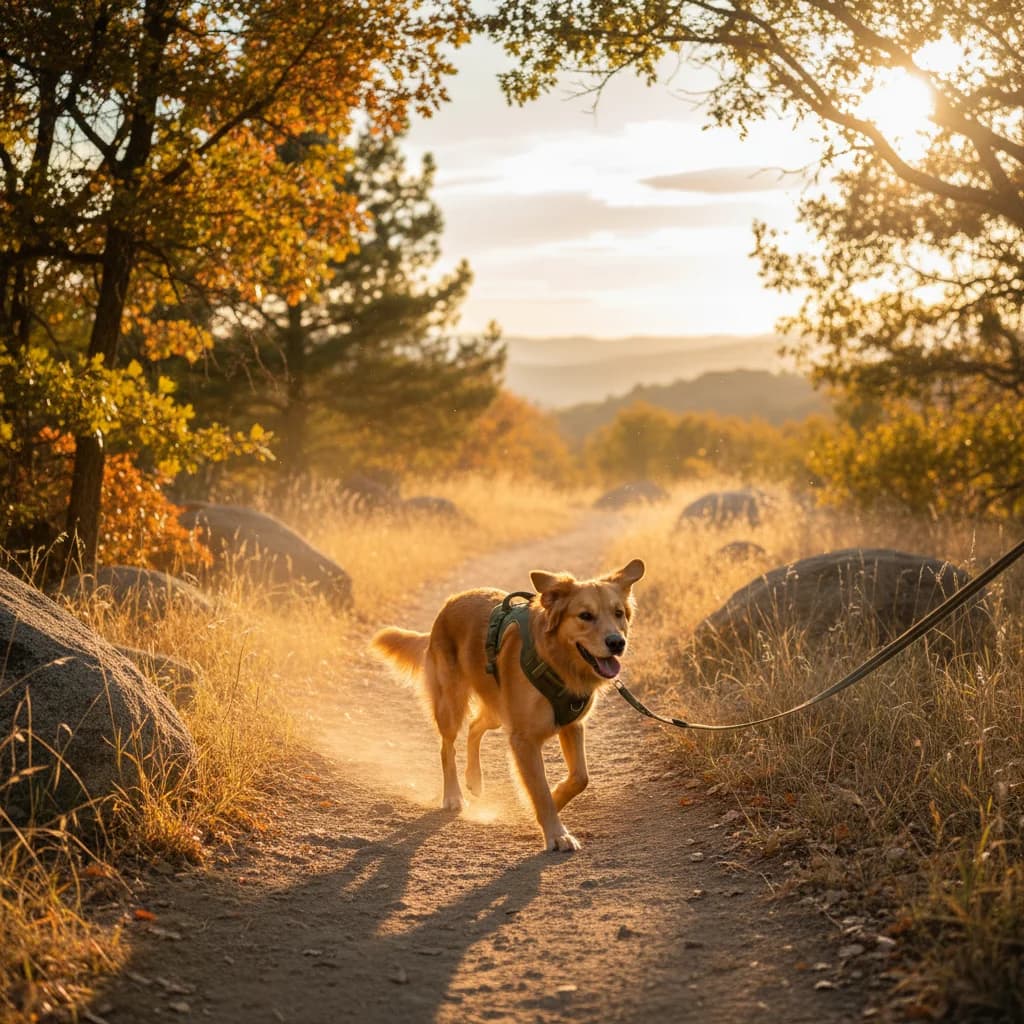
Ruffwear Front Range Leash is the best leash for most hiking dogs: a 5-ft lead with a traffic handle for close control on narrow trails, a padded handle and a locking clip. Ruffwear Roamer Leash is the dedicated hands-free option, and Mendota Artisan Waterproof Leash is the one to pick for wet trails.
Our #1 Pick
Traffic handle for close control, waist-clip for hands-free hiking, and webbing that dries fast.
Our analysis of 637 buyer mentions on Ruffwear Front Range Leash: buyers consistently praised quality, durability, clasp.
Also Great
Hands-Free: Ruffwear Roamer Leash ($49.99) — Bungee stretch absorbs lunges on steep trails
On this page8 sections
Our Verdict
The Ruffwear Front Range Leash is our top pick for most hikers: a 5-ft lead with a traffic handle for tight spots, a padded grip and a locking clip. For hands-free hiking, a dedicated waist leash like the Ruffwear Roamer beats any improvised setup.
Ruffwear Front Range Leash Owner rating4.4 Best overall | Ruffwear Roamer Leash Owner rating4.5 Best hands-free | Mendota Artisan Waterproof Leash Owner rating4.6 Best waterproof | Kurgo 6-in-1 Quantum Leash Owner rating4.4 Best for large dogs | Max and Neo Double Handle Traffic Leash Owner rating4.8 Best budget | Wilderdog Climbing Rope Leash with Locking Carabiner (10 ft) Owner rating4.4 Best for trail scrambles | Viper K9 Biothane Long Line (1/2 in x 20 ft) Owner rating4.7 Best long line for recall | |
|---|---|---|---|---|---|---|---|
| Price | $24.99Buy on Amazon | $49.99Buy on Amazon | $18.99Buy on Amazon | $28.07Buy on Amazon | $16.99Buy on Amazon | $42.00Buy on Amazon | $40.99Buy on Amazon |
| Buyer sentiment | Quality Durability Clasp Lightweight Buyers praise quality, durability, clasp and lightweight. Based on 637 user mentions | Quality Durability Suitable for exercise Length Buyers praise quality, durability, suitable for exercise and length. Based on 376 user mentions | Quality Sturdiness Appearance Durability Buyers praise quality, sturdiness, appearance and durability. Based on 586 user mentions | Quality Versatility Hands-Free Functionality Secure Fit Buyers praise quality, versatility, hands-free and functionality. Mixed feedback on durability. Some flag secure fit. Based on 1,126 user mentions | Durability Handles Comfort Construction Buyers praise durability, handles, comfort and construction. Based on 3,662 user mentions | Quality Durability Length Appearance Buyers praise quality, durability, length and appearance. Mixed feedback on locking mechanism. Based on 74 user mentions | Quality Durability Ease Of Cleaning Length Buyers praise quality, durability, ease of cleaning and length. Mixed feedback on weight. Based on 288 user mentions |
| Pros |
|
|
|
|
|
|
|
| Cons |
|
|
|
|
|
|
|
* Prices are approximate and may vary. Please check the latest price on Amazon.
Hiking Leash Spec Matrix
Length, bungee, hands-free options, and materials for trail-rated leads.
| Product | Length | Material | Hands-Free Convertible | Bungee Shock Absorption | Recommended Dog Size | Reflective Stitching |
|---|---|---|---|---|---|---|
| Ruffwear Front Range Leash | 5 ft | Webbing | No — handheld (pair with a waist leash) | No | — | — |
| Ruffwear Roamer Leash | 5.5–7 ft stretch | Elastic webbing + tubular nylon | Yes — belt buckle handle | Yes — full-length stretch | Medium to large | Yes — reflective trim |
| Mendota Artisan Waterproof Leash | 6 ft (fixed) | Polyester-coated BioThane | No | No | All sizes | No |
| Kurgo 6-in-1 Quantum Leash | 7.5 ft (adjustable) | Nylon webbing + padded handle | Yes — waist or shoulder modes | No | Up to 125 lb | Yes — reflective trim |
| Max and Neo Double Handle Traffic Leash | 6 ft (fixed) | Nylon webbing + neoprene-padded handles | No | No | All sizes | Yes — reflective stitching |
Sizing and construction specs sourced from manufacturer product pages as of April 2026.
How PawBench is paid: we earn an Amazon Associates commission on qualifying purchases. We don’t accept sponsored placements, paid reviews, or free products in exchange for coverage. Picks are ranked on documented owner outcomes and primary-source research, never on commission rate. Read the full methodology.
A hiking leash operates in conditions that would destroy a standard city leash within a single outing. Mud, stream crossings, branch snags, sudden lunges at wildlife, hours of continuous grip — the demands are fundamentally different from a 20-minute neighborhood walk. The leash that works fine on sidewalks becomes a liability on a mountain trail.
Based on our analysis of owner and trail-runner reviews across varied terrain — rocky scrambles, muddy single-track, stream crossings, and open meadows — with dogs ranging from 15-lb terriers to 90-lb shepherds. The best hiking leashes share specific characteristics that separate them from everyday options.
What Makes a Hiking Leash Different
Material Matters More
Standard nylon leashes absorb water and take hours to dry. Wet nylon gets heavy, stiff, and develops mildew if stored damp. Hiking leashes use one of two materials instead, and both handle wet conditions without degradation:
- Tubular webbing — the same material used in climbing gear.
- Biothane — a waterproof synthetic that doesn't absorb moisture.
Hardware Must Be Bomb-Proof
A cheap zinc-alloy clip that works fine for leash walks can fail catastrophically when a 70-lb dog lunges at a squirrel on a cliff-side trail. Hiking leashes need forged steel or aluminum clips rated for loads well beyond your dog's maximum lunge force.
Clip rule: V-ring and carabiner-style clips are more reliable than standard bolt snaps for high-force applications.
Traffic Handle Is Essential
A traffic handle is a secondary grip loop positioned 12-18 inches from the clip, allowing you to shorten control distance instantly. On trails, this is critical for narrow ledges, wildlife encounters, passing other hikers, and any situation where you need your dog close immediately.
The one non-negotiable: if a hiking leash doesn't have a traffic handle, it's not a hiking leash.
Hands-Free Capability
Many hikers prefer waist-worn leash systems that free both hands for trekking poles, scrambling, or photography. A leash that converts from handheld to waist-worn (or a dedicated waist leash) is significantly more practical than holding a leash for 4+ hours.
Visibility
Early morning and dusk hikes require reflective elements on your leash for visibility to other hikers, mountain bikers, and hunters. Reflective stitching or webbing that reflects headlamp light is a baseline requirement for any leash used in low-light conditions.
The 5 Best Dog Leashes for Hiking
#1 Best Overall: Ruffwear Front Range Leash ($24.99)
Buy on Amazon · $24.99 →Why hikers like it: The Front Range is a simple, well-built 5-ft lead with the two details that matter most on a trail. A traffic handle sits near the clip, so you can pull your dog in tight on a narrow switchback or when another hiker passes, and the Locking Crux Clip attaches with one hand and won't release under tension, per Ruffwear.
The main handle is padded, which matters on a multi-hour hike, and a built-in accessory loop holds poop bags or keys. It is a handheld leash: if you want to hike hands-free, pair a waist leash like the Roamer below.
Key specs (per Ruffwear):
- 5 ft lead, padded handle
- Traffic handle near the clip
- Locking Crux Clip, accessory loop
Best for: All-around hiking with any size dog
#2 Best Hands-Free: Ruffwear Roamer Leash ($49.99)
Buy on Amazon · $49.99 →Why hands-free matters on trails: The Roamer is a dedicated waist leash with a stretchy extension section that absorbs your dog's movements without jerking your hips. The bungee section provides 7-11 feet of variable length, giving your dog more freedom than a fixed-length leash while maintaining control.
The padded waist belt distributes force across your hips rather than concentrating it at a single point. For multi-hour hikes, this comfort difference is significant — a standard leash clipped to a belt loop creates pressure points that become painful over time.
The traffic handle is integrated near the clip end, and the entire leash can be used handheld by detaching from the waist belt. Reflective trim provides visibility.
Key specs:
- Bungee section, 7-11 ft
- Padded waist belt, traffic handle
- Reflective trim, aluminum clip
Best for: Trekking pole users, photographers, long-distance hikers
#3 Best Waterproof: Mendota Artisan Waterproof Leash ($18.99)
Buy on Amazon · $18.99 →Why waterproof beats water-resistant: The Mendota uses Biothane — a polyester webbing with a waterproof TPU coating that makes it completely impervious to water. Not water-resistant. Waterproof. It doesn't absorb moisture, doesn't develop mildew, doesn't get heavy when wet, and cleans with a quick wipe.
For hikers who regularly encounter stream crossings, rain, or coastal conditions, Biothane is the superior material choice. It's also easier to grip when wet than nylon webbing, which becomes slippery.
The trade-off is flexibility — Biothane is stiffer than tubular webbing, which some handlers find less comfortable for extended carrying. It also doesn't have a traffic handle (you'd need to add one separately), which is a notable omission for a hiking leash.
Key specs:
- Biothane, fully waterproof, 6 ft
- Brass hardware, easy-clean
- Multiple colors
Best for: Wet-condition hiking, dogs that love water, coastal trails
#4 Best for Large Dogs: Kurgo 6-in-1 Quantum Leash ($28.07)
Buy on Amazon · $28.07 →Why versatility helps with big dogs: The Quantum converts between six configurations: standard leash, short traffic leash, hands-free waist leash, tether, coupler (two dogs), and cross-body leash. For large-dog hikers who need to adapt quickly between open trail and tight switchbacks, this versatility is genuinely useful.
The padded neoprene handle stays comfortable during sustained use, and the dual clip system allows quick length adjustment without re-threading. The carabiner clips are rated for loads well beyond what any dog produces, and they're easier to operate one-handed than bolt snaps — helpful when you're also managing trekking poles.
At 6 feet in standard configuration and 3 feet in traffic mode, the length range covers most hiking scenarios. The reflective stitching is minimal but present.
Key specs:
- 6 configurations, 3-6 ft adjustable
- Neoprene handle, carabiner clips
- Reflective stitching
Best for: Large dogs, hikers who need multiple leash modes
#5 Best Budget: Max and Neo Double Handle Traffic Leash (~$17)
Buy on Amazon · $16.99 →Why it earns the budget spot: The Max and Neo delivers the two most critical hiking features — a traffic handle and durable construction — at a price that makes it accessible to every hiker. The 6-foot length uses heavy-duty nylon webbing with reflective stitching, and the padded neoprene handles (both the main grip and the traffic handle) stay comfortable for extended use.
The hardware is standard bolt-snap zinc alloy — functional but not as robust as the forged aluminum on higher-priced options. For dogs under 60 lbs on moderate terrain, it's perfectly adequate. For large dogs on technical terrain, upgrade to the Ruffwear or Kurgo.
The bonus: Max and Neo donates an identical leash to a dog rescue for every leash sold. Your purchase directly supports shelter dogs.
Key specs:
- Nylon webbing, 6 ft, dual padded handles
- Reflective stitching, bolt snap
- Donation program
Best for: Budget hikers, moderate terrain, small to medium dogs
Comparison Table
| Leash | Price | Material | Length | Traffic Handle | Hands-Free | Waterproof |
|---|---|---|---|---|---|---|
| Ruffwear Front Range | ~$25 | Webbing | 5 ft | Yes | No | — |
| Ruffwear Roamer | ~$50 | Tubular webbing | 7-11 ft | Yes | Yes (dedicated) | Water-resistant |
| Mendota Biothane | ~$19 | Biothane | 6 ft | No | No | Yes |
| Kurgo Quantum | ~$23 | Nylon | 3-6 ft | Yes | Convertible | No |
| Max and Neo | ~$17 | Nylon | 6 ft | Yes | No | No |
Leash Length for Different Trail Types
Wide Open Trails (Fire Roads, Meadows)
A 6-foot standard or 7-11 foot bungee leash gives your dog room to explore scents and terrain without running into other trail users. This is where longer leashes shine.
Single Track Trails
Shorten to 4-6 feet. On narrow trails, a long leash creates tripping hazards for both you and oncoming hikers. The traffic handle is your friend on single-track.
Technical Terrain (Scrambles, Ledges, Boulder Fields)
Use the traffic handle exclusively — 12-18 inches of leash. You need your dog immediately next to you for safety. One wrong step on a ledge is catastrophic for a dog at the end of a 6-foot leash.
Off-Leash Areas
Even in off-leash areas, carry your leash. Any of these can require leashing up instantly:
- Wildlife encounters
- Other aggressive dogs
- Trail crossings
A leash that clips to your waist stays with you without occupying your hands.
Leash Etiquette on Trails
Always leash in leash-required areas
This seems obvious, but trail runners and mountain bikers report off-leash dog encounters as their #1 trail complaint. Even friendly dogs create dangerous situations when they run into the path of a mountain biker or chase wildlife. Respect posted regulations.
Yield the trail to uphill hikers
When passing other hikers, shorten your leash and step to the downhill side. Keep your dog between you and the edge, not between you and the passing hiker. A traffic handle makes this maneuver quick and controlled.
Pack out waste
On trails, carry waste bags and pack out everything. Burying dog waste near water sources contaminates drinking water for wildlife and downstream hikers. Many trailheads now have waste stations, but don't count on it.
Frequently Asked Questions
Should I use a retractable leash on trails?
No. Retractable leashes have thin cord that can snap under sudden force, the locking mechanisms fail at the worst possible moments, and the extended length creates tripping hazards on narrow trails. They're also nearly invisible to mountain bikers.
Use a fixed-length leash with a traffic handle instead.
What length leash is best for hiking?
6 feet is the standard that works for most trails. Hands-free bungee leashes at 7-11 feet are good for open terrain. Always have a traffic handle available for shortening to 12-18 inches on tight sections.
Should I attach the leash to a collar or harness for hiking?
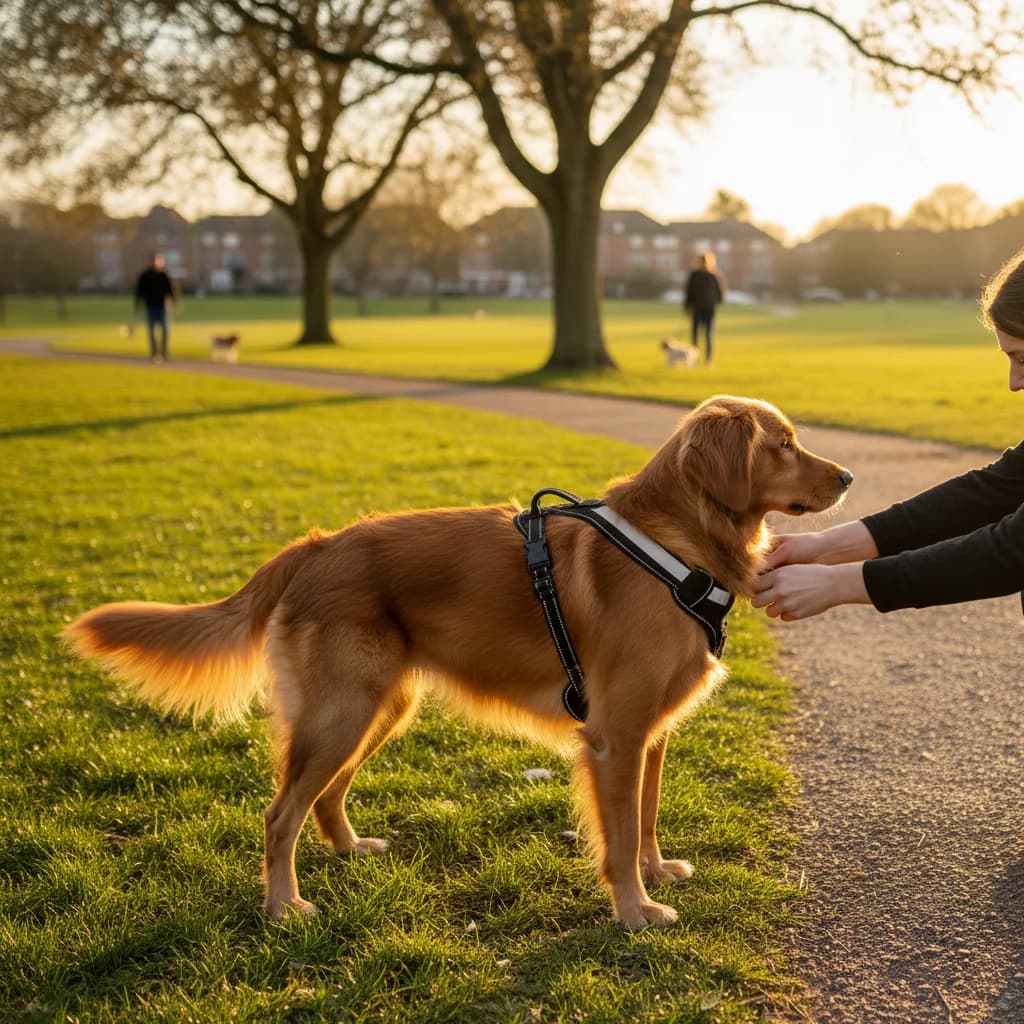
A harness. Collars concentrate force on the neck, which is dangerous during sudden stops on uneven terrain (think: your dog lunging off a ledge). A well-fitted harness distributes force across the chest and shoulders. For hiking specifically, look for harnesses with a back attachment point — front-clip harnesses can impede a dog's natural gait on rough terrain.
Can I let my dog swim while leashed?
Use extreme caution. A standard leash can wrap around submerged rocks or branches, creating a drowning risk. If your dog swims while leashed, use a short length, stay at the water's edge within arm's reach, and avoid areas with submerged obstacles. Better yet, choose swimming spots where off-leash is permitted and safe. Not every dog is a natural swimmer, either: head shape, leg length and build decide it.
How do I dry a wet leash after a hike?
- Tubular webbing: hang to air dry, usually takes 1-2 hours.
- Nylon: hang to air dry, may take 4+ hours, and can develop mildew if stored damp.
- Biothane: wipe with a towel — it's dry immediately.
This is the main argument for waterproof materials on hiking leashes.
The Bottom Line
Your hiking leash needs to handle conditions your everyday leash never encounters.
- Ruffwear Front Range — our recommendation for most hikers; a traffic handle for tight spots and a locking clip, with the Roamer added when you want your hands free.
- Ruffwear Roamer — worth the upgrade for dedicated hands-free hiking.
- Mendota Biothane — unmatched for wet-condition hiking.
Invest in a proper hiking leash. Your sidewalk leash doesn't belong on the trail.
🏆 Bottom Line: For most trail conditions, a 6-foot nylon or biothane leash (Ruffwear Knot-A-Leash or equivalent) is the best combination of control, durability, and safety. Add a hands-free running leash for your dog's most energetic trail companions.
Related Reading
- Leashes & Harnesses — Our complete leash and harness reviews
- Dog Health — Trail safety and first aid
- Dog Toys — Post-hike enrichment for tired dogs
Frequently Asked Questions
- How long should a dog hiking leash be?
- AKC guidelines indicate a 4–6 ft leash offers the best balance of control and freedom on most trails, with longer bungee or convertible leads reserved for open terrain. Many US public lands require leashes six feet or shorter by rule, so longer retractables are rarely appropriate.
- Are bungee leashes safer for hiking?
- Research suggests bungee leashes reduce the peak force of sudden lunges, which lowers the risk of neck and spine strain on the dog and shoulder injury on the handler. They work best on medium-to-large dogs with dependable recall — for reactive dogs a fixed lead still gives more precise control.
- Should I use a harness or collar with a hiking leash?
- Veterinary sources recommend clipping a hiking leash to a Y-front or back-clip harness rather than a flat collar. Harnesses distribute shock across the chest instead of the trachea, which matters more on uneven terrain where sudden jerks are common.
- What leash material handles water and mud best?
- Coated polyester webbing and BioThane-style leashes resist absorbing water, mud, and smell — AKC guides on cold-weather and wet-condition hiking flag these materials for creek crossings and coastal routes. Plain cotton or leather leashes stiffen and mildew after repeated soakings.
- Is hands-free hiking with a waist leash safe?
- Hands-free leashes work well for steady, well-trained dogs on maintained trails and let you use trekking poles or a camera. They are less appropriate for reactive dogs or narrow exposed sections, where AKC safety tips emphasize keeping the dog on a short handheld leash for fast course corrections.
Research Sources
- Hiking With Your Dog: Expert Safety, Training, and Gear Tips — AKC
- How to Train Your Dog to Hike With You — AKC
- Dog Leashes 101: These Leashes Were Made for Walking — AKC
- Dog Walking Safety Tips — VCA Animal Hospitals
- Leash-related injuries associated with dog walking — JAVMA / AVMA, 2024
What changed in this review(1 entry)
- LinksPrices
The Kurgo Quantum 6-in-1 listing B0CG9Z3Z5Z had a suppressed buy box, so the link moved to the live sibling colour of the same listing (B0CG9ZRMWW) and the price was corrected from $10.79 to $15.00 in the comparison row, the body heading and the spec table.

PawBench Editorial
Published by Hilly Shore LabsPawBench’s editorial team researches dog products from primary veterinary sources, manufacturer specifications and aggregated buyer sentiment, alongside the lived ownership of Maggie, an Australian Labradoodle. We do not run hands-on product tests.
331 dog products scored · 1,222,724 buyer review-aspect mentions aggregated · cites AVMA, FDA, AAFCO, Cornell, WSAVA, AKC, ASPCA.
Recommendations are based on published veterinary guidelines, manufacturer specifications, and verified customer feedback. See our editorial standards.