Dachshund Owner Guide: Health, Gear, and Back Problems Explained
Quick Answer
Dachshunds need ramp access to furniture, a harness instead of collar to protect their spine, and weight management as the #1 priority to prevent IVDD (intervertebral disc disease).
On this page9 sections
Our Verdict
Dachshunds need spine-focused care from day one: ramps everywhere, vest harness (never collar), strict weight management, and immediate vet attention for any back pain signs.
How PawBench is paid: we earn an Amazon Associates commission on qualifying purchases. We don’t accept sponsored placements, paid reviews, or free products in exchange for coverage. Picks are ranked on documented owner outcomes and primary-source research, never on commission rate. Read the full methodology.
Dachshunds are among the most beloved breeds in the world — spirited, loyal, and endlessly entertaining. They're also one of the most medically complex small breeds you can own, thanks to a genetic quirk that gives them their distinctive silhouette and a serious spinal vulnerability. Understanding how to live safely with a Dachshund is the difference between a dog that thrives into old age and one that faces a preventable crisis.
This guide covers everything Dachshund owners need to know: spinal health, the right gear, diet, and what to watch for.
The IVDD Problem: What Every Dachshund Owner Must Know
Intervertebral Disc Disease (IVDD) is the Dachshund's defining health risk. The largest owner survey, DachsLife 2015, put the relative risk at 10 to 12 times that of other breeds and found IVDD in 15.7% of the 2,031 Dachshunds surveyed, ranging from 7.1% in Standard Wire-Haired to 24.4% in Standard Smooth-Haired dogs. The root cause is chondrodystrophy: the genetic mutation that causes Dachshunds' legs to be short also causes their intervertebral discs to age differently, calcifying as early as 2 years old instead of the normal 7–10 years.
When a calcified disc ruptures, it compresses the spinal cord. Symptoms range from back pain and reluctance to move to complete rear-leg paralysis. This can happen suddenly — a dog that was fine in the morning is paralyzed by afternoon.
IVDD Risk Factors to Minimize
- Jumping on/off furniture — Landing impact is the most common trigger. Ramps and stairs are non-negotiable.
- Rough play with larger dogs — Physical contact that twists or compresses the spine.
- Obesity — Extra weight dramatically increases spinal load.
- Collar pressure on the neck — Any neck trauma can worsen spinal conditions.
The Non-Negotiable: Ramps Everywhere
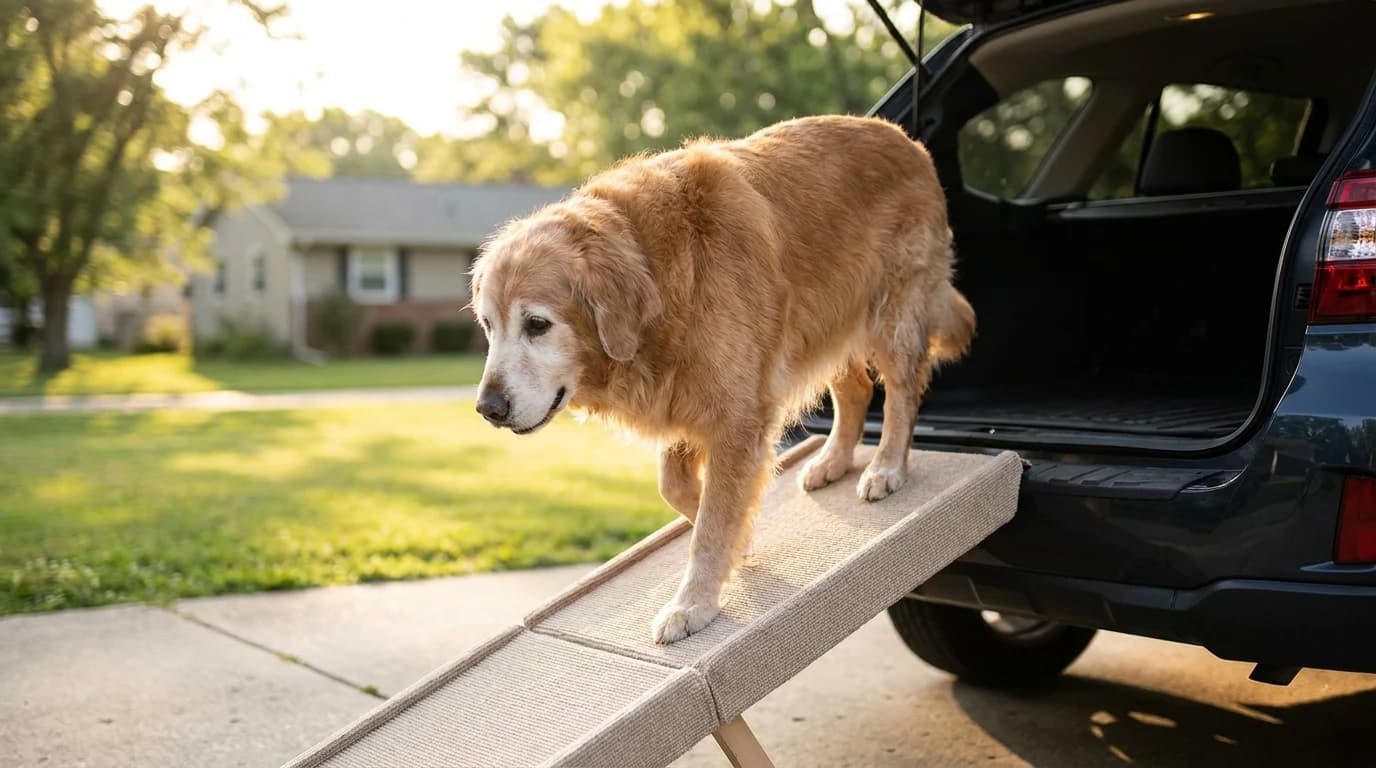
Every piece of furniture your Dachshund uses must be accessible by ramp or low stairs — no jumping. Pet Gear tri-fold ramps are lightweight, fold for storage, and have non-slip surfaces. For couches and beds under 24 inches, a 3-step stair works well. Our ramps and steps guide covers when a ramp beats steps.
The Harness Rule
Never use a collar as your Dachshund's primary leash attachment. Any pulling or jerking on a collar transmits force directly to the cervical spine. A harness with a back clip distributes force across the chest and torso, protecting the neck entirely.
The best harness for Dachshunds is a vest-style harness that doesn't require lifting the front legs over a strap (which can twist the spine in dogs with existing disc issues). The Puppia Soft Harness and the Gooby Escape-Free Easy Fit Harness are both excellent options.
For the best harness options for small breeds, see our harness guide for French Bulldogs and small dogs.
Diet and Weight Management
Obesity is the leading preventable cause of IVDD episodes. A Dachshund's ideal weight depends on variety:
- Miniature Dachshund: 8–11 lbs
- Standard Dachshund: 16–32 lbs
A Dachshund that weighs even 15% over their ideal weight is placing significantly more stress on every intervertebral disc with every step. Measure food precisely — never free-feed. For a small dog eating 1 cup/day, the difference between 1 cup and 1.25 cups is a 25% caloric excess.
For food recommendations, see our best dog food for small breeds guide.
Exercise: Right Amount, Right Type
Dachshunds need moderate daily exercise, but the type matters as much as the amount:
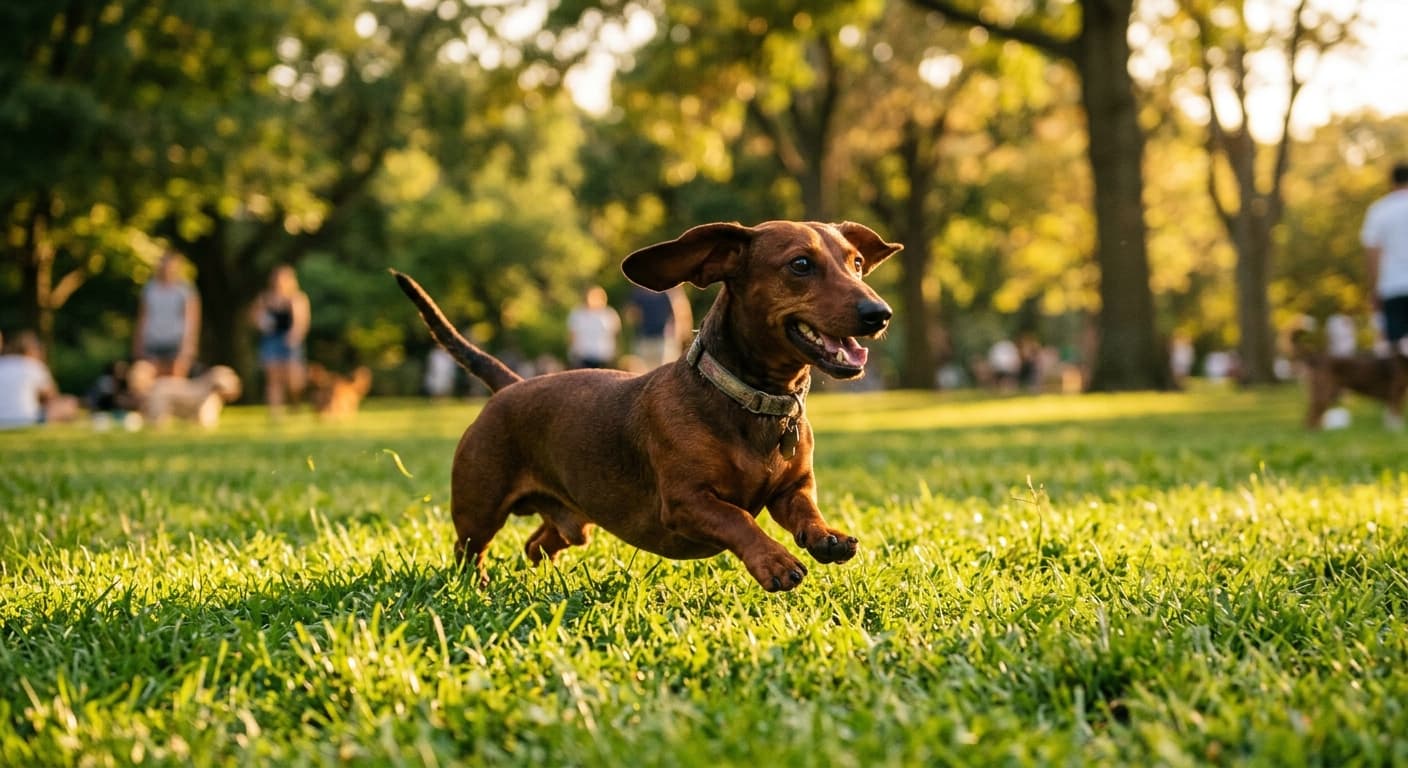
Good: Leash walks on flat or gently rolling terrain, swimming (excellent low-impact exercise), gentle play sessions on flat surfaces.
Avoid: Steep stairs repeatedly, jumping in and out of cars (use a ramp), agility activities with high jumps, rough wrestling with larger dogs.
20–30 minutes of moderate walking twice daily is ideal for most adult Dachshunds. Miniature Dachshunds may need slightly less intensity.
Gear Essentials for Dachshund Owners
| Item | Why It Matters | What to Buy |
|---|---|---|
| Ramp (18–24" height) | Prevent jump-related IVDD | Pet Gear lightweight ramp |
| Vest harness | Protect cervical spine | Puppia Soft or Gooby Easy Fit |
| Orthopedic bed | Support spine during sleep | Memory foam, low entry height |
| Slow feeder bowl | Reduce bloat risk | Standard puzzle bowl |
| Automatic feeder | Prevent overfeeding | See our auto feeder guide |
What the Research Says About Jumping and Exercise
The advice above is the standard veterinary line. The American College of Veterinary Surgeons lists weight loss, a body harness instead of a neck lead, and minimising jumping off furniture, and Cornell's Riney Canine Health Center puts it memorably: walking is safe for any dog; leaping for a thrown toy, not so much.
The DachsLife survey adds two findings owners rarely hear:
- More exercise, not less. Dachshunds exercised for under 30 minutes a day had higher odds of IVDD; those exercised for over an hour, or described as highly or moderately active, had lower odds.
- The furniture result is murkier than the rule. Dogs that were not allowed on furniture had higher odds of IVDD in the survey. The likeliest explanation is reverse cause: owners of dogs with back trouble ban the sofa. The authors call their lifestyle findings hypothesis-generating, not proof.
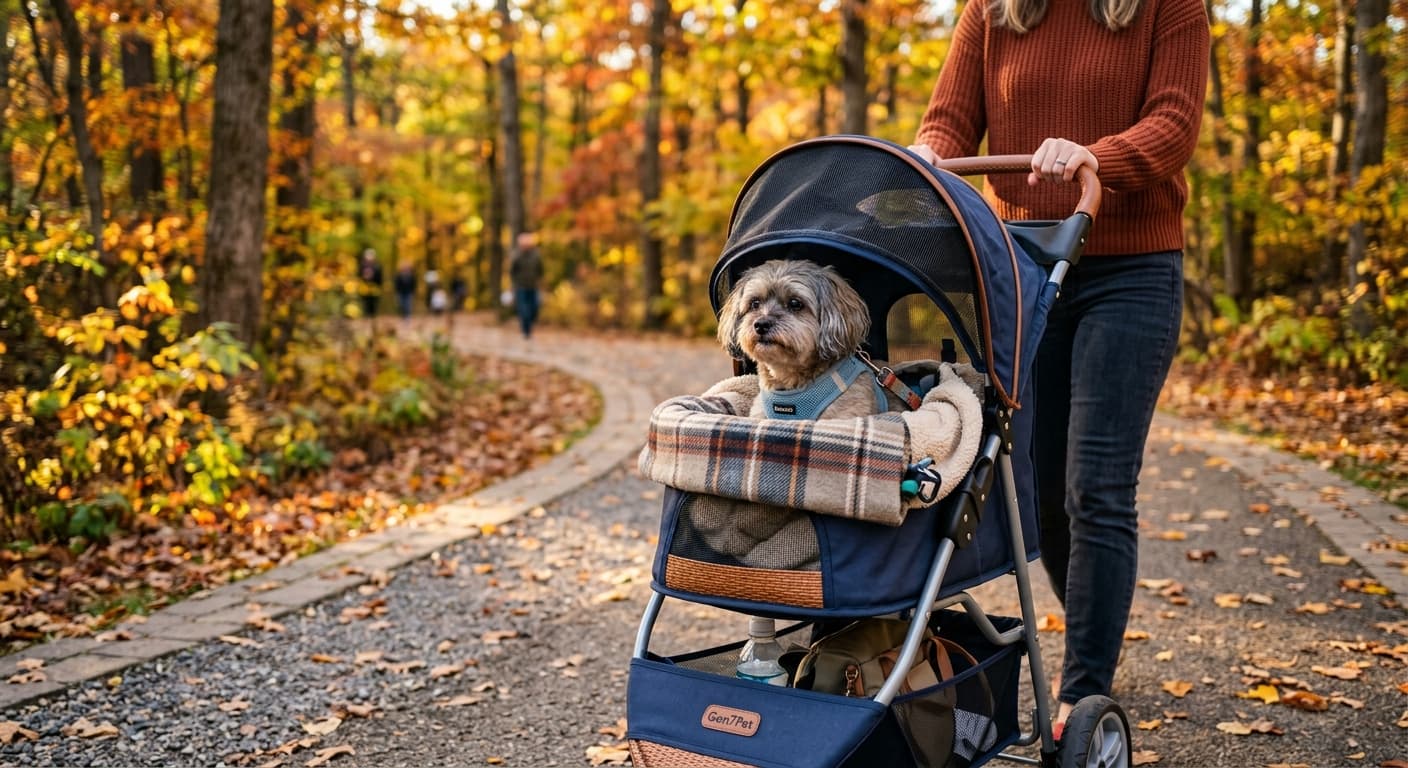
What that means in practice: keep the ramps, because they cost little and every surgical body recommends limiting jumps, but don't mistake a quiet, carried life for a safe one. Daily walking on the flat is part of the prevention. A dog stroller is for the weeks of strict rest after an episode, or the second half of a walk the dog can't finish, not a replacement for walking.
Warning Signs: When to See a Vet Immediately
These symptoms indicate a potential IVDD episode — this is an emergency:
- Sudden crying or yelping without obvious cause
- Reluctance to walk, climb stairs, or jump (even onto things they normally jump onto)
- Stiff or hunched back posture
- Dragging one or both rear legs
- Loss of bladder or bowel control
Time matters enormously with IVDD. Dogs treated within 24 hours of disc rupture have significantly better outcomes than those treated after 48 hours. If you see these signs, go to the emergency vet — don't wait until morning.
Dachshund-Specific Health Screening
Beyond IVDD, Dachshunds are prone to:
- Progressive Retinal Atrophy (PRA) — genetic eye condition leading to blindness. Annual eye exams recommended.
- Lafora Disease (miniature wire-haired Dachshunds) — a form of epilepsy. DNA testing available.
- Cushing's Disease — more common in Dachshunds than most breeds. Watch for increased drinking, pot-bellied appearance, hair loss.
- Dental disease — small mouths with crowded teeth. See our dog dental care guide.
🏆 Bottom Line: Owning a Dachshund means committing to spine protection as a lifestyle — ramps, a back-clip vest harness, weight management, and no jumping. The IVDD risk is real but largely manageable with the right environment. Most Dachshunds who live in ramp-equipped, weight-conscious households never experience a disc event.
Sources
- Bray JP — "Intervertebral disc disease in dogs: Pathophysiology, diagnosis and treatment." New Zealand Veterinary Journal, 2016.
- Dachshund Health UK — IVDD prevalence and prevention guidelines. dachshundhealth.org.uk.
- American Kennel Club (AKC) — Dachshund breed health information. akc.org.
- ACVS (American College of Veterinary Surgeons) — Intervertebral Disc Disease fact sheet. acvs.org.
- Veterinary Partner/VIN — Managing Dachshund weight and IVDD risk. veterinarypartner.vin.com.
Research Sources
- Dachshund Dog Breed Information — American Kennel Club
- Intervertebral disc disease — Cornell University College of Veterinary Medicine
- Intervertebral Disc Disease in Dogs Treatment, Symptoms, Causes — American Kennel Club
- 2021 AAHA Nutrition and Weight Management Guidelines: Age-specific and Breed-specific Diets — American Animal Hospital Association, 2021
- Hip Dysplasia — Orthopedic Foundation for Animals
- DachsLife 2015: an investigation of lifestyle associations with the risk of intervertebral disc disease in Dachshunds (Packer et al., Canine Genetics and Epidemiology 2016) — Canine Genetics and Epidemiology
- Intervertebral Disc Disease — American College of Veterinary Surgeons

PawBench Editorial
Published by Hilly Shore LabsPawBench’s editorial team researches dog products from primary veterinary sources, manufacturer specifications and aggregated buyer sentiment, alongside the lived ownership of Maggie, an Australian Labradoodle. We do not run hands-on product tests.
254 dog products scored · 1,160,091 buyer review-aspect mentions aggregated · cites AVMA, FDA, AAFCO, Cornell, WSAVA, AKC, ASPCA.
Recommendations are based on published veterinary guidelines, manufacturer specifications, and verified customer feedback. See our editorial standards.