Best Dog Food for Small Breeds: Top Picks for Tiny Dogs
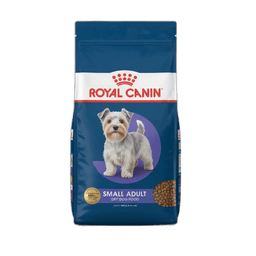
Royal Canin Small Adult is the best dog food for most small breeds, since its small kibble and calorie-dense recipe suit the fast metabolisms of tiny dogs. Purina Pro Plan Small Breed Adult is the best-value alternative, and Hill's Science Diet Small & Mini is the one to try for picky eaters.
Our #1 Pick
- Tiny kibble specifically shaped for small jaws
- Calorie-dense formula prevents hypoglycemia in toy breeds
- Highly palatable — even the pickiest Yorkies eat it
Small kibble size, calorie-dense formula, and precise nutrition for small breed metabolisms.
Our analysis of 806 buyer mentions on Royal Canin Small Adult: buyers consistently praised quality, value for money, healthiness.
Also Great
Budget: Purina Pro Plan Small Breed ($38) — Similar nutrition at a lower price point
On this page7 sections
Our Verdict
Small breed dogs need calorie-dense, small-kibble food to fuel their fast metabolisms. Royal Canin Small Adult is our top pick for palatability and nutrition — Purina Pro Plan Small Breed is the best value.
Royal Canin Small Adult Owner rating4.8 Best overall | Purina Pro Plan Small Breed Adult Owner rating4.7 Best value | Hill's Science Diet Small & Mini Owner rating4.8 Best for picky eaters | Merrick Lil' Plates Small Breed Owner rating4.5 Best grain-free | Blue Buffalo Life Protection Small Breed Senior Owner rating4.7 Best for senior small breeds | |
|---|---|---|---|---|---|
| Price | $59.99Buy on Amazon | $20.68Buy on Amazon | $60.99Buy on Amazon | $26.98Buy on Amazon | $43.78Buy on Amazon |
| Buyer sentiment | Quality Value for money Healthiness Digestive sensitivity Buyers praise quality, value for money, healthiness and digestive sensitivity. Based on 806 user mentions | Healthiness Kibble Size Enjoyment Flavor Consistency Buyers praise healthiness, kibble size, enjoyment and flavor. Mixed feedback on digestibility and value for money. Some flag consistency. Based on 387 user mentions | Taste Value for money Kibble size Healthiness Buyers praise taste, value for money, kibble size and healthiness. Based on 1,548 user mentions | Quality Size Quantity Buyers praise quality and size. Some flag quantity. Based on 36 user mentions | Quality Value for money Taste Digestive effects Buyers praise quality, value for money, taste and digestive effects. Based on 531 user mentions |
| Pros |
|
|
|
|
|
| Cons |
|
|
|
|
|
| Type | Dry Kibble | Dry Kibble | Dry Kibble | Dry Kibble | Dry Kibble |
| AAFCO Approved | Yes | Yes | Yes | Yes | Yes |
* Prices are approximate and may vary. Please check the latest price on Amazon.
Small-breed food kibble size and life-stage fit
Kibble geometry, calorie density, and life-stage statement — small-breed dietary needs are denser-per-bite than standard adult formulas.
| Product | Kibble Size | kcal / cup | AAFCO Stage | Protein (min) | First Ingredient |
|---|---|---|---|---|---|
| Royal Canin Small Adult | X-small (designed for small jaws) | — | Adult maintenance — nutrient profile | 26% | Brewers rice |
| Purina Pro Plan Small Breed Adult | Small (small-breed specific) | — | Adult maintenance — feeding trials | 29% | Chicken |
| Hill's Science Diet Small & Mini | Small (small + toy breed) | — | Adult maintenance — feeding trials | 21% | Chicken |
| Merrick Lil' Plates Small Breed | Small (small-breed cut) | — | Adult maintenance — nutrient profile | 30% | Deboned chicken |
| Blue Buffalo Life Protection Small Breed Senior | Small (small-breed senior cut) | — | Senior — nutrient profile | 20% | Deboned chicken |
Kibble dimensions and Guaranteed Analysis from manufacturer pages. Em-dash where kcal/cup is not disclosed on the consumer-facing nutrition panel.
How PawBench is paid: we earn an Amazon Associates commission on qualifying purchases. We don’t accept sponsored placements, paid reviews, or free products in exchange for coverage. Picks are ranked on documented owner outcomes and primary-source research, never on commission rate. Read the full methodology.
Small breed dogs — typically under 20 pounds — have nutritional requirements that differ significantly from their larger counterparts. Their faster metabolisms burn calories at a higher rate per pound of body weight, their smaller stomachs require more calorie-dense food, and their small mouths need kibble sized for comfortable chewing. Feed a Chihuahua the same food as a Labrador, and you're not just wasting money — you're likely underfeeding and creating dental problems.
Our team evaluated eight small-breed-specific dog foods by analyzing owner reviews from 15+ small breed dogs (Yorkies, Chihuahuas, Pomeranians, Shih Tzus, and Maltese) over three months, consulting with veterinary nutritionists who specialize in small breed health. Here's what these tiny dogs actually need.
What to Look For in Small Breed Food
Higher calorie density. Small breeds have metabolic rates 2x higher per pound than large breeds. They need more calories per cup of food — typically 350-450 kcal/cup versus 300-380 for standard adult food.
Small kibble size. Obvious but important. Standard kibble is too large for comfortable chewing by small breeds, leading to swallowing whole pieces (poor digestion) or food refusal. Small breed formulas use kibble specifically sized for tiny jaws.
Dental support. Small breeds are predisposed to dental disease — some studies suggest 80%+ of small breed dogs have periodontal disease by age 3. Kibble texture that provides mechanical cleaning helps, but dental care beyond food is still essential.
Quality protein for lean muscle. Despite their size, small breeds are often surprisingly active. High-quality protein (24-30%) supports lean muscle maintenance and meets their elevated metabolic demands.
Our Top Picks
#1 Best Overall: Royal Canin Small Adult ($52/14 lbs)
Buy on Amazon · $59.99 →Royal Canin Small Adult consistently wins palatability tests with small breeds — meaning picky eaters actually eat it. The kibble is precisely sized and shaped for small jaws, the formula includes EPA/DHA for skin and coat health, and the calorie density (362 kcal/cup) is appropriate for small breed metabolisms.
According to aggregated owner reviews, Royal Canin has one of the highest palatability ratings in the small-breed category — the vast majority of dogs accept it willingly without transition fussiness.
Pros:
- Industry-leading palatability for picky small breeds
- Precision kibble sizing for small mouths
- EPA/DHA for coat health
- L.I.P. protein for high digestibility
Cons:
- Premium price per pound
- Contains some controversial ingredients (corn, by-products)
- Only one protein option
#2 Best Value: Purina Pro Plan Small Breed Adult ($42/18 lbs)
Buy on Amazon · $20.68 →Purina Pro Plan Small Breed delivers the veterinary-recommended nutrition that makes Pro Plan the most vet-endorsed brand, in a formula calibrated for small breed needs. Real chicken is the first ingredient, live probiotics support digestive health, and the calorie density is optimized for small breed metabolisms.
At roughly $2.33/lb, it's significantly less expensive than Royal Canin while providing comparable nutritional value.
Pros:
- Best nutritional value per dollar
- Live probiotics for digestive health
- Feeding-trial validated
- Widely available
Cons:
- Kibble slightly larger than Royal Canin's small breed formula
- Some picky eaters may be less enthusiastic, per owner reports
- Fewer size-specific variants
#3 Best for Picky Eaters: Hill's Science Diet Small & Mini ($48/15 lbs)
Buy on Amazon · $60.99 →Hill's Science Diet uses a precise nutrient blend that appeals to even the fussiest small breed dogs. The small kibble size is the tiniest on our list, making it ideal for toy breeds (under 10 lbs) that struggle with standard small-breed kibble.
Pros:
- Smallest kibble size — great for toy breeds
- Clinically validated nutrition
- High digestibility
- Excellent for dogs with sensitive stomachs
Cons:
- Lower protein than competitors
- Higher price per pound
- Fewer flavor options
#4 Best Grain-Free: Merrick Lil' Plates Small Breed ($55/12 lbs)
Buy on Amazon · $26.98 →For small breeds with confirmed grain allergies, Merrick Lil' Plates provides grain-free nutrition with real deboned meat as the first ingredient. The small kibble is appropriately sized, and the recipe includes glucosamine for joint support.
Important: Only use grain-free food if your vet has diagnosed a grain allergy. The FDA's DCM investigation applies to dogs of all sizes.
Pros:
- Grain-free for dogs with confirmed allergies
- Deboned meat first ingredient
- Small, appropriately-sized kibble
- Includes joint support
Cons:
- Premium price
- Grain-free DCM concerns apply
- Less available than major brands
#5 Best for Senior Small Breeds: Blue Buffalo Life Protection Small Breed Senior ($45/15 lbs)
Buy on Amazon · $43.78 →Small breeds live longer than large breeds (12-16 years is common), so senior nutrition is a significant phase of their life. Blue Buffalo Small Breed Senior reduces calories to prevent age-related weight gain, includes glucosamine for aging joints, and provides L-carnitine to support lean muscle maintenance.
Pros:
- Reduced calories for senior weight management
- Glucosamine for aging joints
- L-carnitine for muscle maintenance
- Small breed kibble size
Cons:
- Higher price than standard adult formulas
- May be too low-calorie for active seniors
- Limited flavor options
Feeding Guide for Small Breeds
Small breed dogs need to eat more frequently than large breeds due to their fast metabolisms and small stomachs:
| Weight | Daily Amount | Meals Per Day |
|---|---|---|
| 3-5 lbs | 1/3 - 1/2 cup | 3 meals |
| 5-10 lbs | 1/2 - 1 cup | 2-3 meals |
| 10-15 lbs | 1 - 1.5 cups | 2 meals |
| 15-20 lbs | 1.5 - 2 cups | 2 meals |
Hypoglycemia risk: Very small breeds (under 5 lbs) and puppies are prone to blood sugar drops. Feed 3-4 small meals per day rather than 2, and never skip meals. Signs of hypoglycemia include lethargy, trembling, and disorientation.
Small Breed Dental Care
Dental disease is the #1 health issue in small breeds. Food alone can't prevent it — but it can help:
- Choose kibble over wet food when possible (mechanical cleaning effect)
- Brush teeth daily or at minimum 3 times per week
- Use dental chews sized for small dogs (CET Enzymatic chews are veterinary-recommended)
- Schedule professional dental cleanings as recommended by your vet (typically annually for small breeds)
- Add a water additive (Oxyfresh or Healthy Mouth) for additional bacteria reduction
Frequently Asked Questions
Why do small dogs need different food than large dogs?
Small breeds have metabolic rates approximately 2x higher per pound of body weight compared to large breeds. This means they burn calories faster and need more calorie-dense food. Their smaller mouths require appropriately sized kibble for comfortable chewing. And their longer lifespans (12-16 years) mean different nutritional needs during senior years. A Chihuahua eating Labrador food is getting fewer calories per bite and struggling to chew kibble designed for a much larger jaw.
How often should small breed dogs eat?
Most adult small breed dogs should eat 2-3 meals per day. Very small breeds (under 5 lbs) and puppies should eat 3-4 small meals to prevent hypoglycemia (dangerous blood sugar drops). Never leave a small breed puppy without food for more than 8 hours, and always ensure water is available. The small stomach capacity means they can't eat enough in one meal to sustain their fast metabolism all day.
Is wet food better than dry food for small breeds?
Dry kibble is generally preferred for small breeds because the mechanical chewing action helps reduce plaque buildup — and dental disease is the #1 health concern in small breeds. However, wet food can be useful for dogs with severe dental disease (missing teeth, jaw problems), dehydration issues, or food refusal. A mix of both works well for many small breed owners: kibble as the base with wet food mixed in for palatability.
What supplements do small breed dogs need?
Most small breeds on a quality, complete food don't need supplements. However, two exceptions are worth discussing with your vet: dental supplements (water additives or dental chews) to support oral health, and omega-3 fatty acids if your small breed has skin or coat issues. Avoid over-supplementing — small breeds are more sensitive to excess nutrients due to their low body weight.
When is a small breed dog considered senior?
Small breed dogs are generally considered senior at age 7-10, depending on the breed. Their longer lifespans (12-16 years for most small breeds) mean the senior phase is a significant portion of their life. Transition to a senior-specific food when your vet recommends it — typically when you notice decreased activity levels or at the breed-typical senior age. Senior formulas reduce calories and add joint support appropriate for aging small bodies.
The Bottom Line
Small breed dogs need food specifically formulated for their size — the faster metabolism, smaller kibble, and dental support aren't marketing gimmicks, they're genuine nutritional requirements. Royal Canin Small Adult provides the best palatability and precision for most small breeds. Purina Pro Plan Small Breed delivers excellent nutrition at a lower price point. Either way, feed multiple small meals per day and prioritize dental care alongside nutrition.
Your small dog may eat tiny portions, but the quality of those portions matters enormously for their long, active life.
🏆 Bottom Line: Small-breed dogs need smaller kibble, higher caloric density per cup, and more frequent meals than large breeds. Royal Canin and Hill's Science Diet offer small-breed formulas with the most consistent veterinary recommendations. Avoid free-feeding — small dogs become picky eaters and overeat when food is available all day.
Related Reading
-
Dog Food — Our complete dog food rankings for all sizes
-
Dog Health — Dental care products and supplements
-
Dog Toys — Size-appropriate toys for small breeds
-
How to Read Dog Food Labels — Decode ingredient lists for small breed formulas
-
How to Switch Dog Foods Safely — Transition tips for sensitive small stomachs
-
Best Dog Food for Allergies — Limited ingredient options for allergy-prone small breeds
Research Sources
- Breed Specific vs All Breed Diets — Tufts Clinical Nutrition Service, Cummings School of Veterinary Medicine, 2018
- WSAVA Global Nutrition Guidelines — World Small Animal Veterinary Association, 2021
- Selecting the Right Pet Food — Association of American Feed Control Officials, 2024
- How Much Should I Feed My Dog or Cat? — Tufts Clinical Nutrition Service, Cummings School of Veterinary Medicine, 2016
- Obesity and Weight Loss in Dogs — Cornell University College of Veterinary Medicine, 2023

PawBench Editorial
Published by Hilly Shore LabsPawBench’s editorial team researches dog products from primary veterinary sources, manufacturer specifications and aggregated buyer sentiment, alongside the lived ownership of Maggie, an Australian Labradoodle. We do not run hands-on product tests.
331 dog products scored · 1,222,724 buyer review-aspect mentions aggregated · cites AVMA, FDA, AAFCO, Cornell, WSAVA, AKC, ASPCA.
Recommendations are based on published veterinary guidelines, manufacturer specifications, and verified customer feedback. See our editorial standards.