Can Dog Chew Toys Be Too Hard for Teeth?
Quick Answer
Yes. Dog chew toys can be too hard for teeth if they do not dent under a fingernail, develop sharp edges, or invite full back-molar crusher bites. Hard bones, antlers, hooves, and some rigid nylon chews are the danger zone. Flexible rubber, properly sized edible chews, and supervised dental chews are safer defaults for most dogs.
On this page8 sections
Our Verdict
A chew does not need to be indestructible to be safe. If your fingernail cannot dent it, if it develops sharp edges, or if your dog crusher-bites with the back teeth, treat it as a tooth-fracture risk. Safer chews have some give, stay too large to swallow, and get inspected early and often.

How PawBench is paid: we earn an Amazon Associates commission on qualifying purchases. We don’t accept sponsored placements, paid reviews, or free products in exchange for coverage. Picks are ranked on documented owner outcomes and primary-source research, never on commission rate. Read the full methodology.
A chew toy can survive your dog and still be the wrong toy. That is the uncomfortable part of buying for heavy chewers: the more indestructible a chew feels in your hand, the more likely it is to make your dog's tooth take the damage instead.
This is not a ban on chewing. Dogs need legal chewing outlets. The goal is to choose a chew that gives before the tooth does, then retire it before edges, size, or wear turn it into a dental problem.
Quick answer
Yes, dog chew toys can be too hard for teeth. If you cannot dent the chew with a fingernail, or if pressing your nail makes your nail bend instead of the chew, treat it as a tooth-fracture risk. Hard bones, antlers, hooves, and some rigid nylon chews are the usual danger zone. Flexible rubber, appropriately sized edible chews, and supervised dental chews are safer defaults for most dogs.
The 30-second hardness test
| Test | Safe signal | Risk signal |
|---|---|---|
| Fingernail press | Your nail leaves a dent | Your nail bends; chew does not mark |
| Knee tap | Quiet/dull thud | Sharp, rock-like clack |
| Edge check | Smooth, rounded surface | Points, splinters, jagged worn spots |
| Size check | Too large to swallow or lodge | Fits behind back teeth or breaks into chunks |
| Chew style | Gnaws and releases | Crusher-bites with full molar pressure |
The fingernail test is the most useful one because it is simple. A veterinary dentist writing for Veterinary Dentistry of Missouri explains it plainly: if your fingernail makes a dent, the toy has enough give; if it does not, the chew is too hard and likely to lead to a fractured tooth.
Why hard chews break teeth
Dog teeth are strong, but they are not designed to win against rock-hard objects. The big chewing teeth at the back of the mouth create a shearing force. When a dog bites down on a hard object that does not compress, the tooth can fracture before the object does.
The classic injury is a slab fracture of an upper fourth premolar or lower first molar. The problem is not just the chip you can see. A deep fracture can expose the pulp inside the tooth, which means pain, infection risk, and sometimes extraction or root-canal treatment.
That is why "my dog has chewed these for years" is not a safety rule. It only means the fracture has not happened yet.
Which chews are usually too hard?
| Chew type | Risk level | Why |
|---|---|---|
| Cooked bones | High | Hard, splinter-prone, GI risk too |
| Whole antlers | High | Very hard; commonly flagged in fracture warnings |
| Hooves | High | Hard plus sharp worn edges |
| Hard plastic or rigid nylon | Medium to high | Depends on material and dog bite force |
| Flexible rubber | Lower | Gives under pressure if sized correctly |
| VOHC-style dental chews | Lower | Designed to be chewed down, not fought like stone |
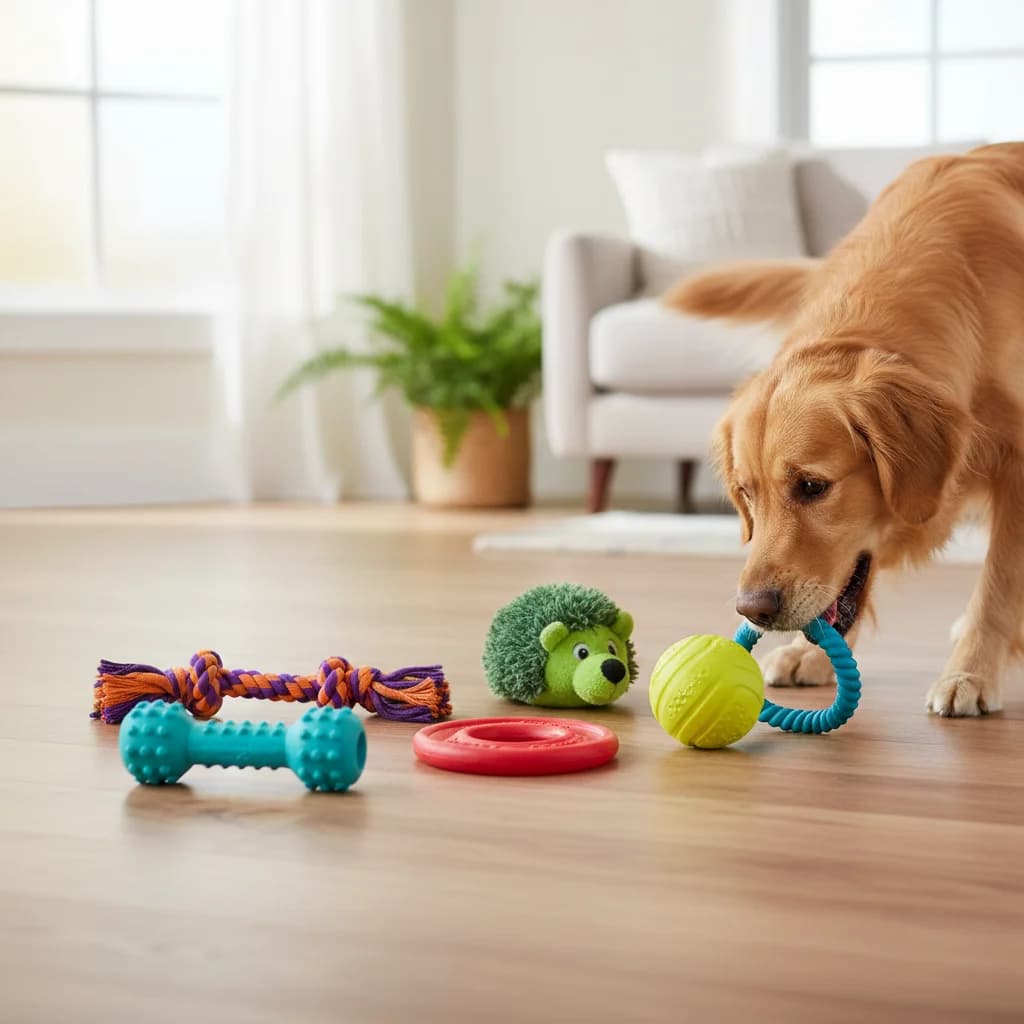
This is why the right answer for a power chewer is not automatically the hardest object in the aisle. For many dogs, a tougher rubber chew toy, a supervised edible chew, or a properly sized dental chew is the safer compromise.
Match the chew to the dog, not the label
The label "for aggressive chewers" only tells you the manufacturer expects strong jaws. It does not tell you whether your dog crusher-bites, gnaws slowly, swallows chunks, or gives up if a toy is not flavored.
Use this decision grid:
| Your dog does this | Safer direction |
|---|---|
| Gnaws steadily and leaves shallow marks | Flexible durable toy, inspected weekly |
| Bites down hard with back teeth | Avoid hard nylon, antlers, hooves, and bones |
| Breaks off chunks | Go larger, softer, or food-stuffed; supervise closely |
| Swallows pieces | No small end pieces; retire early |
| Has worn, cracked, or missing teeth | Ask your vet before giving long-lasting chews |
| Puppy or senior | Softer material; skip adult-strength hard chews |
The first-use supervision rule
Do not hand a new chew to a dog and walk away. Watch the first 10 to 15 minutes and answer four questions:
- Does the dog shave tiny bits or break off chunks?
- Does the chew develop sharp edges?
- Does the dog try to swallow the end whole?
- Is the dog using front-teeth nibbling or full back-molar crushing?
If the chew fails any of those, retire it. Use the same wear signs for knowing when to throw away a dog toy on everything else in the toy basket. The safest chew for one dog can be the wrong chew for another dog in the same house.
Warning signs after a hard-chew session
A fractured tooth is not always dramatic. Dogs often keep eating because they hide oral pain well.
Watch for:
- Dropping food or chewing on one side
- Pawing at the mouth
- Blood on a toy
- Sudden bad breath
- Swelling under the eye or along the jaw
- A visible missing slab, dark spot, or pink/red center on a tooth
If you see any of those, book a veterinary dental exam. A tooth with exposed pulp is painful and can become infected even if the dog acts mostly normal.
What most owners get wrong
The common mistake is treating destruction as the only risk. A toy that gets shredded in five minutes is obviously wrong, but a chew that never changes shape can also be wrong because the force has to go somewhere.
The better standard is: durable enough to occupy the dog, soft enough to dent, large enough not to swallow, and boring enough to inspect regularly.
That is less satisfying than "indestructible," but it is much closer to dental reality.
Research Sources
- The Danger of Hard Chew Toys for Dogs — Veterinary Dentistry of Missouri, 2026
- Can Chew Toys Fracture my Dog's Teeth? — Tribeca Veterinary Wellness
- AVDC Nomenclature — American Veterinary Dental College

PawBench Editorial
Published by Hilly Shore LabsPawBench’s editorial team researches dog products from primary veterinary sources, manufacturer specifications and aggregated buyer sentiment, alongside the lived ownership of Maggie, an Australian Labradoodle. We do not run hands-on product tests.
331 dog products scored · 1,222,724 buyer review-aspect mentions aggregated · cites AVMA, FDA, AAFCO, Cornell, WSAVA, AKC, ASPCA.
Recommendations are based on published veterinary guidelines, manufacturer specifications, and verified customer feedback. See our editorial standards.