Dog Heatstroke: Warning Signs and What to Do Right Now
Quick Answer
A dog's normal temperature is about 101.5°F; above ~106°F is heatstroke, and 107–09°F is where organs fail. Early signs are heavy panting plus drooling, bright red gums, and a dog hot to the touch — act before collapse. Cool with cool (not cold) water over the head, belly, armpits, and feet, add a fan for airflow, and go to the vet even if the dog recovers. Never use ice, wet towels, or rubbing alcohol, and never leave a dog in a parked car.
On this page7 sections
Our Verdict
Heatstroke is a graded emergency, not just a hot dog. Catch it early — heavy panting plus drooling, brick-red gums, and a dog that's hot and won't settle — and you can stop it before collapse. Cool with cool (not cold) water and airflow, never leave a dog in a parked car, walk in the cool hours, and treat every real episode as a vet visit even if the dog perks back up. No cooling mat substitutes for recognizing the signs in time.
Dog Body Temperature: From Normal to Emergency
How a dog's core temperature maps to severity and what each stage means — the scale the cooling-product roundups leave out.
| Product | Core Temp | Stage | What You May See | What to Do |
|---|---|---|---|---|
| ~101.5°F | ~101.5°F | Normal | Light panting after activity, settles quickly | Normal cooling — offer water and shade |
| 103–105°F | 103–105°F | Hyperthermic / heat stress | Heavy panting, excessive drooling, hot to the touch, won't settle | Stop activity, move to shade, begin cooling, monitor closely |
| 106°F+ | 106°F+ | Heatstroke | Bright red gums, disorientation, vomiting, weakness, collapse | Cool with cool (not cold) water + airflow, go to a vet now |
| 107–109°F | 107–109°F | Critical — organ failure | Seizures, bloody diarrhea, unconsciousness, shock | Emergency — cool en route to the nearest open clinic |
Temperature thresholds from VCA Animal Hospitals and the American Kennel Club. This is general education, not a substitute for veterinary care — when in doubt, call a vet.
How PawBench is paid: we earn an Amazon Associates commission on qualifying purchases. We don’t accept sponsored placements, paid reviews, or free products in exchange for coverage. Picks are ranked on documented owner outcomes and primary-source research, never on commission rate. Read the full methodology.
Summer is when dogs die of heat that their owners didn't think was that bad. The dangerous thing about heatstroke is how fast it moves and how easily early signs get waved off as "he's just hot." A dog can go from panting on a walk to a medical emergency in minutes — and the most common cause isn't a heat wave, it's an everyday mistake.
This is the honest, sourced breakdown: what heatstroke actually is, the signs that should stop you cold, and the do-and-don't of cooling a dog down before you reach a vet.
Key Takeaways
- Heatstroke is a body-temperature problem, not just a "hot dog" problem. A dog's normal temperature is about 101.5°F. Above ~105–106°F you're in heatstroke territory, and 107–109°F is where organs fail.
- Early signs are easy to miss. Heavy panting, excessive drooling, bright red gums, and a dog that's hot to the touch come before collapse — recognize them early and you can stop it.
- The most common cause is a dog left in a car. Cars overheat to deadly temperatures within minutes, even in shade with windows cracked.
- Cool water, not ice; a vet, always. Pour cool (not cold) water over the dog, get airflow on them, and head to a clinic — even a dog that "seems fine again" needs to be checked.
What Heatstroke Actually Is
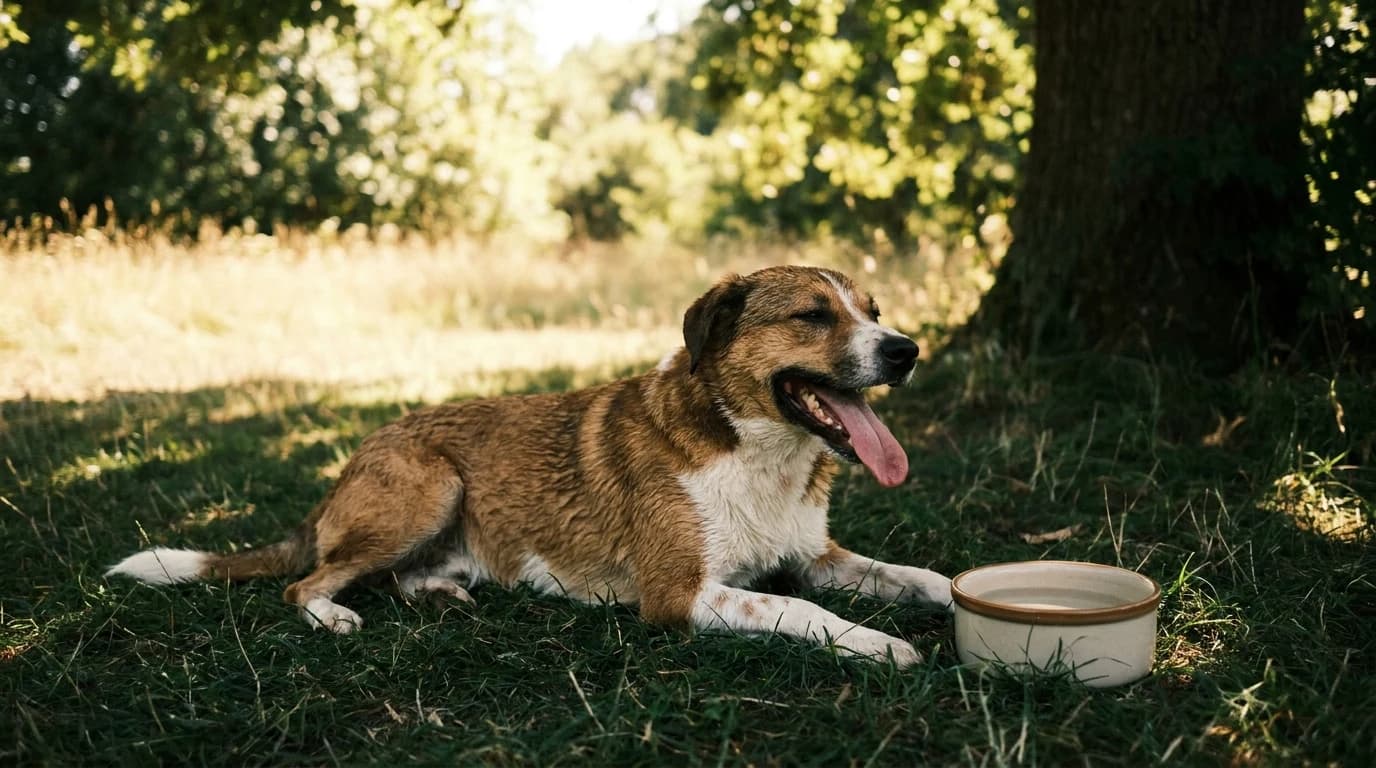
Dogs barely sweat. Unlike humans, they cool themselves almost entirely by panting plus a little blood-vessel dilation in the ears and face. When the air is hot enough — or humid enough — that panting can't keep up, the dog's core temperature climbs. The American Kennel Club explains that the bottom surfaces of a dog's paws can sweat, but "not enough to make a difference."
VCA Animal Hospitals defines the danger zone clearly: a dog is hyperthermic above 103°F, and temperatures above 106°F without prior illness are typically true heat stroke. The point where "multiple organ failure and impending death occurs is around 107°F to 109°F."
The single most important takeaway: heatstroke is a graded emergency. The earlier on this scale you catch it, the better the odds.
The mistake almost everyone makes: treating panting as the whole picture. Panting is normal cooling. The signs that should alarm you are panting plus — drooling, brick-red gums, stumbling, vomiting, or a dog that won't settle. By the time a dog collapses, you've missed the window where this was easy to reverse.
Read the Temperature: A Severity Map
This is the part the gear-and-cooling-mat articles skip. Cooling products help prevent overheating, but they don't tell you when "hot" has become "emergency." Here is the severity gradient, built from veterinary sources:
The Most Common Cause Is Preventable
Per VCA, the most common cause of heatstroke is "leaving a dog in a car with inadequate ventilation," where body temperature "can elevate very rapidly, often within minutes." The AVMA's guidance is blunt: never leave a pet in the car, even in the shade or with the windows cracked — cars overheat to deadly temperatures even when the weather isn't severe.
The other everyday triggers, from the same sources:
- Exercise in heat. Excited or vigorously exercised dogs can overheat even when the temperature and humidity aren't extreme. The AVMA recommends walking, running, or hiking only during the cooler hours of the day and taking frequent breaks.
- No shade or water. A yard with no shade or water on a hot day is a classic setup.
- Flat-faced breeds. Brachycephalic dogs (pugs, bulldogs, boxers) can show heatstroke signs at only moderately elevated temperature and humidity, because their airways restrict panting.
- Hot pavement. The AVMA flags asphalt as a paw-burn hazard — if it's too hot for your hand, it's too hot for their feet.
What to Do — The Right Way to Cool a Dog
If you see the warning signs, act immediately, then get to a vet. VCA's first-aid guidance is specific, and parts of it are counterintuitive:
- Move the dog to shade or air conditioning. Get them out of the heat first.
- Pour cool — not cold — water over the head, stomach, armpits, and feet. Cold water and ice can constrict blood vessels and slow cooling.
- Get airflow on them. Mist cool water over the dog and put them in the path of a fan or AC to drive evaporative cooling.
- Don't drape them in wet towels. VCA notes that covering a dog with wet cloths can actually trap heat by blocking evaporation.
- Skip the ice packs and rubbing alcohol — both are "no longer recommended" methods.
- Go to the vet regardless. Heatstroke can cause delayed organ damage even when the dog perks back up. VCA warns that pets can "die later from complications" hours after the event, and that a dog who has had heatstroke once is at higher risk of it happening again.
What most people get wrong, again: the instinct to dunk an overheating dog in ice water or pack them in ice. It feels decisive, but veterinary sources specifically advise cool, not cold, and warn that over-cooling can swing the dog into dangerously low body temperature. Steady evaporative cooling beats a thermal shock.
The Bottom Line
You can't out-buy heatstroke. A cooling mat or a vest lowers risk on a hot day, but the thing that saves a dog's life is recognizing the early signs — heavy panting plus drooling, red gums, and a dog that's hot and unsettled — and acting before collapse. Cool with cool (not cold) water and airflow, never leave a dog in a parked car, exercise in the cool hours, and treat every real episode as a vet visit even if the dog seems to recover. The temperature scale is unforgiving once you pass 106°F; the goal is to never get there.
Sources
This post draws on veterinary and animal-health authorities for all temperature thresholds, signs, and first-aid guidance.
Research Sources
- Heat Stroke in Dogs — VCA Animal Hospitals
- Heatstroke in Dogs: Signs, Symptoms, Treatments — American Kennel Club
- Warm Weather Pet Safety — American Veterinary Medical Association
- Pets in Vehicles — American Veterinary Medical Association

PawBench Editorial
Published by Hilly Shore LabsPawBench’s editorial team researches dog products from primary veterinary sources, manufacturer specifications and aggregated buyer sentiment, alongside the lived ownership of Maggie, an Australian Labradoodle. We do not run hands-on product tests.
254 dog products scored · 1,160,091 buyer review-aspect mentions aggregated · cites AVMA, FDA, AAFCO, Cornell, WSAVA, AKC, ASPCA.
Recommendations are based on published veterinary guidelines, manufacturer specifications, and verified customer feedback. See our editorial standards.