How Much Should a Dog Sleep a Day? By Age + Red Flags
Quick Answer
Adult dogs sleep about 12 to 14 hours a day, or roughly half of every 24 hours, and that is normal (AKC). Puppies sleep 18 to 20 hours because growth hormones release during rest, and senior dogs sleep about 12 to 15 hours because they tire more easily. Dogs need more total sleep than people because only about 10% of their sleep is restorative REM, versus roughly 25% for humans, so they make up the deficit in volume across many short naps. The number to watch is not the raw hours but the change from your dog's own baseline: AKC chief veterinarian Dr. Jerry Klein notes that sleeping over 20 hours a day, or a notable shift in sleeping pattern, can signal an underlying condition such as hypothyroidism, diabetes, kidney or heart disease, arthritis pain, or canine cognitive dysfunction. Oversleeping that arrives with lost appetite, stiffness, restlessness, or a flat mood warrants a vet visit; a stable lifelong nap habit on its own does not.
On this page6 sections
Our Verdict
How many hours a dog sleeps barely matters on its own. A healthy adult resting half the day, and a puppy or senior resting more, is normal. The diagnostic signal is a sudden change from that dog's own baseline, especially paired with lost appetite, stiffness, restlessness, or a flat mood. That shift, or sleeping past about 20 hours a day, is the cue to call a vet.
Normal Dog Sleep by Life Stage, and When It Becomes a Red Flag
Typical daily sleep ranges by age, what drives the rest, and the warning sign at each stage. The diagnostic signal is a sudden shift from a dog's own baseline, not the raw hour count. Hour ranges from the AKC and PetMD; the over-20-hour threshold and red-flag guidance from AKC chief veterinarian Dr. Jerry Klein.
| Product | Typical daily sleep | What's driving the rest | When to be concerned |
|---|---|---|---|
| Puppy (under ~1 year) | 18 to 20 hours | Growth hormones release during sleep; brain, bones, muscles, and immune system are still developing | Won't wake to eat or play; lethargy with no normal alert bursts |
| Adult (~1 to 7 years) | 12 to 14 hours (about half the day) | Only ~10% REM vs ~25% in humans, so more total sleep is needed to feel rested | A sudden jump (e.g. 13 to 18 hours over a week) or sleeping through meals once eaten eagerly |
| Senior (~7+ years) | 12 to 15 hours | Lower energy and tires more easily with age; some pain-related rest | Over ~20 hours, plus stiffness, disorientation, lost appetite, or trouble getting comfortable |
| Any age, what it can signal | Persistent change from baseline | New oversleeping or a notable pattern shift, not the raw hours | Vets check for hypothyroidism, diabetes, kidney or heart disease, arthritis pain, parasites, or (seniors) canine cognitive dysfunction |
How PawBench is paid: we earn an Amazon Associates commission on qualifying purchases. We don’t accept sponsored placements, paid reviews, or free products in exchange for coverage. Picks are ranked on documented owner outcomes and primary-source research, never on commission rate. Read the full methodology.
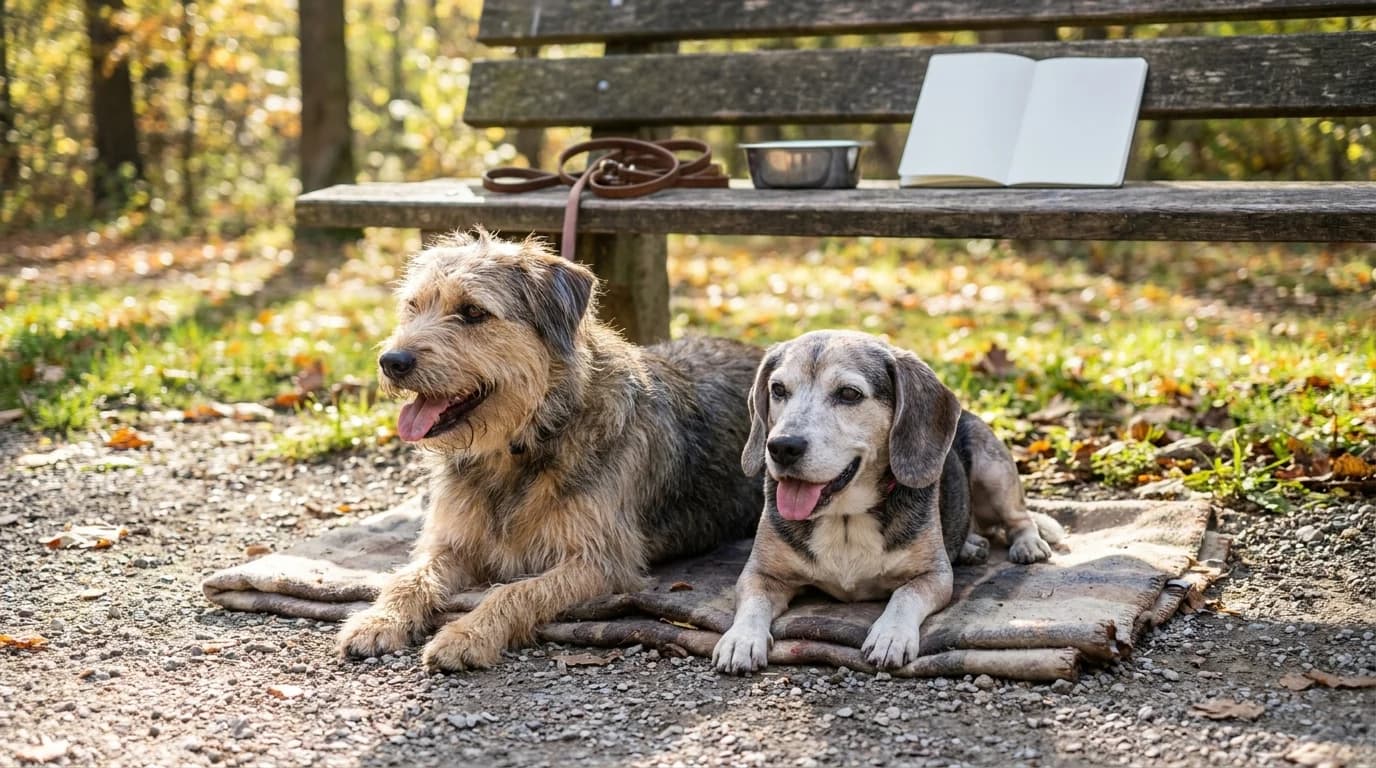
Dogs sleep a lot more than people expect. An adult dog spends roughly half of every 24 hours asleep, and that is completely normal, not a sign that anything is wrong. According to the American Kennel Club, dogs "spend as much as half of their days asleep, 30% awake but relaxing, and just 20% being active."
So a dog napping through your whole afternoon is usually a healthy dog, not a bored or sick one. The number that actually matters for spotting a problem is not the raw hour count. It is how far your dog has drifted from its own normal.
Key Takeaways
- Adult dogs sleep about 12 to 14 hours a day; puppies and seniors more. Half the day asleep is normal, per the AKC.
- The red flag is a sudden change from your dog's baseline, not the total hours. A dog that has always slept 14 hours is fine; a dog that jumps to 18 over a week is worth a vet call.
- Dogs need more total sleep than people because they get less deep REM sleep. Only about 10% of their sleep is REM, versus roughly 25% for humans.
- Over ~20 hours a day, or oversleeping plus other off symptoms, warrants a vet visit. The AKC's chief veterinarian calls a "notable shift in sleeping patterns" a sign of a possible medical issue.
How Much Sleep Is Normal, By Life Stage
How much a dog should sleep changes a lot with age. Puppies and seniors both rest far more than dogs in their prime, and for different reasons: puppies are building a body and brain, while older dogs simply tire faster. The table above lays out the typical ranges and what is actually driving the rest at each stage.
These ranges are a baseline, not a hard rule. Breed, size and activity level all shift the number.
Large breeds and laid-back companion breeds tend to sleep more; high-drive working dogs that get a real job to do sleep less. A working Border Collie at 11 hours and a Saint Bernard at 16 can both be perfectly healthy.
Why Dogs Sleep So Much
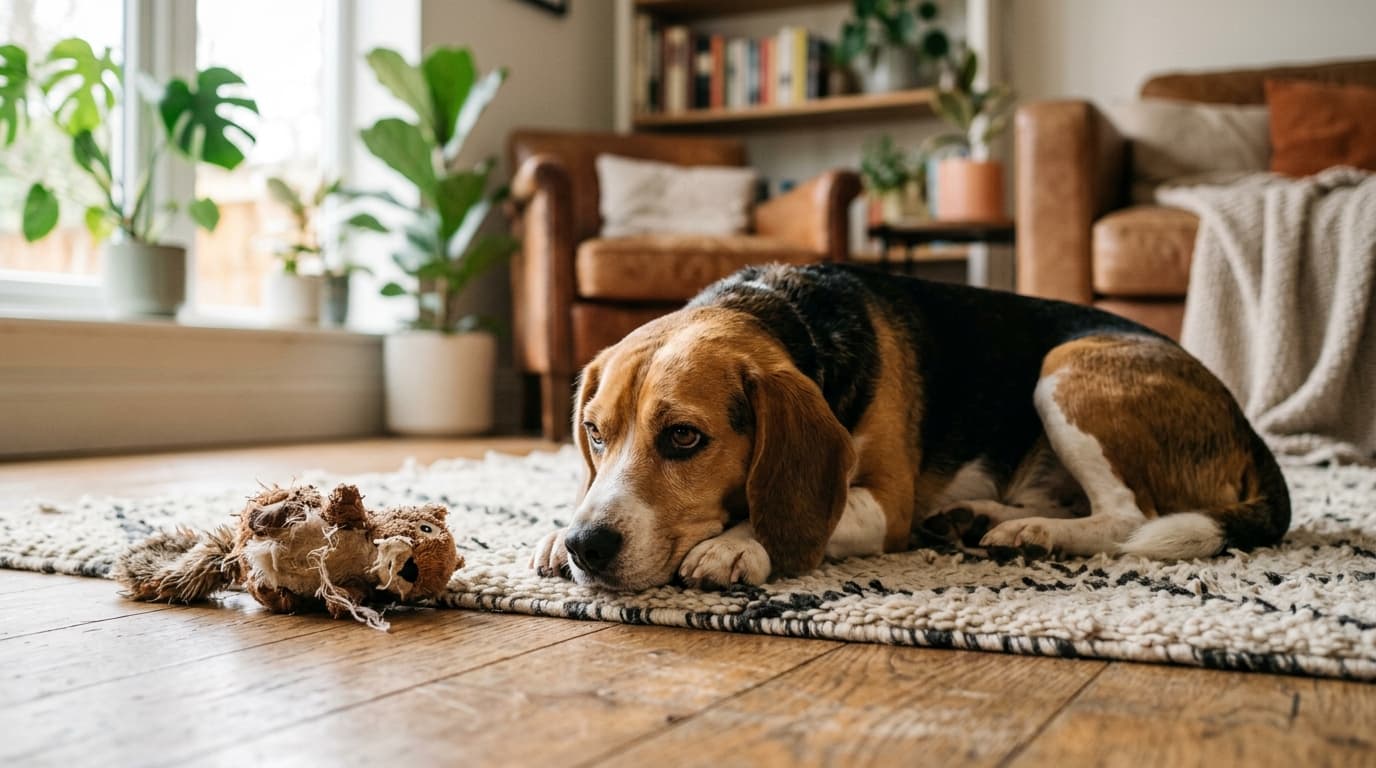
It is easy to assume a dog sleeping all day must be under-stimulated. The biology says otherwise. Dogs are polyphasic sleepers that doze whenever the moment allows and snap awake fast, so their total hours stack up across many short naps rather than one long night.
The deeper reason is sleep quality. The AKC notes dogs "only spend about 10% of their snoozing time in REM," while "humans spend up to 25% of sleep in REM." REM is the restorative, memory-consolidating stage. Because dogs get proportionally less of it per nap, they need more total sleep to feel as rested as a person does on far fewer hours. A dog that naps constantly is not lazy; it is making up the deficit in volume.
For puppies, sleep is literally construction time. The AKC puts puppy sleep at 18 to 20 hours a day, because growth hormones that drive bone and muscle development are released during rest, and the immune system and brain are still maturing. Interrupting a sleeping puppy to play is working against its development, not for it.
When Oversleeping Is a Red Flag
The signal is the change, not the count. This is where most owner worry is misplaced. PetMD and the AKC both make the same point: a stable, lifelong nap habit is fine, but a sudden shift in sleeping pattern is the thing to watch.
Dr. Jerry Klein, the AKC's chief veterinarian, cautions that "dogs sleeping for over 20 hours of the day, or more importantly, having a notable shift in their sleeping patterns, could be a sign of an underlying medical condition." The matrix above flags the conditions excess sleep most often points to.
Watch for oversleeping that arrives with company:
-
Loss of appetite
-
Decreased mobility, or stiffness getting up
-
Unresponsiveness
-
Restlessness
-
Depression
-
Trouble getting comfortable Sleep changes paired with any of those move from "normal aging" to "book the appointment." Underlying causes vets check for:
-
Hypothyroidism
-
Diabetes
-
Kidney or heart disease
-
Arthritis pain
-
Parasites
-
In seniors, canine cognitive dysfunction (dementia)
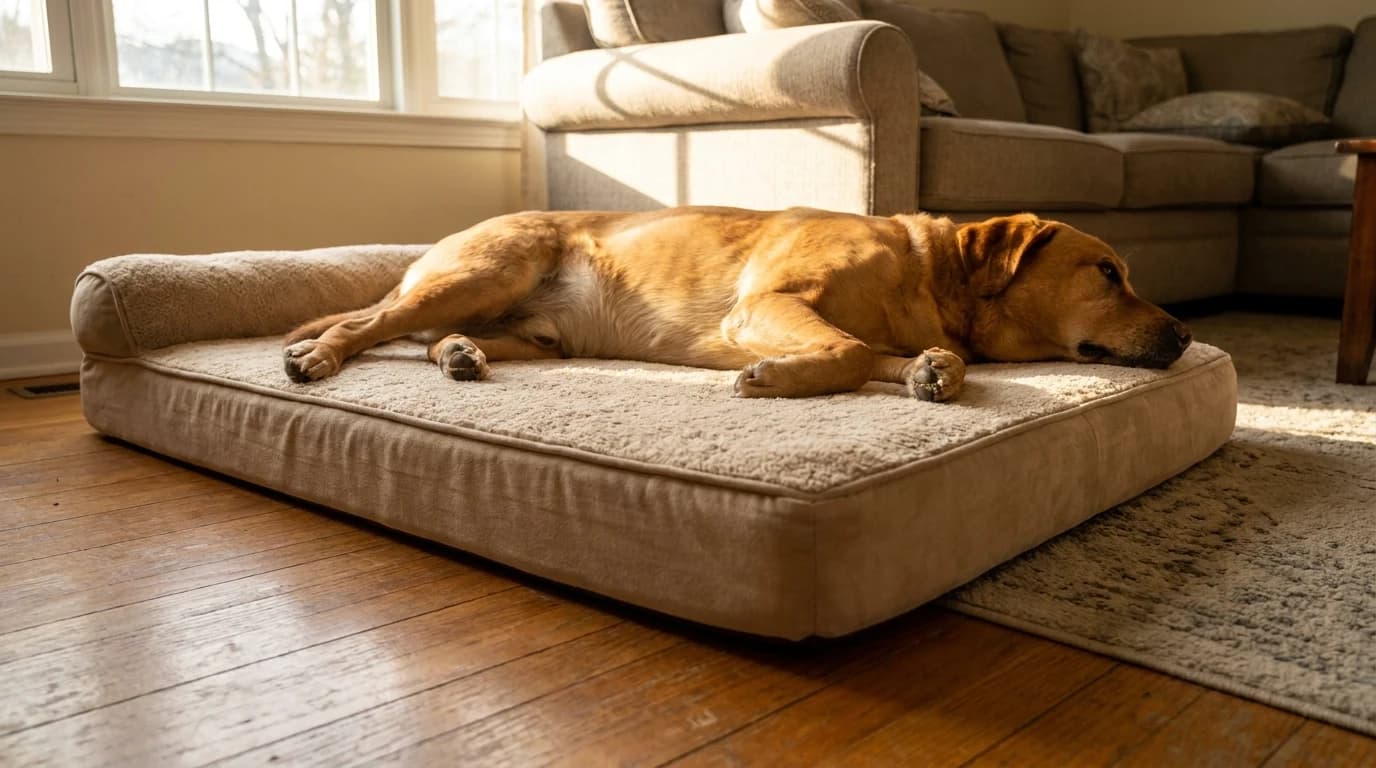
If your dog seems newly restless or reluctant to settle, the cause is sometimes physical comfort rather than illness. A worn-out or too-thin bed can keep an older or large-breed dog from settling into deep rest; a supportive orthopedic dog bed is a cheap thing to rule out before assuming the worst.
What Most People Get Wrong
"My dog sleeps too much, so something is wrong." Usually false. Half the day asleep is the textbook normal for an adult dog, and puppies and seniors sleeping 16 to 20 hours is expected, not alarming. The raw number is a weak signal on its own. Owners burn a lot of worry on a dog hitting 14 hours when 14 hours is the baseline.
What is actually diagnostic is deviation from that dog's personal normal plus accompanying symptoms. A dog that has always slept 13 hours and abruptly climbs to 18 over a few days, or starts sleeping through meals it used to be eager for, has changed, and change is the signal. The hours alone rarely are.
The Bottom Line
A healthy adult dog sleeping roughly half the day is doing exactly what it should, and a puppy or senior resting even more is normal too.
Learn your dog's own baseline. The warning sign is the shift away from it, not a number on a chart. When more sleep shows up alongside lost appetite, stiffness, restlessness, or a flat mood, or when a dog tips past about 20 hours a day, that is the point to call your veterinarian, not the point to count naps.
Research Sources
- Why Do Dogs Sleep So Much? — American Kennel Club
- Can Senior Dogs Sleep Too Much? How Much Should Older Dogs Sleep? — American Kennel Club
- Why Do Dogs Sleep So Much? — PetMD

PawBench Editorial
Published by Hilly Shore LabsPawBench’s editorial team researches dog products from primary veterinary sources, manufacturer specifications and aggregated buyer sentiment, alongside the lived ownership of Maggie, an Australian Labradoodle. We do not run hands-on product tests.
254 dog products scored · 1,160,974 buyer review-aspect mentions aggregated · cites AVMA, FDA, AAFCO, Cornell, WSAVA, AKC, ASPCA.
Recommendations are based on published veterinary guidelines, manufacturer specifications, and verified customer feedback. See our editorial standards.