How Much Water Should a Dog Drink a Day? Vet Guide
Quick Answer
A useful baseline is about 50 mL of fluid per kg of body weight per day (vets estimate it as 30 x weight in kg + 70), and wet or fresh food supplies a chunk of that, so a moist-fed dog may drink less from the bowl and still be fine. Check hydration with the gums (they should be slick, not tacky, and re-pink in under 2 seconds) more than the skin-tent test, which misleads in puppies and senior dogs. Most important: learn your dog's normal intake, because a sudden jump in thirst is an early sign of kidney disease, diabetes, or Cushing's, and warrants a vet visit.
On this page7 sections
Our Verdict
Give your dog free access to clean water and expect roughly 50 mL per kg a day as a fluid baseline, knowing wet food covers part of it. Judge hydration by the gums and capillary refill, not the skin-tent test alone, which misleads in puppies and old dogs. The single most useful habit is knowing your dog's normal intake, so a sudden surge in drinking gets read as the early sign of kidney, diabetes, or Cushing's disease it usually is, and earns a vet visit rather than a bigger fountain. No gadget replaces watching the trend.
Dog Dehydration: What Each Stage Looks Like
How a dog's fluid loss maps to the physical signs a vet checks for in the exam room - the scale the water-bowl and fountain roundups leave out.
| Product | Fluid Loss | Skin Tent (Turgor) | Gums | What It Means |
|---|---|---|---|---|
| Under ~5% | Under ~5% | Normal snap-back | Moist | Hard to detect by exam alone |
| 4-5% | 4-5% | Normal | Semi-dry | Mild - monitor, offer water |
| 6-7% | 6-7% | Mild loss, slow return | Dry | Notable - call your vet |
| 8-10% | 8-10% | Considerable loss | Dry, eyes retracting | Serious - vet now |
| 12%+ | 12% or more | Skin stays tented | Very dry, eyes sunken | Emergency - go immediately |
Percent-dehydration physical findings from the Merck Veterinary Manual. The skin-tent test misleads in puppies (extra-elastic skin) and senior or thin dogs (lost fat and collagen) - read the gums and capillary refill too. General education, not a substitute for veterinary care.
How PawBench is paid: we earn an Amazon Associates commission on qualifying purchases. We don’t accept sponsored placements, paid reviews, or free products in exchange for coverage. Picks are ranked on documented owner outcomes and primary-source research, never on commission rate. Read the full methodology.
Your dog's water bowl is the cheapest piece of "health equipment" you own, and the easiest to read wrong. Owners obsess over upgrading to a fountain, then never actually check whether the dog is drinking a normal amount — or notice the day it suddenly drinks twice as much. The volume in the bowl is real data. Here is what the veterinary fluid-therapy literature actually says a dog needs, the at-home dehydration checks vets use, and the one reading that should send you to the clinic.
Key Takeaways
- The clinical maintenance rule is about 50 mL of water per kg of body weight per day — vets use the formula 30 × weight (kg) + 70 to estimate a dog's daily fluid need, and most of that can come from food plus the bowl.
- A skin-tent test is useful but easy to misread. It is unreliable in puppies (extra-stretchy skin) and senior or thin dogs (lost fat and collagen), so never rely on it alone.
- Dry, tacky gums plus a slow capillary refill are more telling signs of real dehydration than the bowl level.
- Drinking far more than usual is a red flag, not a good thing. A sudden, sustained jump in thirst is one of the most common early signs of kidney disease, diabetes, or Cushing's — worth a vet visit, not a bigger bowl.
How Much Is "Normal"?
There is no single magic number, because a dog's need scales with body weight, diet, activity, and the weather. But veterinary fluid-therapy guidelines give a working baseline. The Merck Veterinary Manual's maintenance formula for dogs is 30 × body weight (kg) + 70 = mL of fluid per 24 hours, which lands at roughly 50 mL per kg per day for an average adult dog.
| Dog weight | ~Daily fluid need | Rough cups |
|---|---|---|
| 5 kg (11 lb) | ~220 mL | ~1 cup |
| 10 kg (22 lb) | ~370 mL | ~1.5 cups |
| 20 kg (44 lb) | ~670 mL | ~2.8 cups |
| 30 kg (66 lb) | ~970 mL | ~4 cups |
The part the bowl hides. That total is fluid intake, not bowl intake. A dog eating wet or fresh food gets a big share of its water from the food, so it may drink far less from the bowl than a kibble-only dog and still be perfectly hydrated. Don't panic over a low bowl if the diet is moist — track the change from your dog's normal, not someone else's number.
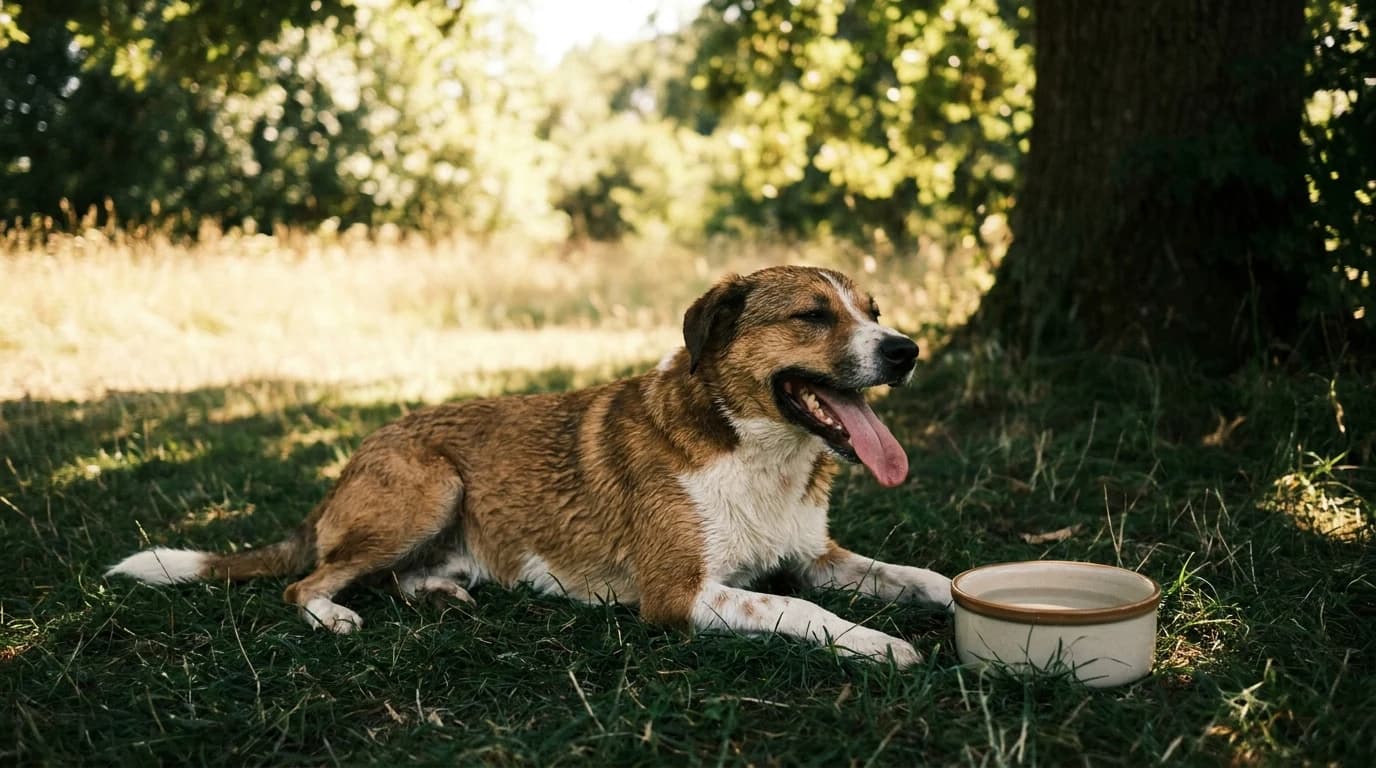
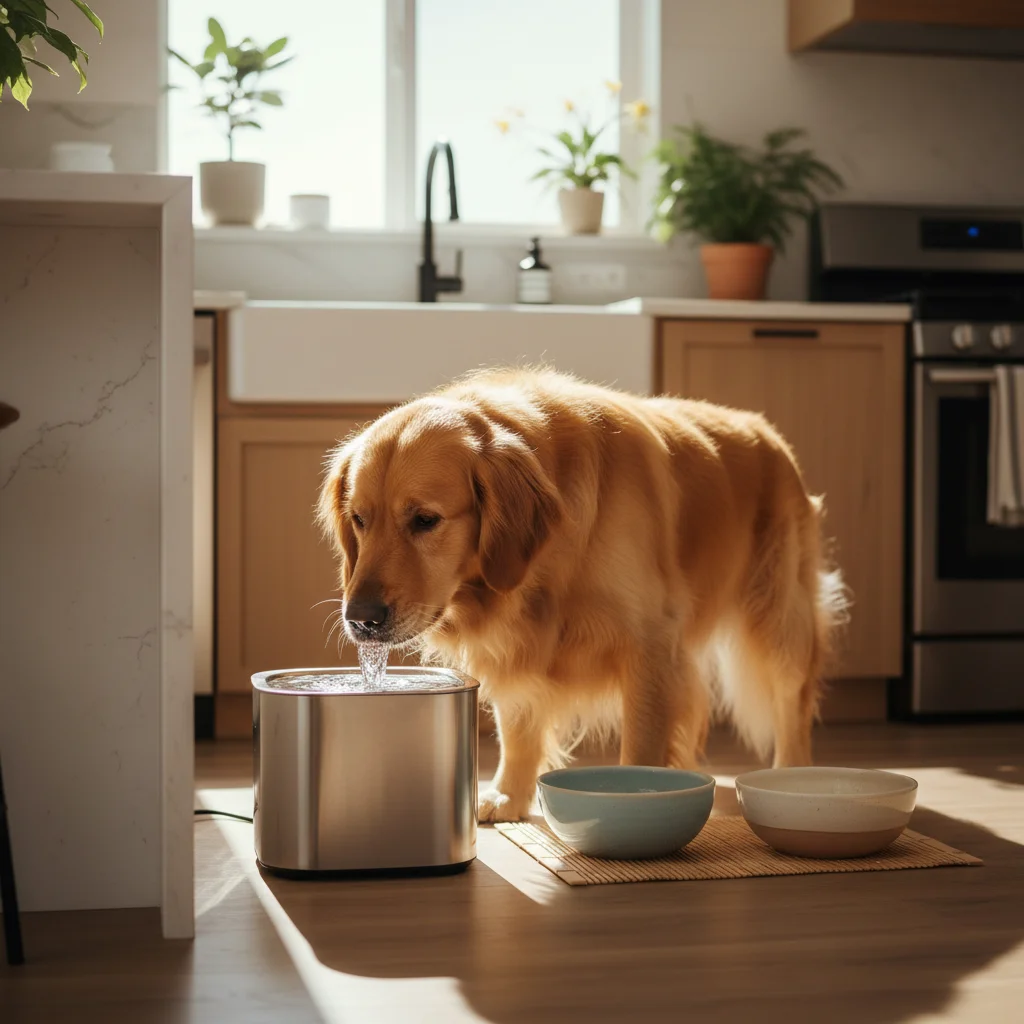
Insensible losses go up with heat, fever, and hard exercise, so a panting dog on a hot day genuinely needs more — the same conditions that drive heatstroke. Free access to clean water matters more than any specific device; if a fountain gets a fussy dog to drink, great, but it is a nudge, not a cure for an underlying problem.
The At-Home Dehydration Checks Vets Actually Use
Dehydration is graded by how much of the body's fluid is gone, and clinicians read it from a few physical signs — not from the water bowl. This is the scale the product reviews never show you.
Dehydration: What Each Stage Looks Like
The mapping below is drawn straight from the Merck Veterinary Manual's clinical assessment of fluid loss. It is what a vet feels for in the exam room, and you can do a rough version at home.
| % fluid loss | Skin tent (turgor) | Gums (mucous membranes) | Eyes | What it means |
|---|---|---|---|---|
| Under ~5% | Normal snap-back | Moist | Normal | Hard to detect by exam alone |
| 4–5% | Normal | Semi-dry | Moist | Mild — monitor, offer water |
| 6–7% | Mild loss, slow return | Dry | Still moist | Notable — call your vet |
| 8–10% | Considerable loss | Dry | Retracting | Serious — vet now |
| 12% or more | Skin stays tented | Very dry | Sunken, dull | Emergency — go immediately |
To run the skin-tent test: gently lift the loose skin over the shoulders and let go. Well-hydrated skin snaps back instantly; dehydrated skin returns slowly or stays peaked. For gums, press a fingertip against the gum above a canine tooth — it should blanch white and re-pink in under two seconds (that's capillary refill), and the gum should feel slick, not tacky.
Why most people get the skin-tent test wrong. Merck is explicit that it misleads in two common groups: puppies and very young dogs have extra-elastic skin, so the tent looks fine even when they are dehydrated, while senior, emaciated, or geriatric dogs have lost the fat and collagen that give skin its bounce, so the tent looks bad even at normal hydration. Nauseated dogs may also drool, hiding dry gums. Read the whole dog, not one test — and when signs disagree, trust the gums and the vet.
When More Water Is the Warning Sign
Here is the counterintuitive part. A dog that is suddenly drinking a lot more — emptying the bowl, asking to go out constantly, having accidents — is usually not "extra healthy." Excessive thirst and urination (polydipsia) is one of the most common early flags of internal disease.
The differential, per VCA. VCA Animal Hospitals lists the usual causes of a sustained spike in thirst and urination: kidney disorders, diabetes mellitus, Cushing's disease (overactive adrenal glands), and other hormone problems — with true behavioral over-drinking being rare. Their practical tip: measure your dog's intake over a full 24 hours and bring that number to the vet, because it helps gauge how serious the change is.
So the highest-value thing you can do is not buy a smarter bowl — it's know your dog's normal. Measure what goes in the bowl on a typical day a couple of times a year. Then a real change, up or down, is obvious instead of invisible. That single habit catches kidney and endocrine disease earlier than any gadget, especially in senior dogs where these conditions are most common.
The Bottom Line
Aim for free access to clean water, expect roughly 50 mL per kg per day as a fluid baseline, and remember that wet diets cover a chunk of it. Check hydration with gums and capillary refill, not just the skin-tent test — and never trust the tent alone in a puppy or an old dog. Most importantly, learn your dog's normal intake so that a sudden surge in drinking gets treated as the early-warning sign it usually is, and gets a vet visit rather than a bigger fountain.
Sources & Research
- Merck Veterinary Manual — Maintenance Fluid Plan in Animals (daily maintenance fluid formula for dogs)
- Merck Veterinary Manual — The Fluid Resuscitation Plan in Animals (percent-dehydration physical findings; skin turgor caveats in young and geriatric dogs)
- AAHA — 2024 AAHA Fluid Therapy Guidelines for Dogs and Cats (hydration end points: skin turgor, mucous membranes, capillary refill)
- VCA Animal Hospitals — Testing for Increased Thirst and Urination (differential for excessive drinking: kidney disease, diabetes, Cushing's)
This article is general education, not veterinary advice. If you are worried your dog is dehydrated or drinking abnormally, contact your veterinarian.
Research Sources
- Maintenance Fluid Plan in Animals — Merck Veterinary Manual
- The Fluid Resuscitation Plan in Animals — Merck Veterinary Manual
- 2024 AAHA Fluid Therapy Guidelines for Dogs and Cats — American Animal Hospital Association
- Testing for Increased Thirst and Urination — VCA Animal Hospitals

PawBench Editorial
Published by Hilly Shore LabsPawBench’s editorial team researches dog products from primary veterinary sources, manufacturer specifications and aggregated buyer sentiment, alongside the lived ownership of Maggie, an Australian Labradoodle. We do not run hands-on product tests.
264 dog products scored · 1,209,046 buyer review-aspect mentions aggregated · cites AVMA, FDA, AAFCO, Cornell, WSAVA, AKC, ASPCA.
Recommendations are based on published veterinary guidelines, manufacturer specifications, and verified customer feedback. See our editorial standards.