How to Choose the Right Dog Bed Size: A Simple Guide
Quick Answer
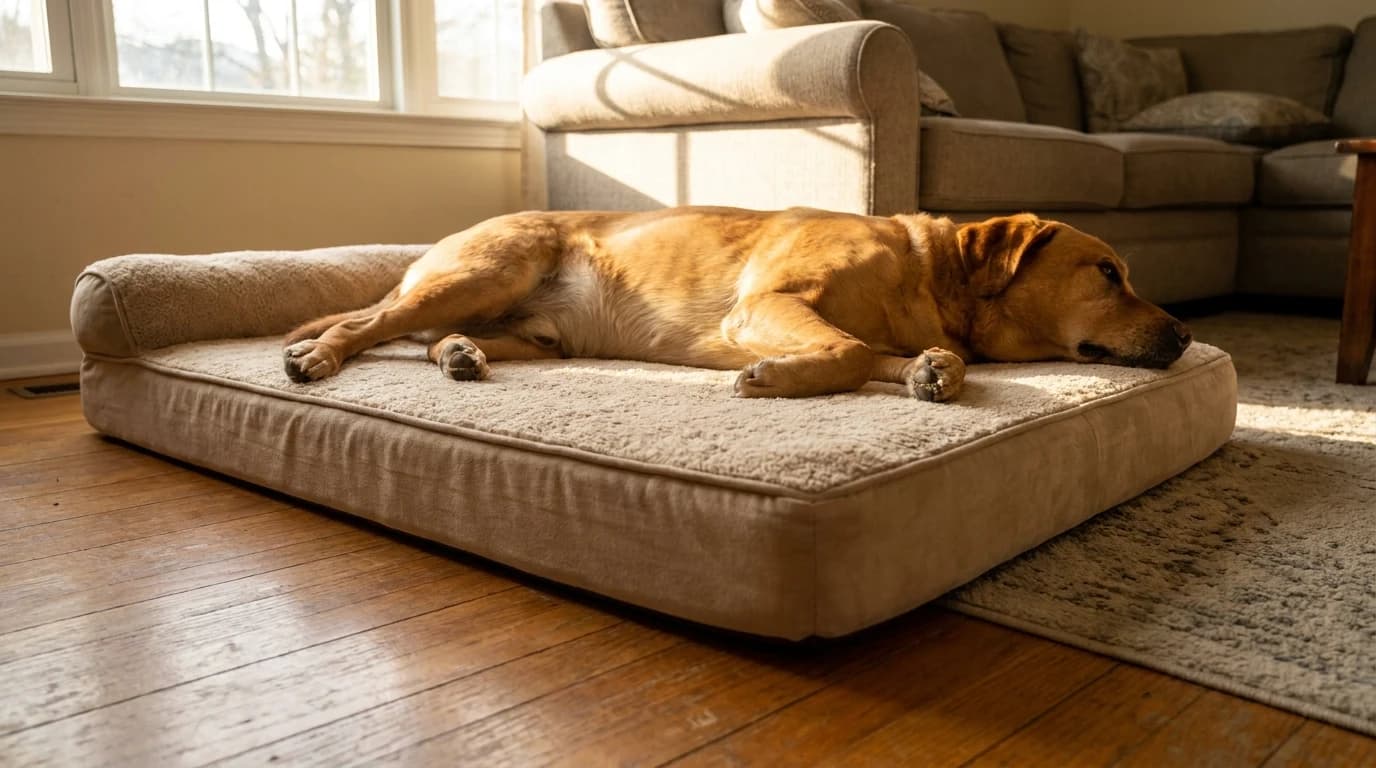
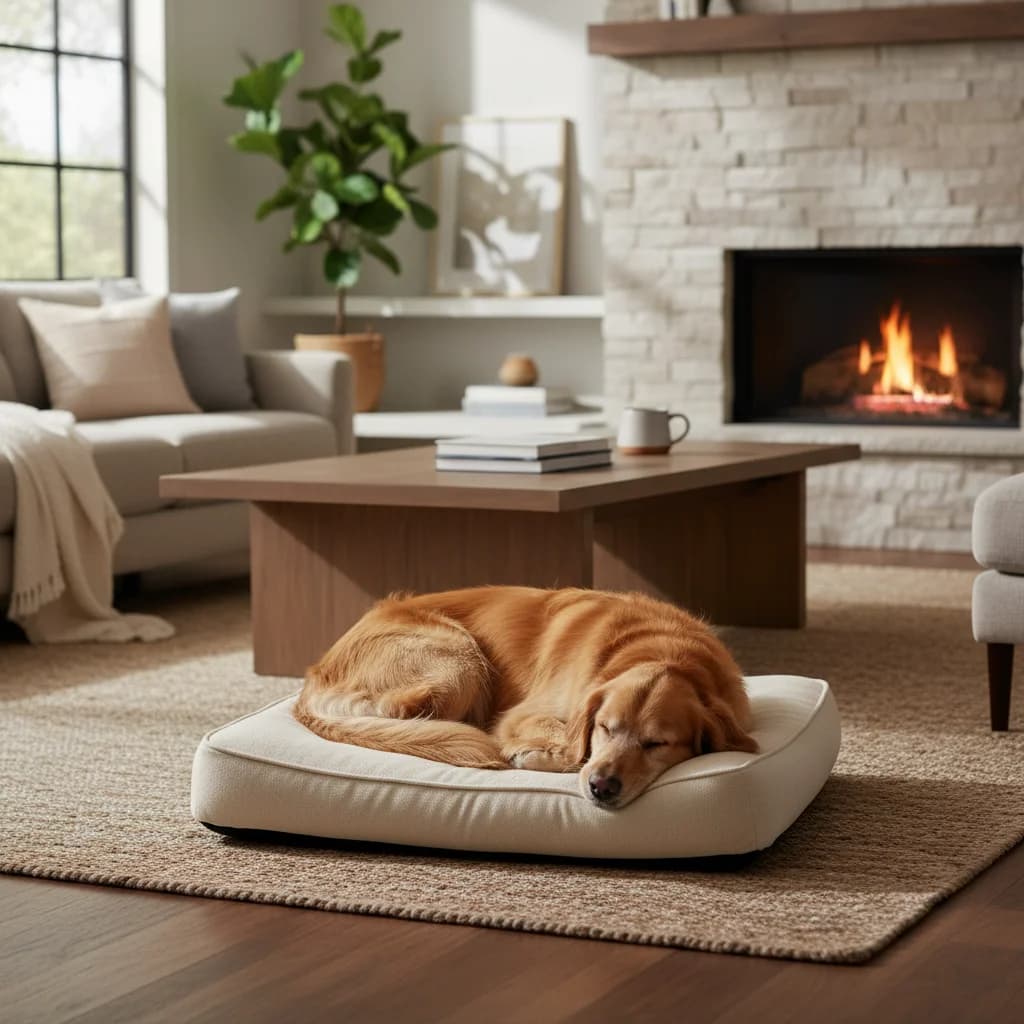
Measure your dog from nose to tail base while lying down and add 6-8 inches in each direction. The bed should be large enough for your dog to stretch out fully without hanging off.
On this page11 sections
Our Verdict
Measure your dog from nose to tail base while lying down, then add 6-8 inches. When between sizes, always size up. A bed that's too small forces uncomfortable sleeping positions — never undersize.
How PawBench is paid: we earn an Amazon Associates commission on qualifying purchases. We don’t accept sponsored placements, paid reviews, or free products in exchange for coverage. Picks are ranked on documented owner outcomes and primary-source research, never on commission rate. Read the full methodology.
A dog bed that's too small forces your dog into uncomfortable sleeping positions, creates pressure on joints, and gets abandoned for your couch. A bed that's too large wastes money and floor space. Getting the size right is simple once you know how to measure — and most people get it wrong because they guess instead of measuring.
This guide gives you the exact method to choose the perfect dog bed size for any breed, any sleeping style, and any bed type.
Step 1: Measure Your Dog
You need two measurements:
Length
- Wait for your dog to lie down in their natural sleeping position
- Measure from the tip of the nose to the base of the tail (not the tip of the tail)
- Note this measurement in inches
Width
- Measure from the widest point of your dog while lying down
- For dogs that sprawl, measure at full extension
- For dogs that curl, measure the diameter of the curl
Add the Buffer
- Add 6-8 inches to the length measurement
- Add 4-6 inches to the width measurement
- These are your minimum bed dimensions
Example: A 50-lb dog that measures 32 inches nose-to-tail needs a bed at least 38-40 inches long.
Gear we would buy for this: once you have the measurement, the K9 Ballistics Tough Orthopedic Bed for dogs over 50 lb (5-inch solid foam on the Large and up, 10-year won't-flatten warranty; rated for light to mild chewers). Big Barker's 7-inch bed, the long-time benchmark, is currently unavailable on Amazon. Both are compared in best orthopedic dog beds for large breeds.
Step 2: Identify Your Dog's Sleep Style
Sleeping style determines whether you need a flat bed, bolster bed, or something else:
The Sprawler
What it looks like: Legs extended in all directions, belly up or on their side, taking up maximum space.
Best bed type: Flat bed without bolsters. Sprawlers need every inch of bed surface.
Size up? Yes — sprawlers use more bed area than their body measurements suggest. Add an extra 4-6 inches to both dimensions.
Common breeds: Great Danes, Labrador Retrievers, Greyhounds, Boxers
The Curler
What it looks like: Nose tucked to tail, circular position, compact.
Best bed type: Round or bolster bed. The raised edges provide head support and a sense of security.
Size up? Usually not necessary. Measure the diameter of the curl and add 4-6 inches.
Common breeds: Chihuahuas, Dachshunds, Shiba Inus, Whippets
The Nester
What it looks like: Digs at the bed surface, rearranges blankets, burrows under covers.
Best bed type: Cave bed or hooded bed. Or a bolster bed with a removable blanket.
Size up? Standard sizing works. The key is bed type, not size.
Common breeds: Dachshunds, Terriers, Beagles, Huskies
The Leaner
What it looks like: Sleeps against walls, furniture edges, or other dogs. Rests chin on elevated surfaces.
Best bed type: Bolster bed with at least one raised edge for chin-resting.
Size up? Account for the bolster width — bolsters eat into usable sleeping area. Get a bed where the interior dimensions (not exterior) meet your dog's measurements.
Common breeds: Golden Retrievers, Cavalier King Charles Spaniels, French Bulldogs, Pugs
Step 3: Match to Standard Bed Sizes
Most dog bed manufacturers use these standard sizes:
| Bed Size | Typical Dimensions | Best For |
|---|---|---|
| Small | 24" x 18" | Dogs under 25 lbs |
| Medium | 30" x 20" | Dogs 25-40 lbs |
| Large | 36" x 28" | Dogs 40-70 lbs |
| X-Large | 42" x 30" | Dogs 70-90 lbs |
| Giant/XXL | 48" x 36" or larger | Dogs 90+ lbs |
Important: These are general guidelines. Always check the manufacturer's specific dimensions — "Large" can mean 34" at one brand and 42" at another. Go by inches, not size labels.
Step 4: Consider the Bed Type
Flat/Mat Beds
- Measurements are straightforward — exterior = usable area
- Best for sprawlers and dogs that don't need bolsters
- Easiest to fit in crates and specific spaces
Bolster/Sofa Beds
- Interior dimensions matter more than exterior
- A "36-inch" bolster bed may only have 28 inches of usable sleeping surface
- Always check the manufacturer's interior measurements
- L-shaped bolsters preserve more sleeping area than full-surround bolsters
Crate Beds/Pads
- Must match crate dimensions exactly
- Too large = bunches up inside the crate
- Too small = slides around and exposes the hard crate floor
- Most manufacturers list crate compatibility (e.g., "fits 36-inch crate")
Round/Donut Beds
- Measured by exterior diameter
- Interior sleeping area is significantly smaller
- Best for curlers — measure your dog's curl diameter and add 8-10 inches for the exterior dimension
Common Sizing Mistakes
Mistake #1: Buying for the puppy, not the adult
Puppies grow fast. A bed that fits your 15-pound puppy will be too small for your 60-pound adult dog in 6 months. Buy for the expected adult size and let the puppy grow into it. Exception: crate beds should match the current divider-panel setting.
Mistake #2: Measuring the dog standing up
Dogs are longer and wider when lying down than when standing. Always measure in the sleeping position.
Mistake #3: Using human bed logic
Humans buy beds bigger than necessary because we share them and move during sleep. Dogs are different — they prefer a bed that fits them snugly. A Golden Retriever doesn't need a queen-sized dog bed. The 6-8 inch buffer is plenty.
Mistake #4: Ignoring the bolster deduction
A 36-inch bolster bed has roughly 28 inches of usable sleeping surface. If your dog needs 34 inches of bed, a 36-inch bolster bed is too small. You need a 42-inch bolster.
Mistake #5: Downsizing for aesthetics
A dog bed that looks proportionate in your room but is too small for your dog defeats the purpose. Joint health is more important than decor. If space is genuinely limited, consider a wall-mounted fold-down bed platform.
When Between Sizes, Always Size Up
If your measurements put your dog between a Large (36") and X-Large (42"), always get the X-Large. Here's why:
- Dogs change sleeping positions throughout the night
- Some dogs sleep more sprawled in warm weather and more curled in cold weather
- Weight gain (even a few pounds) increases the space needed
- Senior dogs spread out more as mobility decreases
- The cost difference between sizes is typically $10-$20 — trivial compared to the bed's total cost
Special Sizing Considerations
Multi-dog households
If your dogs sleep together, measure both dogs lying next to each other and add 6-8 inches. Or get two appropriately-sized individual beds — dogs that share a bed voluntarily will still benefit from having individual options.
Senior dogs
Senior dogs often need larger beds than they did as adults because decreased mobility means they can't reposition easily. They tend to sprawl rather than curl, and they benefit from more surface area to shift between positions. Size up one step from your adult sizing.
Post-surgery dogs
Dogs recovering from orthopedic surgery need room to lie comfortably without pressure on the surgical site. Size up one step and choose a flat bed (no bolsters that limit positioning). An orthopedic bed with at least 5 inches of foam is strongly recommended during recovery.
Quick-Reference Sizing Chart by Breed
These are general guidelines — always measure your individual dog:
| Breed | Typical Adult Weight | Recommended Bed Size |
|---|---|---|
| Chihuahua | 2-6 lbs | Small (24") |
| Yorkshire Terrier | 4-7 lbs | Small (24") |
| French Bulldog | 16-28 lbs | Medium (30") |
| Beagle | 20-30 lbs | Medium-Large (30-36") |
| Cocker Spaniel | 20-30 lbs | Medium-Large (30-36") |
| Bulldog | 40-50 lbs | Large (36") |
| Labrador Retriever | 55-80 lbs | XL (42") |
| Golden Retriever | 55-75 lbs | XL (42") |
| German Shepherd | 50-90 lbs | XL (42-48") |
| Great Dane | 110-175 lbs | Giant (48-60") |
| Bernese Mountain Dog | 70-115 lbs | Giant (48-60") |
Frequently Asked Questions
Can a dog bed be too big?
A dog bed can be unnecessarily large (wasting money and floor space), but it's very unlikely to be harmful. Dogs will use a corner of an oversized bed comfortably. The exception is cave or hooded beds — an oversized cave bed may not provide the enclosed, secure feeling that dogs seek from that style. In general, slightly too large is always better than slightly too small.
Should I measure my dog with or without their collar?
Measure without the collar. The collar adds minimal length and can interfere with accurate nose-to-tail measurement. If your dog sleeps in a harness (rare but some anxiety dogs do), measure with the harness on since it adds bulk.
How do I size a bed for a puppy?
If you know the expected adult weight and breed, buy for adult size. The puppy will grow into it. If you're unsure of adult size (mixed breed rescue), estimate based on paw size and current growth rate — large paws relative to body size usually indicate a larger adult dog. Your vet can estimate adult size at puppy checkups.
Do orthopedic beds need different sizing?
Orthopedic beds follow the same sizing guidelines, but the foam thickness matters more for large breeds. A large or giant breed dog on a thin orthopedic bed will "bottom out" — their weight compresses the foam to the floor, negating the orthopedic benefit. For dogs over 60 lbs, choose orthopedic beds with at least 5 inches of foam. Over 100 lbs, 7 inches is recommended.
How often should I re-measure my dog for bed sizing?
Once your dog reaches adult size (12-18 months for most breeds), a single measurement is sufficient for life — unless your dog gains or loses significant weight. Senior dogs may benefit from re-evaluation, as they tend to spread out more in their sleeping positions.
The Bottom Line
Sizing a dog bed correctly takes 5 minutes with a tape measure. Measure nose to tail base while lying down, add 6-8 inches, and buy the size that matches. When between sizes, always go up. The cost difference is trivial compared to the health benefits of a properly sized bed.
Your dog spends half their life on that surface. A few extra inches of bed is one of the cheapest investments you can make in their comfort and joint health.
🏆 Bottom Line: Measure your dog from nose to tail base, add 6–8 inches, and that's your minimum bed length. For large dogs, err on the side of larger — a dog that can fully stretch out on their bed sleeps better and wakes with less stiffness.
Related Reading
- Dog Beds — Our complete dog bed rankings and reviews
- Dog Health — Joint support and wellness products
- Puppy Essentials — First bed picks for new puppies
Research Sources
- Choosing the Right Dog Bed for Your Dog — AKC
- Why Does My Dog Sleep On Their Back? — AKC
- Why Do Dogs Sleep So Much? — AKC
- 2023 AAHA Senior Care Guidelines for Dogs and Cats — American Animal Hospital Association
- Sleep Duration and Behaviours: A Descriptive Analysis of a Cohort of Dogs up to 12 Months of Age — NCBI/PMC
- Physiotherapeutic Strategies and Their Current Evidence for Canine Osteoarthritis — NCBI/PMC

PawBench Editorial
Published by Hilly Shore LabsPawBench’s editorial team researches dog products from primary veterinary sources, manufacturer specifications and aggregated buyer sentiment, alongside the lived ownership of Maggie, an Australian Labradoodle. We do not run hands-on product tests.
331 dog products scored · 1,222,724 buyer review-aspect mentions aggregated · cites AVMA, FDA, AAFCO, Cornell, WSAVA, AKC, ASPCA.
Recommendations are based on published veterinary guidelines, manufacturer specifications, and verified customer feedback. See our editorial standards.