Labradoodle Puppy Essentials: The Complete New Owner Checklist
Quick Answer
Invest heavily in grooming tools from day one -- a Chris Christensen slicker brush and daily brushing are non-negotiable for Labradoodle coats. Budget $100-150 per professional groom every 6-8 weeks.
On this page8 sections
Our Verdict
Labradoodles need more grooming investment than most breeds thanks to their curly, mat-prone coats. Budget $200-$400 for essential gear, and get a slicker brush on day one — you'll use it daily.
How PawBench is paid: we earn an Amazon Associates commission on qualifying purchases. We don’t accept sponsored placements, paid reviews, or free products in exchange for coverage. Picks are ranked on documented owner outcomes and primary-source research, never on commission rate. Read the full methodology.
Labradoodles are wonderful dogs — intelligent, affectionate, and endlessly charming. They're also more work than most new owners expect. That curly, often-marketed-as-"hypoallergenic" coat requires serious grooming commitment, their energy levels demand real exercise, and their intelligence means they'll outsmart lazy training faster than you'd think.
We've compiled the complete checklist of what you actually need before bringing your Labradoodle puppy home, based on conversations with Labradoodle breeders, veterinarians, and experienced owners. No filler, no unnecessary gadgets — just what works.
What to Look For When Buying Labradoodle Gear
Coat type determines everything. Labradoodles can have wavy (fleece), curly (wool), or straight (hair) coats. Curly and wavy coats require more grooming tools and a higher maintenance commitment. Ask your breeder which coat type your puppy will likely develop — it's usually apparent by 8-10 weeks.
Size varies dramatically. Standard Labradoodles reach 50-65 lbs, mediums hit 30-45 lbs, and minis stay under 25 lbs. Buy gear for the adult size, not the puppy size, or you'll replace everything in months.
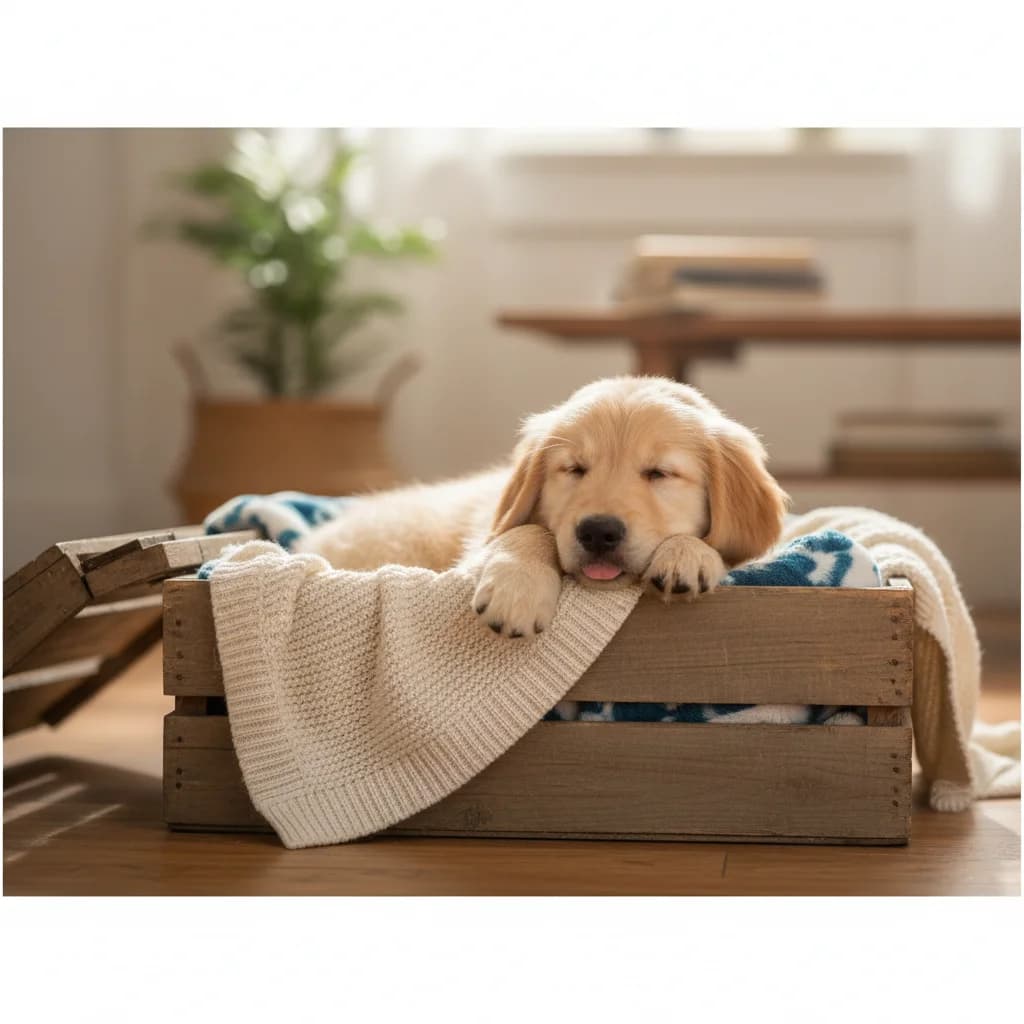
Quality over quantity. A Labradoodle puppy needs about 15-20 items total. Don't buy the 50-piece puppy starter kit from the pet store — half of it will be unused.
Gear we would buy for this: the MidWest iCrate Double Door with the divider, a Fresh Patch Real Grass Patch for house-training gaps, and the Ruffwear Front Range Harness once the puppy is leash-walking. All three are the most-bought picks from our puppy essentials list.
Our Top Picks by Category
Grooming Essentials (The Most Important Category)
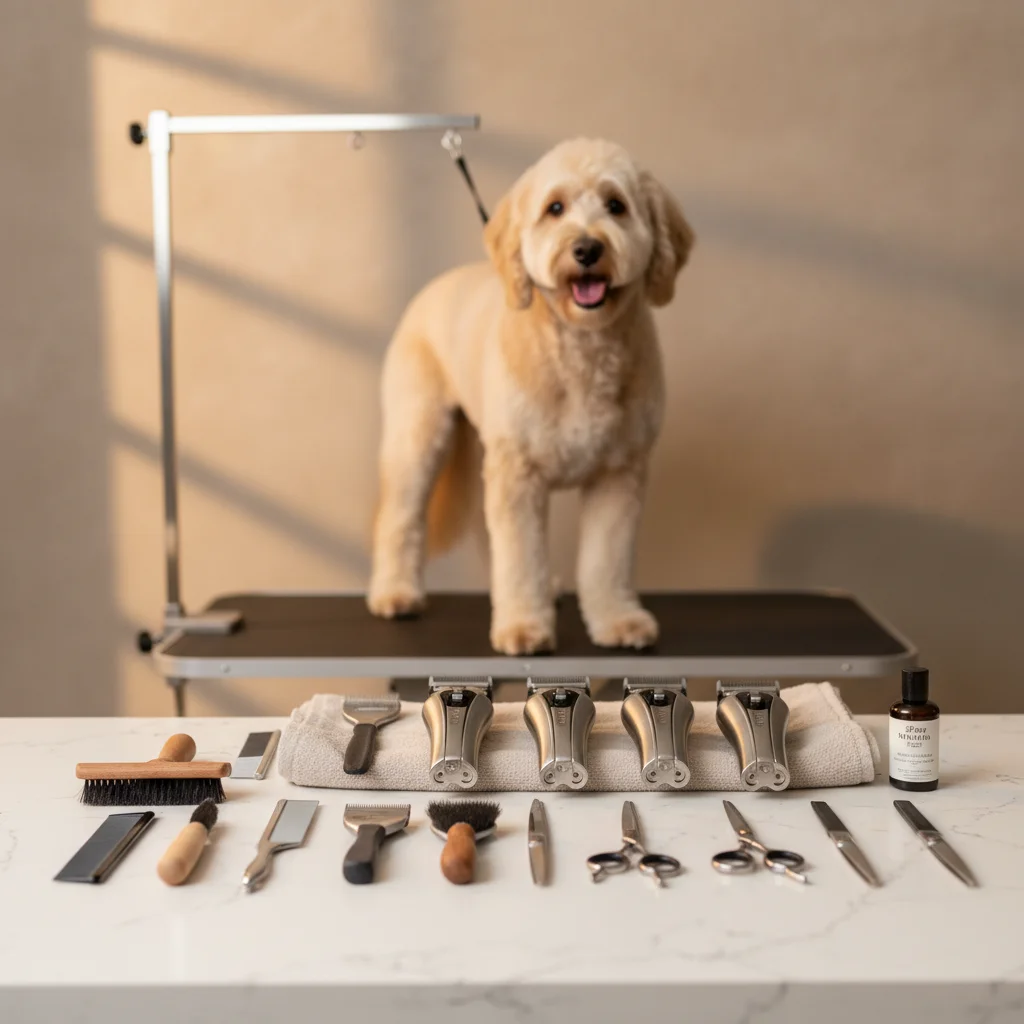
This is where Labradoodle ownership differs from almost every other breed. Their coats mat easily and require daily maintenance.
Slicker Brush: Chris Christensen Big G ($45)
The gold standard for doodle coats. The long, flexible pins penetrate curly coats without pulling, and the brush head is large enough to cover ground efficiently on a standard Labradoodle. Yes, it costs more than a pet store brush — and it's worth every penny. You'll use it daily for the life of your dog.
Pros:
- Long pins reach through thick, curly coats
- Gentle on skin — reduces brush aversion
- Large head covers more area per stroke
Cons:
- $45 is steep for a brush
- Too large for mini Labradoodles — get the Baby G instead
Steel Comb: Andis Steel Comb ($8)
After brushing, run a steel comb through the coat to check for remaining mats. If the comb glides through smoothly, you're done. If it catches, you missed a mat. This $8 tool prevents $100+ grooming emergencies.
Detangling Spray: The Stuff Conditioner ($15)
Spray before brushing to reduce friction and make mat removal less painful for your puppy. Getting your Labradoodle comfortable with grooming early is crucial — a bad experience at 12 weeks creates a lifelong grooming aversion.
Food & Feeding
Puppy Food: Purina Pro Plan Puppy Large Breed ($45/34 lbs)
For standard Labradoodles, a large-breed puppy formula controls calcium and phosphorus for proper skeletal development. Purina Pro Plan is the most veterinarian-recommended brand for good reason — extensive feeding trials, consistent quality, and proven results. See our full dog food guide for alternatives.
For mini and medium Labradoodles, switch to the standard (non-large-breed) Purina Pro Plan Puppy formula.
Slow Feeder Bowl: Outward Hound Fun Feeder ($13)
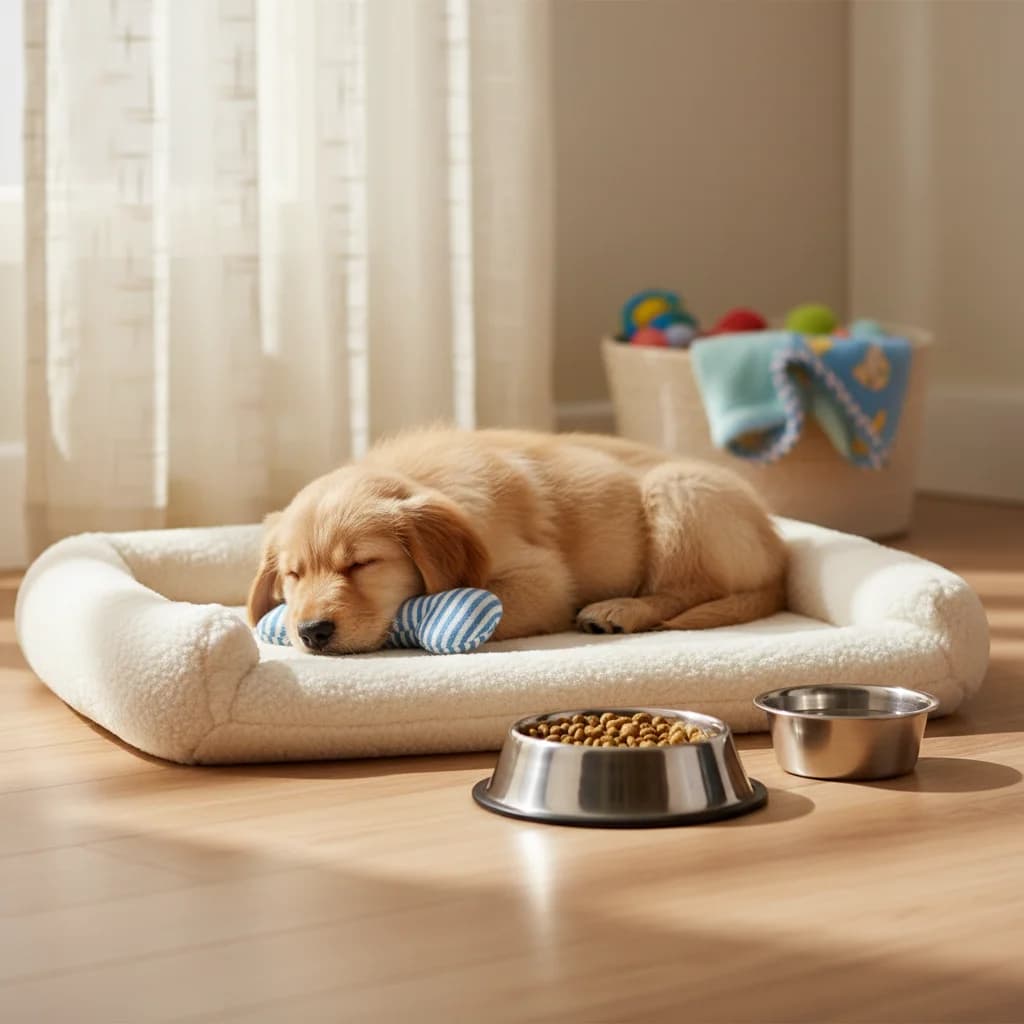
Labradoodles often inherit the Labrador's food-gulping tendencies. A slow feeder adds 5-10 minutes to meal time, reducing the risk of bloat and improving digestion.
Crate & Confinement
Crate: MidWest iCrate Double Door ($50-$80)
The MidWest iCrate comes with a divider panel that lets you adjust the crate size as your puppy grows — one purchase covers puppyhood through adulthood. For standard Labradoodles, get the 42" size. For minis, the 30" is sufficient.
Two doors (front and side) give you flexibility in placement. The fold-flat design is a bonus if you travel. See our complete crate training guide for step-by-step instructions.
Crate Pad: MidWest QuietTime Fleece Pad ($20)
Sized to fit MidWest crates perfectly, the fleece pad is machine washable (you'll wash it a lot during potty training) and the non-skid bottom stays in place.
Leash & Harness
Harness: Ruffwear Front Range (~$60)
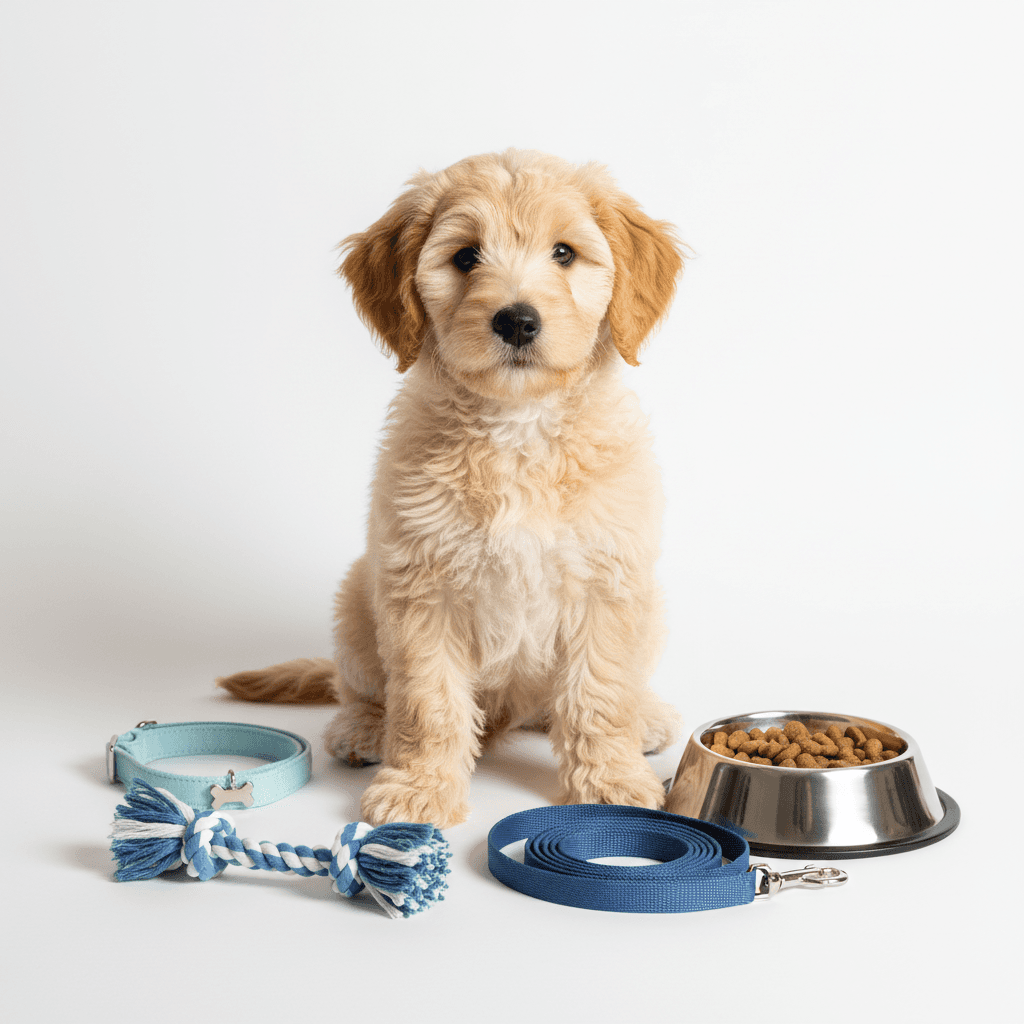
A front-clip harness is essential for training a puppy not to pull. The Ruffwear Front Range has both front and back D-rings, padded straps, and adjustable fit. Start leash training on day one with the front clip, then transition to the back clip for casual walks once pulling is under control.
Leash: 6-foot nylon leash ($10-$15)
Skip retractable leashes entirely. A standard 6-foot leash gives your puppy enough room to explore while keeping you in control. For more on leash selection, see our harness buying guide.
Toys & Enrichment
Kong Classic ($10-$14)
Stuff it with peanut butter, freeze it, and hand it to your Labradoodle puppy in the crate. This single toy will do more for crate training and separation anxiety than any other product you buy. Get the puppy-specific Kong (softer rubber) until your Labradoodle's adult teeth come in around 6-7 months.
Chew Toy: Nylabone Puppy Chew ($7)
Labradoodle puppies need to chew — especially during teething (3-6 months). A Nylabone redirects that drive away from your furniture and shoes. Replace it once you can see visible wear marks.
Interactive Toy: Nina Ottosson Puzzle Feeder ($15)
Labradoodles are smart. Bored Labradoodles are destructive. A puzzle feeder puts their intelligence to work and provides 10-15 minutes of mental stimulation. Start with the beginner level and graduate to harder puzzles as they master each one.
Cleaning & Training Supplies
Enzymatic Cleaner: Nature's Miracle ($10)
Accidents happen during potty training. Standard cleaners don't fully eliminate urine odor — your puppy can still smell it and will return to the same spot. Enzymatic cleaners break down the proteins completely.
Training Treats: Zuke's Mini Naturals ($8)
Small, soft, low-calorie treats that your puppy can eat quickly during training sessions. The small size means you can use dozens per session without overfeeding.
Poop Bags: Earth Rated ($8/120 bags)
You'll go through more bags than you expect. Earth Rated bags are thick enough to prevent breakthrough and the built-in tie handles make disposal easy.
Complete Checklist
Here's your shopping list, organized by priority:
Must-Have (Buy Before Puppy Arrives):
- Crate (MidWest iCrate with divider) — $50-$80
- Crate pad — $20
- Slicker brush (Chris Christensen) — $45
- Steel comb — $8
- Puppy food — $45
- Food and water bowls — $15
- Slow feeder bowl — $12
- Collar with ID tag — $15
- 6-foot leash — $10
- Enzymatic cleaner — $10
- Poop bags — $8
Buy Within First Week:
- Harness (Ruffwear Front Range) — $60
- Kong Classic (puppy) — $10
- Nylabone Puppy Chew — $6
- Training treats — $8
- Detangling spray — $15
Buy Within First Month:
- Puzzle toy — $15
- Dog bed (for outside the crate) — $30-$60
- Car safety harness or barrier — $25-$40
Total estimated cost: $200-$400 depending on the size of Labradoodle and quality tier of products.
Grooming Schedule for Labradoodle Puppies
This is the schedule that experienced Labradoodle owners and groomers recommend:
- Daily: 5-10 minutes of slicker brush and comb-through (non-negotiable for curly/wavy coats)
- Weekly: Check ears for debris and clean if needed (floppy ears trap moisture)
- Every 6-8 weeks: Professional grooming appointment (start at 12-16 weeks to acclimate)
- Monthly: Nail trim (or as needed)
- As needed: Bathing (no more than once every 3-4 weeks to preserve coat oils)
Critical tip: Make grooming a positive experience from day one. Use treats, keep sessions short, and never force a scared puppy through grooming. A 12-week-old puppy who learns to enjoy brushing is a dog who will tolerate grooming for life.
Common Labradoodle Puppy Mistakes
-
Skipping daily brushing. "I'll do it tomorrow" turns into mats, which turn into a $150+ shave-down at the groomer. Curly coats mat overnight.
-
Buying a too-small crate. Your 15-pound puppy will be a 55-pound adult in a year. Buy for the adult size and use the divider panel.
-
Assuming "hypoallergenic" means no grooming. Labradoodles shed less than Labs, but their coats require significantly more maintenance. The low-shedding coat traps hair instead of dropping it — and that trapped hair mats.
-
Over-exercising a puppy. The general rule is 5 minutes of exercise per month of age, twice daily. A 4-month-old Labradoodle needs 20-minute walks, not hour-long hikes. Over-exercise damages developing joints.
-
Delaying training. Labradoodles are smart enough to learn bad habits just as quickly as good ones. Start basic obedience training immediately.
Frequently Asked Questions
When should I take my Labradoodle puppy to the groomer for the first time?
Take your Labradoodle puppy to a groomer for a "puppy introduction" visit between 12-16 weeks of age. This first visit should be short — just a bath, face trim, and sanitary trim. The goal is getting your puppy comfortable with the grooming environment, not a full haircut. Most groomers offer discounted "puppy first visit" packages for this purpose.
What size crate does a Labradoodle need?
Standard Labradoodles (50-65 lbs adult weight) need a 42-inch crate. Medium Labradoodles (30-45 lbs) need a 36-inch crate. Mini Labradoodles (under 25 lbs) need a 30-inch crate. Always buy a crate with a divider panel so you can adjust the interior space as your puppy grows. A crate that's too large defeats the purpose of crate training, as puppies may use one end as a bathroom.
How much does a Labradoodle puppy eat per day?
Follow the feeding guidelines on your puppy food bag as a starting point, then adjust based on body condition. Generally, standard Labradoodle puppies eat 2-3 cups per day split into 3 meals (under 6 months) or 2 meals (6-12 months). Mini Labradoodles eat 1-1.5 cups per day. Your vet can provide specific guidance at each checkup.
Do Labradoodle puppies need a coat in winter?
Despite their fluffy appearance, Labradoodle puppies can get cold in temperatures below 40°F, especially if they have a thinner or newly-trimmed coat. A lightweight, waterproof jacket is a worthwhile investment for cold-climate owners. Once their adult coat fully develops (usually by 12-18 months), most Labradoodles handle moderate cold well.
How often should a Labradoodle be professionally groomed?
Every 6-8 weeks for most Labradoodles with curly or wavy coats. This is a lifelong commitment — budget $60-$100 per professional grooming session. Between professional visits, daily brushing at home is essential to prevent matting. Some owners learn to groom at home with professional-grade clippers, which can save significant money over the dog's lifetime.
The Bottom Line
Labradoodle puppies are wonderful companions, but they're not low-maintenance dogs. The coat alone requires more daily attention than most breeds. Budget for quality grooming tools from day one, establish a daily brushing routine before it becomes a battle, and invest in proper puppy essentials that will grow with your dog.
The most important investment isn't any product — it's the daily 10 minutes of brushing and training that shapes your Labradoodle into the well-groomed, well-behaved dog everyone admires at the park.
🏆 Bottom Line: Labradoodles are wonderful family dogs, but their coats need serious grooming commitment from day one. Start brushing and ear-cleaning early so your puppy learns to tolerate it. Invest in a quality slicker brush and schedule professional grooming every 6–8 weeks — your future self will thank you.
Related Reading
- Puppy Essentials — Complete gear guide for new puppy owners
- Grooming — Brushes, deshedding tools, and coat care products
- Training — Crate training, leash training, and behavior tools
Research Sources
- Hip Dysplasia — Orthopedic Foundation for Animals
- Hip Screening Procedures — Orthopedic Foundation for Animals
- AVSAB Position Statement on Puppy Socialization — American Veterinary Society of Animal Behavior
- 2019 AAHA Canine Life Stage Guidelines — American Animal Hospital Association, 2019
- Feeding Puppies, Large and Small — American Kennel Club
- 2022 AAHA Canine Vaccination Guidelines — American Animal Hospital Association, 2022

PawBench Editorial
Published by Hilly Shore LabsPawBench’s editorial team researches dog products from primary veterinary sources, manufacturer specifications and aggregated buyer sentiment, alongside the lived ownership of Maggie, an Australian Labradoodle. We do not run hands-on product tests.
331 dog products scored · 1,222,724 buyer review-aspect mentions aggregated · cites AVMA, FDA, AAFCO, Cornell, WSAVA, AKC, ASPCA.
Recommendations are based on published veterinary guidelines, manufacturer specifications, and verified customer feedback. See our editorial standards.