How to Crate Train a Puppy in 2026 (Step-by-Step, Without Feeling Guilty)
Quick Answer
Start by making the crate positive with treats and meals inside, never use it as punishment, and gradually increase time from 5 minutes to overnight over 2-4 weeks.
On this page12 sections
Our Verdict
Start by making the crate positive with treats and meals inside. Never use it as punishment, and gradually increase time from 5 minutes to overnight over 2-4 weeks.
How PawBench is paid: we earn an Amazon Associates commission on qualifying purchases. We don’t accept sponsored placements, paid reviews, or free products in exchange for coverage. Picks are ranked on documented owner outcomes and primary-source research, never on commission rate. Read the full methodology.
Let me address the guilt first, because that is what stops most new puppy owners from crate training correctly. A crate is not a cage. A crate is not punishment. A properly introduced crate becomes the single safest, most comforting space in your puppy's world -- their den, their retreat, their place where nothing bad happens. Wild canids seek out enclosed spaces to sleep. Your puppy has the same instinct. You are not fighting nature by crate training; you are working with it.
The guilt usually comes from doing it wrong: shoving the puppy in, closing the door, and walking away while they scream. That is not crate training. That is flooding, and it creates lasting negative associations. Done correctly, crate training takes patience, consistency, and about four weeks. Here is exactly how to do it.
The #1 Crate Training Mistake (And How to Avoid It)
The single biggest crate training mistake is going too fast. It's the root cause of almost every crate training failure, and it's completely understandable — you want the puppy to sleep in the crate tonight, so you put them in and close the door. The puppy screams. You feel guilty. You let them out. Now the puppy has learned that the crate is a scary place and that screaming gets them out.
Most puppies need 3–5 positive exposure sessions before the door is ever closed. That might mean 3–5 days of the crate just sitting there, door open, with treats appearing inside it like magic. It feels painfully slow, but it's actually faster — because you're building a positive association that holds up under pressure, instead of creating a negative association that you then have to spend weeks undoing.
The rule: Your puppy should be choosing to enter the crate voluntarily — walking in on their own to sniff around, grab a treat, or lie down — before you ever close the door. If the puppy won't go in willingly, you haven't done enough positive association work yet. Go back to tossing treats and feeding meals inside with the door wide open.
This single principle — don't close the door until the puppy chooses to go in — prevents 80% of crate training problems.
Gear we would buy for this: the MidWest iCrate Double Door — the adult size with the divider panel, so the crate grows with the puppy — plus a Fresh Patch Real Grass Patch for the overnight gap while the schedule settles. Both are the picks readers buy most from our puppy essentials list.
Choosing the Right Crate
Before you start training, you need the right crate. The wrong size is the most common mistake.
Crate Sizing Chart
| Puppy's Expected Adult Weight | Crate Size | Example Breeds |
|---|---|---|
| Under 25 lbs | 24" | Chihuahua, Yorkie, Maltese |
| 25-40 lbs | 30" | Beagle, Cocker Spaniel, Corgi |
| 40-70 lbs | 36" | Border Collie, Aussie, Bulldog |
| 70-90 lbs | 42" | Lab, Golden, Boxer |
| 90+ lbs | 48" | German Shepherd, Rottweiler, Great Dane |
The critical rule: The crate should be large enough for your puppy to stand up without crouching, turn around completely, and lie down stretched out. But it should not be so large that they can use one end as a bathroom and the other as a bedroom. If you are buying a crate for the adult size, use a divider panel to section off the appropriate space during puppyhood and expand it as they grow.
The MidWest iCrate ($35-$70 depending on size) is the best value crate on the market. It comes with a free divider panel, has two doors for flexible room placement, and folds flat for storage. For puppies that tend to be escape artists, the MidWest Ultima Pro ($60-$100) has slide-bolt latches that are significantly more secure.
What Goes Inside the Crate
- A crate pad or mat. The MidWest Quiet Time Fleece Pad ($15) is the best starter option -- it is cheap enough that you will not cry when the puppy destroys it, and machine washable for the inevitable accidents.
- One chew toy. A KONG Puppy ($8-$12) stuffed with a small amount of peanut butter or moistened kibble. This gives the puppy something positive to associate with crate time.
- Nothing else. No blankets that can be chewed and swallowed. No collars that can catch on the wire. No water bowls that will spill. Keep it simple.
For a complete list of what your new puppy needs beyond the crate, check out our puppy essentials guide.
Pro Tip: Cover 3 sides of the wire crate with a blanket or crate cover to create a more den-like environment. Darkness triggers a dog's natural sleep instinct. This single change reduces nighttime whining for most puppies by 50–70%.## Week-by-Week Training Schedule
The puppy starter basket
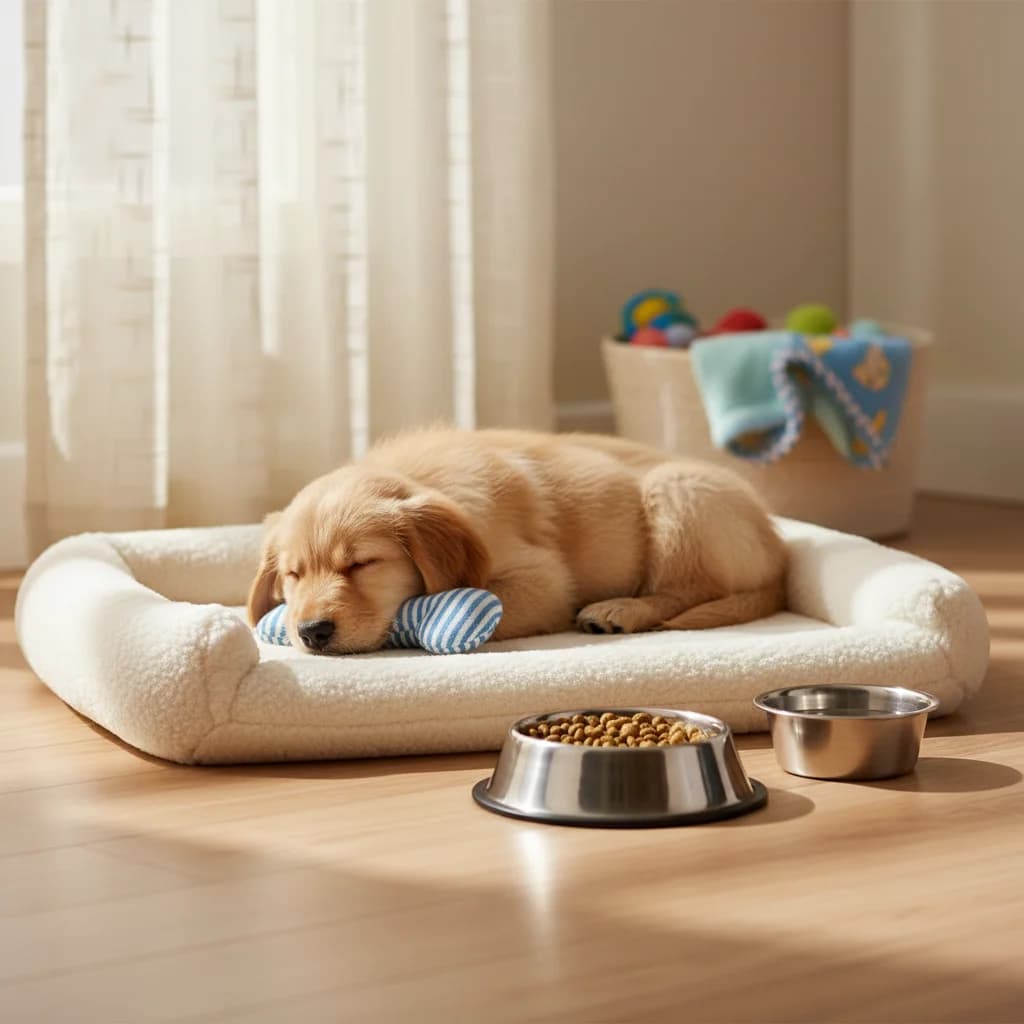
Most people who buy a crate buy the rest of the setup in the same sitting, so here is the version that doesn't need a second order: the MidWest iCrate 42-inch (with its divider, so one crate lasts from 8 weeks to adult), a Furhaven orthopedic sofa bed cut to fit inside, a non-skid stainless bowl for the crate's water, a KONG Classic stuffed and frozen for the first closed-door sessions, and a Nylabone puppy chew for teeth. That's the whole kit; everything else can wait a month.
Week 1: Introduction (Days 1-7)
The goal this week is simple: the puppy enters the crate voluntarily and associates it with good things. Nothing else matters yet.
- Place the crate in a common area where the family spends time. Not in a back bedroom, not in the garage. The puppy needs to see the crate as part of their social environment.
- Leave the door open permanently this week.
- Toss high-value treats inside the crate throughout the day. Let the puppy go in and come back out freely.
- Feed all meals inside the crate with the door open. Place the food bowl at the back so the puppy has to walk fully inside.
- If the puppy naps voluntarily in the crate, quietly celebrate. Do not make a big deal of it or you will wake them.
By the end of week 1, the puppy should be entering the crate without hesitation to get treats or eat meals.
Week 2: Closing the Door (Days 8-14)
- After the puppy enters the crate for a meal, gently close the door while they eat. Open it the moment they finish.
- Gradually extend the closed-door time after meals: 1 minute on day 8, 3 minutes on day 10, 5 minutes on day 12, 10 minutes on day 14.
- Stay in the room and visible during all closed-door sessions this week.
- Give a stuffed KONG when closing the door to create a positive distraction.
- If the puppy whines, wait for even a 2-second pause in the whining before opening the door. You must not open the door while whining is actively happening, or you teach the puppy that whining equals freedom.
Week 3: Building Duration and Distance (Days 15-21)
- Begin leaving the room briefly while the puppy is in the crate. Start with 30 seconds out of sight, then 2 minutes, then 5, then 10.
- Introduce a crate cue -- "kennel up," "crate," or "bed." Say the cue, toss a treat inside, and praise when the puppy enters. Repeat 10+ times per day.
- Work up to 30-minute crate sessions with you in another room.
- Begin short absences from the house: leave for 5 minutes, then 15, then 30. Keep departures and arrivals boring -- no dramatic goodbyes, no excited greetings.
Week 4: Overnight and Extended Periods (Days 22-28)
- Move the crate into your bedroom for nighttime use. Proximity to you reduces nighttime anxiety dramatically.
- Take the puppy out immediately before bedtime for a final potty break.
- Expect 1-2 nighttime wake-ups for bathroom breaks during this week. Puppies under 16 weeks physically cannot hold their bladder all night. Set an alarm for halfway through the night, take them out silently, and put them back.
- By the end of week 4, most puppies are sleeping 6-7 hours in the crate without waking.
How to Handle Crying
Backup for the long nights. A puppy under four months can't reliably hold it through the night, and a crate accident sets training back a week. If you can't do a 3 a.m. trip, set a Fresh Patch real-grass potty in a pen next to the crate for the first few weeks — real grass keeps the outdoor association intact in a way pads don't, and you retire it as soon as the bladder catches up.
This is where most people crack. The crying is hard to listen to. Here is the framework:
Ignore attention-seeking whining. If the puppy has been recently fed, exercised, and taken outside to potty, whining in the crate is a bid for attention. Wait for a pause -- even 2 seconds of quiet -- then calmly let them out or offer quiet praise.
Respond to genuine distress. If the puppy is screaming, panting, drooling, or trying to break out of the crate, they are in genuine distress, not just complaining. This means you moved too fast. Go back to the previous stage and progress more slowly.
Never punish crate crying. Yelling "quiet" at a crying puppy teaches them nothing except that the crate is associated with your anger.
If anxiety is severe and persistent, read our guide on dog anxiety solutions for evidence-based approaches that pair well with crate training.
Common Mistakes That Sabotage Crate Training
- Using the crate as punishment. Never send the puppy to the crate when you are angry. It must remain a positive space.
- Crating too long. A general rule: puppies can hold their bladder for their age in months plus one hour. A 3-month-old puppy should not be crated for more than 4 hours during the day.
- Making departures emotional. Long, drawn-out goodbyes teach the puppy that your leaving is a Big Deal worth getting anxious about.
- Letting the puppy out when they cry. This is the single most common mistake and the hardest to avoid. Every time you open the door during whining, you add 3-5 days to the training timeline.
- Skipping the gradual progression. Jumping from week 1 to week 4 because the puppy "seems fine" almost always backfires.
Transitioning to Sleeping Through the Night
By week 5-6, most puppies can sleep 7-8 hours without a bathroom break. To get there:
- Cut off water 2 hours before bedtime.
- Final potty break at the last possible moment before you go to bed.
- Set a consistent bedtime. Dogs thrive on routine. Same time every night.
- Keep the crate in your bedroom until the puppy is reliably sleeping through the night, then gradually move it to the desired permanent location if needed.
For durable chew toys that can safely stay in the crate overnight, browse our best dog toys roundup -- we specifically note which toys are crate-safe.
Crate Training a Rescue Dog vs. a Puppy
Everything above applies to rescue dogs — but slower, and with more patience for regression. Our guide to bringing a new dog home without overwhelming them covers the first days beyond the crate.
Rescue dogs, especially those from shelters or foster systems, may have an unknown history with crates. A crate might be associated with confinement in a previous home, transport stress, or shelter kennel environments. You can't know what they've experienced, so you have to assume the worst and start from zero.
Key differences from puppy crate training:
-
Unknown history means unknown triggers. A rescue dog that panics in a wire crate might do fine with a plastic airline crate (or vice versa). If one crate type isn't working after a week of patient introduction, try a different style before assuming the dog "can't be crate trained."
-
Adult dogs take longer. Expect 6–8 weeks for a rescue dog to be fully comfortable in a crate, compared to ~4 weeks for a puppy starting with a clean slate. Their behavioral patterns are more established, and any negative associations are deeper-rooted.
-
Regression is normal and expected. A good week followed by a bad week is standard rescue dog crate training. Don't interpret a setback as failure — it's part of the process. When regression happens, go back two stages (e.g., from closed-door time to open-door meals) and rebuild.
-
Start with the door fully open for 2 full weeks. No closed-door time at all during weeks 1–2. Just let the crate exist as a positive space with treats, meals, and optional napping. This is twice as long as the puppy timeline, and it's worth every day.
-
Consider a crate alternative initially. An exercise pen (x-pen) is a great intermediate step for rescue dogs that are terrified of crates. It provides containment without the enclosed, "trapped" feeling. Once the dog is comfortable in the x-pen, you can introduce a crate inside the pen with the door open.
Puppy Crate Training Schedule: Hour by Hour
Here's a sample daily schedule for an 8–10 week old puppy during the first weeks of crate training. Adjust times to fit your routine, but maintain the rhythm: potty → play/training → nap → repeat.
| Time | Activity |
|---|---|
| 7:00 AM | Wake up, immediately outside for potty |
| 7:15 AM | Breakfast in crate (door open during week 1, closed during week 2+) |
| 7:30 AM | Play and socialization time — free in the house (supervised) |
| 8:30 AM | Nap in crate (30–45 minutes) |
| 9:15 AM | Outside for potty |
| 9:30 AM | Training session (5–10 min) + supervised play |
| 10:30 AM | Outside for potty |
| 10:45 AM | Nap in crate (45–60 minutes) |
| 11:45 AM | Outside for potty |
| 12:00 PM | Lunch in crate |
| 12:15 PM | Play and exploration time |
| 1:15 PM | Outside for potty |
| 1:30 PM | Nap in crate (60–90 minutes — the long afternoon nap) |
| 3:00 PM | Outside for potty |
| 3:15 PM | Training session + active play |
| 4:15 PM | Outside for potty |
| 4:30 PM | Nap in crate (30–45 minutes) |
| 5:15 PM | Outside for potty |
| 5:30 PM | Dinner in crate |
| 5:45 PM | Play and family time |
| 7:00 PM | Outside for potty |
| 7:15 PM | Calm chew time (KONG in crate with door open) |
| 8:00 PM | Outside for potty, water bowl picked up |
| 8:15 PM | Quiet family time, settling down |
| 9:30 PM | Final potty break |
| 9:45 PM | Settle in crate for the night |
Key principles behind the schedule:
- Puppies this age sleep 18–20 hours per day. Most of that sleep should happen in the crate to build association.
- Potty breaks every 1.5–2 hours during waking hours. Young puppies physically cannot hold it longer than this.
- Three meals per day until 6 months old, then transition to two.
- Naps in the crate are mandatory even if the puppy doesn't seem tired. Overtired puppies bite more, have more accidents, and have worse impulse control. Enforced naps are an act of kindness.
- Pick up water 2 hours before bedtime to reduce nighttime accidents.
The Best Crates for 2026
You don't need to spend a fortune on a crate, but the right one makes training significantly easier. Here are our three picks:
Best Overall: MidWest iCrate ($35–$70)
The default recommendation for a reason. The MidWest iCrate comes with a free divider panel (essential for growing puppies — section off the crate to prevent using one end as a bathroom), two doors for flexible room placement, and folds flat for storage or travel. The build quality is solid for the price, and the double-latch doors are secure enough for normal puppies. Available in 6 sizes from 18" to 48".
Best Premium: Diggs Revol ($250–$450)
If you want the nicest crate on the market, the Diggs Revol is it. The slide-out divider is easier to adjust than MidWest's wire divider, the diamond-mesh wire won't catch puppy paws, and one side features a garage-style door that slides up and stores on the roof — perfect for keeping the crate open as a permanent den without a swinging door in the way. It also folds flat with one hand for travel. The price is steep, but the design and materials are genuinely superior.
Best for Escape Artists: Frisco Heavy Duty Crate ($100–$200)
For puppies (and especially rescue dogs) that bend wire, pop latches, or otherwise defeat standard crates, the Frisco Heavy Duty uses 20-gauge steel with reinforced corner welds and dual slide-bolt latches. It's significantly heavier than a standard crate (not for travel), but it will contain dogs that destroy everything else. If your dog has already escaped from a MidWest or similar crate, go straight to this one.
For our full crate rankings with detailed reviews, see our best dog crates for puppies guide.
The Bottom Line
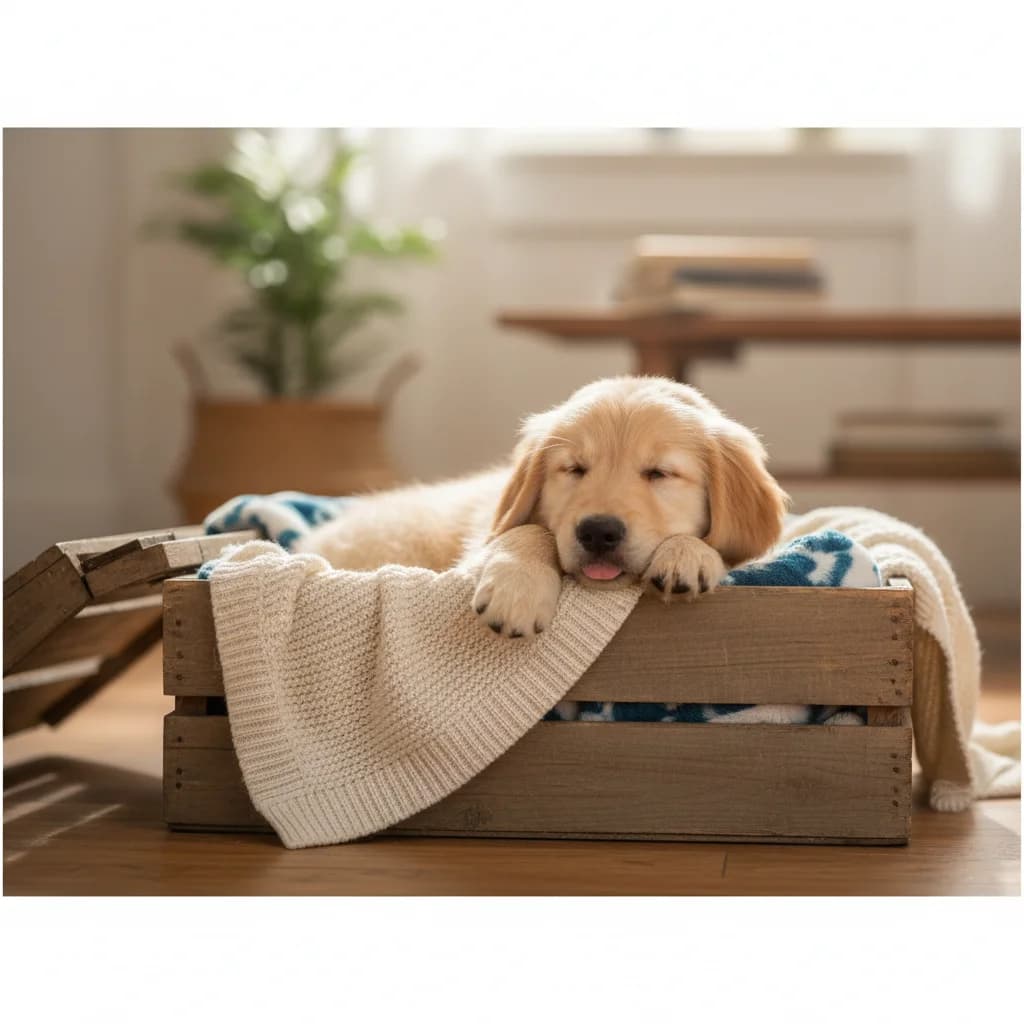
Crate training is a four-week investment that pays dividends for the life of the dog. A crate-trained dog is safer during travel, easier to house-train, less likely to develop separation anxiety, and has a built-in coping mechanism for stressful situations like thunderstorms or houseguests. The guilt you feel in week 1 will be replaced by gratitude in month 2 when your puppy walks into their crate voluntarily and falls asleep. Be patient. Be consistent. Do not skip steps. Your future self -- and your puppy -- will thank you.
🏆 Bottom Line: Crate training works best when the crate is introduced as a positive space, never a punishment. Go slow, use high-value treats, and let your puppy set the pace. Most puppies accept their crate within 1–2 weeks of consistent positive association.
Related Reading
- Training — Crate training tools and techniques
- Puppy Essentials — Everything for new puppy owners
- Dog Toys — Enrichment toys for crate time
Research Sources
- How to Crate Train Your Dog — VCA Animal Hospitals, 2023
- Life Skills for Pets: Crate Training and Confinement for Puppies and Dogs — VCA Animal Hospitals, 2023
- Position Statement on Humane Dog Training — American Veterinary Society of Animal Behavior, 2021
- Puppy Behavior and Training: Training Basics — VCA Animal Hospitals, 2022
- Separation Anxiety in Dogs — VCA Animal Hospitals, 2023

PawBench Editorial
Published by Hilly Shore LabsPawBench’s editorial team researches dog products from primary veterinary sources, manufacturer specifications and aggregated buyer sentiment, alongside the lived ownership of Maggie, an Australian Labradoodle. We do not run hands-on product tests.
331 dog products scored · 1,222,724 buyer review-aspect mentions aggregated · cites AVMA, FDA, AAFCO, Cornell, WSAVA, AKC, ASPCA.
Recommendations are based on published veterinary guidelines, manufacturer specifications, and verified customer feedback. See our editorial standards.