Oral vs Topical vs Collar Flea & Tick: How to Choose
Quick Answer
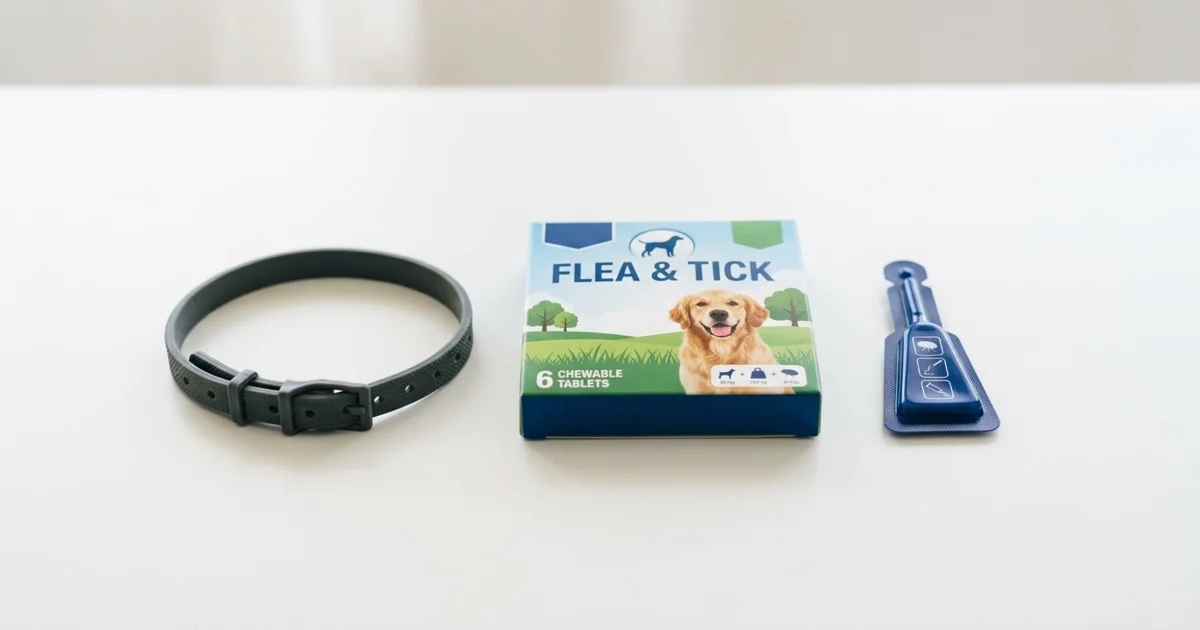
Flea-and-tick products come in three formats: oral chewables (fast, water-proof, often prescription, mostly the isoxazoline class), topical spot-ons (applied to the skin, can wash off), and collars (months of slow-release coverage). None of them alone prevents heartworm — that needs a separate preventive unless you pick a combination product like Simparica Trio or NexGard Plus that adds moxidectin. There is no universal best; match the format to your dog's age, lifestyle, and seizure history, and choose it with your vet. Always check the weight band, read the full label, and never use a dog product on a cat.
On this page8 sections
Our Verdict
Stop shopping by brand and shop by format and coverage. Decide first whether you want a single-parasite flea-and-tick product (with a separate heartworm preventive) or an all-in-one combination that adds moxidectin for heartworm. Then match the delivery type — oral, topical, or collar — to your dog's habits and health, flag any seizure history because most orals are isoxazolines, confirm the weight band, and look for an EPA or FDA approval number on the package. The best protection is the right format used consistently and chosen with your vet, not whatever topped a ranking.
Oral vs Topical vs Collar: The Format Comparison
How the three flea-and-tick delivery formats differ on coverage, water resistance, and regulation — the side-by-side the brand roundups skip.
| Product | Format | How It Works | Typical Duration | Key Considerations |
|---|---|---|---|---|
| Oral chewable / tablet | Oral chewable / tablet | Swallowed; drug circulates so the parasite is killed when it bites | 1 month (some up to 3 months) | Mostly isoxazoline class (FDA neurologic alert); often prescription; not washed off by water or baths; some combos add heartworm coverage |
| Topical spot-on | Topical spot-on | Liquid applied to the skin between the shoulder blades; spreads across the coat | About 1 month | Can be reduced by bathing/swimming; leaves residue on the coat (consider cats and small children); read the label — some are EPA-regulated, some FDA |
| Collar | Collar | Slow, continuous release of active ingredient across the skin and coat | Up to several months per collar | Long, low-maintenance coverage; many are EPA-registered pesticides; fit and replacement timing matter; verify it stays on an active or swimming dog |
Formats and regulatory distinctions per the AVMA and AKC; isoxazoline safety note per the FDA. General education only — confirm the right product and dose with your veterinarian.

How PawBench is paid: we earn an Amazon Associates commission on qualifying purchases. We don’t accept sponsored placements, paid reviews, or free products in exchange for coverage. Picks are ranked on documented owner outcomes and primary-source research, never on commission rate. Read the full methodology.
Walk down the flea-and-tick aisle (or scroll the Chewy page) and you face a wall of chewables, squeeze-on tubes, and collars — all promising the same thing. The product roundups will tell you which brand "wins." What they rarely tell you is the part that actually decides which one is right for your dog: how each delivery type works, what it does and doesn't cover, and which trade-offs matter for your dog's age, lifestyle, and your household.
This is the decision framework — not another ranking.
Key takeaways
- Three formats, real trade-offs: oral chewables (fast, water-proof, often prescription), topical spot-ons (can wash off, leave coat residue), and collars (months of slow release). Match the format to the dog, not the brand.
- Flea-and-tick is not heartworm. A standalone product won't prevent heartworm. You need a separate preventive or a combination product (Simparica Trio, NexGard Plus) that adds moxidectin.
- Most oral chewables are isoxazolines — the FDA flags a rare risk of neurologic reactions, so tell your vet about any seizure history.
- The label tells you who regulates it: an EPA number (pesticide) or an FDA NADA/ANADA number. Neither? Ask your vet before buying.
The three delivery types, side by side
Every modern preventive lands in one of three formats. The format changes how fast it kills, how long it lasts, whether water washes it off, and how it's regulated.
The American Veterinary Medical Association is blunt about why this matters: parasite protection is "not one-size-fits-all," and the right choice depends on your dog's age, health, breed, and where you live. Here's how the formats compare.
What most people get wrong: a flea-and-tick product is not a heartworm product
This is the single most common and most dangerous misconception. A standalone flea-and-tick chewable or collar does not protect against heartworm — that's a separate parasite spread by mosquitoes and needs its own preventive (a macrocyclic lactone like moxidectin or ivermectin), almost always by prescription after a heartworm test.
The reason the confusion exists: some newer oral products are combination preventives that fold heartworm coverage in. The FDA's own product list shows it plainly — Simparica Trio is sarolaner (fleas/ticks) plus moxidectin and pyrantel; NexGard Plus is afoxolaner plus moxidectin and pyrantel. The moxidectin is the heartworm piece. A plain "flea and tick" chewable without that second drug leaves your dog wide open to heartworm.
So before you buy: know whether you want a single-parasite product (and a separate heartworm preventive) or an all-in-one combination. Don't assume "flea, tick, and worm" is covered just because the box looks comprehensive.
The safety conversation worth having
Most oral flea-and-tick chewables for dogs belong to the isoxazoline drug class — afoxolaner (NexGard), fluralaner (Bravecto), lotilaner (Credelio), and sarolaner (Simparica). The FDA considers these "safe and effective" and notes most dogs and cats use them without issue.
But the FDA has also issued an alert: isoxazoline products have been associated with neurologic adverse reactions in some animals — muscle tremors, ataxia (loss of coordination), and seizures — and a seizure can occur in a dog with no prior history. That's not a reason to avoid them; it is a reason to tell your vet if your dog has a seizure history before choosing this class.
A few non-negotiable safety rules the AVMA stresses regardless of format:
Cats are not small dogs. A product labeled for dogs should only ever go on a dog. Some dog topicals are lethal to cats. Never share.
- Weight matters. Dosing is by weight band. A dose meant for a 60-pound dog can harm a 15-pound one. Check the band on the label.
- Read the entire label and follow directions exactly — never more, never less, never more often.
- Tell your vet every medication your dog is on. Some preventives interact with other drugs.
How to read the label: EPA vs FDA
Here's a genuinely useful tell almost nobody knows. Flea-and-tick products are split between two regulators, and the package tells you which:
- An EPA registration number means it's a pesticide-class product (many collars and older topicals).
- A NADA or ANADA number means it's FDA-approved (the prescription-grade orals and some topicals).
If a product shows neither, the AVMA says check with your vet before buying — it may not have cleared the safety review you'd expect.
Why getting this right actually matters
Fleas and ticks aren't only an itchy nuisance. The AVMA notes they can transmit zoonotic diseases — ones that pass between animals and people — including plague, Lyme disease, Rocky Mountain Spotted Fever, and bartonellosis. The point of consistent prevention isn't a tidier coat; it's keeping those disease vectors off your dog and out of your home. A product that's technically effective but skipped half the season because it was the wrong format for your dog isn't protecting anyone.
Three questions to bring to your vet
The AVMA suggests anchoring the conversation on three specifics rather than "what's best?":
- What parasites does this product actually protect against? (This is where you catch the heartworm gap.)
- How often should I apply or give it? (Monthly oral, monthly topical, and multi-month collar are very different commitments.)
- What should I do if my dog reacts to it? (Know the plan before you need it — and report adverse events to your vet and the manufacturer.)
So which should you pick?
There's no universal winner — that's the whole point. Match the format to the dog:
- Active, swims, or hates pills? A collar or a topical may fit better than an oral that depends on being eaten on schedule.
- Multi-pet or kids in the house? Discuss residue and contact risk with your vet; orals leave nothing on the coat for a toddler or cat to touch.
- Seizure history? Raise the isoxazoline alert with your vet before choosing an oral chewable.
- Want heartworm covered too? Choose a combination product (or pair a single-parasite product with a separate heartworm preventive).
The AKC's bottom line, echoed by the AVMA, is that the best protection is "a combination of effective products and consistent use" chosen with your veterinarian — not whichever brand topped a list.
For our researched picks once you've settled on a format, see Best Flea & Tick Prevention 2026, the head-to-head Seresto vs NexGard vs Frontline breakdown, our best flea collars roundup, and an honest look at natural flea prevention. More health guides live in our dog health section.
This article is general education, not veterinary advice. Talk to your veterinarian before starting, changing, or combining any flea, tick, or heartworm preventive.
Research Sources
- Fact Sheet for Pet Owners and Veterinarians about Potential Adverse Events Associated with Isoxazoline Flea and Tick Products — U.S. Food and Drug Administration
- Safe use of flea and tick preventive products — American Veterinary Medical Association
- What Is the Best Flea and Tick Prevention for Dogs? — American Kennel Club

PawBench Editorial
Published by Hilly Shore LabsPawBench’s editorial team researches dog products from primary veterinary sources, manufacturer specifications and aggregated buyer sentiment, alongside the lived ownership of Maggie, an Australian Labradoodle. We do not run hands-on product tests.
264 dog products scored · 1,209,046 buyer review-aspect mentions aggregated · cites AVMA, FDA, AAFCO, Cornell, WSAVA, AKC, ASPCA.
Recommendations are based on published veterinary guidelines, manufacturer specifications, and verified customer feedback. See our editorial standards.