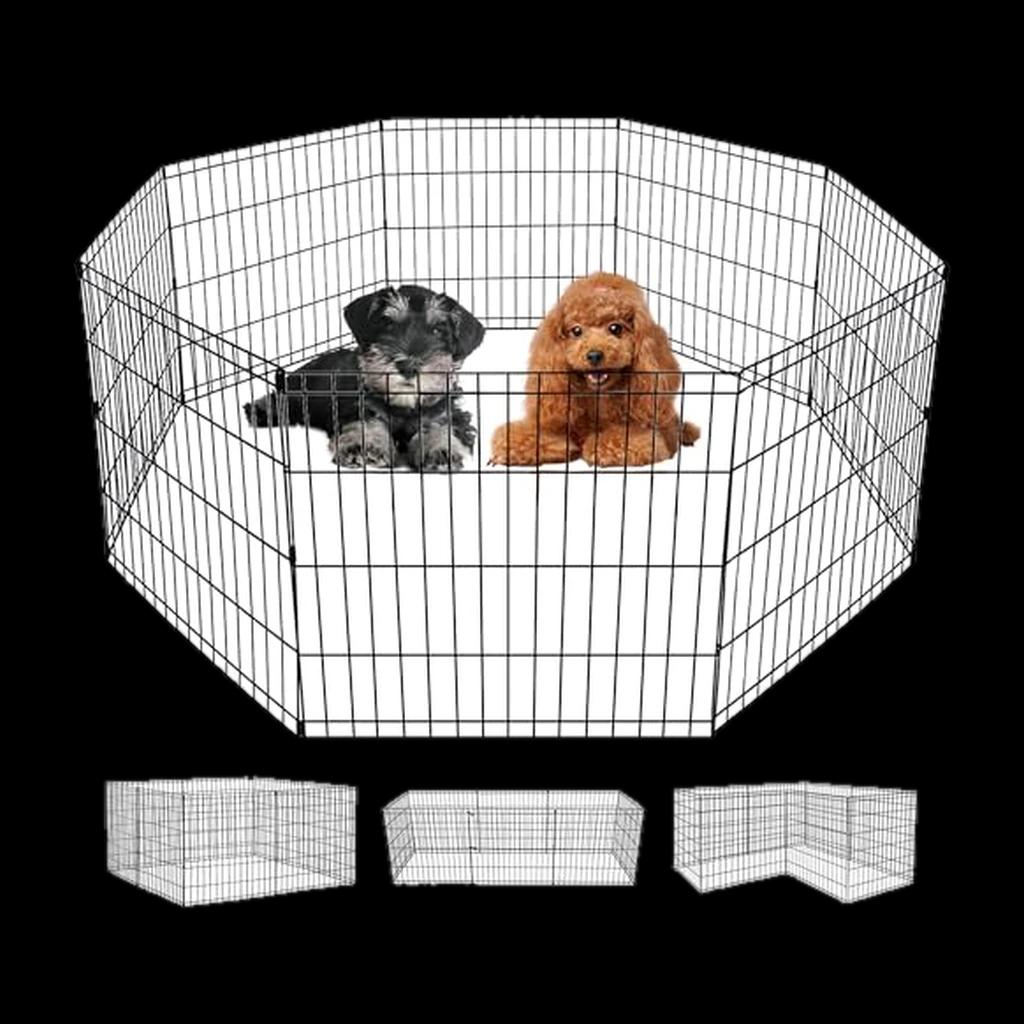
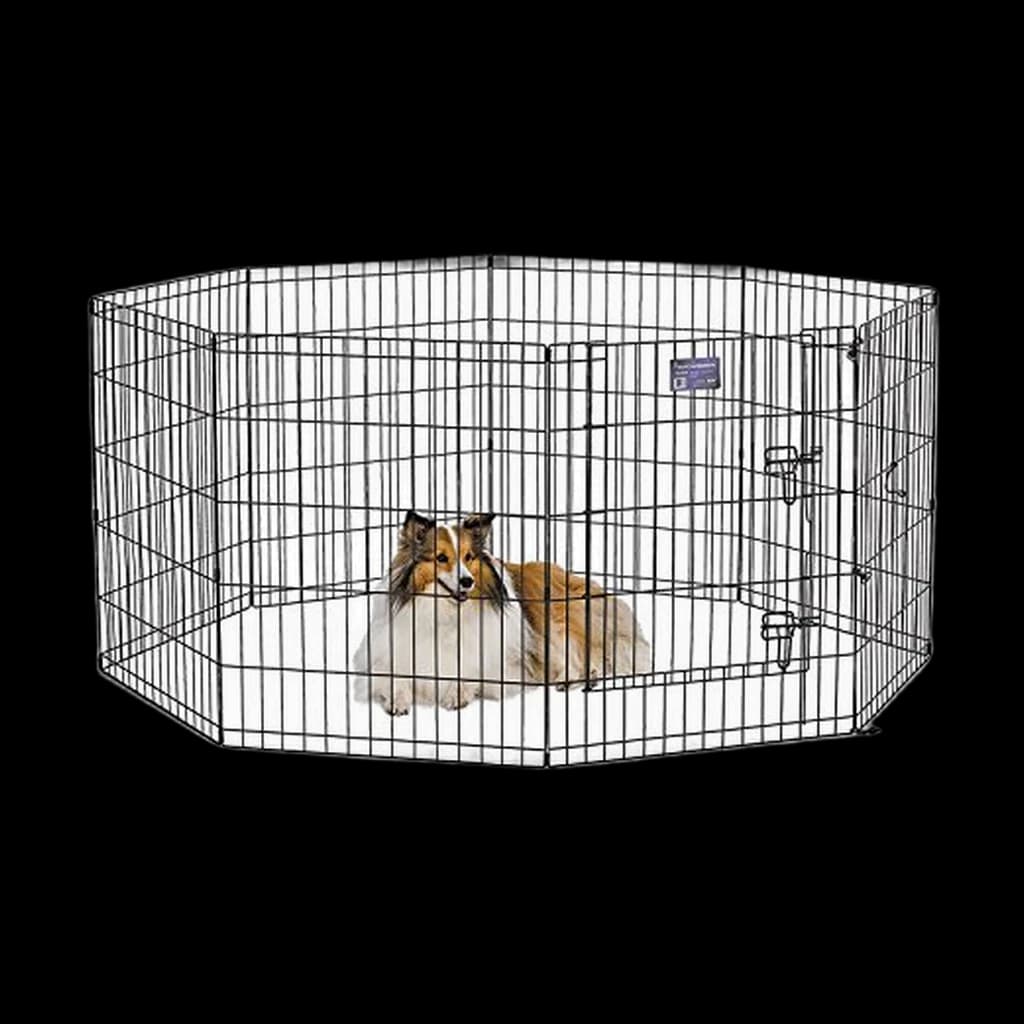
Start with the right question: containment or barrier?
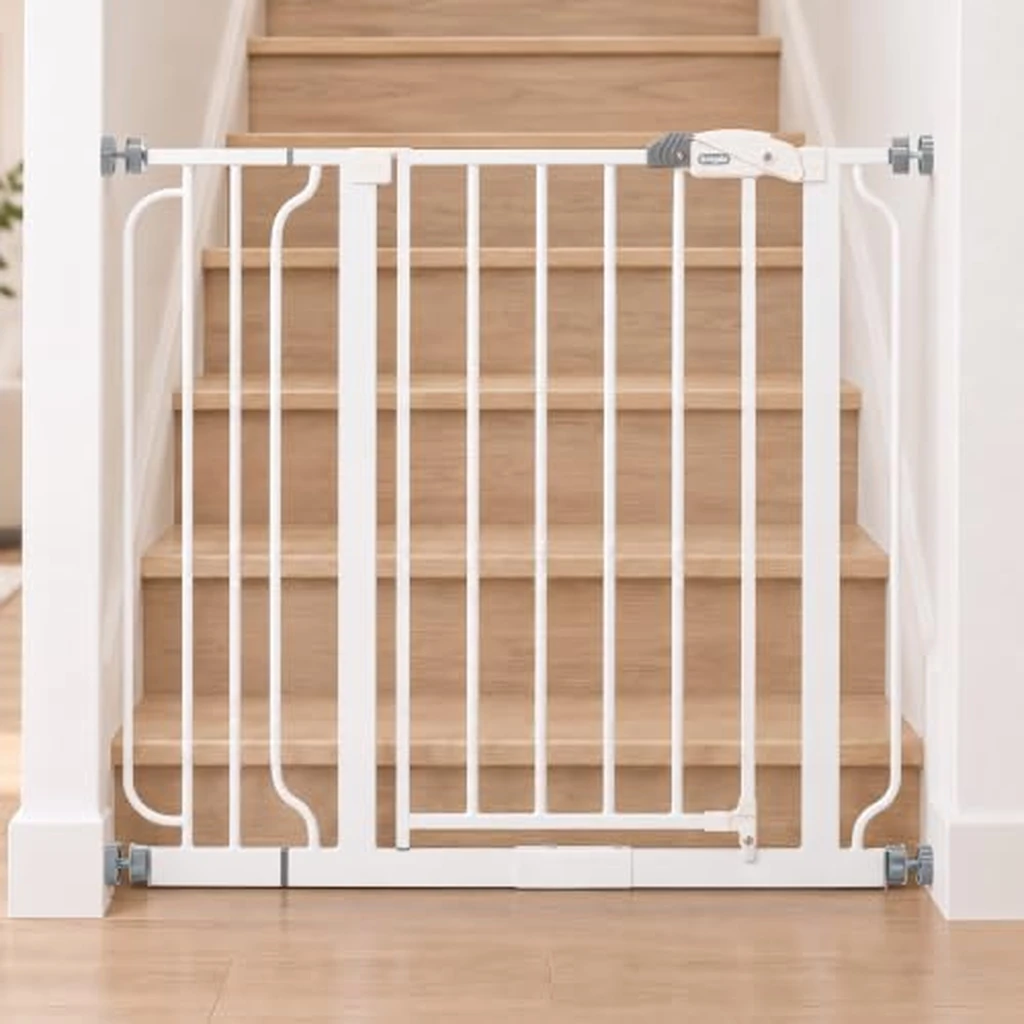
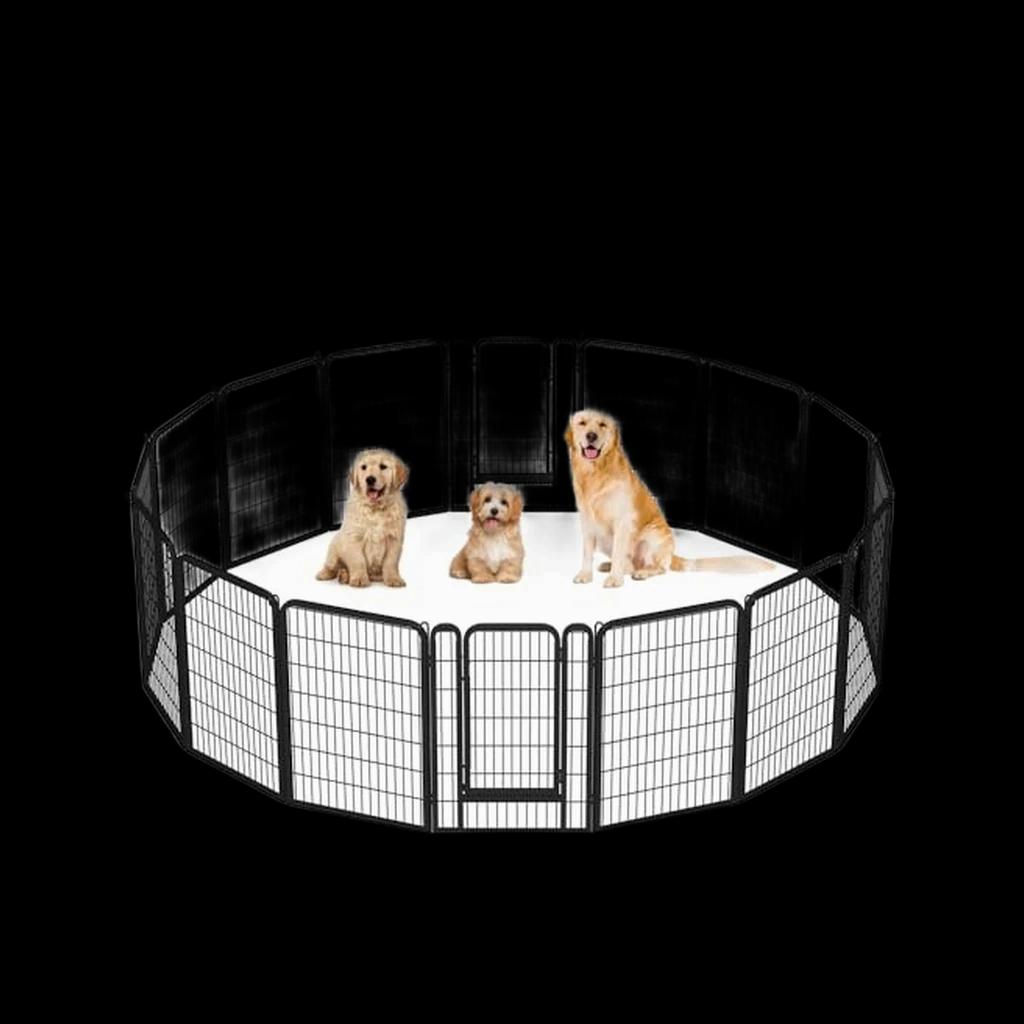
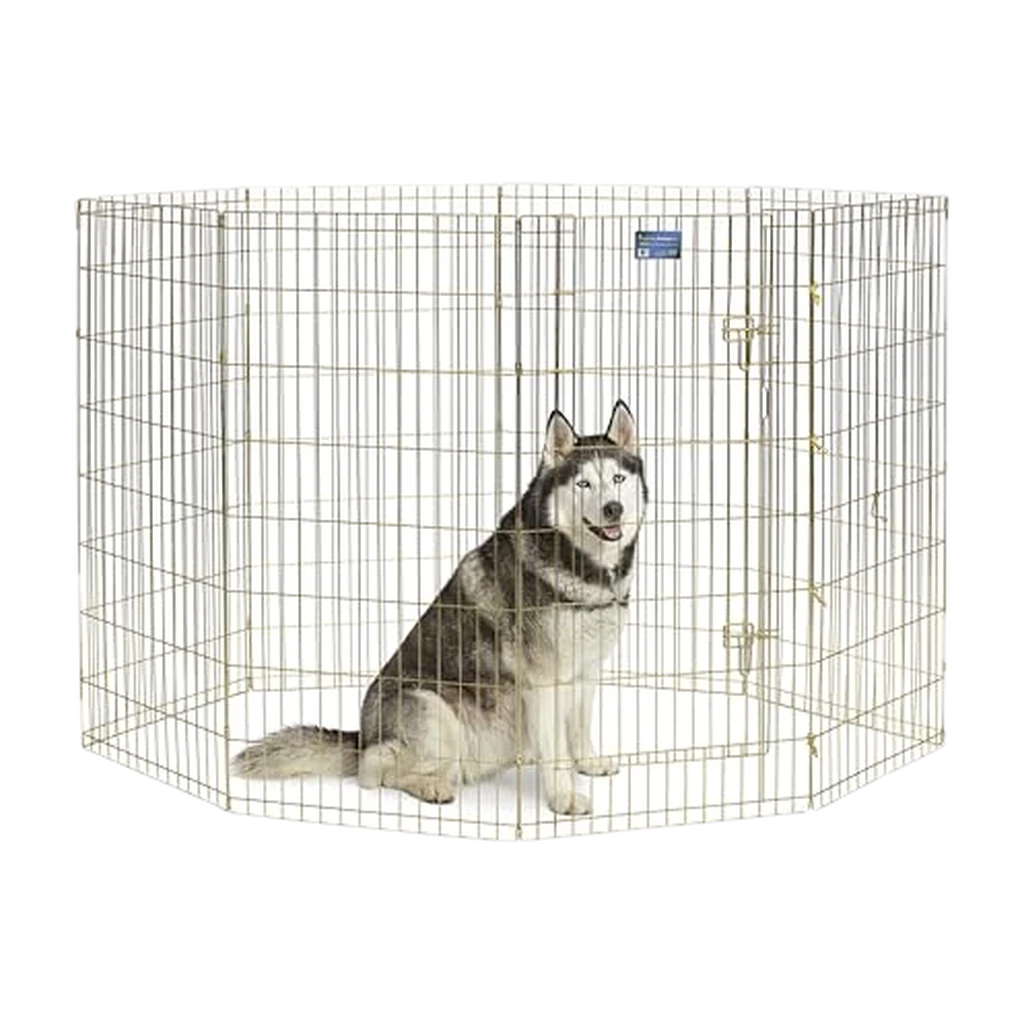
A pen (or X-pen) creates a defined floor space — you put the dog inside it. A gate seals off an opening — you put the gate between two rooms or at the bottom of a staircase. Most owners need one of each, not two of the same.
Pick the right pen height for your specific dog
- 24–30 inches: small breeds, puppies under 5 months, low-drive adults
- 36 inches: medium dogs, most adult mixed-breeds, dogs that don't jump in play
- 42–48 inches: athletic breeds (huskies, malinois, working-line shepherds), known jumpers, anyone who has cleared a 36-inch wall once
When in doubt, size up. A pen that's just barely tall enough fails in the worst possible moment.
Indoor pet gates: pressure-mount vs hardware-mount
This is the single most important distinction in the category.
- Pressure-mounted gates (Carlson, Regalo Easy Step, most walk-throughs) press against the wall with pads. They're easy to install, leave no holes, and are perfectly fine in doorways or at the bottom of stairs. They are not safe at the top of stairs. CPSC's gates-and-enclosures business guidance and ASTM F1004 codify this distinction — pressure mounts can pop loose under a fall load.
- Hardware-mounted gates screw directly into wall studs. They're the only option for the top of stairs. Most major brands (Regalo, Carlson, Cardinal) sell hardware-mounted versions of their gates.
If in doubt, hardware-mount. The five minutes with a drill is worth it.
Material trade-offs
- E-coated steel (MidWest): cheapest per square foot, most durable, escape-resistant, but rattles on hardwood and looks utilitarian.
- Heavy plastic (IRIS, North States): quieter, easier on floors, lighter to move, doesn't rust. Less secure against chewers; less weatherproof outdoors.
- Soft fabric (Pet Gear Travel Lite): travel and small-animal use only. Never a long-term containment solution for any dog over ~25 lbs or any chewer.
The pen-is-a-tool rule
AKC's playpen guide and the ASPCA's house-training resource both make the same point: a pen is a confinement tool used in short blocks, paired with crate training, enrichment, and supervised release. It is not an answer to 'I need to leave my dog alone for 9 hours.' AVSAB's humane training position is explicit that confinement should be associated with positive experiences (food, toys, calm) and never used as punishment — a poorly introduced pen creates the exact anxiety it was meant to prevent.
Setup checklist
- Match height to your specific dog, not the breed average.
- Choose a pen with a single door (one weak point) or no door (zero weak points if you can step over).
- For gates: pressure-mount in doorways, hardware-mount at the top of stairs. Never the reverse.
- Introduce gradually with food and toys. Two to three weeks of positive conditioning before extended use.
- Re-tighten pressure-mount pads monthly. The pad-and-wall interface is the failure point.