Match the height to the dog, not the breed average
A single golden-retriever puppy might be fine in a 30-inch pen for the first four months and need a 42-inch pen by month six. Sighthounds and working-line shepherds routinely clear 36 inches. If your dog has cleared a 30-inch pen once, that pen is permanently retired — they don't forget the trick.
Panel width matters as much as height
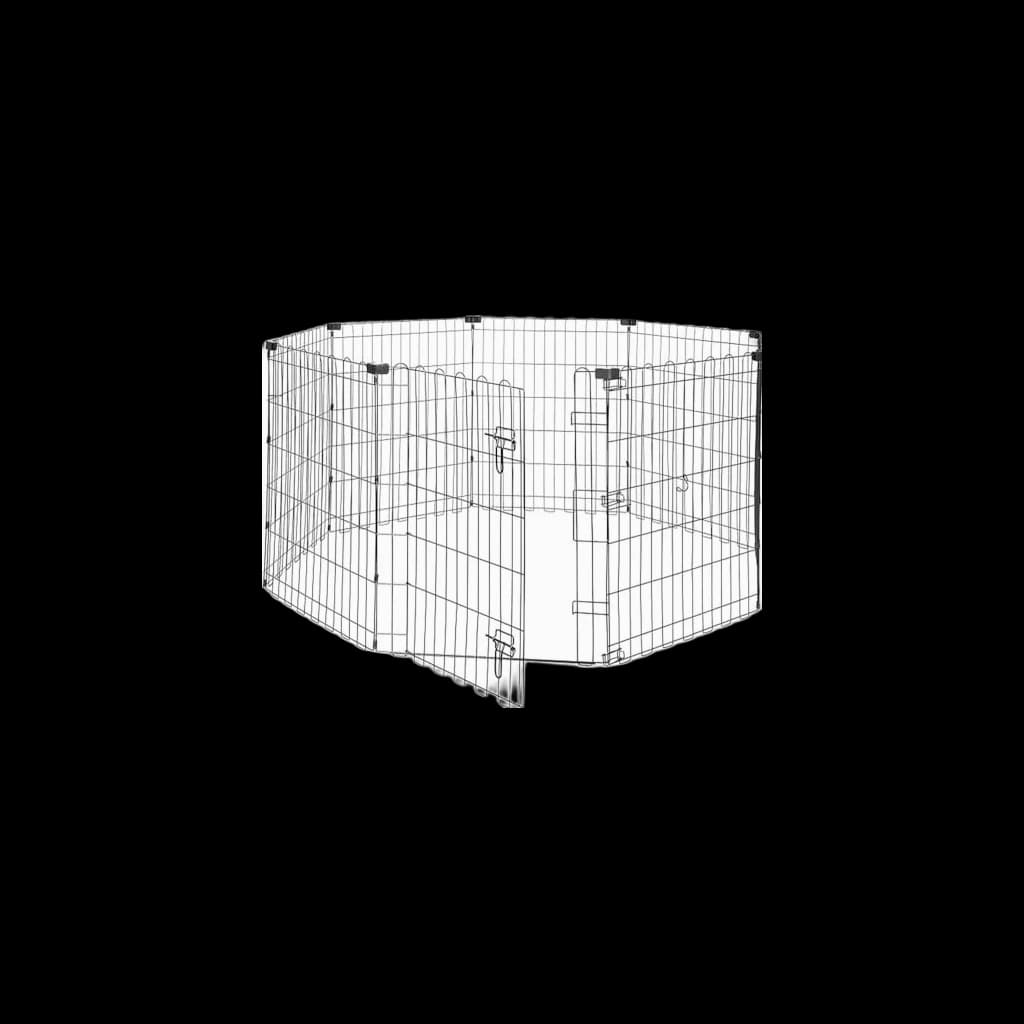
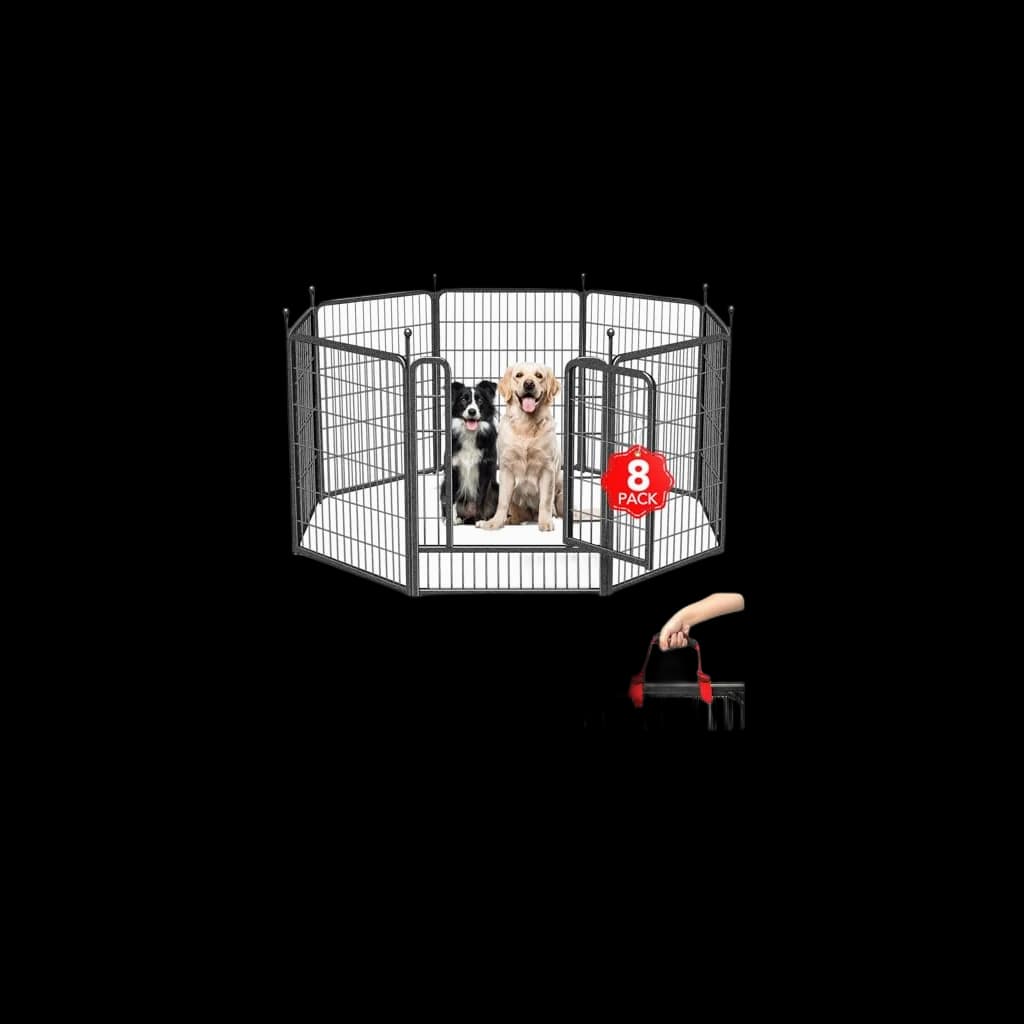
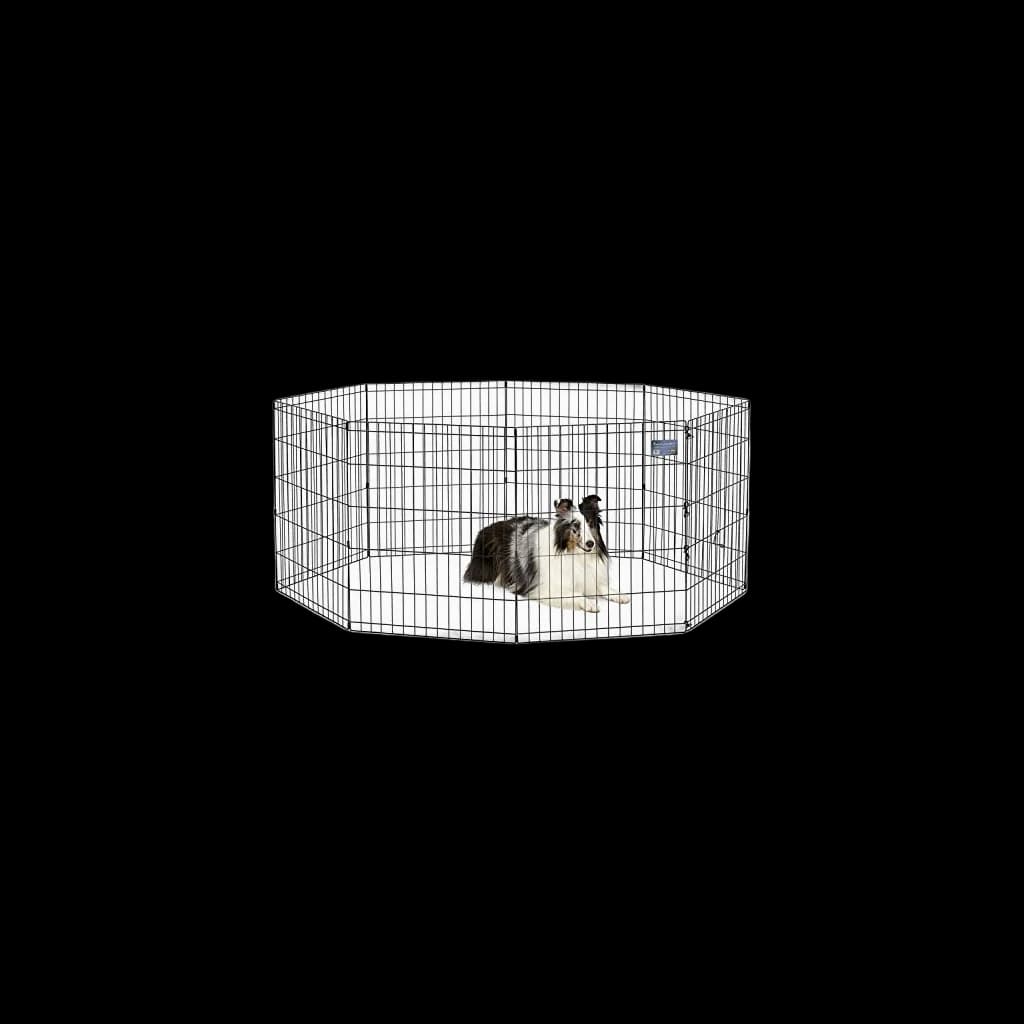
MidWest's 24-inch-wide panels (the canonical X-pen format) give you flexibility: 8 panels arranged in a square gives 16 sq ft of usable space. Brands that use narrower panels create either a smaller footprint or an awkward, elongated shape.
Door, no-door, or escape-engineering
The door is the weakest panel on any X-pen. For dogs prone to working latches, choose no-door variants and step over. For owners with mobility issues, choose a single, full-height door with a slide-bolt that locks from the outside. Avoid pens with multiple gates — every additional door is a new failure mode.
E-coated steel vs plastic
E-coated steel is the standard for a reason: durable, escape-resistant, easy to clean, weatherproof. Plastic (IRIS) is quieter and easier on floors but not appropriate for chewers or outdoor use. Soft fabric pens are not exercise pens — they're travel containment for small, calm animals.
Pen is a tool, not an answer
AKC's playpen guidance is explicit: pens are used in short blocks, paired with crate training, and never as the only confinement strategy. AVSAB's humane training position warns against using confinement as punishment. The pen owners who fail are usually trying to make the pen carry 100% of the management load.