Skip This: Prong and Shock Collars
AVSAB, AVMA, and Fear Free Pets all recommend against aversive collars. Here's why force-based tools backfire — and what credentialed trainers use instead.
PawBench · Best Picks
Rubber nail grips, traction boots, and anti-slip paw protection for senior dogs on hardwood, tile, ice, and hot pavement.
Indoors slipping on hardwood: Dr. Buzby's ToeGrips. Outdoors traction on wet sidewalks, hot pavement, or ice: PawZ Rubber Dog Boots. They solve different problems — don't conflate.
Top pick
Dr Buzby's ToeGrips for Dogs
Vet-designed rubber nail grips with peer-reviewed JAAHA research — the only category in senior mobility with published evidence behind it.
Buy on AmazonSkip this
Non-slip socks and disposable adhesive paw pads
Socks restrict natural paw spread and proprioception, which makes slipping worse for many senior dogs, not better. Adhesive pads release oils and adhesive residue that can irritate paw pads. Cornell's senior-dog guidance and the AVMA's senior-care framing both emphasize unrestricted natural gait — ToeGrips preserve that while adding traction; socks compromise it.
Across the indoor and outdoor traction products we Firecrawl-verified live on Amazon in May 2026, Dr. Buzby's ToeGrips and PawZ Rubber Dog Boots together account for more verified reviews than every ramp, stair, and rear-support harness in this category combined — community evidence that traction, not lifting, is the most-purchased mobility intervention for senior dogs.
Across r/dogs, r/AskVet, r/SeniorDogs, and r/IVDD, the consensus on indoor anti-slip is overwhelmingly Dr. Buzby's ToeGrips — frequently described as the single highest-leverage purchase in the entire senior-dog mobility space. The reasoning is that the floor itself is often the dog's biggest problem, and a $40 set of nail grips can outperform a $200 supplement regimen for dogs whose primary issue is traction, not pain. PawZ Rubber Dog Boots are the most-recommended outdoor traction solution, with the caveat that they're semi-disposable. The recurring warning across all four subreddits is against non-slip socks and disposable adhesive paw pads — these restrict gait or irritate the pads and rarely produce the intended benefit.
As an Amazon Associate I earn from qualifying purchases. Product prices and availability are subject to change.
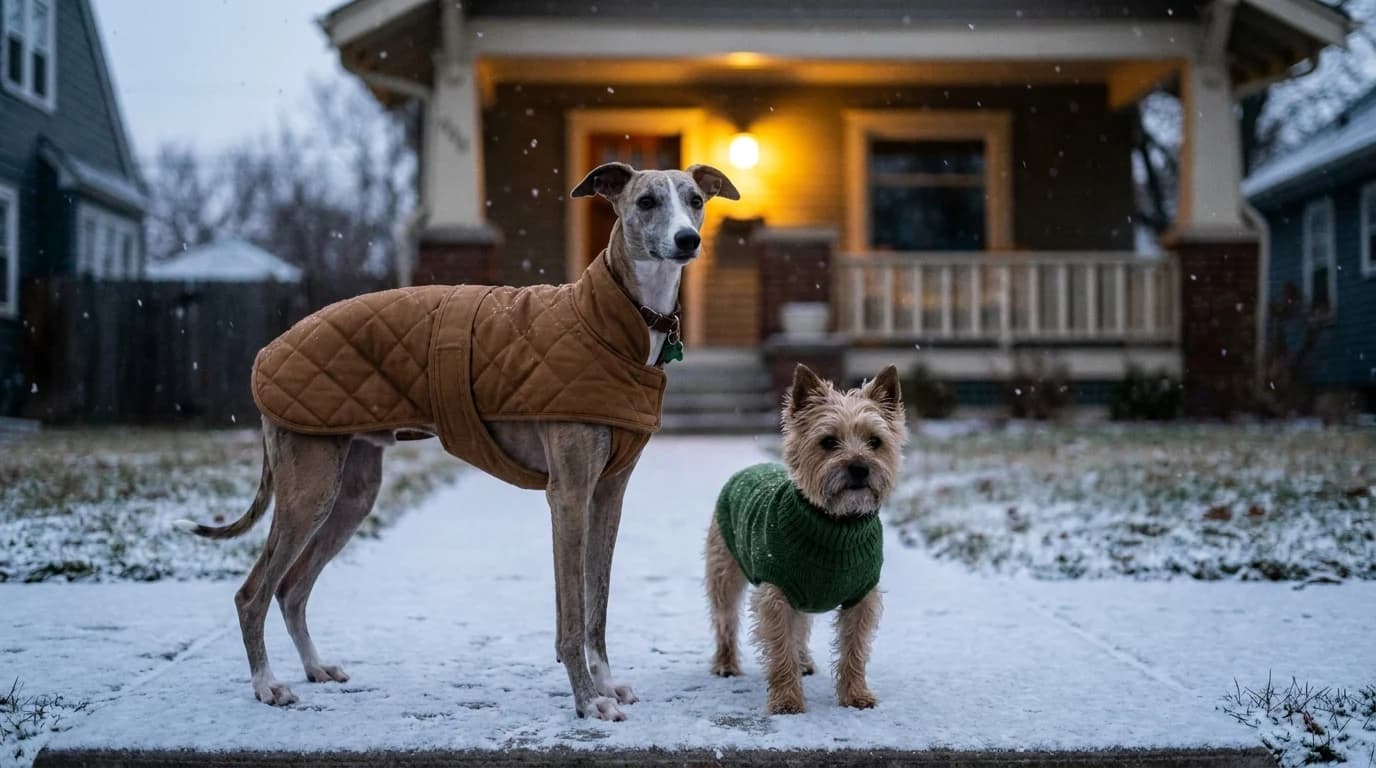
This subcategory splits cleanly into indoor traction and outdoor traction, and the wrong tool for the job produces no benefit. Indoor traction — for senior dogs slipping on hardwood, tile, or laminate — is best solved with Dr. Buzby's ToeGrips. These are vet-designed rubber grips that fit over the dog's nails, and they have peer-reviewed published research in JAAHA documenting reduced slipping events in senior dogs. They don't restrict natural gait the way booties and socks do, which matters because gait restriction is itself a problem in dogs that already have compromised proprioception. Cornell's Riney Canine Health Center is explicit that repeated slipping is a driver of chronic pain flare-ups in senior and arthritic dogs, so the floor itself is often the highest-leverage single intervention available — frequently outperforming a $200 supplement regimen for a dog whose primary problem is traction, not pain. Outdoor traction — for wet sidewalks, hot pavement, ice, or paw protection — is what rubber boots are for. PawZ Rubber Dog Boots are the standard recommendation because they stretch over the paw without straps or Velcro that work loose, and the 12-pack pricing means you have spares when the inevitable one goes missing. These are semi-disposable (5-10 uses on rough surfaces) and that's the design, not a flaw. Don't conflate the two categories — boots indoors typically make slipping worse, not better, because the dog can't feel the surface and may move with less confidence rather than more. For dogs with allergies, hot spots, or post-injury paw healing, rubber boots also serve as a barrier against irritants, and that's an additional valid use case beyond pure traction. AAHA's 2023 Senior Care Guidelines and the AVMA's senior-dog guidance both align: confident footing is foundational to mobility in older dogs, and the right tool depends on whether the problem is indoors or outdoors.
AVSAB, AVMA, and Fear Free Pets all recommend against aversive collars. Here's why force-based tools backfire — and what credentialed trainers use instead.

The FDA's 2018-2022 investigation linked grain-free diets to a rise in canine dilated cardiomyopathy. Here's what the evidence actually says — and what to feed ...

Retractable leashes give a reactive dog 16 feet of rope to launch a lunge. Here's why every credentialed trainer and every ER-vet thread says skip them — and wh...