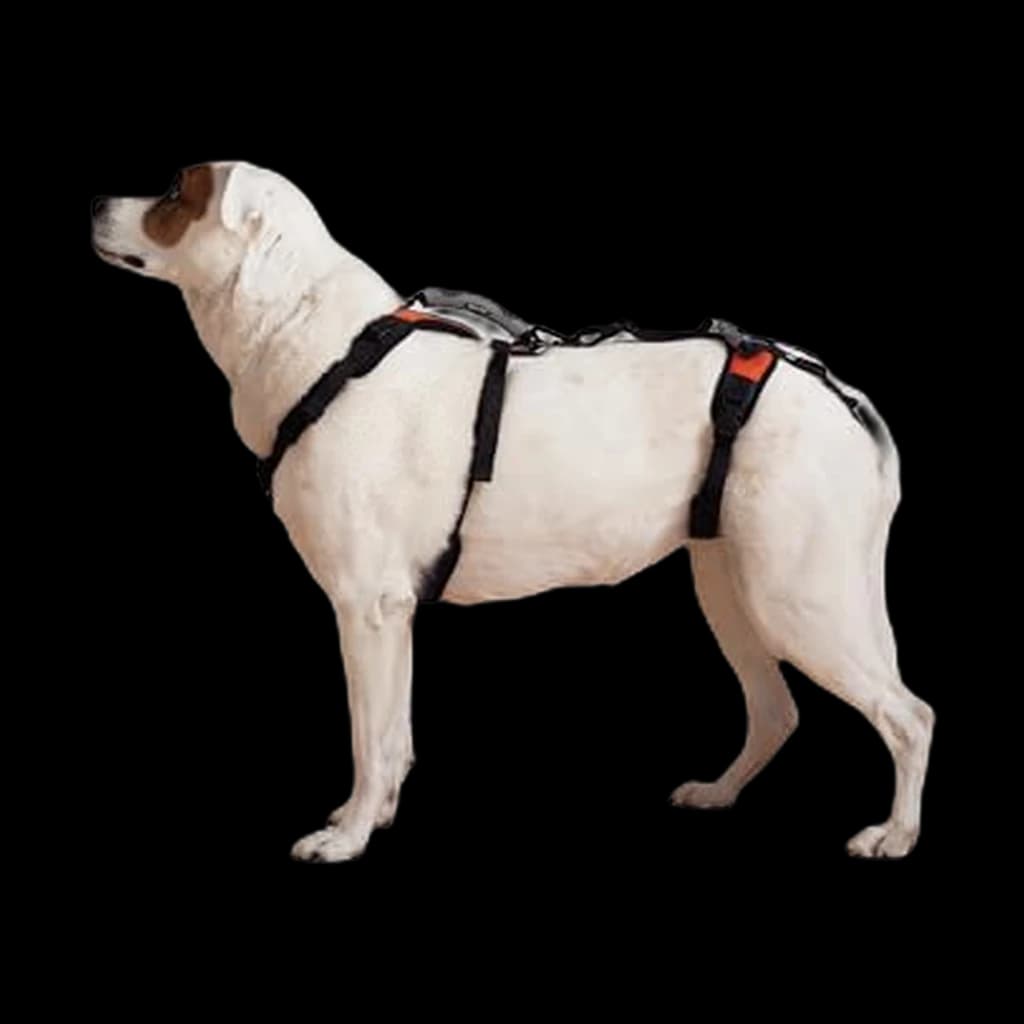
Start by identifying which of the four problems you're actually solving — they call for different gear and the wrong gear can hurt the dog. Problem one is traction. If your dog is slipping on hardwood, tile, or laminate, the highest-leverage purchase in this entire category is anti-slip nail grips (Dr. Buzby's ToeGrips is the only vet-designed option with published JAAHA research) or runners and yoga-mat strips on high-traffic paths. Cornell's Riney Canine Health Center explicitly identifies repeated slipping as a driver of chronic pain in senior and arthritic dogs, so the floor itself is often the biggest single fix available. Problem two is car access. Senior dogs, post-op dogs, and any dog with hip dysplasia or elbow arthritis shouldn't be jumping into SUVs — the landing impact is the issue, not the jump up. A folding ramp (PetSafe Happy Ride) is the right buy for SUVs and trucks; the PetSafe Happy Ride Folding Pet Ramp handles up to 150 lb and folds flat to fit in a trunk. Cheaper ramps without a textured non-slip surface are worse than nothing because they give the dog false confidence at the height where a fall causes the most damage. Problem three is furniture access. Small dogs (under 25 lb) who don't yet have a mobility diagnosis but need help onto the couch or bed are the right fit for pet stairs — PetSafe CozyUp Folding Dog Stairs with non-slip treads is the standard recommendation. For medium and large dogs, and for any dog with existing hip, elbow, or spinal issues, skip stairs and use a ramp instead — stairs concentrate weight on each leg during the step-up, while a ramp distributes it. Problem four is rising and walking support. This is where the most damage is done by buying the wrong product. The category splits sharply into two tiers. Hip-only rear support — for dogs with hip arthritis, dogs recovering from TPLO or other hind-leg surgery, or seniors who can rise on their own but need a hand on stairs — is the GingerLead Dog Rear Support Sling, a padded sling with an integrated leash that distributes weight across the abdomen and hips. Full-body lifting — for dogs with advanced degenerative myelopathy, late-stage IVDD, or large breeds that can't rise without help on both ends — is the Help 'Em Up Harness, which adds a separate front-end handle so a single person can lift the dog without bending or twisting. AAHA's 2023 Senior Care Guidelines specifically caution against mobility aids that don't distribute load across multiple contact points, and WSAVA's Global Pain Council guidelines reinforce that any device causing the dog to compensate or guard creates new pain pathways — which is exactly what cheap $20-30 unbranded slings do. The AVMA's IVDD information for owners is also clear that IVDD-prone breeds (dachshunds, corgis, French bulldogs, basset hounds, beagles, shih tzus) benefit most from preventive ramp use and no-jumping rules introduced before any spinal episode, not after the first incident. Finally, dog boots and rubber boots like PawZ have a specific role — they're traction tools for outdoor surfaces (wet sidewalks, hot pavement, ice) and protective tools for paws with allergies or hot-spot recovery, not a substitute for indoor traction. If your dog slips indoors, the answer is ToeGrips or runners; if your dog needs paw protection outside, boots are the right tool. Don't conflate the two.