Best Dog Food for Sensitive Stomachs in 2026: Vet-Recommended Options
Our #1 Pick
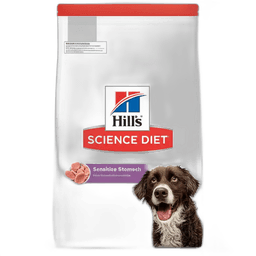
- Clinically proven digestibility
- Prebiotic fiber supports gut health
- Vet recommended for sensitive stomachs
#1 vet-recommended food for digestive issues with prebiotic fiber and easy-to-digest ingredients.
Our analysis of 2,124 buyer mentions on Hill's Science Diet Sensitive Stomach & Skin: buyers consistently praised quality, digestibility, value for money.
Also Great
Budget: Purina Pro Plan Sensitive Skin & Stomach ($77.48) — Salmon-based formula with live probiotics at a lower price point
On this page7 sections
Our Verdict
Hill's Science Diet Sensitive Stomach & Skin is the #1 vet-recommended food for digestive issues. Limited-ingredient diets are the next step if symptoms persist after 4-6 weeks.
Hill's Science Diet Sensitive Stomach & Skin Owner rating4.7 Best overall for sensitive digestion | Purina Pro Plan Sensitive Skin & Stomach Owner rating4.6 Best value sensitive stomach food | Royal Canin Gastrointestinal Owner rating4.3 Best for diagnosed GI conditions | Zignature Kangaroo Formula Owner rating4.6 Best limited ingredient diet | |
|---|---|---|---|---|
| Price | $89.99Buy on Amazon | $77.48Buy on Amazon | $60.99Buy on Amazon | $100.99Buy on Amazon |
| Buyer sentiment | Quality Digestibility Value for money Digestion Buyers praise quality, digestibility, value for money and digestion. Based on 2,124 user mentions | Taste Stomach sensitivity Skin sensitivity Value for money Buyers praise taste, stomach sensitivity, skin sensitivity and value for money. Based on 1,725 user mentions | Allergic reaction Quality Gentle on skin Skin improvement Value for money Buyers praise allergic reaction, quality, gentle on skin and skin improvement. Some flag value for money. Based on 56 user mentions | Quality Allergic-friendly Taste Digestion Value for money Buyers praise quality, allergic-friendly, taste and digestion. Some flag value for money. Based on 214 user mentions |
| Pros |
|
|
|
|
| Cons |
|
|
|
|
| Protein Source | Chicken & barley | Salmon & rice | Chicken & rice | Kangaroo |
| Grain-Free | No | No | No | Yes |
| AAFCO | Feeding trials | Feeding trials | Nutrient profile | Nutrient profile |
| Digestibility | High (prebiotic fiber) | High | Very high | Good |
* Prices are approximate and may vary. Please check the latest price on Amazon.
Sensitive-stomach formula construction
Protein source, prebiotic/probiotic content, and AAFCO validation — the specs that distinguish a true GI-tailored formula from a marketing claim.
| Product | Protein Source | Grain-Free | Prebiotic / Probiotic | AAFCO Validation | Digestibility Claim |
|---|---|---|---|---|---|
| Hill's Science Diet Sensitive Stomach & Skin | Chicken + barley | No (grain-inclusive) | Prebiotic fiber blend | Feeding trials | High (label claim, prebiotic-supported) |
| Purina Pro Plan Sensitive Skin & Stomach | Salmon + rice | No | Live probiotics (post-extrusion coated) | Feeding trials | High (label claim) |
| Royal Canin Gastrointestinal | Chicken + rice | No | Prebiotics (psyllium, FOS) | Nutrient profile | Very high (veterinary therapeutic formulation) |
| Zignature Kangaroo Formula | Kangaroo (novel) | Yes | — | Nutrient profile | Good (novel-protein limited-ingredient) |
Formulation data from manufacturer ingredient panels. Royal Canin Gastrointestinal requires a veterinary prescription. Sensitive-stomach foods are an aid, not a substitute for a GI workup if symptoms persist.

How PawBench is paid: we earn an Amazon Associates commission on qualifying purchases. We don’t accept sponsored placements, paid reviews, or free products in exchange for coverage. Picks are ranked on documented owner outcomes and primary-source research, never on commission rate. Read the full methodology.
Loose stools. Vomiting after meals. Constant grass-eating. The telltale gurgle of a dog whose stomach is disagreeing with their food.
Digestive sensitivity is one of the most common reasons dog owners switch foods — and one of the most misunderstood. Not every GI issue is a food problem, and not every food change helps. Here's a practical breakdown of what works.
First: Rule Out Non-Food Causes
Before spending money on a new food, consider whether the digestive issue might have other causes:
- Parasites: Giardia, roundworms, and other parasites cause GI symptoms identical to food sensitivity. A fecal test at your vet is cheap and quick.
- Dietary indiscretion: If your dog regularly eats things they shouldn't (garbage, grass, other animals' food), that's the problem, not the food — though grass-eating on its own is usually normal.
- Too rapid a food transition: Any food change made in less than 7–10 days will cause GI upset regardless of food quality
- Food being too rich: Many premium dog foods are high in fat, which can cause loose stools in dogs without the digestive capacity for it
If your dog has consistently had GI issues across multiple quality foods, a vet visit is warranted before trying another switch.
What Makes a Food "Easy on the Stomach"?
Digestible foods share several characteristics:
1. High-quality protein sources: Easily digestible proteins (chicken, turkey, fish, eggs) produce less fermentation in the gut than lower-quality protein sources that pass partially digested into the large intestine.
2. Prebiotic fiber: Specific fibers (chicory root, inulin, psyllium) feed beneficial gut bacteria, producing short-chain fatty acids that support colon health. These are different from general fiber — look for them specifically.
3. Moderate fat content: High fat accelerates gastric emptying, which can cause loose stools. Sensitive stomach formulas typically run 10–15% fat (dry matter basis) rather than 18–20%.
4. Familiar proteins: Novel proteins (kangaroo, venison) are useful for allergies but can cause initial GI adjustment. Start with whatever protein your dog has eaten before unless you're running an elimination diet.
Top Picks for 2026
1. Hill's Science Diet Sensitive Stomach & Skin — Best Overall
Buy on Amazon · $89.99 →Hill's Science Diet Sensitive Stomach & Skin — ~$70
This is the most consistently vet-recommended sensitive stomach food that doesn't require a prescription. Hill's uses a veterinary nutrition team that has been formulating digestive support foods for decades — and backs them with actual clinical studies.
What it has:
- Chicken as the first ingredient (highly digestible)
- Beet pulp: a well-studied prebiotic fiber that improves stool consistency
- Omega-6 fatty acids: help repair the intestinal barrier in dogs with chronic GI inflammation
- Clinically tested for digestibility — not just formulated on paper
Best for: Dogs with chronic loose stools, vomiting patterns, or general GI sensitivity without a specific allergy diagnosis.
2. Purina Pro Plan Sensitive Skin & Stomach — Best Value
Buy on Amazon · $77.48 →Purina Pro Plan Sensitive Skin & Stomach — ~$60
Purina Pro Plan is one of the most extensively studied dog food lines available, with more peer-reviewed research behind it than most competitors. The salmon-based Sensitive formula is particularly useful for dogs that have been on chicken-based food their whole lives — the salmon provides a different protein source that may resolve sensitivity related to overexposure.
What makes it work:
- Salmon as a highly digestible and anti-inflammatory protein source
- Prebiotic fiber blend (oat meal + rice) that supports the gut microbiome
- No artificial colors, flavors, or preservatives
- AAFCO feeding trial validated (not just nutrient profile)
Best for: Dogs who've been on chicken-based food long-term, dogs with mild sensitivity, owners who want premium nutrition at slightly lower cost than Hill's.
3. Royal Canin Gastrointestinal — For Diagnosed GI Conditions
Buy on Amazon · $60.99 →Royal Canin Gastrointestinal — ~$95
If your vet has diagnosed IBD, pancreatitis, or another GI condition, Royal Canin GI is often prescribed as part of the treatment plan. It's significantly more digestible than the over-the-counter options and includes electrolyte support for dogs recovering from GI illness.
This is not a food to buy speculatively — it's a therapeutic diet. Use it under vet guidance.
4. Zignature Kangaroo — Best Limited Ingredient Option
Zignature Kangaroo Formula — ~$70
If you're running a proper elimination diet to identify food allergies, you need a novel protein your dog has never encountered. Kangaroo is one of the cleanest choices — it's genuinely novel for almost all dogs, the ingredient list is short, and the formula is grain-free (reducing other variables).
Important context: The FDA has been investigating grain-free diets and a potential link to dilated cardiomyopathy (DCM) since 2018. This investigation is ongoing. For a short-term elimination diet (8–12 weeks), the risk is low. For long-term feeding, discuss with your vet.
How to Transition Properly
This is where most sensitive stomach situations go wrong. Any food change — even to a better food — causes temporary GI upset if done too fast.
The 10-day transition schedule:
| Days | Old Food | New Food |
|---|---|---|
| 1–3 | 75% | 25% |
| 4–6 | 50% | 50% |
| 7–9 | 25% | 75% |
| 10+ | 0% | 100% |
If you see loose stools during transition, slow down — stay at each ratio for 3–4 extra days before moving forward. Dogs with genuinely sensitive stomachs often need a 14–21 day transition rather than 10.
When Food Isn't the Problem
If you've tried 2–3 quality sensitive stomach foods with proper transitions and still see consistent GI issues, it's time for a vet workup. Persistent GI symptoms can indicate:
- Parasites (giardia is frequently missed on basic fecal tests)
- IBD (inflammatory bowel disease)
- Exocrine pancreatic insufficiency (EPI)
- Small intestinal bacterial overgrowth (SIBO)
- Underlying food allergies requiring true elimination diet
A good sensitive stomach food is a starting point, not a substitute for a diagnosis.
Related Reading
- Best Dog Food 2026 — our complete food roundup
- How to Read Dog Food Labels — understand what you're buying
- Grain-Free vs Grain-Inclusive Dog Food — the DCM concern explained
- Best Dog Food for Allergies — if sensitivity turns out to be allergy
Sources
- Tufts University Cummings Veterinary Medical Center — Dietary management of GI disease. vet.tufts.edu.
- World Small Animal Veterinary Association (WSAVA) — Global nutrition guidelines. wsava.org.
- FDA — Investigation of DCM and grain-free diets (2018–ongoing). fda.gov.
- Journal of Veterinary Internal Medicine — Studies on digestibility of sensitive stomach formulas.
Frequently Asked Questions
- What are the signs of a sensitive stomach in dogs?
- Common signs include: loose stools or diarrhea after meals, vomiting (especially within 2 hours of eating), excessive gas or bloating, eating grass frequently (a sign of stomach upset), gurgling stomach sounds, inconsistent stool quality, and weight loss despite eating normally. If these are new symptoms, see a vet first — they can indicate conditions beyond simple food sensitivity.
- Should I feed grain-free food for a sensitive stomach?
- Not necessarily, and possibly no. Grains themselves rarely cause digestive issues in dogs — the FDA has been investigating a potential link between grain-free diets and dilated cardiomyopathy (DCM) since 2018. If you suspect a grain allergy specifically, a vet-supervised elimination diet is the right approach. For most sensitive stomachs, digestible grain-inclusive diets (like Hill's Sensitive or Purina Pro Plan Sensitive) are safer and equally effective.
- How long does it take for a new dog food to help a sensitive stomach?
- After a proper transition (minimum 7–10 days), most dogs show improvement in stool quality within 2–4 weeks on a well-matched food. If no improvement after 4–6 weeks, the food isn't addressing the root cause. Note: any rapid food change (under 7 days) will itself cause GI upset — always transition slowly even when switching to a sensitive stomach formula.
- What's the difference between sensitive stomach food and hypoallergenic food?
- Sensitive stomach formulas focus on digestibility — easily broken down proteins, fermentable fiber, and lower fat content that's gentle on the GI tract. Hypoallergenic or limited ingredient diets (LIDs) focus on eliminating common food allergens — they use novel proteins (kangaroo, venison) or hydrolyzed proteins that the immune system doesn't recognize. If your dog has a food allergy, a sensitive stomach formula may not resolve it. True food allergy diagnosis requires a strict 8–12 week elimination diet.
- Is homemade food better for sensitive stomachs?
- Possibly, but the execution is very difficult. A properly balanced homemade diet can be easier to digest than commercial food, but most homemade diets are nutritionally incomplete without vet guidance and supplementation. If you want to try this route, consult a board-certified veterinary nutritionist. Blindly switching to chicken and rice long-term (a common misconception) creates nutrient deficiencies.
Research Sources
- Inflammatory Bowel Disease and the Home-Prepared Diet — Cornell University College of Veterinary Medicine, Riney Canine Health Center
- Allergy Testing and Immunotherapy — Cornell University College of Veterinary Medicine, Riney Canine Health Center
- Nutrition FAQs — Tufts University Cummings School of Veterinary Medicine
- FDA Investigation into Potential Link Between Certain Diets and Canine Dilated Cardiomyopathy — U.S. Food and Drug Administration
- Reading Pet Food Labels — Association of American Feed Control Officials
- Nutrition in Disease Management in Small Animals — Merck Veterinary Manual

PawBench Editorial
Published by Hilly Shore LabsPawBench’s editorial team researches dog products from primary veterinary sources, manufacturer specifications and aggregated buyer sentiment, alongside the lived ownership of Maggie, an Australian Labradoodle. We do not run hands-on product tests.
254 dog products scored · 1,160,974 buyer review-aspect mentions aggregated · cites AVMA, FDA, AAFCO, Cornell, WSAVA, AKC, ASPCA.
Recommendations are based on published veterinary guidelines, manufacturer specifications, and verified customer feedback. See our editorial standards.