Best Dog Nail Clippers 2026: Safer Trimming at Home
Our #1 Pick
Sharp stainless steel blades with comfortable grip -- the tool most groomers actually use.
Our analysis of 12,225 buyer mentions on Safari Professional Nail Trimmer: buyers consistently praised quality, functionality, ease of use.
Also Great
For Anxious Dogs: Dremel PawControl ($30) — Gentle grinding is less scary than clipping for nail-anxious dogs
On this page11 sections
Our Verdict
The Safari Professional Nail Trimmer is our top pick for its sharp stainless steel blades and comfortable grip. Switch to a Dremel if your dog is nail-clipper anxious.
Millers Forge Pro Nail Clip 4.6 Best Overall Clippers | Safari Professional Nail Trimmer 4.6 Best for Small Dogs | Zen Clipper 4.3 Best Safety Clippers | Dremel 7350-PET Pet Nail Grinder 4.7 Best Overall Grinder | Casfuy Dog Nail Grinder 4.5 Best Quiet Grinder | |
|---|---|---|---|---|---|
| Price | $19.50Buy on Amazon | $9.90Buy on Amazon | $22.95Buy on Amazon | $35.98Buy on Amazon | $18.98Buy on Amazon |
| Buyer sentiment | Quality Sharpness Effectiveness Cutting Performance Buyers praise quality, sharpness, effectiveness and cutting performance. Mixed feedback on grip. Based on 143 user mentions | Quality Functionality Ease Of Use Cutting Performance Buyers praise quality, functionality, ease of use and cutting performance. Mixed feedback on size. Based on 12,225 user mentions | Quality Functionality Adjustability Ease Of Use Size Buyers praise quality, functionality, adjustability and ease of use. Mixed feedback on cutting performance and sharpness. Some flag size. Based on 910 user mentions | Functionality Quality Ease Of Use Speed Buyers praise functionality, quality, ease of use and speed. Mixed feedback on noise level and battery life. Based on 10,845 user mentions | Noise Level Effectiveness Ease Of Use Quality Buyers praise noise level, effectiveness, ease of use and quality. Based on 43,605 user mentions |
| Pros |
|
|
|
|
|
| Cons |
|
|
|
|
|
| For All Coat Types | Yes | Yes | Yes | Yes | Yes |
* Prices are approximate and may vary. Please check the latest price on Amazon.
Dog Nail Clipper & Grinder Spec Matrix
Clipper style, dog size range, safety features, and power specs
| Product | Type | Max Dog/Nail Size | Safety Guard | Rechargeable | Speed / Lock | Blade / Bit Material |
|---|---|---|---|---|---|---|
| Millers Forge Pro Nail Clip | Scissor/plier-style clipper | All dog sizes except very large breeds (large size for 40+ lb) | Yes — built-in guard to prevent over-cutting | N/A | Spring-loaded handle; no lock | Stainless-steel blades, red plastic grip |
| Safari Professional Nail Trimmer | Guillotine-style clipper | Small breed (W6104) or Medium–Large breed (W6105) | — (guillotine opening sizes nail for user) | N/A | Tension spring handles; vinyl-covered grips | Stainless-steel blade, replaceable |
| Zen Clipper | Conical-hole safety clipper | 7 sizes; XX-Large fits dogs up to ~60 lb | Yes — cone only admits the nail tip, physically blocking the quick | N/A | — | Stainless-steel conical blade |
| Dremel 7300-PT Pet Nail Grinder | Rotary nail grinder | All dog sizes; ~9 oz tool weight | No — technique-dependent | Yes — 4.8V Ni-Cd, 3-hour charger | Two speeds: 6,500 and 15,000 RPM | 60-grit sanding band (1/2") |
| Casfuy Dog Nail Grinder | Rotary nail grinder | 3 ports for small, medium, and large pets | Yes — port openings limit nail exposure | Yes — Micro-USB, ~2 hr runtime after 3 hr charge | 2 speeds (low/high) | Diamond bit grinder |
Specs from manufacturer product pages as of April 2026.
How PawBench is paid: we earn an Amazon Associates commission on qualifying purchases. We don’t accept sponsored placements, paid reviews, or free products in exchange for coverage. Picks are ranked on documented owner outcomes and primary-source research, never on commission rate. Read the full methodology.
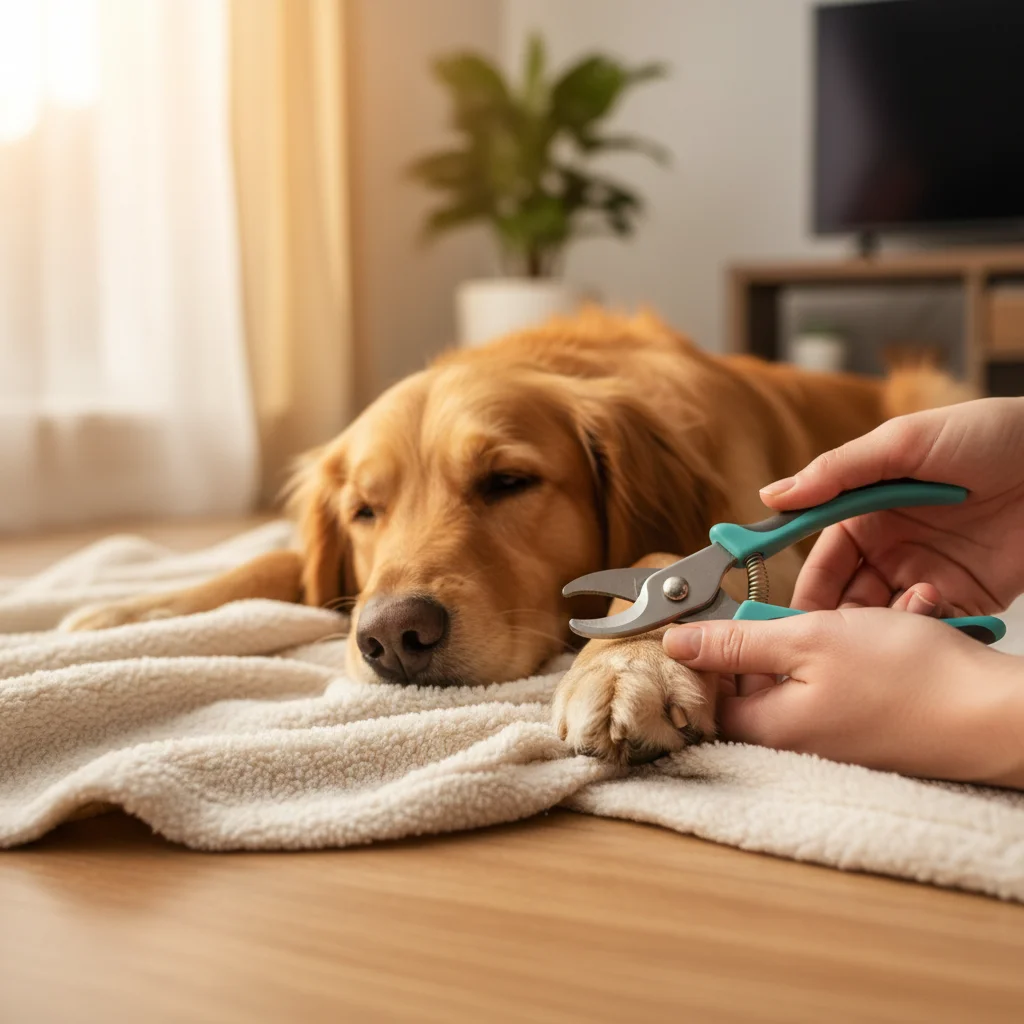
Trimming your dog's nails is one of those tasks most owners dread — and most clippers make it harder than it needs to be. Sharp blades, a good grip, and the right size for your dog's nail thickness are the difference between a calm 3-minute trim and a panicked session that ends with a bleeding quick. This guide walks through the best dog nail clippers across price tiers, plus when to pick a grinder instead, backed by research from ASPCA, AKC, and verified long-term owner reviews.
We're a research-based site — we evaluate products by synthesizing professional reviews, long-term owner feedback on r/dogs and r/dogtraining, and guidance from certified veterinary technicians. We don't hands-on test every product, but we do cross-reference every pick against multiple independent sources before including it.
The clipper vs grinder decision
Before you pick a specific product, pick a tool type. The right choice depends on three things: your dog's nail thickness, your dog's noise tolerance, and your own comfort level with the tools.
Clippers are better if:
- Your dog is calm and tolerates nail trims without drama
- Your dog has medium or thick nails (most medium-to-large breeds)
- You're experienced and can identify the quick visually
- You want speed — a full clipper trim takes 2–3 minutes
Grinders are better if:
- Your dog has light-colored nails where the quick is visible (grinding stops naturally at resistance)
- Your dog has thick, tough nails (grinders handle them more easily)
- You have a nervous dog and want more control (you can stop instantly)
- You care about smooth rounded edges (clippers leave sharp corners that catch on carpet)
- Your dog is tolerant of the grinder's buzzing sound
Use both if:
- You want speed AND smooth edges: clip first to remove length, then grind to smooth
- You have multiple dogs with different preferences
- Your dog has one paw that's sensitive to one tool but fine with the other
The AKC's grooming guidelines note that many professional groomers use both tools sequentially, and that rotating between them reduces the stress of nail trims for anxious dogs.
Tier 1 — Budget clippers ($10–$20)
1. Safari Professional Nail Trimmer (Stainless Steel)
Buy on Amazon · $9.90 →The reference budget pick and what many groomers recommend for owners of medium-to-large dogs. Sharp stainless steel blades, ergonomic rubber grips, and a simple spring mechanism. No bells and whistles — just a reliable clipper that lasts years with occasional sharpening. Available in small, medium, and large sizes; pick the size based on your dog's nail thickness.
- Good for: Medium and large dogs, owners who want a no-nonsense tool.
- Not good for: Anxious dogs (no quick guard), toy breeds (blade too large).
2. Millers Forge Nail Clipper (Professional Grade)
Used in many professional grooming shops. The 7.5-inch blade handles medium-to-large dog nails cleanly. Comes with a safety lock for storage. Slightly longer learning curve than the Safari but the cut is cleaner on thick nails.
- Good for: Medium to extra-large breeds, owners who want professional-grade tools without the price tag.
- Not good for: Toy and small breeds, first-time trimmers (the larger blade requires more confidence).
Tier 2 — Clippers with safety features ($20–$35)
3. Boshel Dog Nail Clippers (with Quick Guard)
The top seller in the category for good reason. Includes a safety stop that limits how far the blade can close, reducing the risk of cutting into the quick for owners who aren't confident yet. Sharp semi-circular stainless steel blades, comfortable non-slip handle, and a small nail file built into the handle. Also includes a free nail file — useful for smoothing edges after clipping.
- Good for: First-time owners, medium dogs, anyone who's ever accidentally cut the quick and now trims nervously.
- Not good for: Large breeds with very thick nails (the blade may not cut cleanly through them).
4. Epica Professional Pet Nail Clipper
Similar class to the Boshel with a stainless steel blade, ergonomic handle, and safety stop. Slightly sharper out of the box based on owner feedback, which makes a real difference on the first few trims while your dog is getting used to the process.
- Good for: Medium and large dogs, owners who want a sharper initial cut.
- Not good for: Toy breeds, puppies.
Tier 3 — Nail grinders ($25–$60)
Grinders are rotary tools that file the nail down instead of clipping it. They're the better choice for thick-nailed breeds, anxious dogs, and anyone who wants smoothly-rounded edges that won't catch on carpets or couches.
5. Casfuy Dog Nail Grinder (Rechargeable)
Buy on Amazon · $18.98 →The budget grinder pick. Two-speed rotation, diamond-drum grinding bit, USB-C rechargeable battery that lasts roughly 5 hours per charge. Three port sizes for different dog sizes. Quieter than most budget grinders — important because the sound is the #1 reason dogs refuse grinders.
- Good for: First-time grinder users, small to medium dogs, budget-conscious owners.
- Not good for: Extra-large breeds with very thick nails (the drum isn't aggressive enough).
6. Dremel 7300-PT PawControl Dog Nail Grinder
The professional standard. Dremel's pet-specific grinder has two speeds (13,000 and 6,500 RPM) and includes a 60-grit sanding drum designed specifically for dog nails. It's louder than the Casfuy but significantly more capable on thick nails. The battery is removable and rechargeable. Owners on r/dogs consistently rank this as the best option for medium-to-large dogs.
- Good for: Medium and large dogs, owners graduating from clippers, anyone who wants professional-grade results.
- Not good for: Noise-sensitive dogs (it's not quiet), budget buyers.
7. Oster Gentle Paws Less Stress Nail Grinder
The quietest grinder in the category per owner feedback — specifically designed for noise-sensitive dogs. Lower RPM (16,000 max) and a padded grip. The tradeoff for quietness is that it takes slightly longer to grind down very thick nails, but for anxious dogs the calm sessions are worth it.
- Good for: Anxious dogs, rescue dogs still adjusting to grooming, owners prioritizing their dog's comfort over speed.
- Not good for: Impatient owners, dogs with rapid-growing thick nails.
Tier 4 — Premium / hybrid ($50+)
8. Furminator Nail Grinder with Clipper Attachment
A grinder and clipper in one tool. Lets you clip the length off quickly and then switch to grinding to smooth edges, without changing tools. The clipper mechanism is sharp enough to handle large breed nails, and the grinder is quieter than the Dremel. The tradeoff: it's bigger and heavier than either dedicated tool.
- Good for: Owners of multiple dogs with different nail types, anyone who wants one tool that does both jobs.
- Not good for: People who prefer the feel of a dedicated tool, budget buyers.
How to trim without cutting the quick
The quick is the pink/darker vein inside the nail. Cutting it causes bleeding and (more importantly) pain, which is the #1 reason dogs develop lifelong nail-trim anxiety. Four strategies to avoid it:
- Trim frequently, small amounts. A light trim every 1–2 weeks keeps the quick from growing long. If your dog's nails are overgrown, clip just a tiny bit at a time and wait 1–2 weeks for the quick to recede before clipping more. This is the approach the ASPCA recommends for overgrown nails.
- Use a flashlight. Shining a light from behind the nail makes the quick visible, even on dark nails. Takes 30 seconds and eliminates most guesswork.
- Cut at a 45-degree angle from below. Avoid cutting straight across — angle the blade slightly so you're only trimming the sharp tip and leaving a margin.
- Keep styptic powder within reach. Even experienced owners hit the quick occasionally. A $5 bottle of styptic powder (Kwik Stop is the standard) stops the bleeding in 30 seconds. Corn starch works as an emergency substitute.
What to look for when buying
Sharpness. Sharp clippers on the first day outperform any expensive clipper that's gotten dull.
Dull blades crush the nail instead of cutting it cleanly. The crushing sensation is what makes dogs hate nail trims.
Size match to your dog. Too-small clippers won't close fully on thick nails. Too-large clippers are awkward for small breeds. Size charts on product pages are usually reliable.
Comfortable grip. You're going to be squeezing this for several minutes, sometimes with one hand while holding the dog with the other. Ergonomic, non-slip handles matter more than they seem.
Safety stop (for beginners). If you've never trimmed before, pay the extra $5 for a clipper with a quick guard.
Battery life (for grinders). A grinder that dies mid-session is worse than no grinder at all. Look for at least 2–3 hours of continuous use per charge.
Nail trim frequency by breed type
The AKC's grooming guide breaks this down by activity level, not breed:
- Highly active dogs (running, hiking, city pavement): every 4–8 weeks (natural wear does most of the work)
- Moderately active dogs (yard play, short walks): every 3–4 weeks
- Low-activity dogs (indoor or senior): every 2–3 weeks (nails don't wear down naturally)
The clicking test: if you can hear your dog's nails clicking on hard floors, they're too long.
When to let a professional do it
There's no shame in paying a groomer $15–$20 for a nail trim. Scenarios where it's worth it:
- Your dog has black nails and you're not comfortable identifying the quick
- Your dog has severe anxiety about nail trims
- You have a very large breed with very thick nails
- Your dog has thick dewclaws that require special angle
- You've cut the quick more than twice and both of you are traumatized
Professional trims also include nail filing, which most home setups skip. Groomers can get a smoother finish in less time than most owners.
Frequently asked questions
Which is better — clippers or grinders for dog nails? Both have their place. Clippers are faster and better for thick nails. Grinders leave smoother edges and are better for dogs who are scared of the clipping sound. Many owners use clippers first to remove length, then grinders to smooth. Pick the tool your dog tolerates best.
How often should I trim my dog's nails? Roughly every 3–4 weeks for most dogs. If you can hear clicking on hard floors, it's overdue. Highly active dogs who walk on pavement often need less frequent trims due to natural wear.
What do I do if I cut the quick? Apply styptic powder (Kwik Stop is the standard) to the nail and hold firm pressure for 30 seconds. If you don't have styptic powder, corn starch works as an emergency substitute. The bleeding should stop within 1–2 minutes. If it persists beyond 10 minutes, contact your vet.
Why does my dog hate nail trims? Usually because of a past bad experience — often a cut quick that caused pain. The fix is gradual counter-conditioning: let your dog smell the clippers, give treats, touch each paw, give treats, trim ONE nail, give treats. Build up over weeks. The ASPCA has guidelines on desensitization for nail trims that work well.
Can I use human nail clippers on my dog? Only on very small puppies or toy breeds with soft nails. Adult dog nails are too thick for human clippers and you'll end up crushing the nail instead of cutting it.
Are electric nail grinders safer than clippers? Generally yes, for beginners. Grinders stop when they hit resistance so you're less likely to hit the quick by accident. They're also slower, which gives you more control. The downside is the noise stresses some dogs.
What's the best nail clipper for small dogs? For toy and small breeds (under 25 lbs), the Boshel small size or any "small dog" Safari Professional clipper works well. Avoid professional Millers Forge at this size — the blade is too large.
What's the best nail clipper for large dogs? The Millers Forge professional clipper for nail width, or the Dremel PawControl grinder for dogs with very thick nails.
Bottom line
For most owners, our overall pick is the Boshel Dog Nail Clippers — they're sharp, have a quick guard that prevents beginner mistakes, and cost under $20. If you have a large breed with thick nails, step up to the Dremel 7300-PT grinder. If you have an anxious dog, go with the Oster Gentle Paws for its quieter operation.
Whatever tool you pick, the most important factor is frequency. Trim small amounts often rather than large amounts rarely — your dog's quick stays short, nail trims stay painless, and you avoid the downward spiral of "nails got so long that trimming them became traumatic."
For related grooming gear, see our guides on the best grooming tools 2026, dog grooming schedule by coat type, and how often to bathe your dog.
Frequently Asked Questions
- How often should I cut my dog's nails?
- Most dogs need nail trimming every 2-4 weeks. A simple test: if you can hear your dog's nails clicking on hard floors, they are too long. Active dogs that walk frequently on pavement may only need monthly trims, while indoor dogs on carpet may need attention every 10-14 days. Always check dew claws, which never wear naturally.
- How do I cut my dog's nails without hitting the quick?
- For light-colored nails, look for the pink quick visible inside the nail and cut 2mm below it. For dark nails, trim in small increments and stop when you see a gray or pink oval appear in the center of the cut surface. Using a nail grinder instead of clippers virtually eliminates the risk of quicking because you remove nail gradually.
- What do I do if I cut my dog's nail too short and it bleeds?
- Apply styptic powder (like Kwik Stop) to the bleeding nail with a cotton ball and hold gentle pressure for 30 seconds. The bleeding will stop almost immediately. If you don't have styptic powder, cornstarch or flour can work as a temporary substitute. Keep your dog calm and avoid letting them walk on rough surfaces until the bleeding fully stops.
- Is a nail grinder better than clippers for dogs?
- Nail grinders eliminate the risk of cutting the quick, leave a smoother finish without sharp edges, and require less force than clippers. About 70% of dogs that are fearful of clippers tolerate grinders better. The main trade-off is noise and vibration, which some dogs need 1-2 weeks of desensitization to accept comfortably.
- How do I trim black dog nails safely?
- For dark-colored nails where you cannot see the quick, trim in very small increments (1-2mm at a time). After each cut, look at the cross-section of the nail. When you see a gray or pink oval appear in the center of the cut surface, stop — you are close to the quick. A nail grinder is often safer for dark nails because it removes material gradually rather than making a single cut.
- How do I get my dog to let me clip their nails?
- Use gradual desensitization over 1-2 weeks. Start by handling your dog's paws daily with treats. Then introduce the clippers without using them — let your dog sniff them, reward. Next, touch the clippers to the nails without cutting, reward. Then clip one nail, give a high-value treat, and stop. Build up to more nails over multiple sessions. A Licki Mat with peanut butter is an excellent distraction during the process.
- Are nail grinders better than clippers for dogs?
- Nail grinders eliminate the risk of cutting the quick and leave a smoother finish without sharp edges. About 70% of dogs that are fearful of clippers tolerate grinders better because there is no sudden pressure or crack sound. The main trade-offs are noise, vibration (which some dogs dislike), and slower speed. For anxious dogs or dark nails, grinders are generally the better choice.
- What happens if you never cut your dog's nails?
- Chronically overgrown nails cause pain with every step, alter your dog's gait and posture, and can lead to joint problems, arthritis, and even tendon injuries over time. The quick grows longer as the nail grows, making future trimming more difficult. In extreme cases, nails can curl and grow into the paw pad, causing infection and severe pain. Dew claws are especially prone to this since they never wear naturally.
- Can I use human nail clippers on my dog?
- Human nail clippers can work on very small puppies or tiny breeds with thin nails, but they are not recommended for most dogs. Dog nails are thicker and rounder than human nails, and human clippers can crush or split the nail rather than cutting cleanly. Purpose-built dog nail clippers like the Millers Forge provide a cleaner cut with less risk of nail splitting or cracking.
- How do I know if my dog's nails are too long?
- The simplest test: if you can hear your dog's nails clicking on hard floors, they are too long. When your dog is standing, the nails should not touch the ground. For a more precise check, look at the nails from the side — they should curve slightly but not extend past the pad. Dew claws require separate attention since they never make ground contact and never wear naturally.
Research Sources
- How to Trim Your Dog's Nails Safely — AKC, 2025
- How to Trim a Dog's Nails at Home — VCA Animal Hospitals, 2024
- Dog Grooming Tips (nail trimming guidance) — ASPCA, 2024
- Caring for Your Dog's Nails — ASPCA Pet Health Insurance, 2024
- It's Bath Time! Towels, Brushes, Dog Shampoo, and More — AKC, 2024

Hilly Shore Labs
Editorial teamIndependent product research team behind PawBench. Reviews are grounded in primary veterinary sources, aggregated buyer sentiment, and the lived ownership of Maggie, an Australian Labradoodle.
200+ dog products researched · 1.1M+ Amazon review-aspect mentions analyzed · cites AVMA, FDA, AAFCO, Cornell, WSAVA, AKC, ASPCA.
All product reviews are independently researched. Recommendations are based on published veterinary guidelines, manufacturer specifications, and verified customer feedback. See our editorial standards.