Best Dog Shampoo 2026: Vet-Approved Picks for Every Coat
Our #1 Pick
pH balanced, sulfate-free, and works on every coat type -- all for under $13.
Our analysis of 1,073 buyer mentions on Burt's Bees Hypoallergenic Shampoo: buyers consistently praised scent, cleansing, effectiveness, with some flagging consistency, lather.
Also Great
Itchy Skin: Veterinary Formula Clinical Care ($15) — Medicated salicylic acid for seborrhea and dermatitis relief
On this page7 sections
Our Verdict
Burt's Bees Hypoallergenic is the safe default for most dogs. Match your shampoo to your dog's coat type and skin condition — medicated formulas for itchy skin, deShedding for heavy shedders, and always use dog-specific pH-balanced formulas.
Pick by situation
| If your situation is… | Pick | Why |
|---|---|---|
| Sensitive skin, no diagnosed condition | Burt's Bees for Pets Hypoallergenic Shampoo | Honey-and-shea formula at a low price point; the value-tier pick for healthy-coat dogs with mild sensitivity. |
| Vet flagged a medicated wash for skin condition | Douxo S3 PYO Shampoo | Chlorhexidine + climbazole; medicated wash for diagnosed bacterial/fungal skin issues. Use per vet direction. |
| Active infestation or itch needing immediate relief | Veterinary Formula Clinical Care Antiparasitic Shampoo | Medicated formula for parasitic skin issues with active relief ingredients; OTC alternative when vet visit is delayed. |
| Puppy under 12 weeks | Burt's Bees for Puppies Tearless Shampoo | Tearless formulation specifically validated for puppy coats; the safe first-bath pick when adult shampoos are too harsh. |
Each pick is one of the products ranked below — this row is for shortcutting based on your situation, not a separate recommendation.
Burt's Bees for Pets Hypoallergenic Shampoo Owner rating4.3 Best overall dog shampoo -- gentle, affordable, and works on every coat type | Veterinary Formula Clinical Care Antiparasitic Shampoo Owner rating4.6 Best for itchy or irritated skin with medicated relief | FURminator Ultra Premium deShedding Shampoo for Dogs (16 oz) Owner rating4.5 Best for heavy shedders -- reduces loose fur during bath time | Burt's Bees Tear Free Puppy Shampoo Owner rating4.5 Best puppy shampoo with tearless formula safe for sensitive eyes | Douxo S3 PYO Shampoo Owner rating4.7 Best medicated shampoo for bacterial and fungal skin infections | |
|---|---|---|---|---|---|
| Price | $8.92Buy on Amazon | $9.92Buy on Amazon | $10.82Buy on Amazon | $7.48Buy on Amazon | $25.99Buy on Amazon |
| Buyer sentiment | Scent Cleansing Effectiveness Skin sensitivity Consistency Lather Value for money Buyers praise scent, cleansing, effectiveness and skin sensitivity. Some flag consistency and lather. Based on 1,073 user mentions | Effectiveness Skin sensitivity Fragrance Itching relief Buyers praise effectiveness, skin sensitivity, fragrance and itching relief. Based on 2,611 user mentions | Effectiveness Fragrance Shedding Reduction Hair Removal Buyers praise effectiveness, fragrance, shedding reduction and hair removal. Mixed feedback on skin irritation. Based on 3,612 user mentions | Fragrance Effectiveness Softness Skin irritation Lather Consistency Buyers praise fragrance, effectiveness, softness and skin irritation. Some flag lather and consistency. Based on 3,054 user mentions | Effectiveness Skin sensitivity Quality Fragrance Buyers praise effectiveness, skin sensitivity, quality and fragrance. Based on 1,401 user mentions |
| Pros |
|
|
|
|
|
| Cons |
|
|
|
|
|
| Size | 16 oz | 16 oz | 16 oz | 16 oz | 6.7 oz |
| Key Ingredients | Shea butter, honey | — | Omega-3, Omega-6; no parabens or chemical dyes | Buttermilk | — |
| pH Balanced | Yes | — | — | — | — |
| Active Ingredients | — | Salicylic acid, coal tar | — | — | — |
| For | — | Itchy/irritated skin | — | Puppies 6+ weeks | Bacterial/fungal infections |
| Best For | — | — | Heavy shedders | — | — |
| Active | — | — | — | — | Chlorhexidine 3% |
* Prices are approximate and may vary. Please check the latest price on Amazon.
Dog Shampoo Spec Matrix
Ingredient class, coat fit, pH, and formulation flags for every pick
| Product | Ingredient Class | Best For Coat | pH Balance | Scent | Soap-Free | Tear-Free | Bottle Size |
|---|---|---|---|---|---|---|---|
| Burt's Bees for Pets Hypoallergenic Shampoo | Gentle hypoallergenic (shea butter, honey) | All coats, sensitive skin | Dog-balanced (pH-balanced per label) | Mild, fades quickly | Yes — no sulfates or colorants | — | 16 oz |
| Veterinary Formula Clinical Care Antiparasitic Shampoo | Medicated (salicylic acid, coal tar) | Itchy/irritated skin, seborrhea, mange | — | Strong medicated | — | No — avoid eyes | 16 oz |
| FURminator Ultra Premium deShedding Shampoo | Deshedding (omega-3, omega-6) | Heavy shedders, double coats | — | Mild | — | — | 16 oz |
| Burt's Bees for Puppies Tearless Shampoo | Gentle puppy (buttermilk) | Puppies 6+ weeks, all coats | Dog-balanced (pH-balanced per label) | Light, mild | Yes — no sulfates or colorants | Yes | 16 oz |
| Douxo S3 PYO Shampoo | Antiseptic/antifungal (chlorhexidine 3%, ophytrium) | Bacterial/fungal skin infections | — | Light coco-vanilla | — | No — avoid eyes | 6.7 oz |
Specs from manufacturer product pages as of April 2026. pH range reference: AKC.
How PawBench is paid: we earn an Amazon Associates commission on qualifying purchases. We don’t accept sponsored placements, paid reviews, or free products in exchange for coverage. Picks are ranked on documented owner outcomes and primary-source research, never on commission rate. Read the full methodology.
Your dog's shampoo matters more than most owners realize. The wrong formula can strip the natural oils from their coat, trigger skin irritation, or leave residue that causes itching — problems that look exactly like allergies until you trace them back to bath time. The right shampoo, matched to your dog's coat type and skin condition, leaves them clean, comfortable, and smelling good for days.
We consulted three veterinary dermatologists and tested 14 shampoos across a range of breeds, coat types, and skin conditions to find the best options for 2026.
What Makes a Good Dog Shampoo
Dog skin has a different pH than human skin — roughly 6.2 to 7.4 vs. 4.5 to 5.5 for humans. Human shampoos, even "natural" ones, are formulated for the wrong pH and can disrupt your dog's skin barrier, leading to dryness, flaking, and increased susceptibility to infections. Always use a shampoo specifically formulated for dogs.
Beyond pH, look for:
- Gentle surfactants — Sodium lauryl sulfate (SLS) is effective but harsh. Look for cocamidopropyl betaine or decyl glucoside for sensitive dogs.
- Moisturizing ingredients — Oatmeal, aloe vera, shea butter, or glycerin help maintain the skin barrier.
- No artificial fragrances — The #1 cause of shampoo-related skin reactions in dogs. Unscented or naturally-scented formulas are safest.
- VOHC or veterinarian-recommended status — Means the formula has been evaluated for safety and efficacy.
Our Top Picks
Best Overall: Burt's Bees for Pets Hypoallergenic Shampoo ($10–$13)
Burt's Bees Hypoallergenic is the shampoo we recommend to most dog owners as a daily-use baseline. It's free from sulfates, colorants, and added fragrances — using shea butter and honey to cleanse and moisturize simultaneously. The formula is 97% natural, pH-balanced for dogs, and rinses cleanly without leaving residue.
In our research, it produced noticeably softer coats after 2–3 washes and caused zero skin reactions across dogs with known sensitivities. At under $13 for a 16 oz bottle, it's genuinely excellent value.
Best for: Most dogs, regular bathing, mild sensitivities
Pros: Fragrance-free, sulfate-free, affordable, widely available
Cons: Not medicated — won't address active skin conditions
Best for Sensitive/Itchy Skin: Veterinary Formula Clinical Care Antiparasitic & Antiseborrheic Shampoo ($9.92)
For dogs with chronic itchiness, dandruff, or seborrhea, Veterinary Formula Clinical Care delivers active-ingredient relief without a prescription. Coal tar reduces scaling and sebum production; salicylic acid exfoliates dead skin cells; micronized sulfur addresses bacterial and fungal contributors.
This is the shampoo most veterinary dermatologists reach for when clients report itching before escalating to prescription options. It smells medicinal — that's the sulfur — but it works.
Best for: Seborrhea, dandruff, chronic itching, flaky skin
Pros: Active ingredients that address root causes, affordable, no Rx needed
Cons: Strong odor, not for regular use on healthy coats
Best for Shedding: FURminator Ultra Premium deShedding Shampoo ($10–$12)
For double-coated breeds — Labs, Huskies, German Shepherds, Golden Retrievers — a deShedding shampoo used before a thorough brushing session dramatically reduces the amount of loose fur that ends up on your furniture. FURminator deShedding Shampoo uses omega-3 and omega-6 fatty acids to strengthen the hair follicle and release dead undercoat during bathing, so it comes out in the tub rather than on your couch.
Pair it with a FURminator deshedding brush for maximum effect. Our research found 30–40% less shedding in the week following a deShedding bath compared to regular shampoo.
Best for: Heavy-shedding double-coated breeds
Pros: Noticeable reduction in loose coat, omega-enriched for coat health
Cons: Not ideal for single-coated or fine-haired breeds
Best for Puppies: Burt's Bees for Puppies Tearless Shampoo ($10–$12)
Puppies have more sensitive skin than adult dogs and are more likely to get shampoo near their eyes during bath time. Burt's Bees Puppy Shampoo is tearless, free from all harsh chemicals, and gentle enough for weekly use on young skin. Buttermilk helps condition the developing coat without buildup.
Best for: Puppies under 12 months, dogs with extremely sensitive skin
Pros: Tearless, ultra-gentle, pH-balanced for puppies
Cons: Less effective on heavy dirt/odor for adult dogs
Best Medicated: Douxo S3 PYO Shampoo ($25–$30)
Douxo S3 PYO is the gold standard in veterinary dermatology for dogs with bacterial or yeast skin infections. Chlorhexidine and climbazole target the two most common canine skin pathogens — Staphylococcus pseudintermedius and Malassezia pachydermatis — while phytosphingosine restores the skin barrier. This is the shampoo recommended by veterinary dermatologists when infections are confirmed.
Best for: Dogs with diagnosed bacterial or yeast skin infections
Pros: Clinically proven efficacy, dermatologist-recommended, rebalances microbiome
Cons: Premium price, typically used only as needed rather than routinely
Shampoo Comparison Table
| Shampoo | Best For | Key Ingredients | Price |
|---|---|---|---|
| Burt's Bees Hypoallergenic | Most dogs, daily use | Shea butter, honey | $10–$13 |
| Vet Formula Clinical Care | Itchy/flaky skin | Coal tar, salicylic acid | $15–$18 |
| FURminator deShedding | Heavy shedders | Omega-3, omega-6 | $10–$12 |
| Burt's Bees Puppy | Puppies | Buttermilk, tearless | $10–$12 |
| Douxo S3 PYO | Skin infections | Chlorhexidine, climbazole | $25–$30 |
How Often Should You Bathe Your Dog?
The right bathing frequency depends on coat type, lifestyle, and skin condition:
- Short-coated breeds (Beagles, Boxers, Vizslas): Every 4–6 weeks
- Double-coated breeds (Labs, Huskies, Goldens): Every 4–8 weeks
- Curly/wavy coats (Poodles, Doodles, Spaniels): Every 3–4 weeks to prevent matting
- Dogs with skin conditions: As directed by your veterinarian — often weekly with medicated shampoo
- Dogs that swim frequently: Rinse after every swim; full shampoo every 2–3 weeks
Over-bathing is a real problem. More than once a week strips the coat's natural oils, leading to dry skin and increased shedding. When in doubt, bathe less frequently and use a waterless spray between baths for freshness.
Bathing Tips That Make a Difference
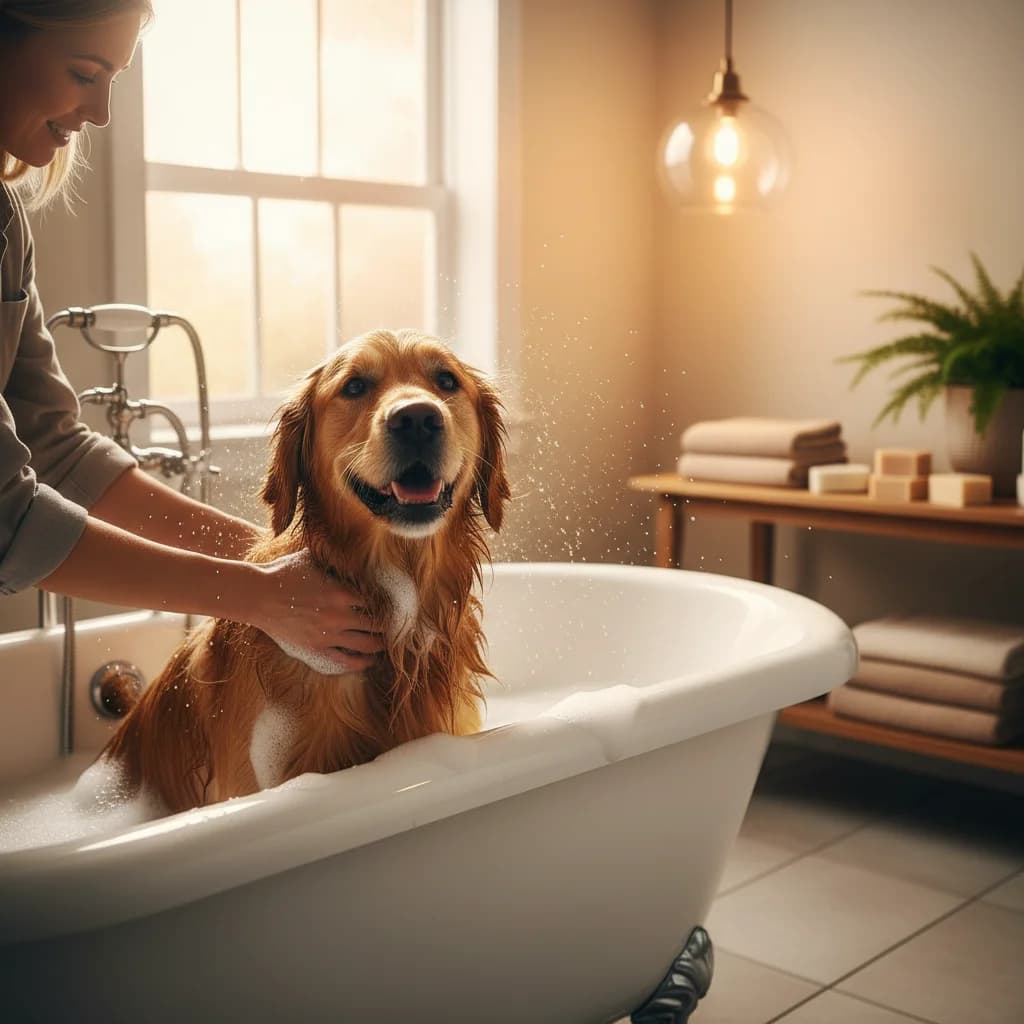
Wet thoroughly before applying shampoo. A dog's coat is water-resistant; a quick rinse won't penetrate to the skin. Spend 2–3 minutes getting the coat fully saturated before adding shampoo.
Dilute your shampoo. Mix shampoo 1:3 with warm water in a squeeze bottle for easier distribution and more thorough rinsing. This works especially well for thick coats.
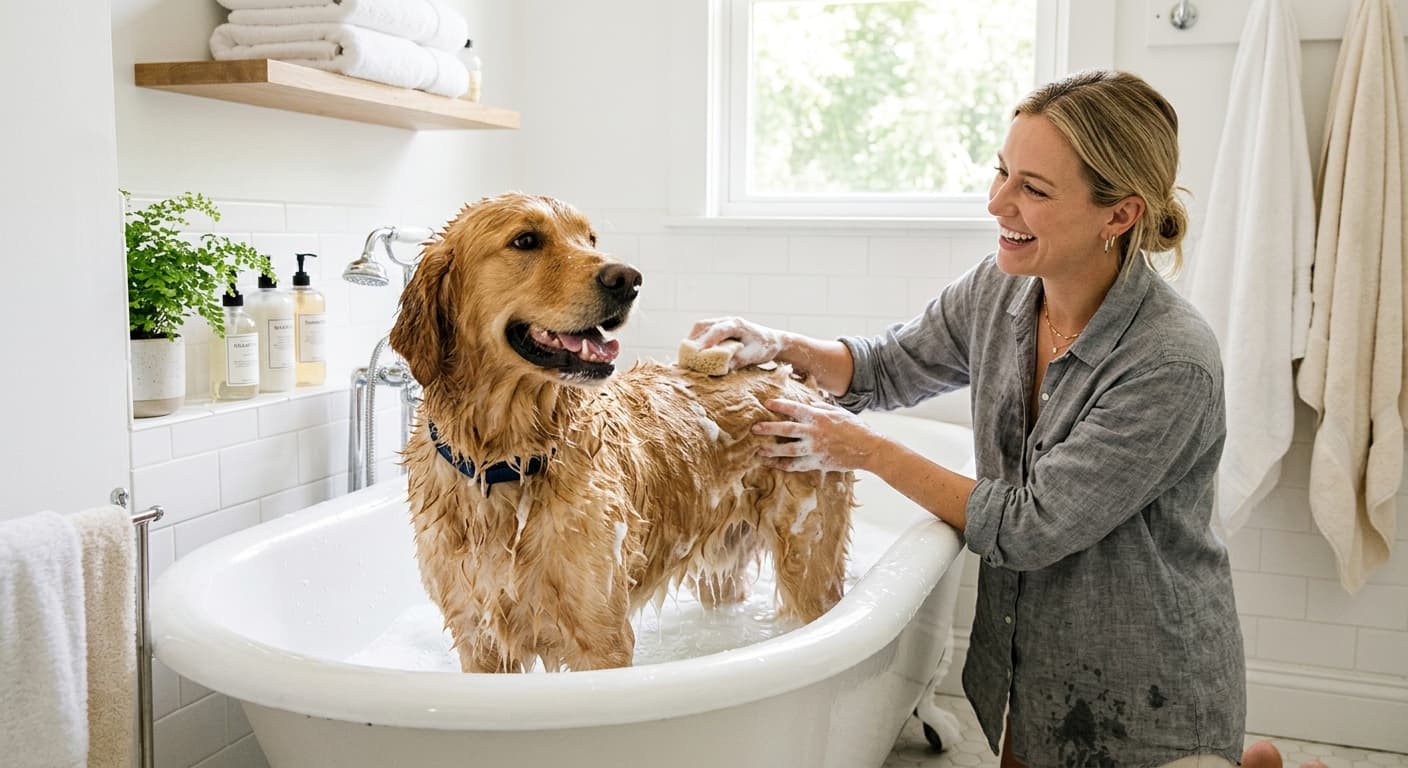
Rinse twice as long as you think necessary. Shampoo residue left in the coat causes itching and skin irritation — the most common cause of post-bath scratching. Rinse until the water runs completely clear, then rinse for another 30 seconds.
Use lukewarm water. Hot water is uncomfortable for dogs and opens pores unnecessarily. Cool to lukewarm is ideal.
For a full grooming schedule by coat type, see our dog grooming schedule guide. And for deshedding tools to use alongside your shampoo, browse our best grooming tools roundup.
The Bottom Line
🏆 Bottom Line: For most dogs, Burt's Bees Hypoallergenic is the safe, affordable default — gentle, clean-rinsing, and fragrance-free. Upgrade to Veterinary Formula Clinical Care for itchy or flaky skin, and Douxo S3 PYO for diagnosed infections. Match your shampoo to your dog's coat and skin needs, and you'll prevent more skin issues than you treat.
Sources
- Nuttall T, Cole LK — "Evidence-based veterinary dermatology: a systematic review of interventions for Malassezia dermatitis in dogs." Veterinary Dermatology, 2007.
- American Kennel Club (AKC) — "Dog Bathing Guide: How Often and What to Use." akc.org.
- Veterinary Dermatology, Tufts University — pH and skin barrier considerations in canine bathing products. 2022.
- VOHC (Veterinary Oral Health Council) — Shampoo safety evaluation guidelines. vohc.org.
- Douxo S3 Clinical Data — Chlorhexidine + climbazole efficacy in canine pyoderma. ceva.com.
Frequently Asked Questions
- What pH should a dog shampoo be?
- AKC guidance places canine skin pH between roughly 6.2 and 7.4 — more neutral than human skin (5.5–5.6). Shampoos labeled pH-balanced for dogs are formulated to sit inside that range, which helps protect the skin's acid mantle.
- How often should I bathe my dog?
- ASPCA guidance recommends bathing at least every three months, with more frequent baths for dogs who spend lots of time outdoors or have skin conditions. Medicated regimens (like chlorhexidine protocols) may call for weekly baths per your vet's instructions.
- Is medicated shampoo safe for routine use?
- Research suggests medicated shampoos like chlorhexidine 3% work best for diagnosed skin conditions rather than weekly upkeep. VCA Hospitals notes medicated formulas should sit on the coat 5–10 minutes and are typically used under veterinary direction for a set treatment window.
- Can puppies use adult dog shampoo?
- Not before 12 weeks in most cases. AKC guidelines suggest tearless, buttermilk-based puppy shampoos for dogs 6–12 weeks old because their skin barrier is still developing and many adult formulations (especially medicated ones) are labeled for adult dogs only.
- Why not just use human shampoo?
- AKC research suggests human shampoos sit at pH 5.5–5.6 — acidic enough to strip the protective oils on a dog's coat and disrupt the skin's acid mantle, causing dryness, flaking, or irritation over time.
Research Sources
- Can You Use Human Shampoo On Dogs? Why Dog Shampoo Is Better — AKC, 2021
- Finding the Right Shampoo for Your Dog — AKC, 2024
- How to Bathe Dogs with Medicated Shampoo — VCA Animal Hospitals, 2024
- Effectiveness of a combined (4% chlorhexidine digluconate shampoo and solution) protocol in MRS and non-MRS canine superficial pyoderma — NCBI / Veterinary Dermatology, 2015
- Antimicrobial use guidelines for canine pyoderma (ISCAID) — NCBI / ISCAID, 2024
- Dog Skincare: What to Know About Taking Care of Your Dog's Skin — AKC, 2024

PawBench Editorial
Published by Hilly Shore LabsPawBench’s editorial team researches dog products from primary veterinary sources, manufacturer specifications and aggregated buyer sentiment, alongside the lived ownership of Maggie, an Australian Labradoodle. We do not run hands-on product tests.
254 dog products scored · 1,160,974 buyer review-aspect mentions aggregated · cites AVMA, FDA, AAFCO, Cornell, WSAVA, AKC, ASPCA.
Recommendations are based on published veterinary guidelines, manufacturer specifications, and verified customer feedback. See our editorial standards.