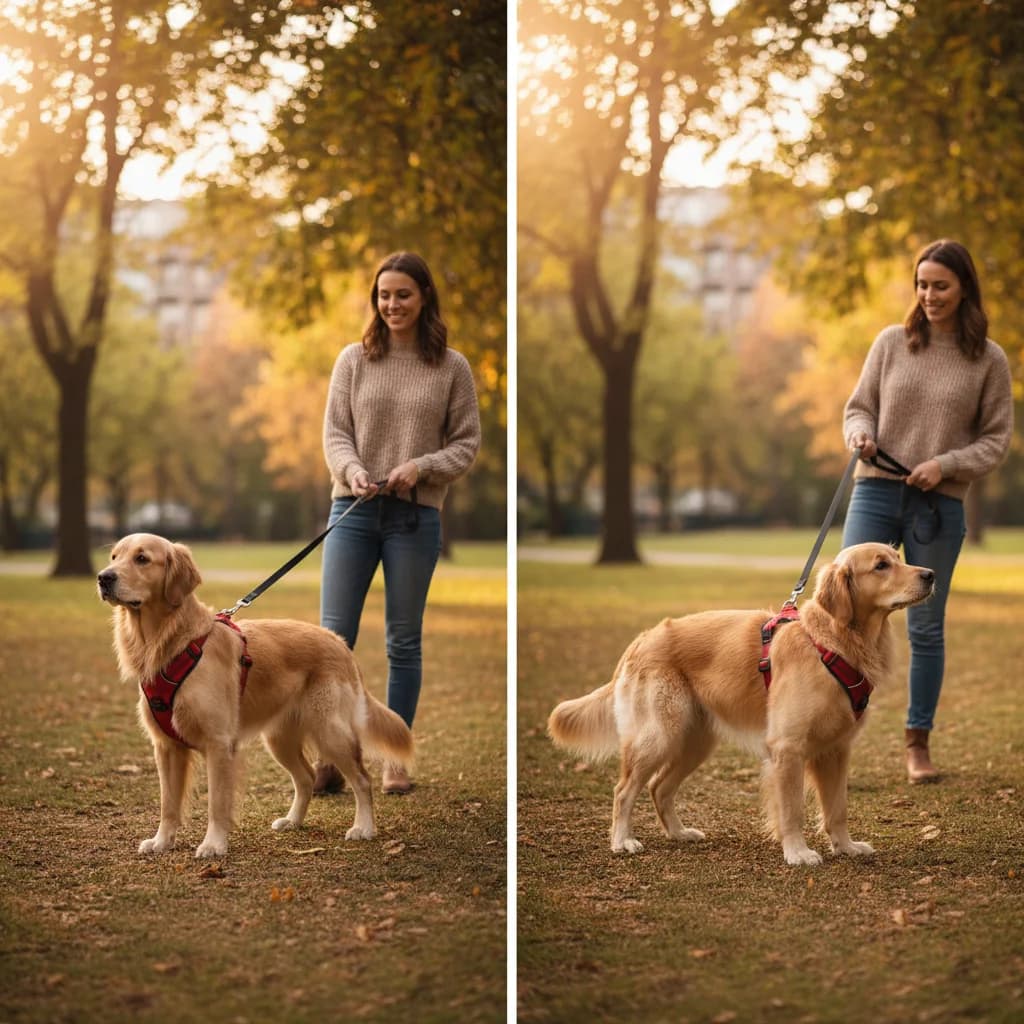
Best No-Pull Dog Harness for Strong Dogs in 2026
Our #1 Pick
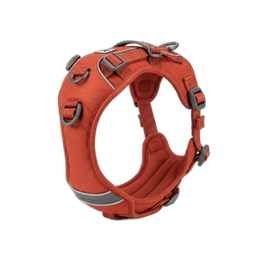
- Two leash attachment points (front and back) for training versatility
- Foam-padded chest and belly panel prevents chafing on long walks
- Reflective trim and light-loop keep your dog visible at dusk
Buy this if your dog pulls hard but is not an escape risk: the front clip turns the dog toward you instead of letting them lean into the harness.
Our analysis of 3,167 buyer mentions on Ruffwear Front Range Harness: buyers consistently praised fit, durability, comfort.
Also Great
Max control: Julius-K9 IDC Powerharness ($52.58) — Working-dog build with a rigid handle for close control on the strongest pullers
On this page5 sections
Our Verdict
The Ruffwear Front Range with front-clip attachment is the best no-pull harness for strong dogs. Front-clip redirects pulling force toward you instead of letting the dog lean into it.
Ruffwear Front Range Harness Owner rating4.6 Best overall for strong dogs | Julius-K9 IDC Powerharness Owner rating4.6 Best for working-dog-level strength | PetSafe Easy Walk Deluxe Owner rating4.4 Best budget front-clip option | 2 Hounds Design Freedom No-Pull Harness Owner rating4.3 Best for chafe-prone dogs — front + back clip with a velvet-lined strap trainers consistently recommend | |
|---|---|---|---|---|
| Price | $59.99Buy on Amazon | $52.58Buy on Amazon | $26.99Buy on Amazon | $45.96Buy on Amazon |
| Buyer sentiment | Fit Durability Comfort Ease of use Buyers praise fit, durability, comfort and ease of use. Based on 3,167 user mentions | Quality Fit Durability Ease of use Buyers praise quality, fit, durability and ease of use. Based on 1,237 user mentions | Quality Pull control Functionality Ease of use Fit Durability Buyers praise quality, pull control, functionality and ease of use. Some flag fit and durability. Based on 3,784 user mentions | Quality Ease Of Use Sturdiness Control Durability Buyers praise quality, ease of use, sturdiness and control. Mixed feedback on anti-pull and comfort. Some flag durability. Based on 5,930 user mentions |
| Pros |
|
|
|
|
| Cons |
|
|
|
|
| Clips | Front + Back (dual) | Back only (+ handle) | Front only | — |
| Material | Nylon/polyester blend | Nylon webbing | Nylon | — |
| Weight Capacity | All sizes | Rated for high-force breeds | Up to ~100 lbs | — |
| Padding | Foam-padded chest + belly | Chest padding | Minimal | — |
* Prices are approximate and may vary. Please check the latest price on Amazon.
Harness clip configuration and mechanical effect
Clip placement, sizing range, and structural features — the specs that determine whether a harness actually reduces pulling force.
| Product | Clip Configuration | Mechanical Effect on Pulling | Size Range | Escape-Prevention Features |
|---|---|---|---|---|
| Ruffwear Front Range Harness | Front + back (dual) | Front clip redirects forward thrust into a turn | XXS – L/XL (chest girth 13–42 in across sizes) | Two adjustment points + secondary belly strap behind ribcage |
| Julius-K9 IDC Powerharness | Back clip only (with handle) | Back-clip — does not reduce pulling force mechanically | Mini – 4 (chest girth 16–35+ in) | Single-strap-around-chest design; firm fit needed to prevent panic-back-out |
| PetSafe Easy Walk Deluxe | Front clip only | Front clip redirects forward thrust into a turn | Petite – XL (rated up to ~100 lbs) | Minimal padding; not designed as an escape-prevention harness for reactive dogs |
Mechanical-effect framing reflects basic biomechanics: a leash attachment forward of the dog's center of mass cannot transmit thrust in line with the leash. Back-only harnesses marketed as 'no-pull' do not have a mechanical pulling-reduction effect. For reactive dogs, pair the harness with positive-reinforcement training (AVSAB position statement).
How PawBench is paid: we earn an Amazon Associates commission on qualifying purchases. We don’t accept sponsored placements, paid reviews, or free products in exchange for coverage. Picks are ranked on documented owner outcomes and primary-source research, never on commission rate. Read the full methodology.
Walking a strong dog who pulls is exhausting, potentially dangerous, and harder on your dog than it looks. The good news: the right harness makes a significant difference. The bad news: most "no-pull" harnesses aren't designed to handle the actual forces involved with a determined 60-lb puller.
Here's what works for strong dogs, and why.
Why Harness Design Matters for Strong Dogs
The physics: a 50-lb dog pulling at 60% body weight generates about 30 lbs of force. Consistently. For a 30-minute walk. That force has to go somewhere — and where it goes determines whether the walk is manageable.
What a back-clip harness does with that force:
- Spreads it across the back and shoulders
- Hands your dog maximum mechanical advantage to pull forward
- Stays comfortable, which suits dogs who already walk well
- Makes pulling easier, not harder
What a front clip changes:
- Pulling arcs the body sideways rather than straight ahead
- Redirects rather than punishes — the dog's own momentum breaks the behavior
- Reorients the dog toward you
For truly strong dogs, dual-clip harnesses offer the best of both worlds: front clip for training and management, back clip for off-leash parks or when the dog is being good.
Top Picks for Strong Dogs
| Harness | Approx. price | Attachment | Best suited to |
|---|---|---|---|
| Ruffwear Front Range | $59.99 | Front and back | Active training with a strong puller |
| Julius-K9 IDC Powerharness | $52.83 | Back only, with top handle | Control and management |
| PetSafe Easy Walk Deluxe | ~$25 | Front | Moderate pullers up to about 75 lbs |
1. Ruffwear Front Range — Best Overall
Ruffwear Front Range — ~$40
Ruffwear builds gear for dogs that go on actual adventures, which means the hardware is rated for real forces. The Front Range is their everyday harness, and it's become the default recommendation from trainers for strong dogs.
Why it works for strong pullers:
- Dual attachment: Both front chest clip AND back clip. Use front for training, back for established-good-behavior walks.
- Four adjustment points: Neck, two sides, belly — achieving a genuinely secure fit on any body shape
- Padded chest and belly panels: Distributes force across a wider area; no pressure points even under sustained tension
- Aluminum V-ring hardware: Will not fail under high loads
The fit takes time to dial in correctly — budget 10–15 minutes the first time you put it on. The extra effort is worth it. A properly fitted Ruffwear Front Range rarely has escape issues even with Houdini-type dogs.
2. Julius-K9 IDC Powerharness — For Working-Dog-Level Strength
Buy on Amazon · $52.58 →Julius-K9 IDC Powerharness — ~$30
Originally designed for police and protection dogs in Europe, the Julius-K9 is now one of the most popular harnesses for strong breeds. Its heritage means the hardware is genuinely rated for high-force applications.
Standout features:
- Top handle: Grab your dog instantly in high-stress situations (passing other dogs, cyclists, etc.)
- Interchangeable side panels: Can add custom patches/ID — useful for service dog users
- Wide belly strap design: Prevents the twisting and ratcheting that less structured harnesses develop under load
- Nylon webbing construction: Heavy-duty; significantly more durable than lifestyle harnesses at the same price point
The limitation: No front clip, which means it doesn't redirect pullers as effectively as the Ruffwear. Best for dogs who need control and management rather than active leash training. If you have a strong dog that already walks with some manners, the Julius-K9 is excellent.
3. PetSafe Easy Walk Deluxe — Best Budget Front-Clip
Buy on Amazon · $26.99 →PetSafe Easy Walk Deluxe — ~$25
If you need a front-clip harness at a more accessible price point, the Easy Walk Deluxe works well. The front attachment is well-positioned (center of chest, not too high) which makes the redirection effective without causing the chest strap to ride up under the armpits.
Best for: Dogs up to about 75 lbs who pull moderately. For very large or very determined pullers (90+ lbs), the hardware isn't as robust as Ruffwear — the plastic buckles can flex under sustained high force loads.
Harness Fitting Guide for Strong Dogs
A harness that fits correctly is the foundation of everything else. For strong dogs, fit is also a safety issue — an ill-fitting harness can be escaped.
Key checkpoints:
- Chest strap: Should sit in the center of the sternum, about 1 inch below the throat
- Belly strap: Should sit behind the front legs (not in the armpit area)
- Side adjusters: Snug, but with two fingers of clearance at each strap
- Movement test: Walk the dog forward, stop suddenly. The harness should not shift or twist.
Breed-specific notes:
- Barrel-chested breeds (Bulldogs, Mastiffs): Go up a size and tighten adjustment straps rather than buying the "correct" size
- Narrow-chested sighthounds (Greyhounds, Whippets): Look for harnesses with wider chest panels; Roman-style harnesses fit these breeds better
- Deep-chested breeds (Great Danes, Dobermans): The belly strap length matters; verify measurements before ordering
Rule of thumb: if the harness shifts or twists during the sudden-stop test, no amount of leash technique will fix the walk. Re-fit first, train second.
For our broader harness recommendations across all dog types, see the full harness guide 2026.
Related Reading
- Best Dog Harnesses 2026 — complete roundup across all sizes and styles
- Front-Clip vs Back-Clip Dog Harness: Which Stops Pulling Faster — the mechanism explained
- How to Stop a Dog from Pulling on the Leash — technique matters as much as equipment
- Best Dog Harnesses 2026 — historical comparison for context
Sources
- American College of Veterinary Surgeons — Cervical spine injury in dogs from collar use. acvs.org.
- Association of Professional Dog Trainers (APDT) — Equipment recommendations for leash training. apdt.com.
- Ruffwear — Front Range technical specifications.
- Julius-K9 — IDC Powerharness testing and use documentation.
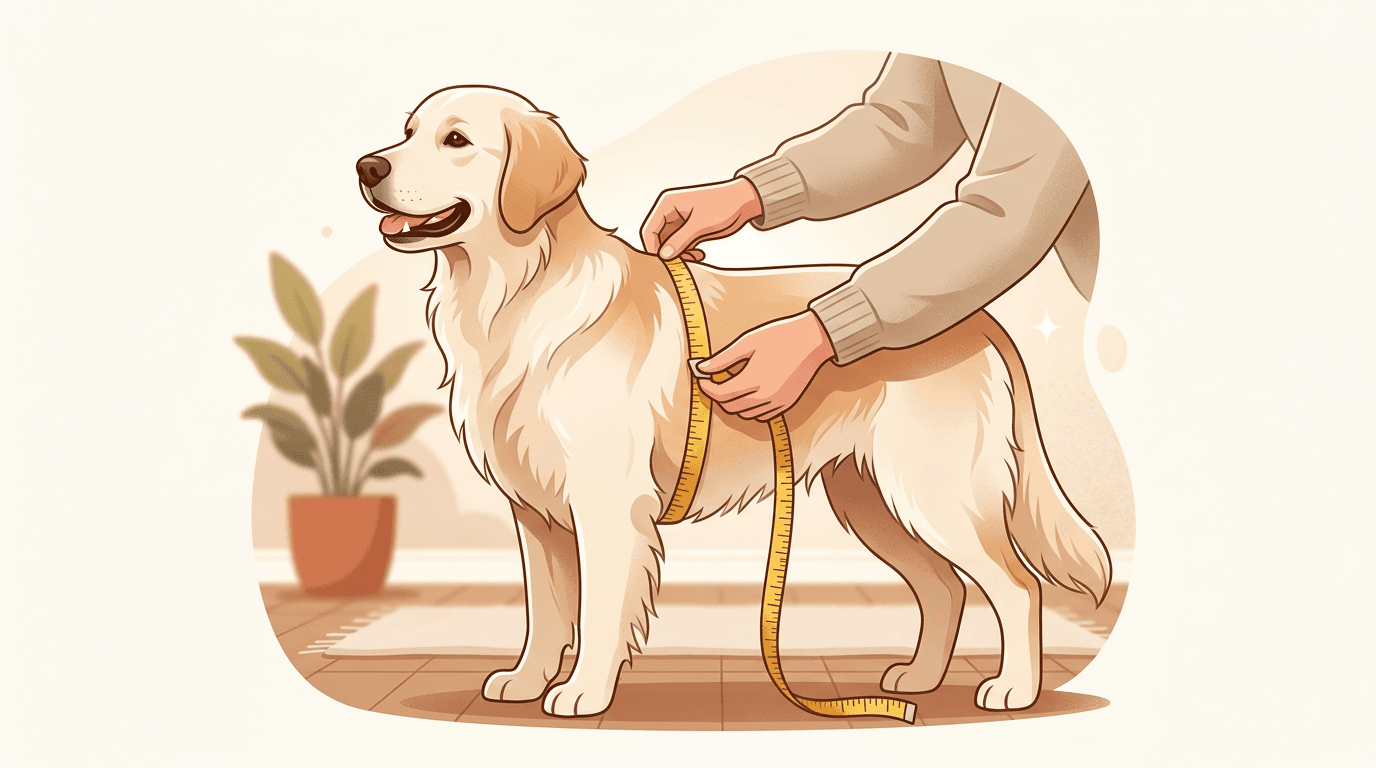
Chest girth is the widest part of the rib cage, just behind the front legs. Snug tape, two fingers underneath.
Enter a chest girth to see the size each brand’s chart points to.
Full harness size finder — all 5 brands, full charts and prices
Frequently Asked Questions
- Why doesn't a regular collar work for a strong puller?
- Collars concentrate all pulling force on the neck — specifically the trachea and cervical vertebrae. For strong pullers, this creates a real risk of injury: tracheal collapse (especially in small dogs and brachycephalic breeds), collapsed tracheas, and cervical spine damage. Harnesses distribute force across the chest and shoulders, which are structurally designed to handle forward force. This is why vets and trainers almost universally recommend harnesses for dogs who pull.
- What's the difference between a front-clip and back-clip harness for pullers?
- Front-clip harnesses attach the leash at the dog's chest. When a dog pulls forward, the leash redirects them sideways — breaking the pulling momentum and turning the dog toward you. Back-clip harnesses attach at the spine, which actually gives a pulling dog more mechanical advantage, like sled dog rigging. For serious pullers, front-clip is dramatically more effective at reducing pulling behavior.
- Can a strong dog break out of a harness?
- Yes — poorly fitting harnesses are a common escape method, especially for dogs with deep chests, narrow heads (like Greyhounds or Whippets), or strong reverse-pulling instincts. A properly fitted harness should have four points of adjustment and be snug enough that you can fit only two fingers underneath each strap. The chest plate should sit centered on the sternum, not off to one side.
- Should I use a harness for training or just for walks?
- For active leash training (working on stopping pulling behavior), use a front-clip harness combined with reward-based training. The front clip makes training more effective by redirecting the dog's momentum. For dogs that have already learned to walk nicely, a comfortable back-clip harness is fine for everyday walks. Many owners use dual-clip harnesses like the Ruffwear Front Range and switch attachment points depending on the situation.
- Do no-pull harnesses restrict a dog's shoulder movement?
- Somewhat, and so does every other harness studied. A Royal Veterinary College treadmill study of nine dogs found both harness styles it tested reduced shoulder extension compared with no harness, and the Y-shaped design reduced it slightly more than the strap-across-the-chest design. A 2024 motion-capture study of five dogs in a tactical harness also found changes at the shoulder, elbow and wrist. Both samples are small. The practical takeaway is fit: chest strap on the breastbone, belly strap clear of the armpits, and watch the dog's stride.
Research Sources
- Reward-Based Training Methods for Dogs (and Cats) — American Veterinary Society of Animal Behavior, 2021
- How to Stop Your Dog From Pulling on Leash — American Kennel Club, 2024
- Choosing the Right Harness for Your Dog — American Kennel Club, 2024
- How to Teach a Puppy to Walk on a Leash — American Kennel Club, 2024
- Winter Safety Tips — Cornell Riney Canine Health Center
- Dog Harnesses and Dog Collars — American Kennel Club, 2024
- Effects of restrictive and non-restrictive harnesses on shoulder extension in dogs at walk and trot (Lafuente et al., Vet Record 2019) — Veterinary Record
- Influence of Wearing a Tactical Harness on Three-Dimensional Thoracic Limb Kinematics (Sandberg et al., VCOT 2024) — Veterinary and Comparative Orthopaedics and Traumatology
What changed in this review(2 entries)
- faq
Added an FAQ on whether no-pull harnesses restrict shoulder movement, citing two published gait studies. No pick or link changed.
- PicksLinks
The #1 card linked the size-specific Small child listing of the harness it recommends; it now links the Ruffwear Front Range parent listing. The unlinked Gentle Leader also-great was replaced with the Julius-K9 the table ranks second, and a second row's duplicate best no-pull harness verdict was retitled so it no longer competes with the #1 pick.
Your next step
A no-pull harness only works if it fits and the training goes with it.

PawBench Editorial
Published by Hilly Shore LabsPawBench’s editorial team researches dog products from primary veterinary sources, manufacturer specifications and aggregated buyer sentiment, alongside the lived ownership of Maggie, an Australian Labradoodle. We do not run hands-on product tests.
254 dog products scored · 1,160,974 buyer review-aspect mentions aggregated · cites AVMA, FDA, AAFCO, Cornell, WSAVA, AKC, ASPCA.
Recommendations are based on published veterinary guidelines, manufacturer specifications, and verified customer feedback. See our editorial standards.