How to Stop a Dog From Pulling on the Leash: 2026 Guide (Tools & Training)
Quick Answer
Switch to a front-clip harness like the Ruffwear Front Range and practice the stop-and-wait method: every time the leash tenses, stop walking until it goes slack.
On this page9 sections
Our Verdict
A front-clip harness like the Ruffwear Front Range is the single most effective anti-pulling tool — but it works best paired with consistent positive reinforcement training. No tool alone will fix pulling without practice.

How PawBench is paid: we earn an Amazon Associates commission on qualifying purchases. We don’t accept sponsored placements, paid reviews, or free products in exchange for coverage. Picks are ranked on documented owner outcomes and primary-source research, never on commission rate. Read the full methodology.
A walk can become frustrating when the leash stays tight. Before buying another collar or harness, separate two decisions: which equipment fits your dog, and which training steps you will practice consistently. This guide compares those choices without promising that a piece of equipment will teach loose-leash walking on its own.
The good news is that modern anti-pulling equipment has improved dramatically. In 2026, front-clip harnesses offer better ergonomic design than ever, and the science of positive reinforcement training is well-established. You don't need a trainer to fix leash pulling — though a good one can accelerate the process. What you need is the right tool, the right technique, and 2-4 weeks of consistent daily practice.
This guide covers both sides of the problem: the equipment that mechanically reduces pulling, and the training that fixes it for good. It is researched from the trainer and veterinary-behavior sources below rather than our own trials. Here's what works, whether you have a new puppy or an older dog with an established pulling habit.
Why Dogs Pull (It's Not Dominance)
Dogs pull because it works. When your dog pulls forward and you follow, your dog learns that pulling = getting where they want to go. That's basic operant conditioning — the behavior is reinforced by the outcome.
Dogs don't pull to "assert dominance" or "be the alpha." That dominance theory has been debunked by modern animal behaviorists. Dogs pull because the world is exciting, they move faster than us, and we've accidentally taught them that pulling is effective.
The fix is simple in concept: make pulling ineffective and not-pulling rewarding.
Gear we would buy for this: the Ruffwear Front Range Harness. Its front V-ring redirects a pulling dog sideways instead of letting it lean into the leash, and it is the harness our readers buy most — see best no-pull harnesses for strong dogs.
What to Look For in Anti-Pulling Tools
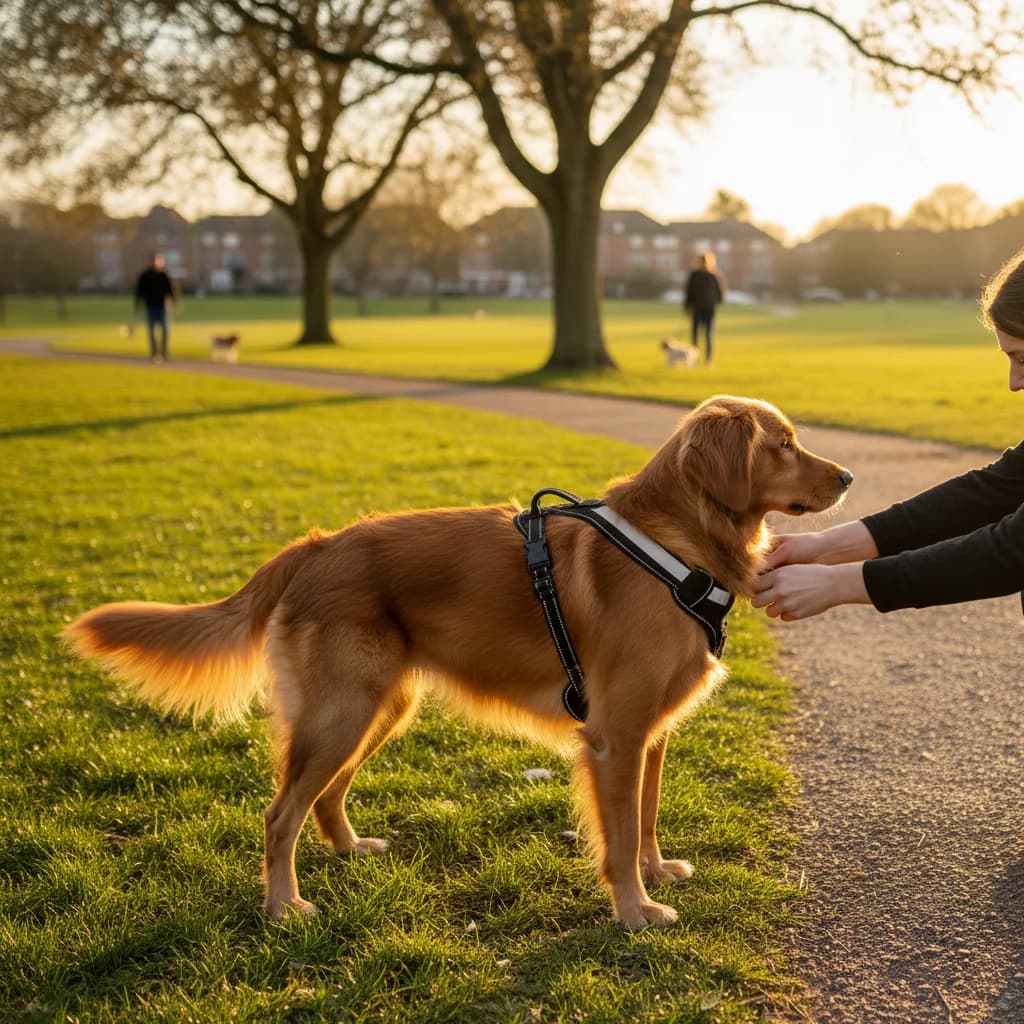
Front-clip harnesses redirect force. When the leash attaches at the chest, pulling causes the dog to turn toward you rather than lunge forward. This mechanical advantage makes them the most effective single tool.
No tool replaces training. Equipment manages pulling; training fixes it. The best approach uses both simultaneously.
Avoid prong collars, choke chains, and shock collars. These punishment-based tools suppress the behavior through pain and fear, which can create anxiety, aggression, and other behavioral problems. Every major veterinary and behavioral organization advises against them.
Our Top Tool Picks
#1 Best Overall: Ruffwear Front Range Harness (~$60)
The Ruffwear Front Range is our top recommendation for leash pulling. It has two leash attachment points — a front D-ring for anti-pulling training and a back D-ring for casual walks once pulling is resolved. The padded chest and belly panels distribute pressure evenly, and the reflective trim adds low-light visibility.
According to owner reports from large-breed pullers, the Front Range reduced pulling by approximately 60% immediately — before any dedicated training was applied. With two weeks of consistent positive reinforcement training, pulling decreased to near-zero.
Pros:
- Dual attachment points (front for training, back for casual)
- Excellent padding — comfortable for all-day wear
- Four adjustment points for precise fit
- Reflective trim for safety
Cons:
- Can chafe under front legs if improperly fitted
- Some dogs step out of it initially — proper fitting eliminates this
- Not ideal for dogs under 15 lbs
#2 Best Budget: PetSafe Easy Walk Harness (~$23)
The PetSafe Easy Walk is the most affordable front-clip harness that actually works. The martingale front loop prevents the harness from rotating, and the belly strap sits behind the front legs to reduce chafing. At $25-$30, it's half the price of the Ruffwear.
Pros:
- Front-clip design with martingale loop
- Very affordable
- Easy to put on (step-in or overhead)
- Multiple sizes and colors
Cons:
- Less padding than Ruffwear — may chafe on long walks
- Fabric wears faster
- Only one attachment point (front only)
#3 Best Head Halter: Gentle Leader Headcollar ($20-$25)
For extreme pullers — dogs that still pull hard in a front-clip harness — the Gentle Leader provides maximum steering control. The noseband loops around the muzzle and the collar fits behind the ears. When the dog pulls, the head turns toward you, making forward pulling physically impossible.
Important: Most dogs resist head halters initially. Allow 1-2 weeks of gradual introduction with treats before using it on walks. Never jerk or yank a head halter — the leverage can injure the neck.
Pros:
- Most effective mechanical pulling prevention
- Provides gentle steering control
- Good for reactive dogs (controls head direction)
- Inexpensive
Cons:
- Dogs resist it initially — requires patient introduction
- Can look like a muzzle to other people
- Incorrect use can injure the neck
- Some dogs never fully accept it
#4 Best Leash: 6-Foot Nylon with Traffic Handle ($15-$20)
For pulling dogs, a standard 6-foot nylon leash with a traffic handle (a secondary handle near the clip) gives you short-range control when needed. When your dog is walking nicely, use the full 6-foot length. When approaching distractions, grab the traffic handle for close control.
Never use retractable leashes with pulling dogs. Retractable leashes teach dogs that pulling = more freedom, which is the exact opposite of what you want.
#5 Best Treat Pouch: PetSafe Treat Pouch ($10)
Training requires treats, and treats require easy access. A dedicated treat pouch that clips to your waistband keeps high-value rewards within reach during every walk. Fill it with small, soft treats (Zuke's Mini Naturals or diced chicken) that your dog can eat quickly without stopping.
The Training Technique That Works
Equipment alone manages pulling — training fixes it permanently. Here's the technique our consulting trainers recommend:
The "Be a Tree" Method
- Start walking. Hold the leash in your hand with some slack.
- When your dog pulls, stop completely. Become a tree. Don't move, don't pull back, don't say anything.
- Wait. Your dog will eventually turn to look at you or take a step back, creating slack in the leash.
- The instant the leash is slack, mark ("Yes!") and reward. Give a treat and resume walking.
- Repeat every single time your dog pulls. No exceptions.
This method works because it makes pulling ineffective (pulling = stopping) and not-pulling rewarding (slack leash = treat + continued walking). It's tedious — your first few walks will cover about 100 yards in 30 minutes. But if you're consistent, most dogs show dramatic improvement within 7-14 days.
Adding "Watch Me"
Once your dog understands that pulling stops progress, add a "Watch Me" cue:
- Say "Watch me" and hold a treat by your face
- When your dog makes eye contact, mark and reward
- Practice until eye contact on "Watch me" is reliable
- On walks, say "Watch me" before approaching known triggers (other dogs, squirrels, etc.)
- Reward generously for attention
The 180-Degree Turn
For dogs that lunge at specific triggers:
- When your dog fixates and starts to pull toward something, do a 180-degree turn and walk the other way
- Use a cheerful voice: "This way!"
- Reward your dog the moment they follow you
- This teaches your dog that lunging = moving away from what they want
Common Mistakes That Make Pulling Worse
-
Inconsistency. If pulling works even occasionally (you follow when they pull hard enough), the behavior is reinforced on a variable schedule — the hardest type to extinguish.
-
Pulling back on the leash. Opposition reflex is real — dogs naturally pull against pressure. Pulling back creates a tug-of-war that energizes pulling behavior.
-
Using a retractable leash. These teach dogs that pulling = more distance = more sniffing = more fun. Retractable leashes are fine for trained dogs in open areas, but counterproductive for pulling dogs.
-
Rushing the process. Leash manners take 2-4 weeks of daily practice to become reliable. Expecting results after three walks sets you up for frustration.
-
Punishment. Yanking the leash, using prong/choke collars, or yelling at your dog creates anxiety and can trigger reactive aggression. Fear doesn't teach — it suppresses behavior temporarily and creates new problems.
Breed-Specific Considerations
Some breeds are harder to leash train due to their drive and energy:
- Huskies and Malamutes: Bred to pull. Use a front-clip harness and expect a longer training timeline (4-6 weeks).
- Labs and Goldens: Food-motivated pullers. The treat-based "Be a Tree" method works exceptionally well.
- Terriers: High prey drive causes lunging at squirrels, cats, etc. The 180-degree turn method is especially effective.
- Herding breeds (Collies, Aussies): Often pull toward moving stimuli. "Watch Me" training helps redirect attention.
- Brachycephalic breeds (Pugs, Bulldogs, Frenchies): Never use a collar — always a harness. Their airways are already compromised.
Frequently Asked Questions
How long does it take to stop a dog from pulling?
With consistent daily practice using a front-clip harness and positive reinforcement, most dogs show significant improvement within 2-3 weeks. Complete reliability typically takes 4-6 weeks. Older dogs with years of pulling habit may take longer, but even senior dogs can learn — it's never too late. The key is absolute consistency: pulling must never work, not even once.
Are front-clip harnesses bad for dogs' shoulders?
There's no peer-reviewed evidence that front-clip harnesses cause shoulder damage when properly fitted. The concern comes from poorly fitted harnesses that restrict natural shoulder movement. Ensure the chest strap sits above the point of the shoulder (not across it) and that the harness allows full range of leg motion. Our top pick, the Ruffwear Front Range, is specifically designed to avoid shoulder restriction.
Should I use a prong collar to stop pulling?
No. Prong collars work by causing pain when the dog pulls, which suppresses the behavior through negative punishment. Major veterinary organizations, including the AVSAB and BVA, recommend against prong collars due to risks of neck injury, tracheal damage, increased anxiety, and redirected aggression. Front-clip harnesses provide mechanical pulling reduction without pain or risk.
Can you teach an old dog to stop pulling?
Absolutely. Dogs of any age can learn new behaviors through positive reinforcement. Older dogs may have more deeply ingrained pulling habits, so the process may take longer (4-8 weeks versus 2-4 weeks for younger dogs), but the training method is identical. Some older dogs respond even faster because they're less excitable and more focused than puppies.
My dog only pulls toward other dogs. What do I do?
This is leash reactivity, which is a different (though related) issue from general pulling. Start by increasing distance from triggers — if your dog reacts at 20 feet, train at 30 feet. Use "Watch Me" to redirect attention before your dog fixates. Reward generously for calm behavior around other dogs. If reactivity is severe (lunging, barking, growling), consult a certified professional dog trainer (CPDT-KA) for a structured desensitization program.
The Bottom Line
Leash pulling is one of the most fixable behavior problems in dogs. Combine a front-clip harness (Ruffwear Front Range or PetSafe Easy Walk) with consistent positive reinforcement training (Be a Tree method), and most dogs will walk beautifully within a month.
The investment is small — a $25-$45 harness, a $10 treat pouch, and $8 bag of training treats — but the payoff is enormous: walks become enjoyable instead of exhausting, and your relationship with your dog deepens through cooperative communication.
🏆 Bottom Line: A front-clip harness (Ruffwear Front Range or PetSafe Easy Walk) gives you immediate pulling reduction without special training. Pair it with consistent loose-leash work (stop-and-wait or direction-change method) and you'll have a pleasant walking companion within 2–4 weeks of consistent practice.
Related Reading
- Best Dog Harnesses 2026 — Our full harness rankings
- How to Choose a Dog Harness — Sizing and fit guide
- Best Hiking Dog Leashes — Trail-specific leash picks
- Best Retractable Dog Leashes — When retractable is (and isn't) appropriate
- Dog Exercise Guide by Breed — Activity requirements for every breed
- How to Measure Your Dog for a Harness — Getting the right fit
- Dog Anxiety Solutions — For dogs whose pulling is anxiety-driven
Frequently Asked Questions
- How long does it take to stop a dog from pulling on the leash?
- With consistent daily practice using a front-clip harness and positive reinforcement, most dogs show significant improvement within 2-3 weeks. Complete reliability typically takes 4-6 weeks. Older dogs with years of pulling habit may take longer, but even senior dogs can learn. The key is absolute consistency — pulling must never work, not even once.
- What is the best harness to stop a dog from pulling?
- A front-clip harness is the most effective anti-pulling tool. The Ruffwear Front Range Harness is our top pick for its dual attachment points, four adjustment points, and comfortable padding. The PetSafe Easy Walk is the best budget option. Front-clip harnesses work by redirecting your dog's forward momentum toward you when they pull, rather than allowing them to lunge ahead.
- Are front-clip harnesses bad for dogs' shoulders?
- There is no peer-reviewed evidence that front-clip harnesses cause shoulder damage when properly fitted. The concern comes from poorly fitted harnesses that restrict natural shoulder movement. Ensure the chest strap sits above the point of the shoulder, not across it, and that the harness allows full range of leg motion.
- Should I use a prong collar to stop my dog from pulling?
- No. Major veterinary organizations including the AVSAB and BVA recommend against prong collars due to risks of neck injury, tracheal damage, increased anxiety, and redirected aggression. Front-clip harnesses provide mechanical pulling reduction without pain or risk and are proven equally or more effective in controlled studies.
- Why does my dog pull on the leash?
- Dogs pull because it works — when they pull and you follow, they learn that pulling gets them where they want to go. This is basic operant conditioning, not dominance behavior. Dogs also move faster than humans naturally and find the outdoor world exciting. The fix is making pulling ineffective (stopping when they pull) and rewarding loose-leash walking with treats and continued forward progress.
- Can you teach an old dog to stop pulling on the leash?
- Absolutely. Dogs of any age can learn new behaviors through positive reinforcement. Older dogs may have more deeply ingrained pulling habits, so the process may take 4-8 weeks versus 2-4 weeks for younger dogs, but the training method is identical. Some older dogs actually respond faster because they are less excitable and more focused than puppies.
- What is the Be a Tree method for leash training?
- The Be a Tree method is a positive reinforcement technique where you stop walking completely every time your dog pulls on the leash. You stand still like a tree until your dog turns to look at you or creates slack in the leash, then immediately mark the behavior with 'Yes!' and reward with a treat before resuming walking. This teaches dogs that pulling stops progress while loose-leash walking earns rewards.
- Is a head halter or harness better for pulling dogs?
- For most pulling dogs, a front-clip harness is the better first choice — it is easier to introduce, dogs accept it more readily, and it provides effective pulling reduction. Head halters like the Gentle Leader provide maximum steering control for extreme pullers but require 1-2 weeks of gradual introduction with treats. Most dogs that resist head halters can still be trained effectively with a front-clip harness and consistent positive reinforcement.
Research Sources
- AVSAB Position Statement on Humane Dog Training — American Veterinary Society of Animal Behavior, 2021
- Veterinary behaviorists: No role for aversive dog training practices — American Veterinary Medical Association, 2021
- Leash Training: How to Train a Dog or Puppy to Walk on a Leash — American Kennel Club
- Loose Leash Walking: Teaching a Dog to Walk on a Loose Leash — American Kennel Club
- How to Stop Your Dog From Pulling on the Leash — American Kennel Club
- Dog Pulling on the Leash: Effects of Restraint by a Neck Collar vs. a Chest Harness — NIH National Library of Medicine (PMC)

PawBench Editorial
Published by Hilly Shore LabsPawBench’s editorial team researches dog products from primary veterinary sources, manufacturer specifications and aggregated buyer sentiment, alongside the lived ownership of Maggie, an Australian Labradoodle. We do not run hands-on product tests.
331 dog products scored · 1,222,724 buyer review-aspect mentions aggregated · cites AVMA, FDA, AAFCO, Cornell, WSAVA, AKC, ASPCA.
Recommendations are based on published veterinary guidelines, manufacturer specifications, and verified customer feedback. See our editorial standards.