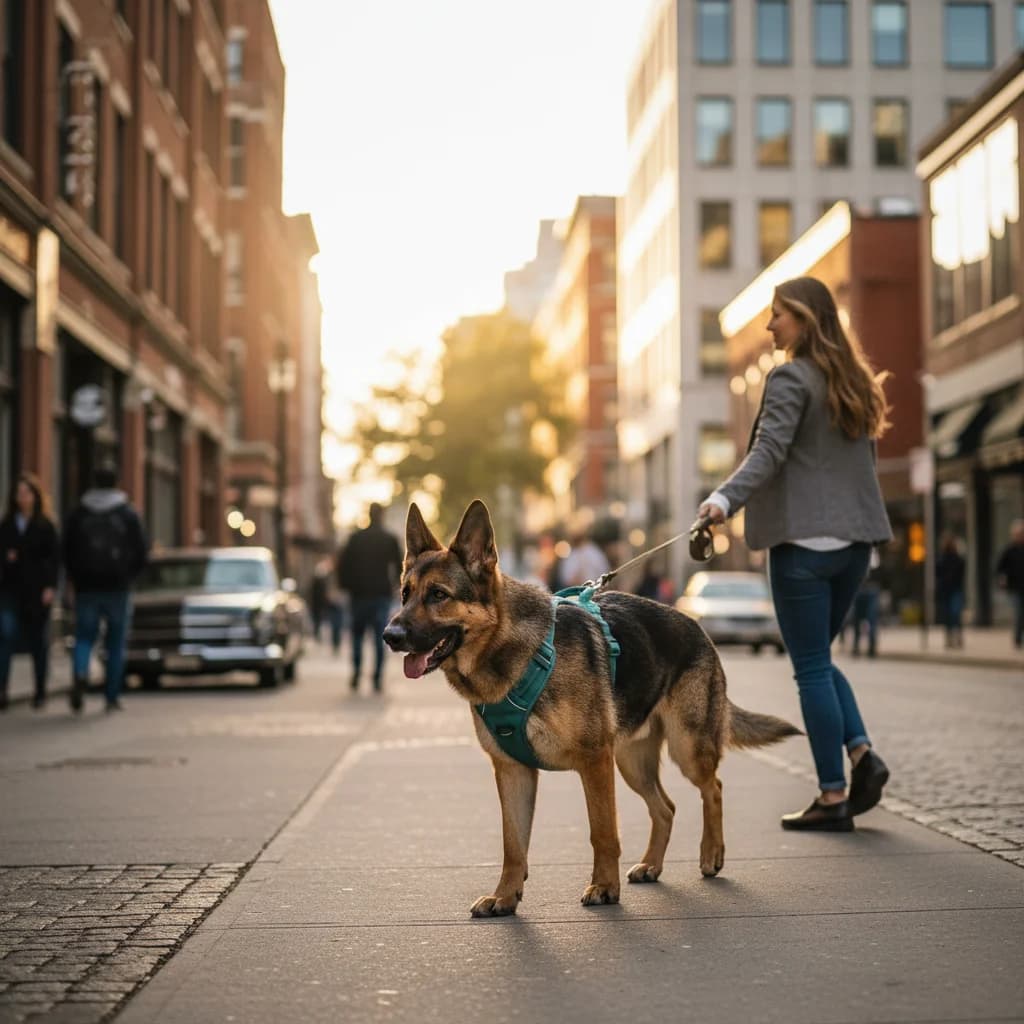
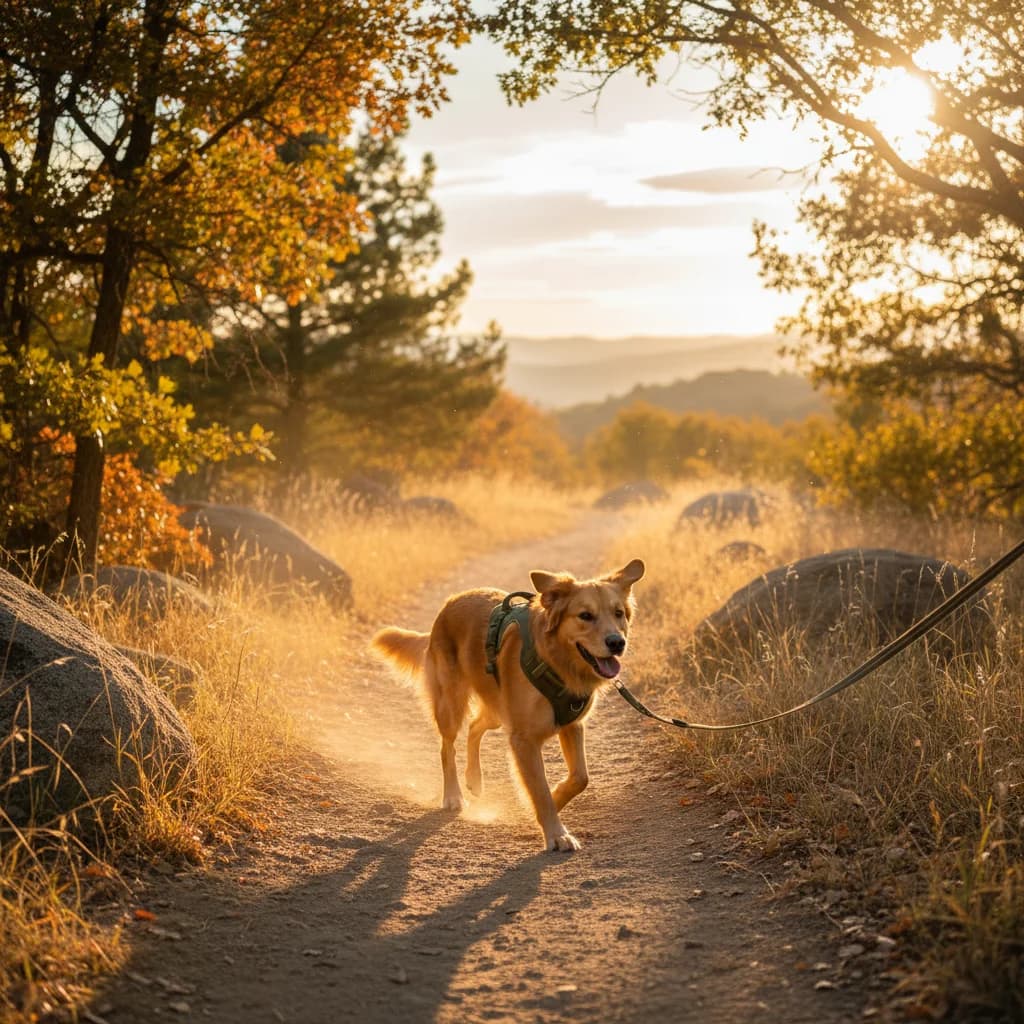
Front-Clip vs Back-Clip Dog Harness: Which Stops Pulling Faster?
The Verdict
On this page8 sections
Our Verdict
Front-clip harnesses are better for training and dogs that pull. Back-clip harnesses are better for small dogs, well-trained walkers, and running. Most dogs benefit from starting with front-clip.
How PawBench is paid: we earn an Amazon Associates commission on qualifying purchases. We don’t accept sponsored placements, paid reviews, or free products in exchange for coverage. Picks are ranked on documented owner outcomes and primary-source research, never on commission rate. Read the full methodology.
Walk into any pet store and you'll find two categories of harnesses: those with the leash ring on the back, and those with the leash ring on the chest. The difference in pulling behavior between these two designs is significant — and it's pure physics.
Here's the simple explanation, plus guidance on which is right for your dog.
The Physics (In Plain English)
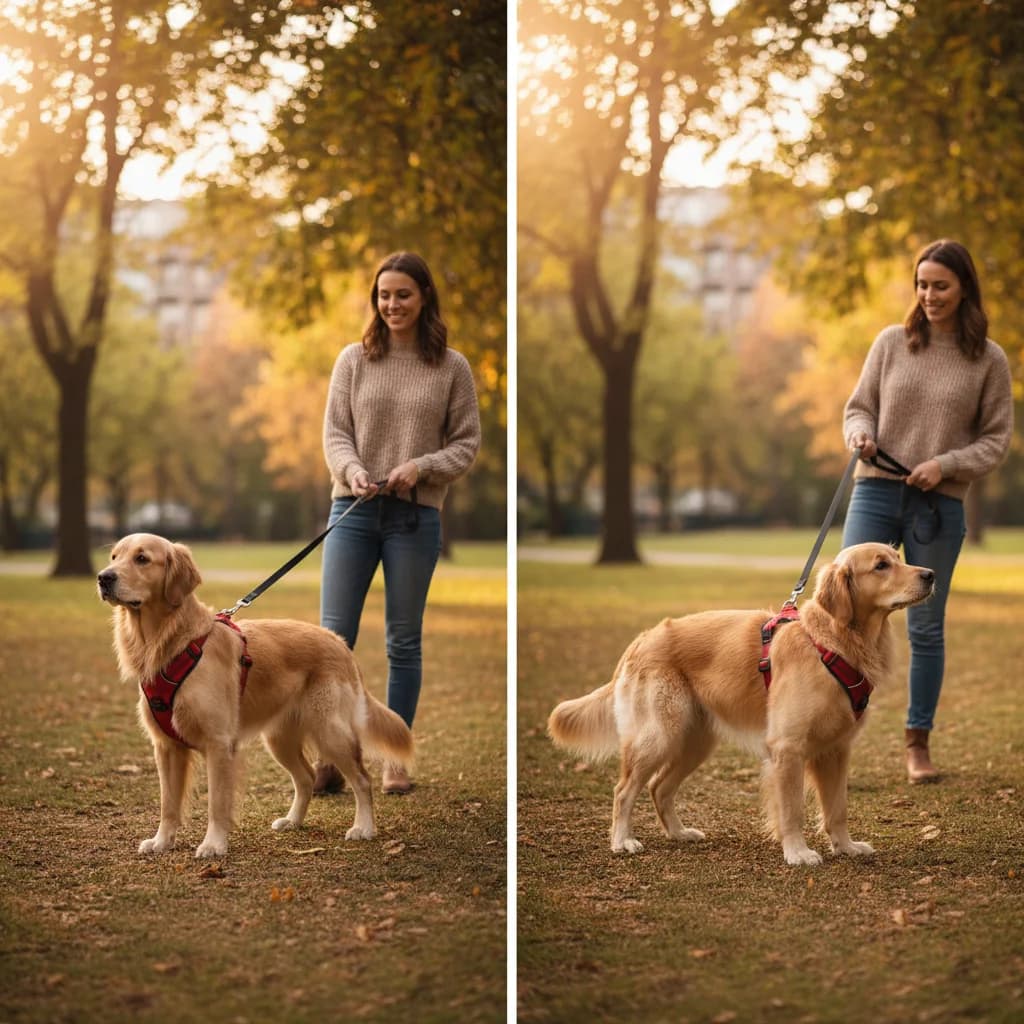
When a dog pulls forward and the leash is attached at the back of the harness:
- The force goes straight back from the dog's spine toward you
- The dog's center of gravity is perfectly aligned for forward movement
- You're essentially holding a tug-of-war against the dog's full body weight
- Back-clip is how sled dog harnesses work — designed to maximize pulling power
When a dog pulls forward and the leash is attached at the front/chest:
- The force acts as a lever point on the dog's chest
- The dog's momentum swings them sideways toward you
- Their body turns perpendicular to the direction of travel, breaking the pulling momentum
- The dog physically cannot maintain a strong pull because their body is being redirected
The result: Front-clip harnesses reduce pulling without any physical correction — just geometry.
Back-Clip Harnesses: When to Use Them
Back-clip harnesses are not bad — they're the right tool for the right dog.
Best for:
- Dogs that already walk with loose-leash manners
- Off-leash walking in secure areas (parks, trails)
- Active dogs where you want to allow natural full-range shoulder movement
- Sighthound breeds with delicate necks who might be injured by front-clip leverage
Popular back-clip options:
| Product | Best For | Price |
|---|---|---|
| Ruffwear Front Range (back clip) | Versatile dogs (has both clips) | ~$40 |
| Julius-K9 IDC Powerharness | Large/powerful breeds | ~$30 |
| Rabbitgoo No-Pull Harness | Budget dual-clip option | ~$16 |
Front-Clip Harnesses: When to Use Them
Front-clip harnesses are the standard tool for dogs that pull. Trainers recommend them overwhelmingly over back-clip for leash manners training.
Best for:
- Dogs actively being trained to stop pulling
- Strong dogs in high-distraction environments (city walking, crowded trails)
- Dogs that have learned to ignore leash pressure from back-clip positions
Key tip: A front-clip harness works better combined with reward-based training. The redirection interrupts the pull; rewarding the dog for reorienting to you teaches them what you want instead. Equipment alone won't train a dog — it just makes training easier.
Popular front-clip options:
| Product | Best For | Price |
|---|---|---|
| PetSafe Easy Walk Deluxe | Budget-friendly, easy to use | ~$25 |
| Ruffwear Front Range (front clip) | Durable option for strong dogs | ~$40 |
Dual-Clip Harnesses: Best of Both Worlds
Several harnesses include both a front chest clip AND a back clip. This lets you:
- Use the front clip on walks where pulling is an issue
- Switch to the back clip when the dog is behaving well or in off-leash areas
- Use a double-ended leash clipped to both for maximum steering control
The Ruffwear Front Range and Rabbitgoo harness both include dual clips and are the most popular options in this category.
Head-to-Head: Pulling Reduction by Design
Based on research and trainer consensus:
| Design | Pulling Reduction | Best Application |
|---|---|---|
| Back clip | Minimal | Well-mannered dogs |
| Front clip | Moderate–High (50–70% reduction in most dogs) | Training, strong pullers |
| Head halter | High (80%+) | Extreme cases, requires careful intro |
| Dual clip | Flexible | Transitioning dogs, versatile use |
Making the Right Choice
If your dog pulls at all: Start with a front-clip harness. The PetSafe Easy Walk is the most accessible entry point; the Ruffwear Front Range if you want durability and dual-clip flexibility.
If your dog walks nicely: Back-clip is fine. Any well-fitted harness with a back ring will do.
If your dog is a serious puller: See our no-pull harness guide for strong dogs for heavy-duty options.
For our full harness rankings across all categories and sizes, see the complete dog harness guide for 2026.
Related Reading
- Best Dog Harnesses 2026 — full rankings, all clip types
- Best No-Pull Harness for Strong Dogs 2026 — heavy-duty picks
- How to Stop a Dog from Pulling on the Leash — training technique guide
- Best Dog Harnesses 2026 — previous year comparison
Sources
- Association of Professional Dog Trainers (APDT) — Harness design recommendations for leash training. apdt.com.
- American Veterinary Society of Animal Behavior (AVSAB) — Position statement on humane training equipment. avsab.org.
- Journal of Veterinary Behavior — Studies comparing no-pull harness designs on leash tension.
Chest girth is the widest part of the rib cage, just behind the front legs. Snug tape, two fingers underneath.
Enter a chest girth to see the size each brand’s chart points to.
Full harness size finder — all 5 brands, full charts and prices
Frequently Asked Questions
- Which clip position is better for everyday walks?
- For dogs who already walk calmly, back-clip harnesses are more comfortable and give the dog more natural movement. For dogs who pull, front-clip is significantly more effective at reducing pulling behavior. Many owners use dual-clip harnesses and switch depending on the situation — front clip in high-distraction environments, back clip on familiar calm routes.
- Can a front-clip harness hurt my dog?
- Front-clip harnesses are generally safe when properly fitted. The chest strap should sit on the sternum, not up on the throat. One caution: if the strap is positioned too high or too tight, it can interfere with shoulder movement in dogs with certain body types. Check that your dog has a full natural gait with no shortened stride before relying on a new harness.
- Do head halters work better than front-clip harnesses for pulling?
- Head halters (like the Gentle Leader) are highly effective but require careful introduction — many dogs initially resist them. They work by controlling the head rather than the chest, which is very effective but can cause neck strain if a dog hits the end of the leash hard. For most owners, a front-clip harness is easier to introduce and still provides significant improvement in pulling behavior.
- Why do sled dogs use back-clip harnesses if back clips encourage pulling?
- Exactly because back clips allow full pulling power without redirection. Sled dogs are specifically bred and trained to pull, and their harnesses are designed to maximize the power transfer from their whole body. The spreading, flat back-clip design of sled harnesses is the opposite of what you want for a dog you're trying to train to walk nicely.
Research Sources
- Choosing the Right Harness for Your Dog — American Kennel Club, 2024
- How to Put on a Dog Harness — American Kennel Club, 2024
- Dog Harnesses and Dog Collars — American Kennel Club, 2024
- How to Teach a Puppy to Walk on a Leash — American Kennel Club, 2024
- Winter Safety Tips for Dogs — Cornell Riney Canine Health Center

PawBench Editorial
Published by Hilly Shore LabsPawBench’s editorial team researches dog products from primary veterinary sources, manufacturer specifications and aggregated buyer sentiment, alongside the lived ownership of Maggie, an Australian Labradoodle. We do not run hands-on product tests.
254 dog products scored · 1,160,974 buyer review-aspect mentions aggregated · cites AVMA, FDA, AAFCO, Cornell, WSAVA, AKC, ASPCA.
Recommendations are based on published veterinary guidelines, manufacturer specifications, and verified customer feedback. See our editorial standards.