Best Puppy Essentials 2026: Everything You Actually Need
Our #1 Pick
The most essential puppy purchase -- divider panel grows with your dog, double doors for flexible placement.
Also Great
Food: Purina Pro Plan Puppy ($55) — DHA for brain development, real chicken first ingredient
Chew Toy: KONG Puppy ($10) — Softer rubber formula designed for puppy teeth
Our Verdict
Start with the MidWest iCrate, Purina Pro Plan Puppy food, KONG Puppy toys, and Nature's Miracle cleaner. Skip the fancy beds and boutique accessories until your puppy stops chewing everything.
Key Takeaways
Start with the MidWest iCrate, Purina Pro Plan Puppy food, KONG Puppy toys, and Nature's Miracle cleaner. Skip the fancy beds and boutique accessories until your puppy stops chewing everything.
MidWest iCrate 4.8 Best puppy crate with divider panel that grows with your dog | Purina Pro Plan Puppy 4.7 Best puppy food with DHA for brain development and real chicken first | KONG Puppy 4.7 Essential chew toy with softer rubber designed for puppy teeth | Nature's Miracle Advanced Stain & Odor Eliminator 4.6 Essential enzymatic cleaner that eliminates accident odors completely | Zuke's Mini Naturals Training Treats 4.6 Gold standard training treats -- tiny, soft, and easy to break apart | |
|---|---|---|---|---|---|
| Price | |||||
| Buyer sentiment | — | — | — | — | Training-Friendly Size Pet Taste Quality Buyers praise training-friendly, size, pet taste and quality. Mixed feedback on texture and odor. Based on 4,932 user mentions |
| Pros |
|
|
|
|
|
| Cons |
|
|
|
|
|
| Sizes | 22" to 48" | — | S, M, L | — | — |
| Features | Divider panel, double door | — | — | — | — |
| Material | Wire with plastic tray | — | Natural rubber (puppy formula) | — | — |
| Type | — | Dry puppy food | — | Enzymatic cleaner | — |
| First Ingredient | — | Chicken | — | — | — |
| Special | — | DHA, probiotics | — | — | — |
| Use | — | — | Stuff with treats/kibble | — | — |
| Size | — | — | — | 32 oz | 6 oz bag |
| Surfaces | — | — | — | Carpet, hardwood, fabric | — |
| Calories | — | — | — | — | <3 per treat |
| Protein | — | — | — | — | Chicken, peanut butter, or salmon |
* Prices are approximate and may vary. Please check the latest price on Amazon.
How PawBench is paid: we earn an Amazon Associates commission on qualifying purchases. We don’t accept sponsored placements, paid reviews, or free products in exchange for coverage. Picks are ranked on documented owner outcomes and primary-source research, never on commission rate. Read the full methodology.
Bringing home a new puppy is one of the most exciting things you will ever do. It is also one of the most overwhelming. The internet is full of "complete puppy checklists" with 47 items, half of which you will never use and a quarter of which are actively bad purchases. I am going to cut through that noise and tell you exactly what you need, what you do not need, and how to survive the first week without losing your mind or your security deposit.
The First 7 Days: Survival Mode
The first week with a new puppy is about establishing routine, not perfection. Your puppy just lost everything familiar -- their mother, littermates, and the only environment they have ever known. Your job is to provide structure and comfort.
Day 1-2: Let them decompress. Resist the urge to invite everyone you know to meet the new puppy. Keep the house calm. Show them where they eat, sleep, and go to the bathroom. That is it.
Day 3-4: Begin the crate routine. Start crate training with the door open, treats inside, and zero pressure. Feed meals in the crate. Let the puppy choose to enter and exit freely.
Day 5-7: Establish the schedule. Puppies thrive on predictability. Feed at the same times, take bathroom breaks at the same times (immediately after waking, eating, and playing), and establish a consistent bedtime routine.
The overnight reality check: Your puppy will cry at night. This is normal. Place the crate next to your bed so they can see and smell you. Most puppies settle within 3-5 nights. Do not take them out when they are actively crying -- wait for a lull, then calmly take them outside for a bathroom break.
The Essential Gear List
The Crate: Non-Negotiable
The MidWest iCrate ($40-60 depending on size) with a divider panel is the standard recommendation. Buy the adult size and use the divider to make the space appropriately small for a puppy -- just enough room to stand, turn around, and lie down. Too much space and they will use one end as a bathroom.
For puppies that will grow into large or giant breeds, the MidWest iCrate Double Door 48-inch ($60) accommodates dogs up to 110 pounds when the divider is removed.
Food: Get This Right From Day One
Continue feeding whatever food the breeder or shelter was using for at least the first two weeks. Abrupt food changes cause digestive upset in puppies, which means diarrhea, which means more cleanup, which means less sleep for everyone.
After two weeks, transition gradually to a high-quality puppy formula over 7-10 days. For most puppies, Purina Pro Plan Puppy ($55 for 30 lbs) or Royal Canin Puppy ($60 for 30 lbs) are the vet-recommended picks. Check out our comprehensive dog food guide for detailed comparisons.
Feeding schedule for puppies:
- 8-12 weeks: 4 meals per day
- 3-6 months: 3 meals per day
- 6-12 months: 2 meals per day
Bowls: Simple Is Best
Stainless steel bowls ($8 for a 2-pack). Do not buy plastic -- it harbors bacteria and some puppies develop chin acne from plastic bowls. Do not buy ceramic -- puppies knock things over and ceramic shatters. Stainless steel is indestructible and dishwasher safe.
Chew Toys: Your Furniture's Best Friend
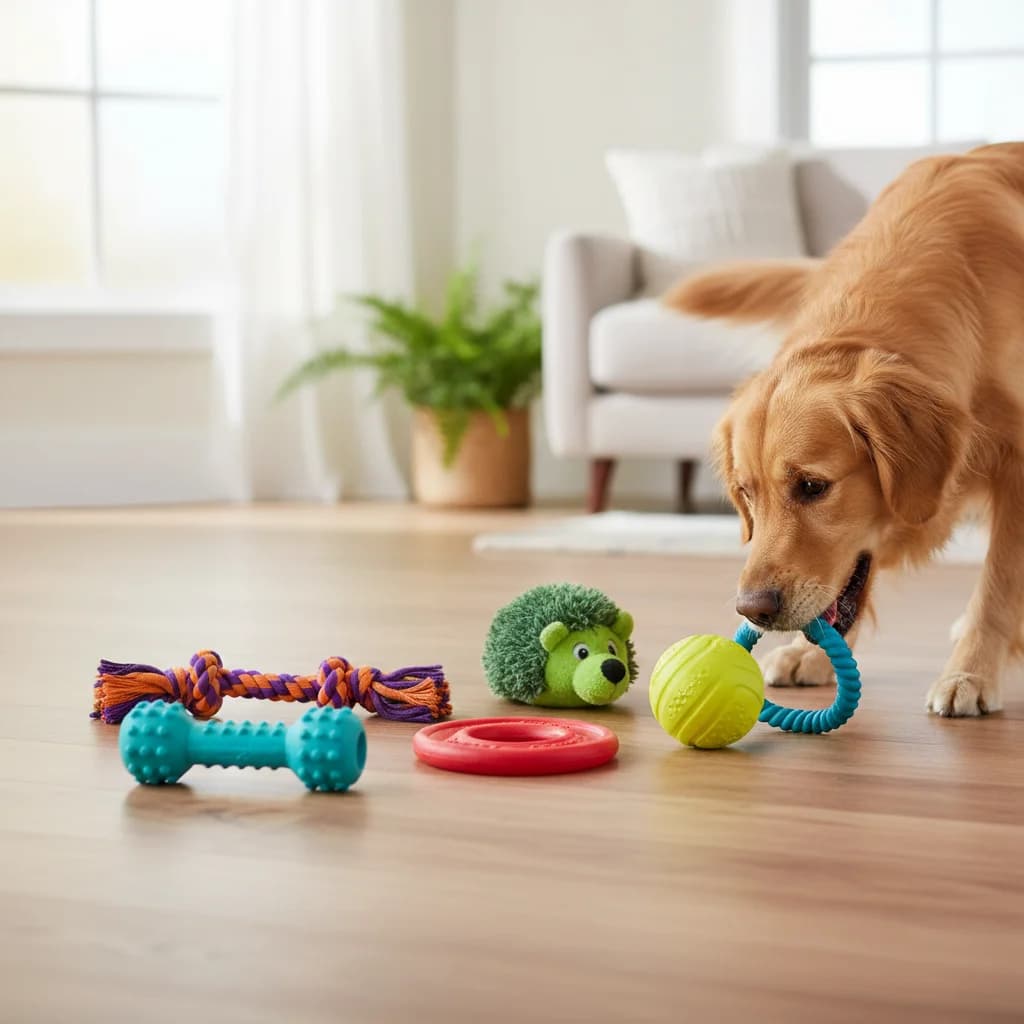
Puppies chew. This is not optional. If you do not provide appropriate chew outlets, they will find their own -- your shoes, your baseboards, your charging cables.
- KONG Puppy ($10) -- Softer rubber formula designed for puppy teeth. Stuff with moistened kibble and freeze it
- Nylabone Puppy Chew ($8) -- For puppies that prefer to gnaw rather than stuff-and-eat
- Rope toys ($5-8) -- Good for light tugging and teething, but monitor for fraying
For more options and recommendations by chew style, see our best dog toys guide.
Enzymatic Cleaner: You Will Use This Daily
Nature's Miracle Advanced Stain & Odor Eliminator ($12 for 32 oz). Puppies have accidents. Regular cleaners do not fully eliminate the scent, which means the puppy returns to the same spot. Enzymatic cleaners break down the proteins in urine so the dog cannot smell it. Buy the gallon size. You will need it.
Training Treats: Small and Soft
Zuke's Mini Naturals ($8 for 6 oz) are the gold standard for training treats -- tiny, soft, and easy to break into even smaller pieces. Puppies should be earning 30-50 small treats per day during active training. This is not spoiling. This is building communication.
Collar, Leash, and ID
- Adjustable nylon collar ($8) with a buckle (not a snap-release, which puppies can pop open)
- 6-foot nylon leash ($8) -- No retractable leashes for puppies, ever
- ID tag ($5) with your phone number -- Get this before the puppy comes home
Puppy Pads (Maybe)
This is controversial. Some trainers recommend puppy pads as a house-training aid. Others argue they teach puppies to eliminate indoors. My position: if you live in an apartment without immediate yard access, puppy pads are a practical necessity. If you have a yard, skip them and go directly to outdoor elimination training. AmazonBasics Puppy Pads ($20 for 100) are the best value.
Puppy-Proofing Room by Room
Think like a curious, mouth-oriented creature that stands 8 inches tall.
Kitchen: Secure trash cans with lids. Move cleaning supplies to upper cabinets. Block access behind the refrigerator where cords and dust collect.
Living room: Lift electrical cords off the floor or cover them with cord protectors ($10). Move houseplants out of reach -- many are toxic (lilies, pothos, sago palm, aloe). Secure wobbly furniture that could fall on a climbing puppy.
Bedroom: Close closet doors. Move shoes and clothing off the floor. Secure any medications on nightstands -- a single dropped ibuprofen can be fatal to a small puppy.
Bathroom: Keep the toilet lid closed. Secure trash cans. Move all medications, cleaners, and personal care products out of reach.
Garage/Yard: This is the highest-risk area. Antifreeze is sweet-tasting and lethal in tiny amounts. Rodent bait, fertilizers, and pesticides must be completely inaccessible. Check your fence for gaps a small puppy could squeeze through -- if a puppy can fit its head through an opening, it can fit its body.
Baby gates are essential for restricting access during the puppy-proofing phase. The Richell Convertible Pet Gate ($70) is the most versatile option because it converts between a freestanding gate and a wall-mounted gate.
The Socialization Window: Do Not Miss This
Between 3 and 14 weeks of age, puppies are in a critical socialization period where exposure to new experiences shapes their temperament for life. This is not an exaggeration -- undersocialized puppies are significantly more likely to develop fear, aggression, and anxiety as adults.
What to expose them to (positively, with treats):
- Different surfaces (grass, tile, carpet, grates, gravel)
- Different sounds (traffic, vacuum, doorbell, thunder recordings at low volume)
- Different people (men, women, children, people wearing hats, people with beards)
- Handling (touching paws, ears, mouth, tail -- mimicking vet exam procedures)
- Other vaccinated dogs (puppy socialization classes are ideal)
The vaccination caveat: Your puppy should not walk in public areas where unvaccinated dogs may have been until 2 weeks after their final round of vaccinations (typically 16-18 weeks). However, socialization should not wait. Carry your puppy in public, attend puppy classes in clean indoor environments, and arrange playdates with known vaccinated dogs.
Vaccination Schedule Overview
- 6-8 weeks: First DHPP (distemper, hepatitis, parainfluenza, parvovirus)
- 10-12 weeks: Second DHPP, possibly Bordetella (kennel cough)
- 14-16 weeks: Third DHPP, rabies (required by law)
- 12-16 weeks: Begin heartworm and flea/tick prevention (vet-recommended brands only)
Your vet will customize this schedule. Do not skip or delay vaccinations -- parvovirus kills puppies and is entirely preventable.
First Vet Visit Prep
Schedule your first vet visit within 72 hours of bringing the puppy home. Bring:
- Any paperwork from the breeder or shelter
- A stool sample (fresh, in a sealed bag)
- A list of what the puppy has been eating
- Your questions written down (you will forget them otherwise)
Budget $150-300 for the first visit including exam, initial vaccines, deworming, and fecal test.
What NOT to Buy
Save your money on these commonly recommended products that are unnecessary or counterproductive:
- Puppy perfume/cologne. Your puppy does not need to smell like lavender.
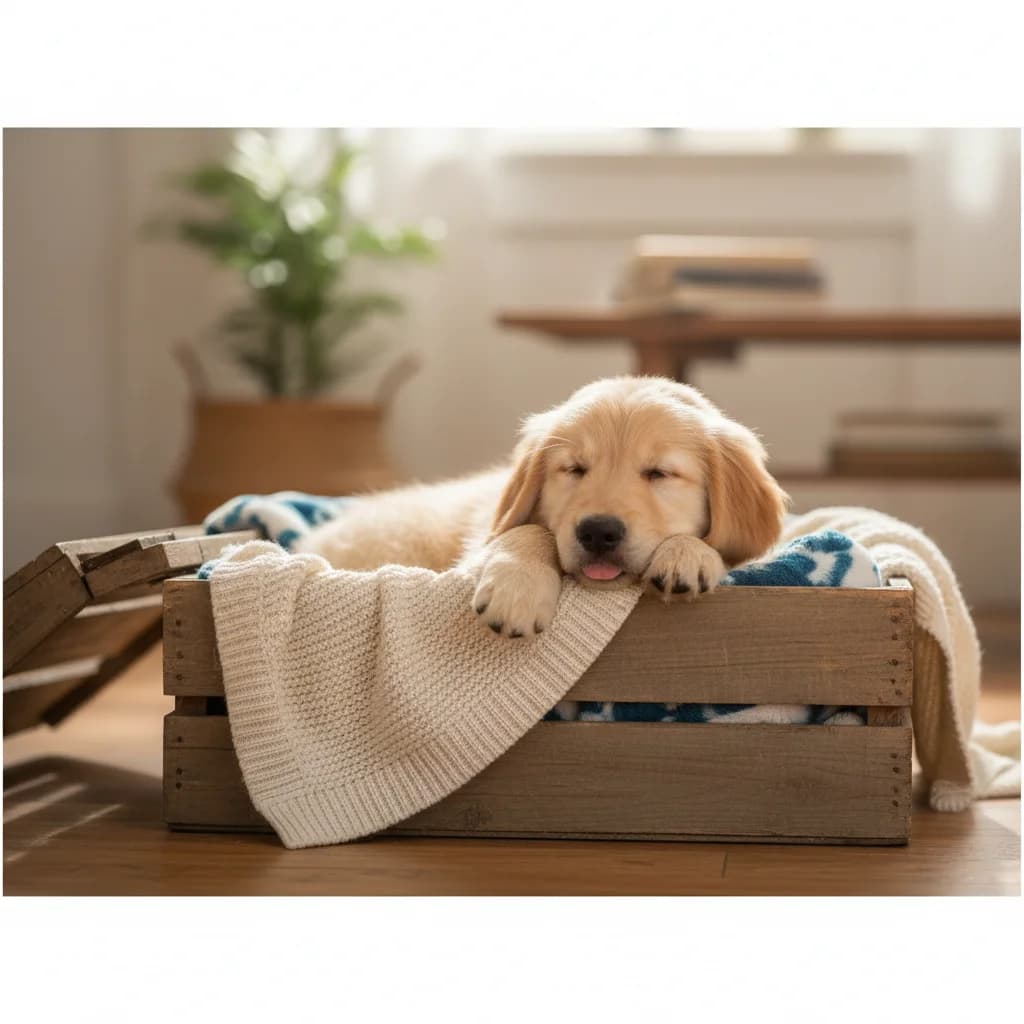
- Expensive designer beds. Your puppy will chew them. Use old towels in the crate until chewing behavior subsides.
- Retractable leashes. They teach pulling and create dangerous situations.
- Rawhide chews. Choking hazard and digestive blockage risk. Use bully sticks instead.
- Shock collars or prong collars. Completely inappropriate for puppies. Positive reinforcement is the standard.
- Too many toys at once. Start with 3-4 and rotate. Drowning a puppy in toys reduces the value of each one.
The Bottom Line
A new puppy needs about 10-12 essential items, not 47. Get the crate, the food, the chew toys, the enzymatic cleaner, and the training treats. Puppy-proof methodically, prioritize socialization during the critical window, and get to the vet within the first 72 hours. Everything else can wait until you understand your specific puppy's personality and needs. The first year is an investment of time and patience more than money -- and it pays dividends for the next 10 to 15 years.
🏆 Bottom Line: Don't try to buy everything before your puppy arrives. Start with the six essentials: food, water bowl, collar with ID tag, leash, crate, and a basic bed. Add grooming tools, puzzle toys, and training gear as you learn your specific puppy's needs in the first few weeks.
Related Reading
- Puppy Essentials — Complete puppy gear guide
- Dog Food — Puppy food recommendations
- Training — Puppy training basics
Sources
- American Veterinary Medical Association (AVMA) — Puppy wellness recommendations for the first year. avma.org.
- American Kennel Club (AKC) — "Puppy Essentials: What You Need Before Bringing Your Dog Home." akc.org.
- American Animal Hospital Association (AAHA) — Puppy care guidelines 2022. aaha.org.
- Association of Professional Dog Trainers (APDT) — Puppy socialization and training recommendations. apdt.com.
- Dunbar I — Before and After Getting Your Puppy. New World Library, 2004.
Research Sources
- New Puppy Checklist: Essentials for Your New Pup — American Kennel Club
- Puppy Feeding Fundamentals: Timeline for Puppy Feeding — American Kennel Club
- 2019 AAHA Canine Life Stage Guidelines — American Animal Hospital Association, 2019
- AVSAB Position Statement on Puppy Socialization — American Veterinary Society of Animal Behavior
- Vaccinating Your Pet — American Veterinary Medical Association
- 2022 AAHA Canine Vaccination Guidelines — American Animal Hospital Association, 2022

Hilly Shore Labs
Founder & EditorDog owner for 5+ years, product researcher, and founder of PawBench. Every recommendation is based on hands-on experience with Maggie — my Australian Labradoodle — plus cross-referencing veterinary research from the AKC, AVMA, and peer-reviewed studies.
All product reviews are independently researched. Our recommendations are based on published veterinary guidelines, manufacturer specifications, and verified customer feedback. See our methodology.