Does Dog Dental Powder Actually Work? The Evidence
Quick Answer
Partly — and not in the way the tub implies. Seaweed-based dental powders (Ascophyllum nodosum, the studied brand is ProDen PlaqueOff) have genuine double-blind, placebo-controlled evidence: in a 90-day trial they slowed plaque re-accumulation by about 38% and tartar by about 20% versus placebo, and reduced bad breath. But every one of those studies started by professionally cleaning the dogs' teeth, so the honest claim is that powder slows NEW buildup on a clean mouth — it does not remove tartar your dog already has (only a professional scaling under anesthesia does that), and daily brushing still controls tartar roughly four times better. Think of powder as a passive add-on for dogs who won't tolerate a brush, not a replacement for brushing or a cleaning.
On this page6 sections
Our Verdict
Dental powder is a real but modest supplement, not a cure. Double-blind trials show seaweed-based Ascophyllum nodosum powder slows plaque and tartar re-accumulation on already-clean teeth by roughly 20–38%, and lowers bad breath. But it cannot remove existing tartar, and on a clean mouth daily brushing controls tartar about four times better. Use it on a freshly cleaned mouth, or for dogs that won't tolerate a brush — never as a substitute for brushing or a professional cleaning.
Dental powder vs. brushing vs. a professional cleaning
What each method can and can't do for your dog's teeth. Powder is the passive slow-the-buildup option — it is not the one that removes what's already there.
| Product | Seaweed dental powder | Daily brushing | Professional cleaning |
|---|---|---|---|
| Removes tartar already on the tooth | No — does nothing mechanical | No — wipes soft plaque, not hardened tartar | Yes — the only method that does (ultrasonic scaling under anesthesia) |
| Slows NEW plaque | ~38% vs placebo (double-blind RCT) | ~37% vs unbrushed teeth | Resets to zero; doesn't prevent regrowth |
| Slows NEW tartar | ~20% vs placebo | ~80% vs unbrushed teeth | n/a — removes, doesn't prevent |
| How it works | Systemic — via saliva chemistry, no tooth contact | Mechanical — physically removes plaque daily | Mechanical — scaling + polishing |
| Freshens breath | Yes — lower volatile sulfur compounds in trials | Yes | Yes — removes the source |
| Effort / tolerance | Scoop on food; most dogs accept it | Daily; many dogs resist | 1–2x/yr; vet visit + anesthesia |
| Best role | Passive add-on on an already-clean mouth | First-line daily control | The only reset for existing tartar |
How PawBench is paid: we earn an Amazon Associates commission on qualifying purchases. We don’t accept sponsored placements, paid reviews, or free products in exchange for coverage. Picks are ranked on documented owner outcomes and primary-source research, never on commission rate. Read the full methodology.
Sprinkle a scoop of greenish powder on your dog's dinner and watch the tartar melt away. That's roughly the promise on the tub. It's also where most owners get the wrong idea — not because dental powders are a scam, but because they do something narrower and slower than the marketing implies.
Here's the honest version, built from the actual double-blind trials rather than the label copy.
The takeaways up front:
- It cannot remove tartar your dog already has. Every trial that showed powder "working" started by professionally cleaning the dogs' teeth first, then measured how much slower new buildup came back.
- The evidence is real but modest. A double-blind, placebo-controlled study found the seaweed active ingredient cut plaque re-accumulation by roughly a third and tartar by about a fifth over 90 days.
- Brushing still wins. On a clean mouth, daily brushing out-controls tartar by roughly four to one versus powder.
- It works through saliva, not scrubbing — so it's a supplement to dental care, not a replacement for a brush or a cleaning.
What most owners get wrong
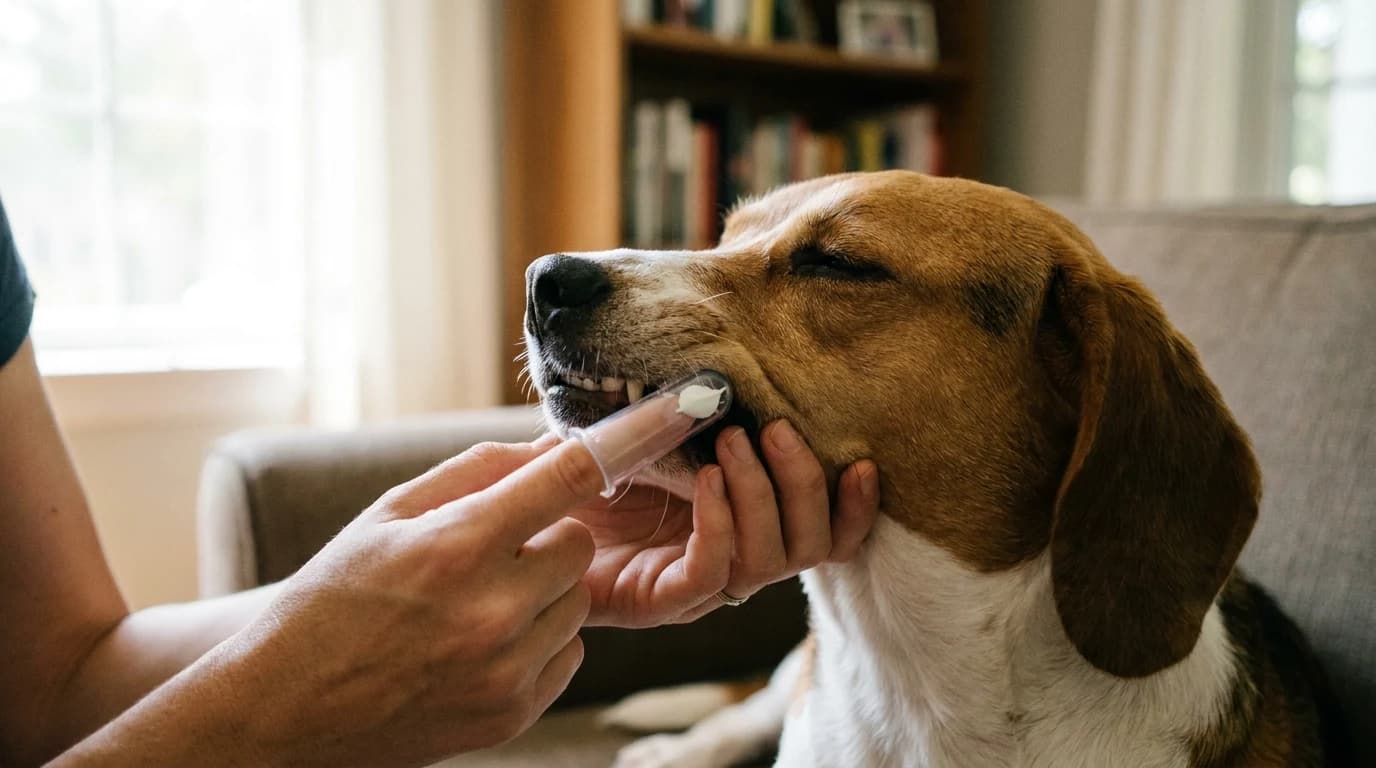
The core misunderstanding is mechanical. A brush and a professional scaler physically remove deposits. Dental powder does nothing physical at all — your dog swallows it with food. So the one thing it structurally cannot do is lift tartar that's already cemented to the tooth.
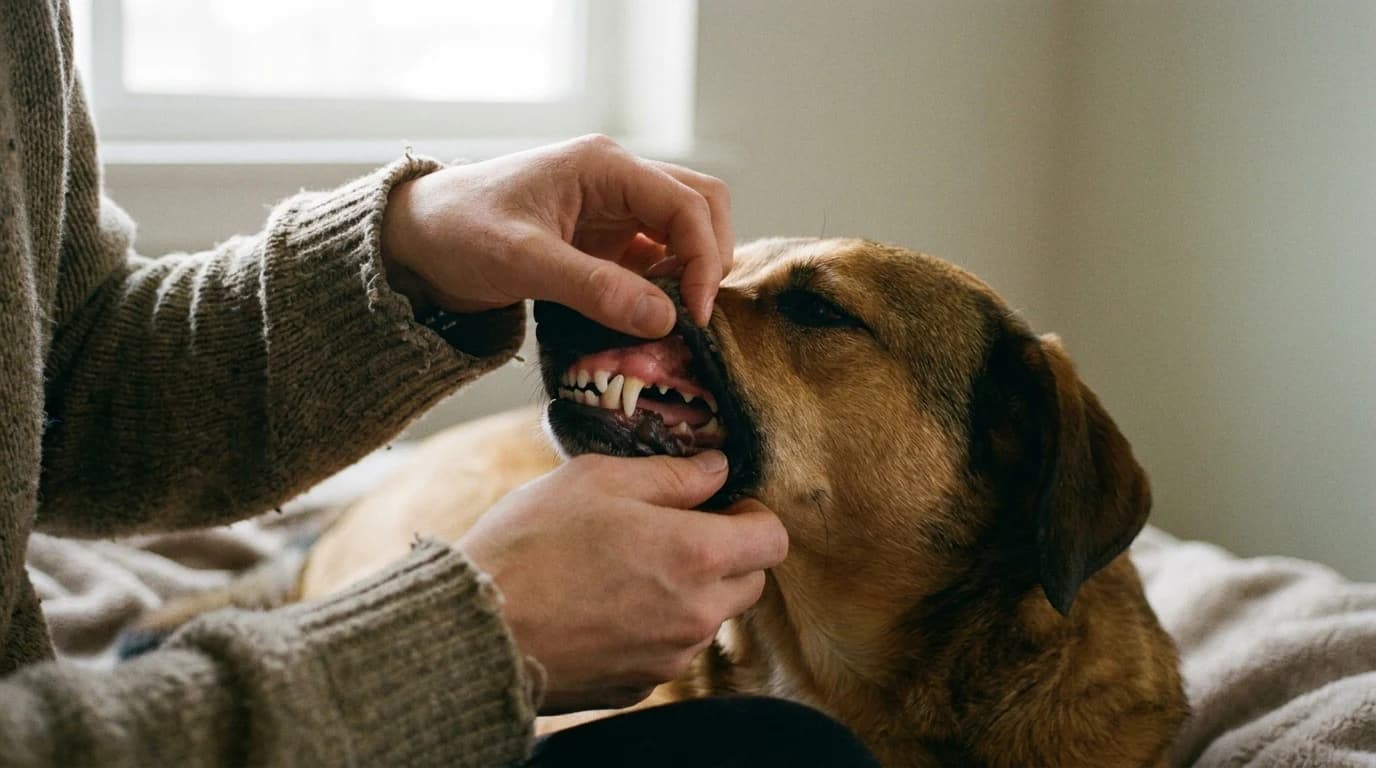
Veterinary sources are blunt about this. VCA Animal Hospitals notes that once tartar has formed, "professional scaling and polishing under general anesthesia will be needed as it cannot easily be removed by diets and/or brushing." Any powder that claims to dissolve existing tartar is overpromising. If your dog already has visible brown buildup, no supplement will take it off — that's a cleaning.
The studies never tested powder on a dirty mouth. They cleaned every dog first, then measured how fast the buildup returned. That's the only claim powder has actually earned: it slows the comeback.
What the research actually shows
The active ingredient in the leading powders is Ascophyllum nodosum, a brown seaweed (the studied product is ProDen PlaqueOff). It has been through a genuinely rigorous test — a double-blind, randomized, placebo-controlled trial of 60 client-owned dogs, published in Frontiers in Veterinary Science.
Every dog got a full professional cleaning under anesthesia to start from zero. Then half received the seaweed daily and half got a placebo, for 90 days. At day 90:
- Plaque index: 1.67 in the treated group vs 2.71 in the placebo group — about 38% lower.
- Calculus (tartar) index: 1.07 vs 1.34 — about 20% lower.
- Bad breath (measured as volatile sulfur compounds) and gum bleeding were also significantly lower in the treated dogs.
So it does something measurable. This isn't homeopathy. But read the numbers as "buildup came back more slowly," not "teeth got cleaner." Those results are why Ascophyllum powders can carry the Veterinary Oral Health Council (VOHC) seal — but note the seal only certifies that a product "helps control plaque and/or tartar," never that it removes what's there.
How it works: through saliva, not scrubbing
This is the strangest and most useful thing to understand. The powder isn't a surface treatment. The leading hypothesis, from a 2021 saliva-metabolome study, is that the seaweed's compounds are absorbed in the gut and then secreted back into the mouth through saliva, subtly shifting the chemistry so plaque mineralizes into tartar more slowly. The researchers are candid that "the exact mechanism is still unclear."
Two practical consequences fall out of that:
- It coats every tooth evenly, including the back molars a brush often misses — a real edge over spot methods.
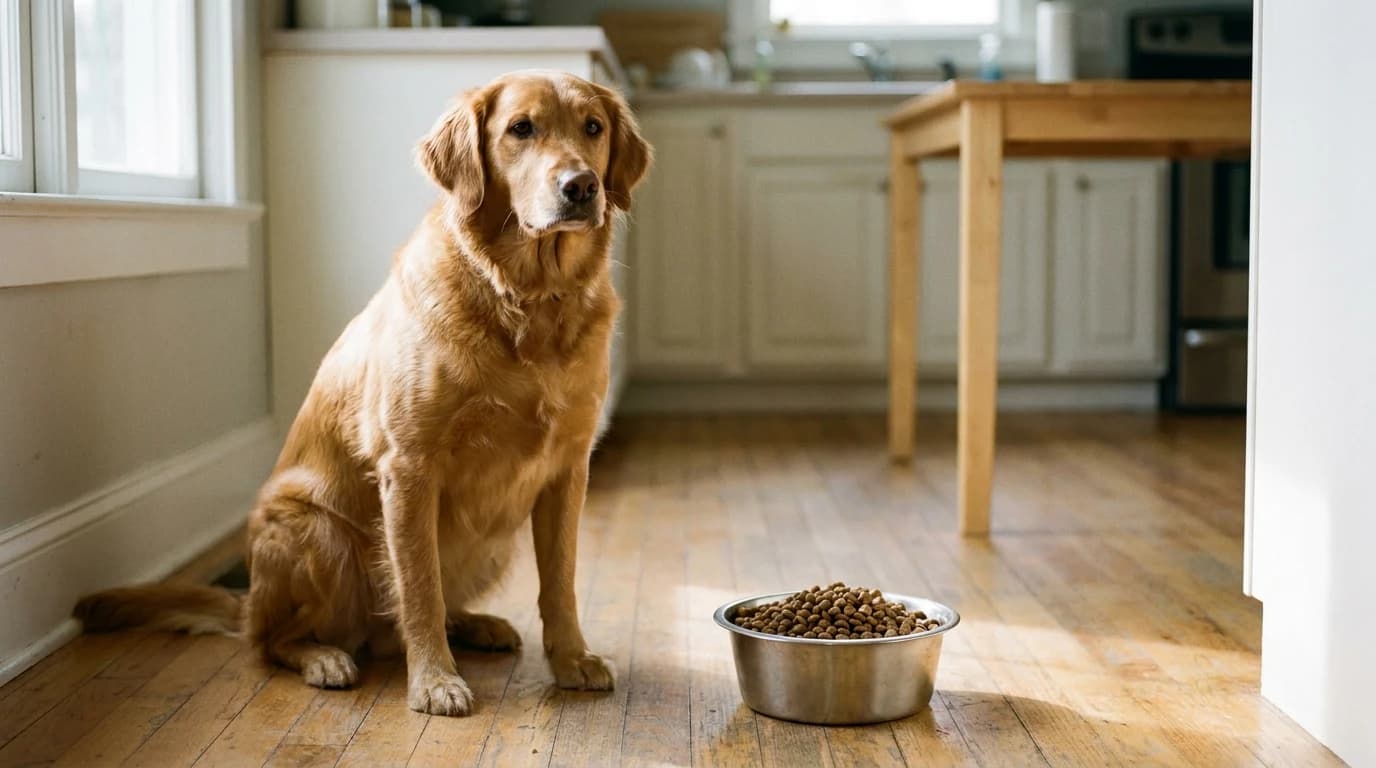
- It's entirely passive and bland enough that most dogs eat it without a fight, which matters if brushing is a nightly wrestling match.
Powder vs. brushing vs. a cleaning
The table above lays out what each method can and can't do. The uncomfortable comparison is brushing. In the same body of research, daily brushing reduced plaque by about 37% and tartar by about 80% versus unbrushed teeth. Powder's ~20% tartar figure is real — but daily tooth brushing is roughly four times better at the thing that actually hardens onto the tooth.
That doesn't make powder pointless. It makes it a second-string tool: useful when brushing isn't happening, and stackable on top of brushing for dogs prone to fast buildup.
What actually moves the needle is mechanical cleaning plus an enzymatic toothpaste — Virbac C.E.T. enzymatic toothpaste is the one most veterinary dentists recommend, and it's the product the VOHC-accepted powders are trying to approximate. If brushing is a non-starter, a VOHC-listed chew like Greenies does more than any powder.
Who it's actually for
Dental powder earns its place in three situations:
- The un-brushable dog who treats a toothbrush as a threat. A 20–38% slowdown in buildup beats the zero you get from a brush that never touches the teeth.
- After a professional cleaning, to stretch the interval before the next one — exactly the scenario the trials modeled.
- As an add-on, not an anchor, alongside brushing and vet checkups.
Who it's not for: any dog with visible tartar or red, inflamed gums today. That dog needs a veterinary exam and likely a cleaning first — and if the breath has turned foul, that's a signal to book the vet, not the supplement aisle. Start powder on a clean mouth, or you're just seasoning the problem.
The bottom line
Dog dental powder works — in the narrow, evidence-backed sense that it slows how fast plaque and tartar rebuild on already-clean teeth, and freshens breath along the way. It does not remove existing tartar, it does not replace a brush, and it does not replace a professional cleaning. Treat it as a helpful supplement to real dental care and it earns its scoop. Treat it as a cure and you'll be disappointed at the next vet visit.
If you're shopping rather than just reading, buy the brush and paste before the powder — our pick is Vet's Best Enzymatic Toothpaste, in best dog dental care 2026.
Frequently Asked Questions
- Does dental powder remove tartar that's already on my dog's teeth?
- No. Dental powder is swallowed with food and works through saliva chemistry, not by scrubbing, so it can't lift tartar that has already hardened onto the tooth. Per VCA Animal Hospitals, once tartar has formed it requires professional scaling and polishing under general anesthesia — it can't easily be removed by diets or brushing. Powder's job is to slow how fast new buildup forms on a clean mouth.
- Is there real evidence that seaweed dental powder works?
- Yes, more than most dental supplements. Ascophyllum nodosum has been tested in double-blind, randomized, placebo-controlled trials in dogs. Over 90 days it slowed plaque re-accumulation by roughly 38% and tartar by about 20% versus placebo, and lowered bad-breath compounds. That's why some Ascophyllum powders carry the Veterinary Oral Health Council seal — which certifies a product 'helps control plaque and/or tartar,' not that it removes it.
- Is dental powder better than brushing my dog's teeth?
- No. In the same research, daily brushing reduced tartar by about 80% versus unbrushed teeth, compared with about 20% for powder — roughly four times better at the deposit that actually hardens. Brushing is the first-line home method. Powder is best used as a passive add-on, especially for dogs that won't tolerate a toothbrush, or to stretch the interval after a professional cleaning.
Research Sources
- Dental Disease in Dogs — VCA Animal Hospitals
- Effects of Edible Treats Containing Ascophyllum nodosum on the Oral Health of Dogs: A Double-Blind, Randomized, Placebo-Controlled Study — Frontiers in Veterinary Science (2018)
- Influence of Dietary Supplementation With a Powder Containing A.N. ProDen (Ascophyllum nodosum) on Dog Saliva Metabolome — Frontiers in Veterinary Science (2021)
- VOHC Accepted Products for Dogs — Veterinary Oral Health Council
- VOHC FAQ — What the Seal Means — Veterinary Oral Health Council
What changed in this review(1 entry)
- Body copy
Added one contextual line pointing readers who are shopping to the dental-care roundup and its named pick.

PawBench Editorial
Published by Hilly Shore LabsPawBench’s editorial team researches dog products from primary veterinary sources, manufacturer specifications and aggregated buyer sentiment, alongside the lived ownership of Maggie, an Australian Labradoodle. We do not run hands-on product tests.
254 dog products scored · 1,160,091 buyer review-aspect mentions aggregated · cites AVMA, FDA, AAFCO, Cornell, WSAVA, AKC, ASPCA.
Recommendations are based on published veterinary guidelines, manufacturer specifications, and verified customer feedback. See our editorial standards.