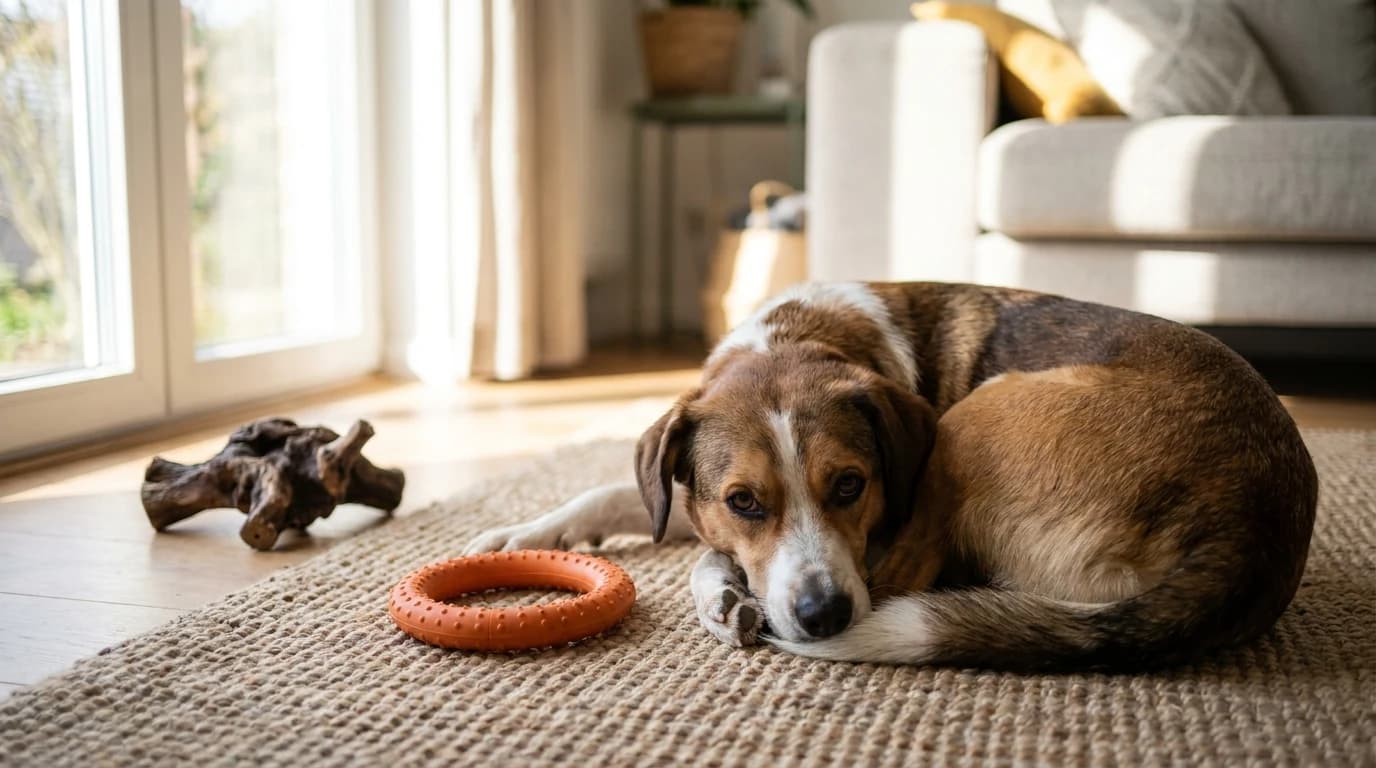
What Your Dog's Bad Breath Is Actually Telling You
Quick Answer
Your dog's bad breath is usually the smell of dental disease, not a normal trait. The most common cause is periodontal disease from plaque and tartar, which affects up to 84% of dogs over three years old, per veterinary research. The smell helps you gauge urgency: a strong, foul, rotting odor points to advanced gum disease, an abscessed or fractured tooth, or in older dogs an oral tumor; a sweet or fruity smell can signal ketones from uncontrolled diabetes; and an ammonia or urine-like smell can signal kidney failure (uremia). A faint odor is early tartar and a warning. The real fix for the common cause is a professional dental cleaning under anesthesia plus daily brushing, not a breath freshener, and a sweet or urine-like smell warrants a prompt vet visit because those are whole-body problems, not just teeth.
On this page7 sections
Our Verdict
Persistent bad breath is almost never normal. The most common cause is periodontal disease that needs a professional cleaning under anesthesia, not a breath chew. A sweet or fruity smell can mean diabetes, and an ammonia or urine-like smell can mean kidney disease, so those warrant a prompt vet exam. Use the smell and the rest of your dog's body to gauge urgency, then let a vet confirm the cause.
Dog Bad-Breath Decode Chart
The kind of smell is a clue to urgency, not a diagnosis. Match what you smell to the likely source, then have a vet confirm.
| Product | What you smell | Likely source | Urgency |
|---|---|---|---|
| Faint / routine “dog breath” | Mild, low-grade odor | Early plaque and tartar (gingivitis starting) | Schedule a dental check |
| Strong, foul, rotting | Decay-like, gets worse over weeks | Advanced periodontal disease, abscess or fractured tooth, or oral tumor | Vet visit soon |
| Sweet / fruity / nail-polish | Acetone-like sweetness | Ketones from uncontrolled diabetes (often with weight loss, thirst, urination) | Prompt vet visit |
| Ammonia / urine-like | Sharp, urine or ammonia note | Uremia from kidney dysfunction | Prompt vet visit |
How PawBench is paid: we earn an Amazon Associates commission on qualifying purchases. We don’t accept sponsored placements, paid reviews, or free products in exchange for coverage. Picks are ranked on documented owner outcomes and primary-source research, never on commission rate. Read the full methodology.
"Dog breath" is one of the most normalized symptoms in pet care. We treat it as a fact of life, a punchline, the price of a dog who licks your face. It almost never is. In the overwhelming majority of cases, persistent bad breath is the smell of disease your dog cannot tell you about, and the most common cause is an infection eating away at the bone holding their teeth in.
This post is not a list of breath mints. It is a translation guide: what the smell, the severity, and the rest of your dog's body are telling you, and when bad breath stops being a nuisance and becomes a same-week vet visit.
What most owners get wrong
The myth is that healthy dogs have bad breath. They do not. A healthy dog's mouth is largely odorless or faintly neutral. The University of California, Davis veterinary school puts it plainly: bad breath in a pet "is very often associated with a health problem and should be taken seriously." If you have stopped noticing your dog's breath because it has always been there, that is not reassurance. It usually means a slow problem has been getting worse for months.
The number one cause: it's the gums, not the stomach
People reach for diet, "doggy breath," or an upset stomach. The real answer is almost always the mouth. According to VCA Animal Hospitals, the most common cause of halitosis in dogs is periodontal disease arising from plaque and tartar build-up. Plaque mineralizes into tartar within days, tartar inflames the gums (gingivitis), and as that progresses to periodontitis the bacteria shift from harmless to destructive, producing the volatile sulfur compounds you smell.
And it is not rare. A veterinary review in the journal Antibiotics reports periodontal disease rising to 84% of dogs aged three or more years (and effectively 100% of older small breeds). Small and flat-faced breeds are hit hardest because their teeth are crowded. If your dog is over three and has never had a dental cleaning, assume there is something happening under the gumline that the breath is reporting.
The breath-smell decode
The kind of smell is a clue, not a diagnosis. Use this to gauge urgency, then let a vet confirm. The mappings below for sweet and ammonia-like breath come from PetMD's veterinary team; the systemic-disease umbrella is corroborated by UC Davis.
The smell tells you how worried to be. A sweet or ammonia-like odor means look past the mouth, fast.
Decode table
The table above is the field version. The reasoning:
- Routine "dog breath" / faint odor is the early-tartar stage. It is the warning shot, not nothing.
- Strong, foul, rotting smell points to advanced periodontal disease, an abscessed or fractured tooth, or in older dogs an oral tumor with dying tissue. This is a vet visit, not a chew-stick fix.
- Sweet or fruity / nail-polish breath can mean ketones from uncontrolled diabetes. PetMD notes these dogs often also show weight loss, big appetite swings, and increased thirst and urination. Treat it as urgent.
- Ammonia or urine-like breath can signal that the kidneys are failing to clear urea from the blood (uremia), which can also ulcerate the mouth. Also urgent.
The takeaway: a foul mouth smell is usually a dental problem; a sweet or urine-like smell is a whole-body alarm. The second category is the one people miss because they assume all bad breath is "just teeth."
When bad breath is an emergency-adjacent sign
Book a vet promptly, not "next time you're in," if the breath comes with any of these:
- Sweet/fruity or ammonia/urine-like odor (possible diabetes or kidney disease)
- A sudden change in smell, drooling, or pawing at the mouth (possible fractured tooth, abscess, or a foreign object stuck in the mouth)
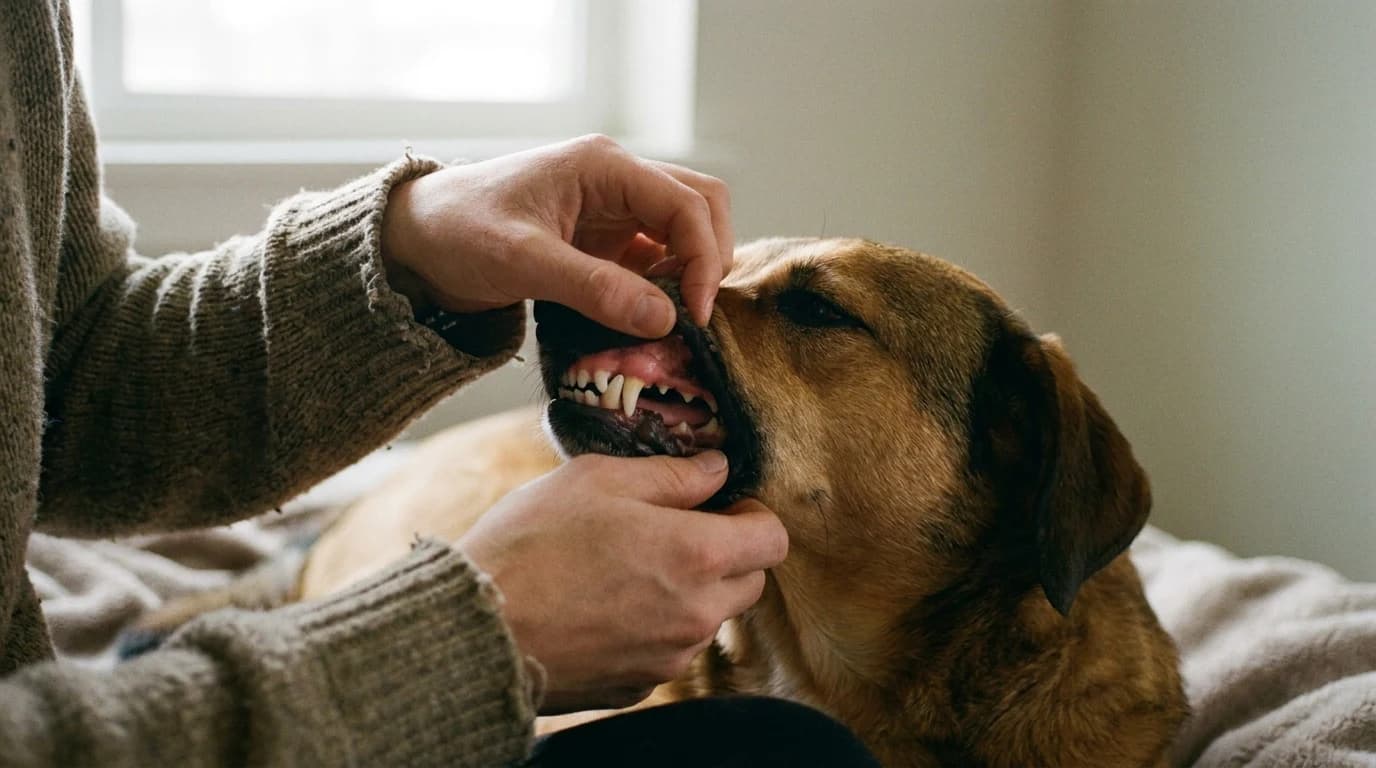
- Bleeding gums, refusing hard food, chewing on one side, or visible brown tartar
- Bad breath plus weight loss, yellowing of the eyes or gums, or increased drinking and urination
What actually fixes it (and what doesn't)
Breath fresheners, water additives, and dental chews manage plaque at the margins. They do not remove tartar below the gumline, and they cannot treat an abscess or a systemic disease. The fix for the common cause is a professional dental cleaning under anesthesia, where a vet scales below the gumline and examines each tooth. The American Animal Hospital Association recommends a full dental assessment by one year of age for small and medium breeds, and regular cleanings after that.
At home, daily toothbrushing is the single most effective preventive, supported by a sensible chew and a vet-checked diet. Our guide to dog dental care products covers brushes, additives, and chews, and our dental chew picks by size help you match a chew to your dog without overdoing hardness (see also why some chews are too hard for teeth). But none of that substitutes for a cleaning once tartar has formed, and none of it touches a kidney or diabetes problem.
The bottom line
Persistent bad breath is a symptom, not a personality trait. Most of the time it is periodontal disease that has been quietly progressing and needs a professional cleaning. Some of the time it is the only early sign you will get of diabetes or kidney disease. Either way, the correct response is a vet exam, not a peppermint chew.
Research Sources
- Halitosis in Dogs — VCA Animal Hospitals
- Halitosis in Dogs — UC Davis School of Veterinary Medicine
- Revisiting Periodontal Disease in Dogs: How to Manage This New Old Problem — Antibiotics (PMC / NCBI)
- Bad Breath in Dogs: Causes and Treatment — PetMD

PawBench Editorial
Published by Hilly Shore LabsPawBench’s editorial team researches dog products from primary veterinary sources, manufacturer specifications and aggregated buyer sentiment, alongside the lived ownership of Maggie, an Australian Labradoodle. We do not run hands-on product tests.
331 dog products scored · 1,222,724 buyer review-aspect mentions aggregated · cites AVMA, FDA, AAFCO, Cornell, WSAVA, AKC, ASPCA.
Recommendations are based on published veterinary guidelines, manufacturer specifications, and verified customer feedback. See our editorial standards.