How to Brush a Dog's Teeth (the Right Way, Without a Fight)
Quick Answer
Brush a dog's teeth by building up gradually: first rub a finger over the outer teeth, then let your dog taste dog toothpaste, then use a cloth, and only then a toothbrush, moving up a stage at a time over several days to weeks (VCA). Once your dog accepts the brush, lift the lip and gently brush the outer surfaces of the cheek and canine teeth in a back-and-forth motion, about 30 seconds per side, focusing where the gum meets the tooth. Brush daily if possible and at least three times a week, because plaque mineralizes into tartar within about a day. Never use human toothpaste, which can contain xylitol that is toxic to dogs.
On this page7 sections
Our Verdict
Brushing is the only home method that removes plaque every day, in the roughly 24-hour window before it mineralizes into tartar you can no longer brush off. Build up gradually from finger to brush over a week or more so your dog never learns to dread it, then brush the outer cheek and canine teeth about 30 seconds per side, ideally daily and at minimum three times a week. Dental chews and water additives help slow plaque but do not replace the brush, and anesthesia-free cleanings are largely cosmetic.
The Gradual Tooth-Brushing Ramp (Finger to Brush)
The vet-recommended desensitization progression. Move up a stage only when your dog is relaxed and cooperative at the current one; if your dog tenses or pulls away, drop back. Stage sequence and technique from VCA; rushing to the brush is the most common reason dogs fight the routine.
| Product | Stage | What you do | Move up when |
|---|---|---|---|
| 1. Finger only | 1. Finger only | Rub a finger or soft cloth over the outer teeth in a back-and-forth motion, just a few teeth at a time, focusing on the gum line. | Your dog stays calm and lets you touch the outer teeth. |
| 2. Toothpaste taste | 2. Toothpaste taste | Let your dog lick a little dog toothpaste off your finger so the flavor becomes a reward. | Your dog eagerly accepts the taste. |
| 3. Cloth + paste | 3. Cloth + paste | Apply a small amount of dog toothpaste to the cloth and rub it over the outer teeth. | Your dog tolerates the cloth with paste calmly. |
| 4. Toothbrush | 4. Toothbrush | Switch to a dog or finger toothbrush. Lift the lip, brush outer cheek and canine teeth ~30 sec per side, gently, at the gum line. | This is the routine: daily ideal, 3x/week minimum. |
How PawBench is paid: we earn an Amazon Associates commission on qualifying purchases. We don’t accept sponsored placements, paid reviews, or free products in exchange for coverage. Picks are ranked on documented owner outcomes and primary-source research, never on commission rate. Read the full methodology.
Brushing your dog's teeth is the single most effective thing you can do at home to prevent dental disease, and the only home-care step that actually removes plaque before it hardens. According to Cornell's Riney Canine Health Center, "brushing your dog's teeth is the most effective method of home care for preventing dental disease."
The catch is timing, both kinds.
Plaque starts mineralizing into tartar within about a day (VCA). That's why brushing has to be frequent to matter. And teaching the habit is a multi-week project, not a one-night wrestling match. Rush it and your dog learns to dread the sight of the brush. Below is the gradual, vet-backed way to get there.
Key Takeaways
- Brush daily if you can; three times a week is the real minimum. Less often than that and plaque mineralizes faster than you remove it (VCA).
- Build up over days to weeks, not in one session. Finger, then taste, then cloth, then brush. The fight happens when people skip straight to the toothbrush.
- Only the outer surfaces of the cheek and canine teeth matter most. That is where plaque builds; the tongue cleans most of the inside.
- Never use human toothpaste. Many contain xylitol, which is toxic to dogs (VCA). Use dog toothpaste, which is made to be swallowed.
Why Brushing Beats Chews and Water Additives
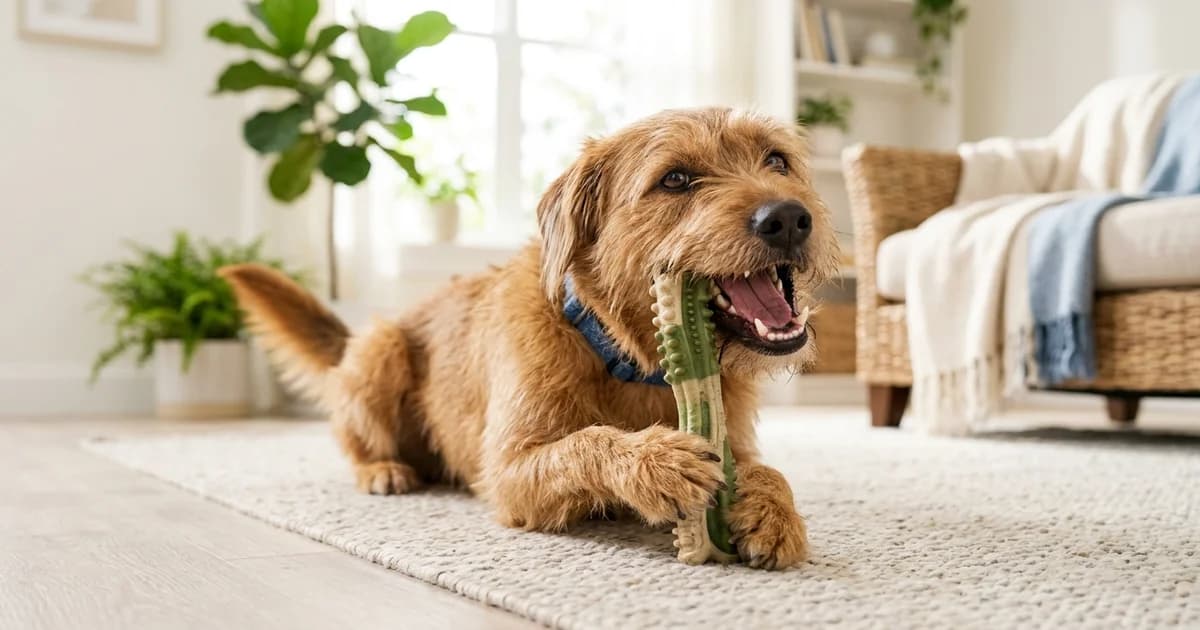
Dental chews, dental diets, water additives, and dental powders all help slow plaque, and the Veterinary Oral Health Council seal tells you which ones are proven. But none of them is a substitute for the brush, and here is the part most product pages skip: mechanical brushing is the only home method that disrupts the plaque biofilm on the tooth surface itself, every day, before it has time to mineralize.
Once plaque hardens into tartar, it is locked on. As VCA puts it, "professional scaling and polishing under general anesthesia will be needed, as it cannot easily be removed by diets and/or brushing." That is why brushing is preventive, not corrective: it works on plaque, in the roughly 24-hour window before it becomes something you can no longer brush off.
This matters because dental disease is nearly universal. By age three, most dogs already have some degree of periodontal disease (AAHA, VCA), and gingivitis, its first stage, is the only truly reversible one (VCA). Daily brushing is how you stay in the reversible zone.
The Gradual Plan: Go Slower Than You Think
The mistake almost everyone makes is starting with the toothbrush on day one. Dogs do not understand a foreign object in their mouth, and one bad session can poison the whole routine. Instead, work through stages, only moving up when your dog is relaxed at the current one. The table above maps the progression VCA recommends.
The whole point is to keep every session a positive experience, with praise and a calm voice throughout.
- If your dog tenses or pulls away, you have moved too fast — drop back a stage
- Choose a quiet time and place
- For the first lessons, touch only a few teeth, not the whole mouth
How to Actually Brush, Once You're There
When your dog accepts the brush, the technique is simple (VCA):
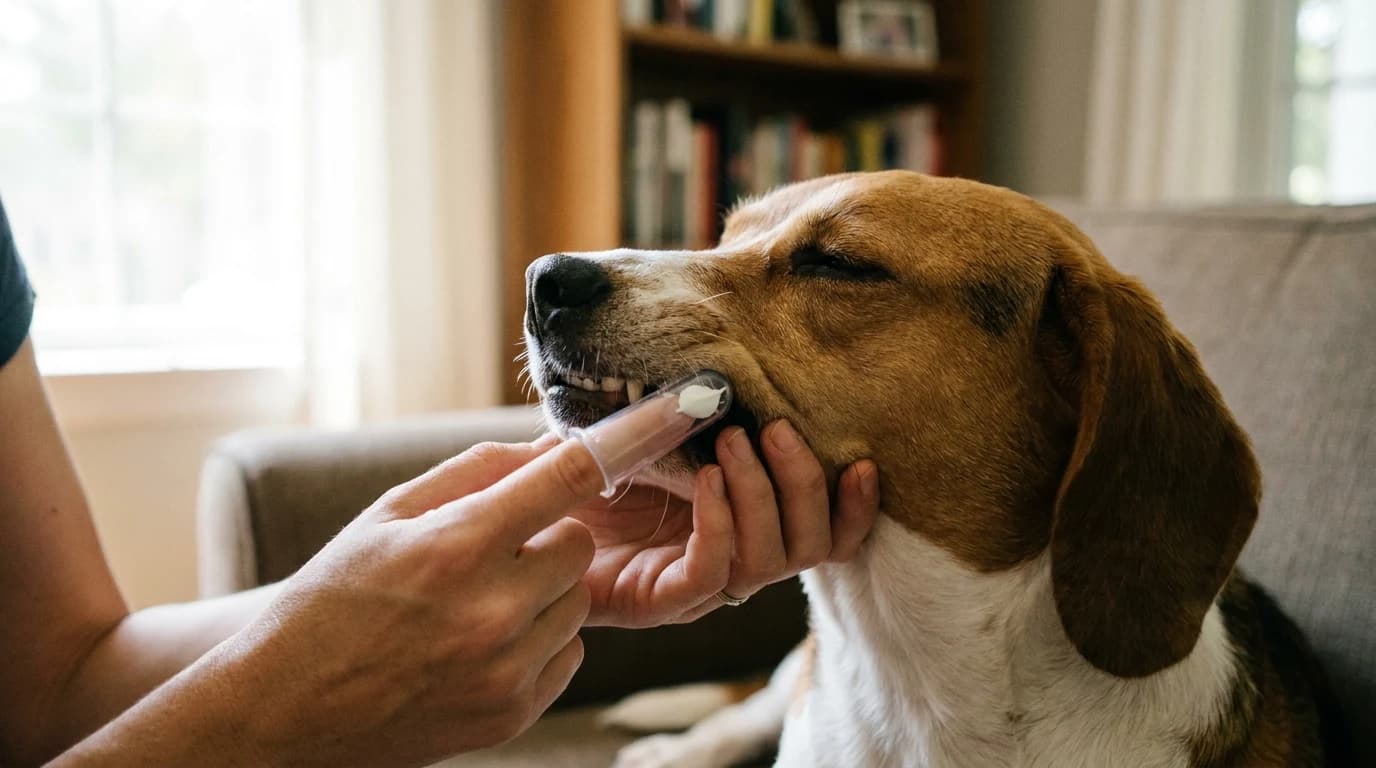
- Apply a small dab of dog toothpaste to the brush. A finger brush is easiest when you are starting out.
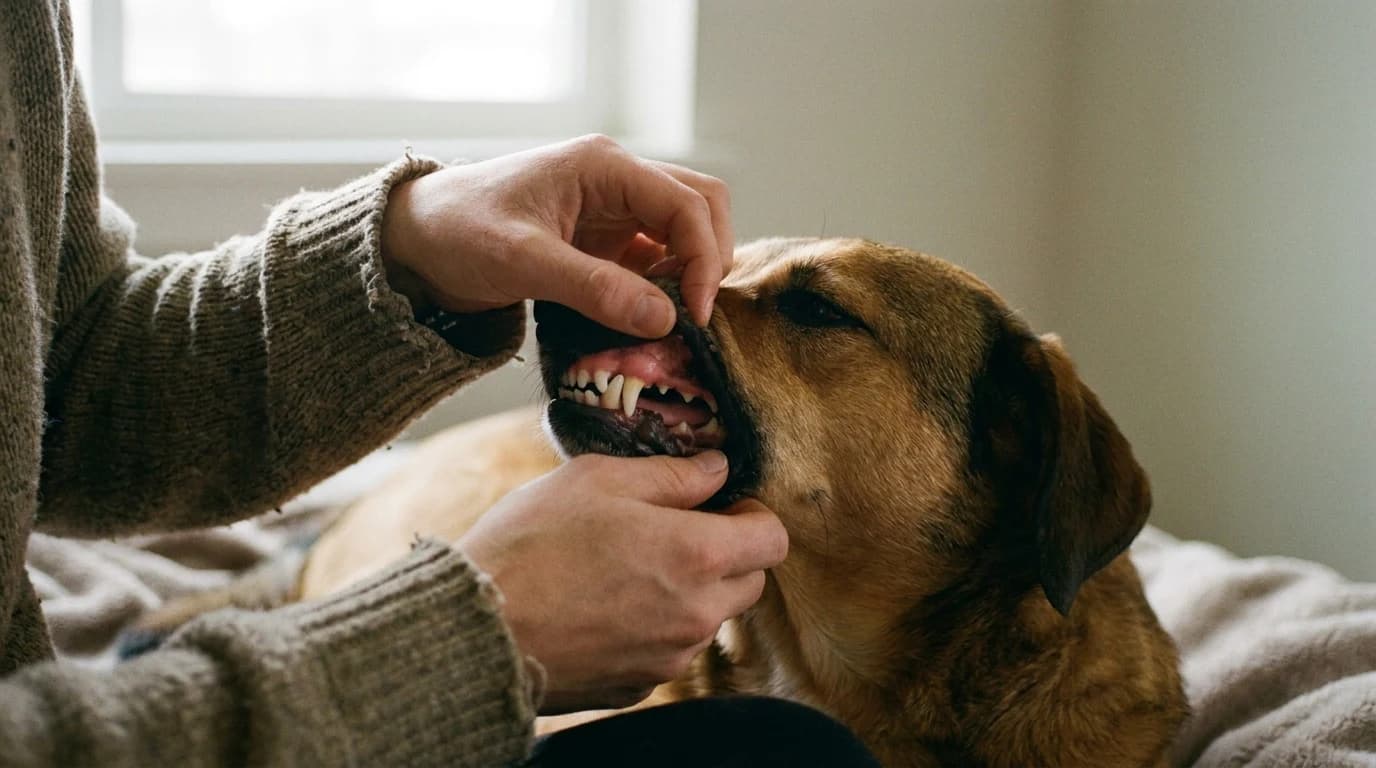
- Lift the lip on one side. Push up gently with your free hand, or cradle the muzzle with your thumb and index finger on opposite sides of the upper jaw.
- Brush the outer surfaces in a gentle back-and-forth motion, angled toward where the gum meets the tooth. Focus on the large cheek teeth and the canine teeth first; that is where plaque and tartar build up fastest.
- Aim for about 30 seconds per side. Do not worry about the tips or the insides unless your dog is very cooperative; the tongue handles most of the inner surfaces.
- Stay on the outside of the teeth to avoid an accidental nip, and go gently so the brush tip does not poke the gums.
Replace the toothbrush every three months, and use a separate brush for each dog in the house.
What Most People Get Wrong
- A dental chew is not a replacement for brushing. Chews and additives slow plaque; only brushing removes it daily before it hardens. A useful supplement, not the main event
- "Anesthesia-free" cleanings are mostly cosmetic. They scrape visible tartar off the crown but cannot reach under the gumline, where the real damage happens
- Skipping the buildup is the actual cause of "my dog won't let me." Dogs that fight the brush were usually rushed to it
AAHA is blunt about anesthesia-free cleanings: without anesthesia "there's no way to fully assess and address your pet's dental health," and these services "create a false sense of security." A shinier-looking tooth is not a healthier mouth.
When to Call the Vet
Brushing prevents disease; it does not treat a mouth that is already inflamed. Book a veterinary dental exam if you see:
- Red or bleeding gums
- Persistent bad breath
- Brown tartar along the gumline
- A tooth that looks loose or discolored
- Dropping food
- Pawing at the mouth These point to disease that is past the reversible stage, and once tartar is on the teeth, only a professional cleaning under anesthesia can remove it (VCA). Most dogs over three are due for a dental check regardless.
The Bottom Line
Pick up a finger brush and dog toothpaste, and spend a week just getting your dog comfortable before the bristles ever touch a tooth. Then brush the outer cheek and canine teeth, about 30 seconds a side, ideally every day and at least three times a week.
That daily rhythm — inside the 24-hour window before plaque turns to tartar — is the whole game. Chews and additives ride alongside it; they do not replace it.
Research Sources
- Brushing Your Dog's Teeth — VCA Animal Hospitals
- Brushing Your Dog's Teeth — Cornell Riney Canine Health Center
- Dental Disease in Dogs — VCA Animal Hospitals
- Your Pet's Dental Care — American Animal Hospital Association

PawBench Editorial
Published by Hilly Shore LabsPawBench’s editorial team researches dog products from primary veterinary sources, manufacturer specifications and aggregated buyer sentiment, alongside the lived ownership of Maggie, an Australian Labradoodle. We do not run hands-on product tests.
254 dog products scored · 1,160,974 buyer review-aspect mentions aggregated · cites AVMA, FDA, AAFCO, Cornell, WSAVA, AKC, ASPCA.
Recommendations are based on published veterinary guidelines, manufacturer specifications, and verified customer feedback. See our editorial standards.