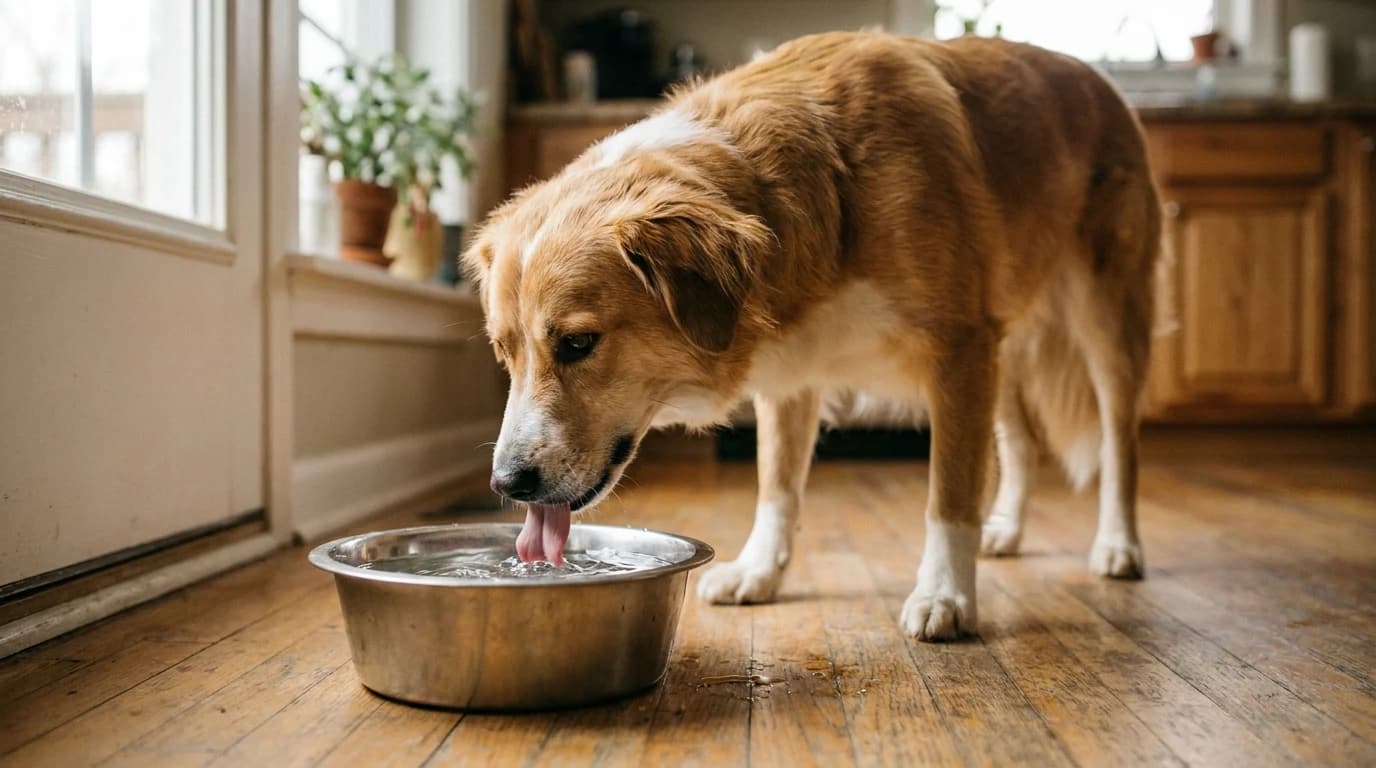
Dog Vomiting or Diarrhea: When to Wait vs. Call the Vet
Quick Answer
A single episode of vomiting or one loose stool in a dog that's otherwise bright, alert, and drinking is usually safe to watch at home — most acute upsets clear on their own within about 24 hours. Rest the gut with a short food break (a few hours for an adult, never a full fast and never for puppies), keep small amounts of water available, then reintroduce a bland meal of boiled plain chicken and white rice. Don't judge by how many times it happened; judge the whole dog. Call your veterinarian right away — don't wait out the day — if vomit or stool contains blood, vomiting is repeated or won't stop, the belly is bloated and hard with unproductive retching, or the dog is lethargic, weak, refusing food or water, dehydrated (dry or tacky gums), in belly pain, feverish, or may have eaten a toxin or foreign object. Puppies, seniors, toy breeds, and dogs with health conditions dehydrate quickly and have little to no safe-to-watch window, so call sooner. Never give human anti-diarrheal or anti-nausea medications without veterinary guidance — several are toxic to dogs.
On this page6 sections
Our Verdict
A single episode of vomiting or one loose stool in a bright, alert, drinking dog is usually safe to watch at home for up to 24 hours — most acute upsets resolve on their own. Rest the gut with a short food break (never a full fast, never for puppies), keep water available, then ease back in with a bland meal. The number of episodes is the wrong thing to fixate on; what matters is the company the symptom keeps. Call your veterinarian right away — don't wait out the day — if you see blood in vomit or stool, repeated or non-stop vomiting, a bloated hard belly with unproductive retching, lethargy or collapse, refusal of food or water beyond a day, signs of dehydration, belly pain, fever, or any suspected toxin or swallowed object. Puppies, seniors, toy breeds, and dogs with existing conditions dehydrate fast and have little to no safe-to-watch window — call sooner. And never reach for human anti-diarrheal or anti-nausea medication without your vet's direction; several are toxic to dogs. When you can't tell a minor upset from a real problem, that uncertainty is itself a good reason to call.
Vomiting & Diarrhea Triage: Watch, Call Today, or Call Now
Use the column your dog most matches — and remember any single 'call now' sign outranks everything else. The number of episodes matters far less than how the rest of the dog is doing.
| Product | Safe to watch (<= 24h) | Call your vet today | Call now / emergency |
|---|---|---|---|
| Frequency | One or two episodes, then it stops | Continues past 24-48 hours | Repeated, frequent, or won't stop |
| The dog otherwise | Bright, alert, playful, drinking | A bit quiet or off, but stable | Lethargic, weak, collapsing, or hiding |
| Blood | None | Any blood means call now instead | Red or coffee-ground vomit; red or black tarry stool |
| Appetite & water | Drinking; interested in food after a rest | Eating less than usual | Refusing water, or no food for over a day |
| Belly | Soft, comfortable | Mildly tender | Bloated and hard, painful, or retching with nothing up (possible bloat) |
| Risk factors | Healthy adult dog | Mild signs in an at-risk dog | Puppy, senior, toy breed, ill dog, or suspected toxin/swallowed object |
How PawBench is paid: we earn an Amazon Associates commission on qualifying purchases. We don’t accept sponsored placements, paid reviews, or free products in exchange for coverage. Picks are ranked on documented owner outcomes and primary-source research, never on commission rate. Read the full methodology.
A dog throwing up once, or having one loose stool, is usually not an emergency. A dog throwing up six times in an afternoon, or passing bloody diarrhea while acting weak, is. The hard part for owners is the middle: knowing which of those two pictures you're actually looking at before it tips over into the dangerous one.
This guide is a triage tool, not a diagnosis. It covers what's safe to watch at home, the exact signs that mean call now, and the one distinction most owners get wrong that completely changes what you should do.
First: are you sure it's vomiting?
This matters more than it sounds, because vomiting and regurgitation look similar but point at totally different problems.
According to VCA Animal Hospitals and the Merck Veterinary Manual, the difference is the effort:
Vomiting is forceful — the dog heaves, the abdomen contracts, there's usually nausea first (drooling, lip-licking, restlessness). The contents are partly digested.
Regurgitation is passive — food and fluid come back up with no heaving, often right after eating, frequently in a tube-like shape. Coughing or trouble breathing is more common with regurgitation.
Regurgitation points at the esophagus, not the stomach, and the home-care advice below (resting the gut, bland food) doesn't apply to it. If what you're seeing is effortless and happens seconds after eating, note that for your vet — it's a different conversation.
Key takeaways
- Most acute vomiting resolves on its own within 24 hours in an otherwise-well dog, per VCA — a single episode rarely needs a vet visit.
- It's the company the symptom keeps that matters, not the symptom alone: blood, lethargy, no appetite, belly pain, fever, or dehydration alongside the upset is the line that turns "watch" into "call."
- Puppies, seniors, toy breeds, and dogs with health conditions have almost no buffer — they dehydrate fast, so the wait-and-watch window is much shorter or gone entirely.
- Never give human anti-diarrheals or anti-nausea meds without your vet's say-so; the AKC warns several are toxic to dogs.
The triage: call now, call today, or watch
Use the column your dog most matches below. Any single "call now" sign outranks everything else — a dog can vomit just once and still belong in that column.
What "safe to watch" actually looks like at home
If your dog is in the green zone — one or two episodes, still bright, drinking, no blood — the goal is to rest the gut, not to treat the symptom.
- Short food rest, not a fast. For an adult dog, withholding food for a few hours (not days) lets the stomach settle. Keep small amounts of water available — yanking water risks dehydration, which is the actual danger. Do not fast a puppy.
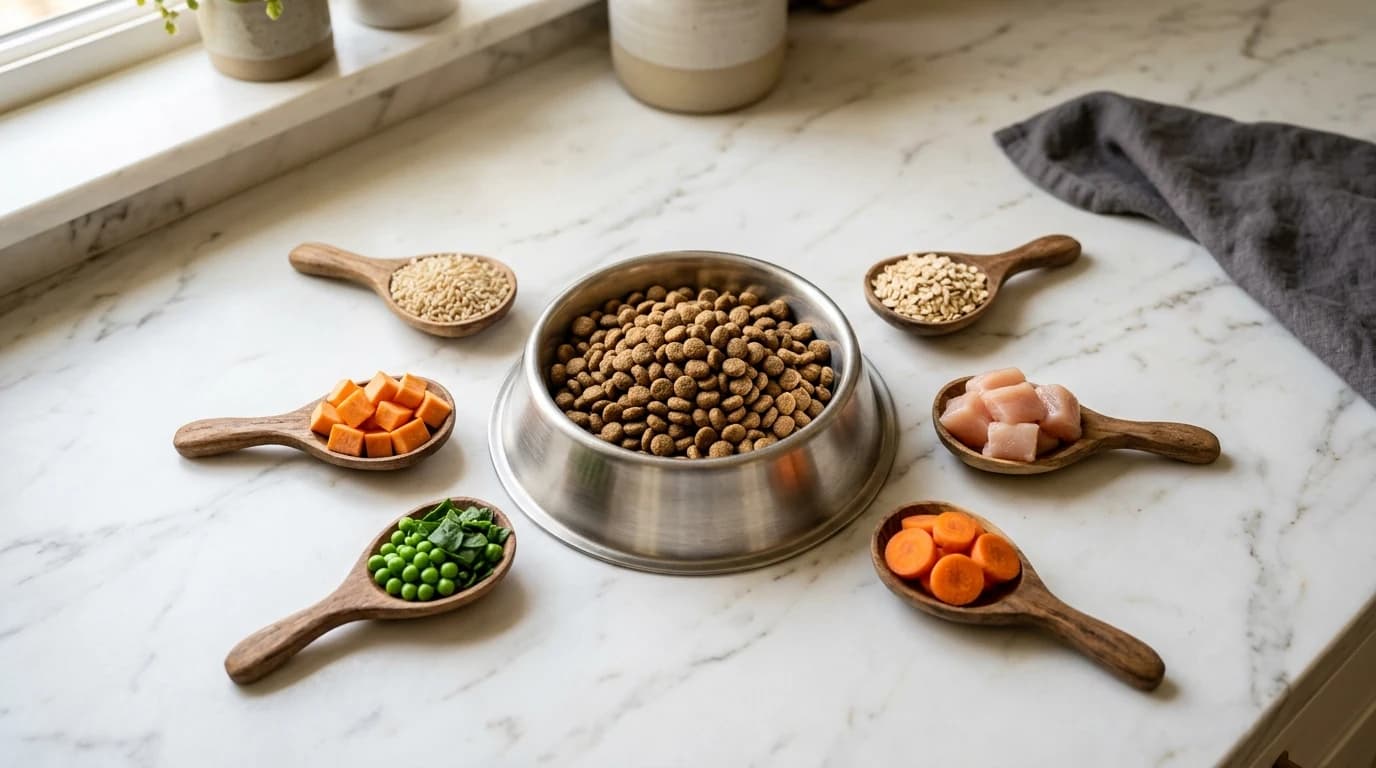
- Then a bland meal. The AKC's at-home approach is boiled, plain chicken and white rice in small portions, easing back to normal food over a day or two. A vet-recommended probiotic can help.
- Watch the clock. VCA's guidance is clear: if an otherwise-well dog is still vomiting after a day or two — or the diarrhea isn't improving — it's time for a vet to rule out something more serious or a metabolic problem the upset itself caused.
The point of the home window is to give a minor stomach upset (the most common cause: dietary indiscretion — garbage, table scraps, spoiled food, eating something they shouldn't) time to clear. Grass gets blamed often, but most dogs that eat grass don't vomit afterward. It is not a reason to ignore a dog who's getting worse.
The signs that mean call right now
These are the accompanying signs both VCA and Merck flag as reasons to seek care immediately — don't wait out the 24 hours:
- Blood — in vomit (red, or coffee-ground colored) or in stool (red streaks or black, tarry stool).
- Repeated, frequent vomiting or vomiting that won't stop, especially with nothing coming up but foam.
- Unproductive retching with a bloated, hard belly — this can be bloat (GDV), a true emergency.
- Lethargy, weakness, collapse, or hiding.
- No appetite for more than about a day, or refusing water.
- Signs of dehydration — tacky or dry gums, sunken eyes, skin that's slow to spring back.
- Belly pain — a hunched posture, or yelping when the abdomen is touched.
- Fever, or a known or suspected toxin or foreign object (a chewed sock, a raided trash can, a swallowed toy).
Merck notes that acute vomiting can be the first sign of an ingested foreign object or poisoning, and VCA notes diarrhea is one of the earliest signs of parvovirus in unvaccinated dogs — both are why "wait and see" stops being safe the moment these signs appear. If you suspect your dog ate something toxic, treat it as an emergency regardless of how they look.
What most owners get wrong
The instinct is to fixate on how much — how many times the dog threw up, how loose the stool is. That's the wrong dial. A dog can vomit twice and be fine; a dog can vomit once and be in serious trouble because of what else is going on.
The better question is always: is the dog otherwise well? A bright, alert, drinking dog with one bad meal behind them is a different animal from a quiet, off-food, weak dog — even if both vomited the same number of times. Judge the whole dog, not the puddle.
And don't shorten that judgment for the dogs with the least margin. A young puppy, a tiny breed, a senior, or a dog with kidney, liver, or other conditions can slide into dangerous dehydration from the same upset a healthy adult would shrug off. For those dogs, the home-watch window is short to none — call sooner.
Research Sources
- Vomiting in Dogs — VCA Animal Hospitals
- Diarrhea in Dogs — VCA Animal Hospitals
- Vomiting in Dogs — Merck Veterinary Manual
- Dog Diarrhea: Causes and Treatment — American Kennel Club

PawBench Editorial
Published by Hilly Shore LabsPawBench’s editorial team researches dog products from primary veterinary sources, manufacturer specifications and aggregated buyer sentiment, alongside the lived ownership of Maggie, an Australian Labradoodle. We do not run hands-on product tests.
331 dog products scored · 1,222,724 buyer review-aspect mentions aggregated · cites AVMA, FDA, AAFCO, Cornell, WSAVA, AKC, ASPCA.
Recommendations are based on published veterinary guidelines, manufacturer specifications, and verified customer feedback. See our editorial standards.