German Shepherd Care Guide: Gear, Health, and What to Buy
Quick Answer
German Shepherds require joint-focused nutrition, daily mental stimulation exceeding physical exercise, and early socialization. Budget for hip/elbow screening and potential GI sensitivity.
On this page9 sections
Our Verdict
German Shepherds require joint-focused nutrition, daily mental stimulation exceeding physical exercise, and proactive management of their predisposition to degenerative myelopathy and hip dysplasia. This breed rewards engaged owners and frustrates passive ones.

How PawBench is paid: we earn an Amazon Associates commission on qualifying purchases. We don’t accept sponsored placements, paid reviews, or free products in exchange for coverage. Picks are ranked on documented owner outcomes and primary-source research, never on commission rate. Read the full methodology.
The German Shepherd Dog is the second most popular breed in America and arguably the most versatile working dog ever developed. Police work, military service, search and rescue, guide work, competitive obedience, herding, and devoted family companionship — no other breed performs at an elite level across this many disciplines.
That versatility comes from a combination of intelligence, drive, and physical capability that demands equally capable ownership. German Shepherds don't thrive on autopilot. They need structured exercise, mental challenges, and proactive health management that accounts for breed-specific vulnerabilities. This guide covers what you need to know and what you need to buy. If you're still choosing between breeds, our German Shepherd vs Golden Retriever comparison covers the day-to-day differences.
Health: The GSD's Genetic Landscape
Hip and Elbow Dysplasia
German Shepherds have one of the highest rates of hip dysplasia among large breeds — OFA data shows approximately 20% of evaluated GSDs have some degree of hip dysplasia, and 19% have elbow dysplasia. The breed's characteristic sloped topline (particularly in American show lines) contributes to biomechanical stress on rear joints.
Prevention and management:
- Large-breed puppy food through 18 months to control growth rate
- Avoid forced exercise before growth plate closure (approximately 18 months)
- Maintain lean body weight throughout life — this is the single most impactful factor
- Supplement with glucosamine/chondroitin starting at age 2 (our top joint pick is Cosequin Maximum Strength (DS) Plus MSM)
- Omega-3 fatty acids (fish oil) for anti-inflammatory joint support
- OFA screening at age 2 if you plan to breed, or simply for your own prognostic information
Degenerative Myelopathy (DM)
DM is a progressive neurological disease that affects the spinal cord, causing gradual loss of coordination and mobility in the hind legs. It's the canine equivalent of ALS, and German Shepherds are disproportionately affected. The disease typically appears between ages 8 and 14 and progresses over 6-12 months.
There is currently no cure or effective treatment. A genetic test (SOD1 mutation) can identify dogs at risk — responsible breeders test for this and avoid breeding carriers. If purchasing from a breeder, request DM genetic test results for both parents.
Physical therapy and mobility aids (harnesses, carts) can maintain quality of life during disease progression. Knowing your dog's DM genetic status allows you to plan rather than react.
Exocrine Pancreatic Insufficiency (EPI)
GSDs are the breed most commonly affected by EPI, a condition where the pancreas doesn't produce enough digestive enzymes. Symptoms include chronic diarrhea, weight loss despite a ravenous appetite, and poor coat condition.
EPI is manageable with enzyme supplementation added to every meal — but diagnosis requires specific blood testing (TLI test) that isn't part of routine wellness panels. If your GSD has chronic digestive issues, ask your vet specifically about EPI testing.
Bloat (Gastric Dilatation-Volvulus)
German Shepherds are among the breeds most susceptible to bloat — a life-threatening emergency where the stomach fills with gas and potentially rotates on its axis. Untreated bloat can kill a dog within hours.
Risk reduction:
- Feed 2-3 smaller meals instead of one large meal
- Use a slow feeder bowl to prevent gulping
- Avoid vigorous exercise for 30-60 minutes before and after meals
- Don't use elevated feeders — despite popular advice, research suggests elevated feeding may increase bloat risk in large breeds
- Know the signs: restless pacing, unproductive retching, distended abdomen, excessive drooling. If you see these, go to the emergency vet immediately — minutes matter.
Allergies and Skin Issues
GSDs are prone to both food allergies and environmental allergies. Common manifestations include ear infections, paw licking, hot spots, and chronic itching. The breed's dense double coat can mask early skin problems, so regular hands-on grooming (not just visual inspection) is important for early detection.
Gear we would buy for this: the Ruffwear Front Range Harness (front clip, for a strong puller), the K9 Ballistics Tough Orthopedic Bed — 5 inches of solid orthopedic foam for a breed with a known hip-dysplasia load — and the 4Knines Rear Seat Cover for the back seat.
Nutrition: Fueling the GSD
Protein and Fat Requirements
German Shepherds are muscular, active dogs that need 25-30% protein and 12-18% fat in their diet. The protein should come from named animal sources — "chicken," "salmon," "lamb" — not vague terms like "meat meal."
For working or highly active GSDs (schutzhund, agility, regular running), increase to a sport or performance formula with 28-32% protein and 18-20% fat.
Recommended Foods
Our detailed GSD food guide covers specific product recommendations. The short version:
- Purina Pro Plan Large Breed — Best overall, feeding-trial validated, excellent protein-to-fat ratio
- Royal Canin German Shepherd Adult — Breed-specific kibble shape designed for the GSD's jaw structure
- Hill's Science Diet Sensitive Stomach — For GSDs with EPI or chronic digestive issues
Feeding Schedule
Feed adult GSDs twice daily at consistent times. Free-feeding (leaving food out all day) leads to overeating and increases bloat risk. Use a measuring cup — not a scoop — and adjust portions based on body condition, not just package guidelines.
An adult GSD at healthy weight (65-90 lbs) typically needs 1,600-2,200 calories per day depending on activity level.
Exercise: Meeting the GSD's Drive
German Shepherds need 90+ minutes of daily exercise — and this isn't a soft recommendation. Under-exercised GSDs develop behavioral problems that are often mischaracterized as aggression, anxiety, or disobedience. A GSD that's reactive on leash, destructive at home, or excessively vocal is almost always an under-stimulated GSD.
Physical Exercise
- Structured walks/runs: 45-60 minutes minimum
- Off-leash play: Fetch, frisbee, swimming in safe areas
- Sport training: Agility, tracking, schutzhund, herding — these satisfy the breed's need for purposeful work
Mental Exercise (Equally Important)
German Shepherds are the #3 most intelligent breed. Physical exercise alone doesn't satisfy their cognitive drive. Daily mental work should include:
- Training sessions: 15-20 minutes of obedience, tricks, or task training
- Puzzle feeders: Feed meals through Kongs, snuffle mats, or puzzle toys instead of bowls
- Nose work: Hide treats or toys and let your GSD find them. Scent work engages more brain power than any other activity
- New environments: Regular exposure to new trails, parks, and situations provides sensory enrichment
A mentally stimulated GSD that gets adequate physical exercise is the calm, confident dog the breed is known for. An under-stimulated GSD is a liability.
Grooming: The Double Coat Challenge
German Shepherds have a thick double coat that sheds year-round, with major coat blows in spring and fall. During coat blow, the volume of loose fur is staggering — you will find it in your food, your car, and places that defy physics.
Essential Grooming Tools
- Undercoat rake — The most important tool. Use 2-3 times per week normally, daily during coat blow
- Slicker brush — For finishing and removing surface debris
- Furminator deShedding tool — Weekly maximum. Overuse can damage the outer coat
- High-velocity dryer — A game-changer for coat blow season. Professional-grade dryers blast out loose undercoat in minutes vs. hours of brushing
Bathing
Bathe every 6-8 weeks unless visibly dirty. GSDs have natural skin oils that maintain coat health — over-bathing strips these oils and causes dry, itchy skin. Use a gentle, pH-balanced dog shampoo.
Nails, Ears, and Teeth
- Nails: Trim or grind every 2-3 weeks. GSD nails are thick and dark, making the quick difficult to see — use a grinder for safer incremental shortening
- Ears: GSDs' upright ears have better ventilation than floppy-eared breeds, reducing infection risk. Still check weekly for redness or odor
- Teeth: Brush 2-3 times weekly. GSDs are moderate chewers — dental chews and raw recreational bones (supervised) supplement brushing
Essential Gear for German Shepherds
Beds
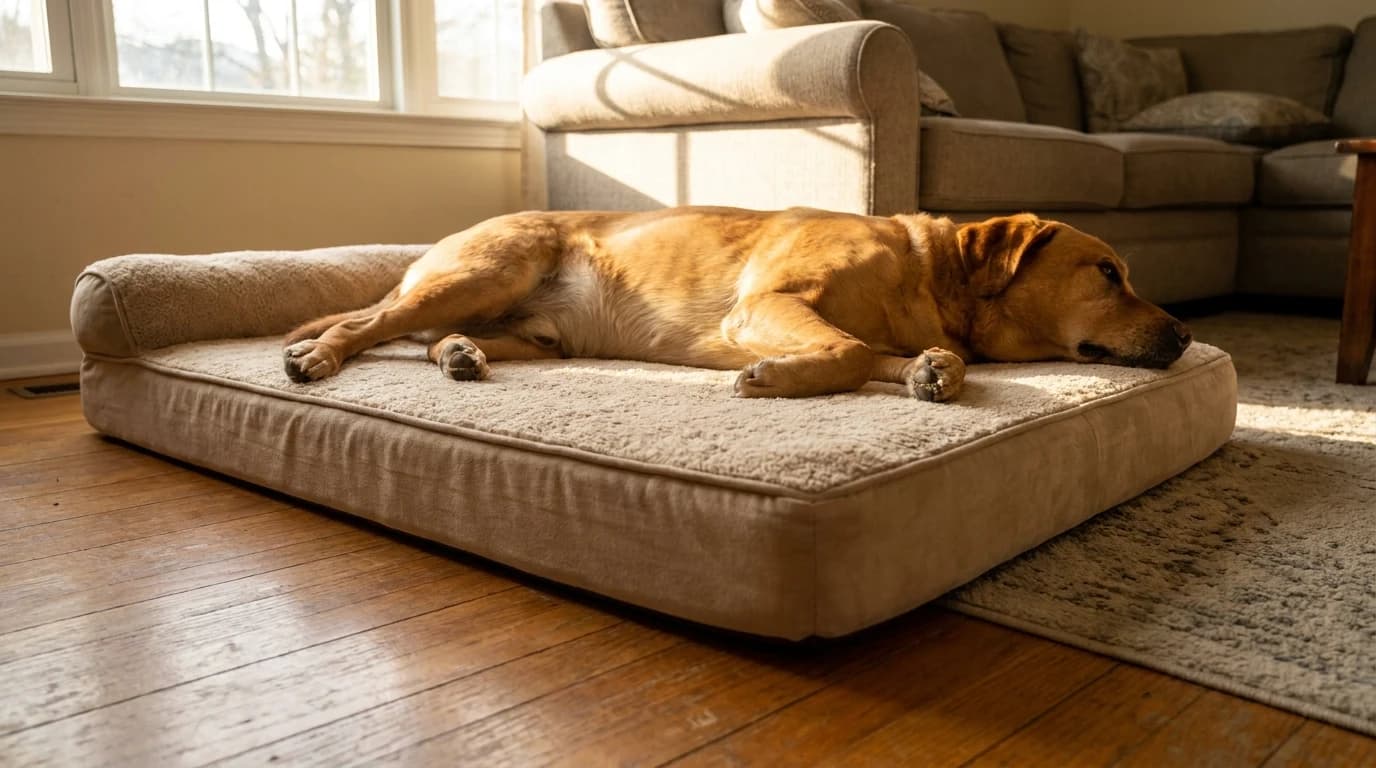
At 65-90 lbs, GSDs need XL orthopedic beds (42-48") with at least 5 inches of high-density foam. Given the breed's joint disease prevalence, an orthopedic bed isn't a luxury — it's preventative care. Our orthopedic bed guide has specific recommendations. Look for waterproof liners and machine-washable covers — you'll be washing them frequently due to shedding.
Harness
A front-clip harness is essential for most GSDs during training. This breed is powerful enough that a traditional collar and leash allows them to drag an adult human. The Ruffwear Front Range or similar front-clip harness redirects pulling force without choking.
Avoid prong collars and choke chains. They suppress behavior through discomfort rather than teaching the desired behavior, and they can cause tracheal and cervical spine damage in a breed already prone to spinal issues (DM).
Toys
GSDs need durable toys — standard pet store toys rarely survive a week:
- Kong Extreme (black) — Rated for power chewers, fillable for enrichment
- Chuckit Ultra Ball — Dense rubber that survives GSD jaws. Tennis balls are too soft and the fuzz wears down teeth
- Jolly Ball — Large, hard-to-puncture ball for solo play in the yard
- Tug toys — Firehose or double-layered fabric. GSDs love tug and it's excellent relationship-building exercise
Crate
Most adult GSDs need a 42-48" crate. Wire crates work well for most; anxious GSDs may prefer the enclosed feel of a plastic airline crate. See our crate guide for detailed recommendations.
Training: The Non-Negotiable
German Shepherds are not optional-training dogs. An untrained GSD is a dangerous GSD — not because the breed is inherently aggressive, but because an 80-lb dog with powerful drives, strong jaws, and high intelligence will make its own decisions when not given guidance. Those decisions won't align with human expectations.
Basics
- Puppy socialization (8-16 weeks) is critical — expose to as many people, dogs, sounds, and environments as safely possible
- Basic obedience by 6 months: sit, down, stay, come, leave it, loose-leash walking
- Impulse control exercises: wait at doors, leave food on command, settle on a mat
- Positive reinforcement — GSDs are sensitive to handler emotions and respond poorly to punitive methods. Harsh corrections create fearful, reactive dogs.
Advanced
GSDs excel at advanced training — it's what they were bred for. Consider:
- Canine Good Citizen (CGC) certification as a baseline
- Nosework or tracking for mental enrichment
- Agility for physical and mental challenge
- Schutzhund/IPO for GSDs from working lines who need an outlet for drive
Working with a Trainer
We strongly recommend working with a professional trainer for your first GSD. The breed's combination of intelligence, drive, and physical power means training mistakes have larger consequences than with a Cavalier King Charles Spaniel. Look for trainers certified through CCPDT or KPA who use positive reinforcement methods.
Frequently Asked Questions
Are German Shepherds good family dogs?
Yes, with proper training and socialization. GSDs are naturally protective, which means they bond deeply with their family and are gentle with children they're raised with. However, their protective instinct requires management — an untrained GSD may perceive normal visitor behavior as a threat. Socialization and obedience training make the difference between a wonderful family dog and a liability.
How much do German Shepherds shed?
Enormously. GSDs shed year-round and have two major coat blow seasons per year. If you're not prepared to vacuum daily, brush multiple times per week, and accept dog hair as a permanent fixture of your wardrobe and furniture, this breed is not for you. No grooming routine eliminates shedding — it can only be managed.
Should I get a German Shepherd from a breeder or rescue?
Both are valid. If purchasing from a breeder, prioritize health testing (OFA hips/elbows, DM genetic test, cardiac clearance) and temperament over appearance. For rescue GSDs, understand that you may not have health or behavioral history — budget for a veterinary exam and a behavioral assessment before committing. Many GSD rescues do thorough evaluations and can match you with a dog appropriate for your experience level.
Do German Shepherds have a lot of health problems?
More than average, yes. The breed's popularity has led to breeding practices that concentrate genetic health risks. Hip dysplasia, elbow dysplasia, degenerative myelopathy, EPI, bloat, and allergies are all common. Purchasing from health-tested parents reduces (but doesn't eliminate) risk. Budget $2,500-$4,000 per year for routine care, with emergency reserves of $5,000+ for potential orthopedic or GI emergencies.
How much exercise does a German Shepherd puppy need?
Follow the "5 minutes per month of age, twice daily" rule for structured exercise. A 3-month-old puppy gets 15 minutes of walking twice daily. Free play in a safe area can supplement this — puppies self-regulate play intensity better than structured exercise. Avoid forced running, repetitive jumping, and excessive stair climbing until 18 months when growth plates close.
The Bottom Line
German Shepherds are magnificent dogs for owners who are willing to match the breed's intensity. They demand daily exercise exceeding 90 minutes, regular mental stimulation, consistent training, proactive health management, and significant grooming effort. In return, they offer unmatched loyalty, intelligence, and versatility.
If that trade sounds overwhelming, choose a lower-maintenance breed. If it sounds like exactly what you want — welcome to GSD ownership. You'll never go back.
🏆 Bottom Line: German Shepherds are exceptionally capable and loyal dogs that thrive with mental and physical stimulation. Their most important health priorities are hip dysplasia screening, degenerative myelopathy awareness (genetic testing available), and maintaining a healthy weight throughout life.
Related Reading
- Dog Food — Breed-specific nutrition for German Shepherds
- Dog Beds — Orthopedic beds for large, joint-prone breeds
- Dog Health — Joint supplements and preventative care
- Leashes & Harnesses — Harness picks for powerful pullers
Research Sources
- German Shepherd Dog - Dog Breed Information — American Kennel Club
- Hip Dysplasia — Orthopedic Foundation for Animals
- Degenerative Myelopathy: Causes, Symptoms, and Treatment — American Kennel Club, 2024-01-18
- Hip Dysplasia in Dogs: Signs, Symptoms, Treatment — American Kennel Club
- 2023 AAHA Senior Care Guidelines for Dogs and Cats — American Animal Hospital Association, 2023
- Hemangiosarcoma in dogs — Cornell University College of Veterinary Medicine

PawBench Editorial
Published by Hilly Shore LabsPawBench’s editorial team researches dog products from primary veterinary sources, manufacturer specifications and aggregated buyer sentiment, alongside the lived ownership of Maggie, an Australian Labradoodle. We do not run hands-on product tests.
331 dog products scored · 1,222,724 buyer review-aspect mentions aggregated · cites AVMA, FDA, AAFCO, Cornell, WSAVA, AKC, ASPCA.
Recommendations are based on published veterinary guidelines, manufacturer specifications, and verified customer feedback. See our editorial standards.