Hot Pavement and Dog Paws: The 7-Second Test
Quick Answer
Hot pavement burns dogs' paws even on days that feel mild because dark surfaces absorb and re-radiate solar heat far hotter than the air — when the air is 86°F, asphalt can register 135°F (JAMA data, via AKC), and tissue damage begins around 125°F. Don't trust the thermometer; use the seven-second test: press the back of your hand flat on the pavement for seven seconds (AKC and FOUR PAWS both endorse this hand test). If you can't hold it comfortably, it's too hot for paws and the walk should wait. Pavement keeps storing heat all day, so it can stay dangerous into the evening. Burned pads look swollen, red, and blistered (VCA); early signs are limping, refusing to walk, and licking the feet. Walk early or late, route onto grass and shade, and watch for heatstroke too, since the same ground radiates heat upward.
On this page7 sections
Our Verdict
The air temperature you feel is not the number that burns your dog — dark pavement absorbs and re-radiates solar heat far hotter than the surrounding air, and holds it well past sunset. At 86°F air, asphalt can hit 135°F; tissue damage starts around 125°F. Skip the thermometer: press the back of your hand to the pavement for seven seconds, and if you can't hold it, the walk waits. Route onto grass and shade, walk early or late, and treat the "mild" summer days as the ones most likely to catch you out.
Air Temperature vs. Dark-Pavement Surface Temperature
How everyday air temperatures translate to surface heat on dark asphalt, and the risk to paw pads. Paw-pad tissue damage begins around 125°F with sustained contact — every "danger" row clears that line. Surface temps from FOUR PAWS; the 86°F → 135°F figure is JAMA data via AKC.
| Product | Dark pavement surface temp | Risk to paw pads |
|---|---|---|
| 77°F air (feels pleasant) | ~125°F asphalt | At the burn threshold — borderline; do the seven-second test |
| 86°F air (warm summer day) | ~135°F asphalt | Danger — well past the 125°F damage line |
| 87°F air | ~143°F asphalt | Danger — burns possible in under a minute |
| 95°F air (hot day) | ~149°F asphalt | Severe — avoid pavement entirely; stay on grass/shade |
How PawBench is paid: we earn an Amazon Associates commission on qualifying purchases. We don’t accept sponsored placements, paid reviews, or free products in exchange for coverage. Picks are ranked on documented owner outcomes and primary-source research, never on commission rate. Read the full methodology.
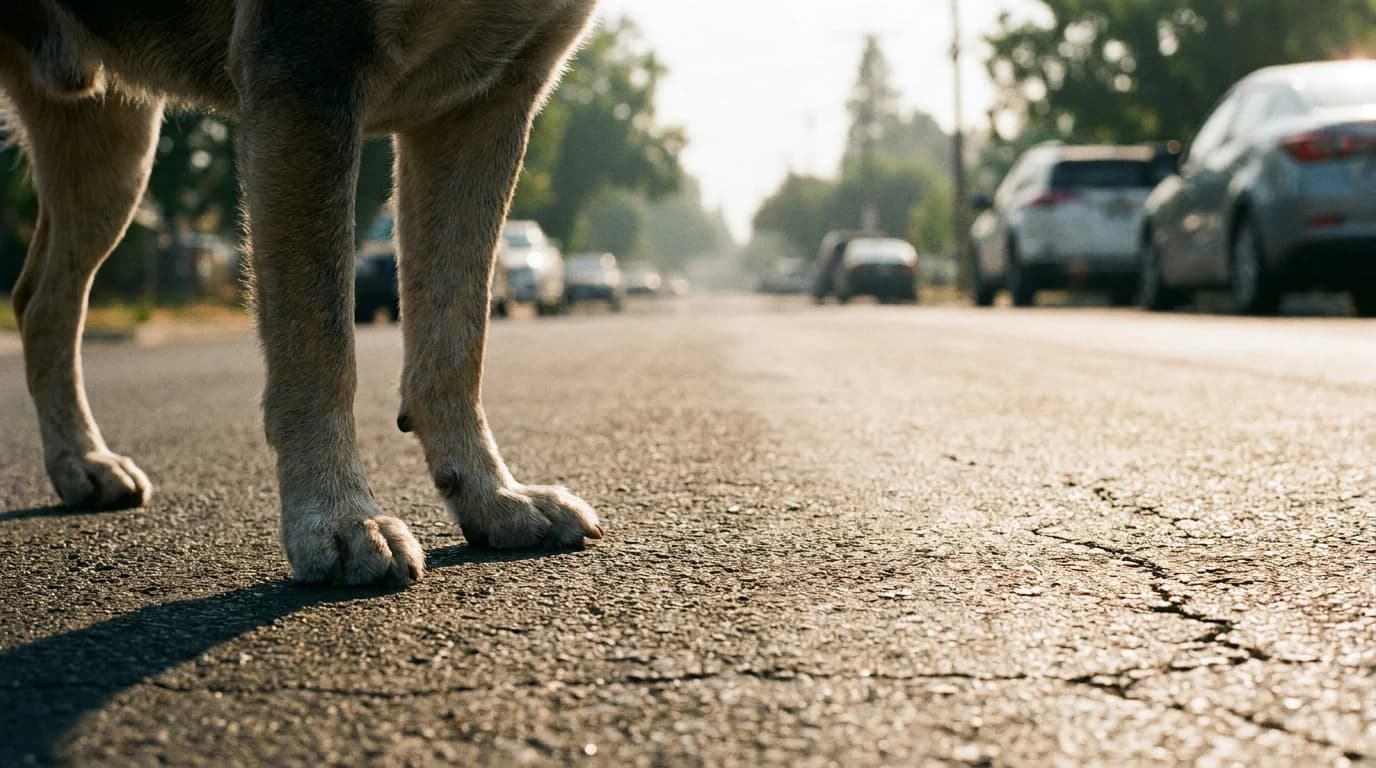
A 75-degree morning feels harmless. You clip the leash, step onto the driveway, and start walking. But the asphalt under your dog's paws may already be near 110 degrees — and by midday, the same pavement can hit 135 to 149 degrees, hot enough to cause second-degree burns in under a minute. The dangerous part isn't the temperature you feel on your skin five feet up in moving air. It's the radiant heat the ground has been quietly storing all morning.
The thing most owners get wrong: the air temperature is not the number that matters. Dark surfaces absorb and re-radiate solar heat far hotter than the surrounding air, and they hold it long after the sun moves. A "mild" 80-degree day can hand your dog a burned paw, and pavement can still be dangerous well into the evening (FOUR PAWS).
The air temperature lies — the surface is what burns
Per data reported by the Journal of the American Medical Association, when the air temperature is 86 degrees, asphalt registers 135 degrees (AKC). The gap only widens as the day goes on, because dark, dense surfaces are heat batteries: they keep absorbing sun all morning and release it slowly all afternoon and evening.
That stored-heat effect is why two walks at the "same" temperature can have wildly different outcomes. A 9 a.m. walk after a cool night is usually fine. The identical thermometer reading at 4 p.m., after eight hours of direct sun loading the pavement, is not.
Air vs. surface temperature, by the numbers
Here is how everyday air temperatures translate to surface heat on dark pavement. The point of the table isn't to memorize numbers — it's to internalize how big the gap is.
For reference, skin and paw-pad tissue damage begins around 125 degrees with sustained contact. Everything in the "danger" rows below clears that line easily.
The seven-second test beats any thermometer
You don't need a temperature gun. Both the AKC and FOUR PAWS endorse the same field check, just timed slightly differently:
- The seven-second test (FOUR PAWS): Press the back of your hand flat against the pavement for seven seconds. If you can't comfortably hold it there for the full count, it's too hot for your dog's paws.
- The ten-second version (AKC): Dr. Jerry Klein, AKC's Chief Veterinarian, recommends placing your hand on the pavement for ten seconds — "if it's too hot for your hand, it's too hot for your dog's paws."
Use the back of your hand, not your palm — it's more sensitive and closer to how thin paw-pad skin reads heat. The same test works on sand, metal, brick, concrete, and artificial turf, all of which can run hotter than asphalt.
What a burned paw actually looks like
Burns escalate by degree, and dogs hide pain well, so the early signs are behavioral before they're visible (FOUR PAWS, VCA):
- First signs: limping, refusing to keep walking, suddenly sitting down, or licking and chewing at the feet afterward.
- First-degree: the pad looks reddened and swollen.
- Second-degree: clear blisters form on the pad.
- Third-degree: the pad skin is charred or missing pieces.
VCA notes that a hot-pavement burn leaves pads "swollen, red and blistered." If you see blistering, missing pad tissue, or your dog won't bear weight, that's a veterinary visit — not a wait-and-see.
If it already happened: first aid
- Get off the hot surface immediately — carry your dog to grass or shade if you can.
- Cool the pads with cool (not ice-cold) water for several minutes to stop the heat from driving deeper.
- Keep it clean and don't let them lick. VCA recommends a recovery cone to stop licking, which drives infection. Monitor for redness, swelling, pus, or ongoing pain.
- Don't apply human burn creams or bandage tightly without veterinary guidance, and call your vet for anything past mild redness.
How to avoid it entirely
The fix is mostly about timing and routing, not gear:
- Walk early or late. Before the pavement has loaded with sun (early morning) or well after it's released most of it. Remember that late-evening pavement can still be hot.
- Stay on grass, dirt, and shade. Route around blacktop, dark concrete, metal grates, and artificial turf — the worst offenders.
- Do the seven-second test every time in summer, not just on the days that feel extreme. The "mild" days are exactly when owners get caught.
- Watch the whole dog, not just the feet. The same pavement that burns paws radiates heat upward and contributes to heatstroke (AKC) — short-muzzled and dark-coated dogs heat up fastest. If the ground fails the test, the walk probably should too.
Booties exist and help for unavoidable hot surfaces or rough terrain, but most dogs need a real acclimation period to tolerate them, and they don't replace the basic decision: if the pavement fails the seven-second test, the walk waits.
Sources
- American Kennel Club — How to Protect Dog Paws From Hot Pavement
- FOUR PAWS International — Hot Asphalt: A Danger to Your Dog's Paws
- VCA Animal Hospitals — Dog Paw Injuries and How To Help
- Journal of the American Medical Association — asphalt surface-temperature data (cited via AKC)
Research Sources
- How to Protect Dog Paws From Hot Pavement, Sidewalks — American Kennel Club
- Hot Asphalt – A Danger to Your Dog's Paws — FOUR PAWS International
- Dog Paw Injuries and How To Help — VCA Animal Hospitals
- Asphalt surface temperature data (cited via AKC) — Journal of the American Medical Association

Hilly Shore Labs
Editorial teamIndependent product research team behind PawBench. Reviews are grounded in primary veterinary sources, aggregated buyer sentiment, and the lived ownership of Maggie, an Australian Labradoodle.
200+ dog products researched · 1.1M+ Amazon review-aspect mentions analyzed · cites AVMA, FDA, AAFCO, Cornell, WSAVA, AKC, ASPCA.
All product reviews are independently researched. Recommendations are based on published veterinary guidelines, manufacturer specifications, and verified customer feedback. See our editorial standards.