Best Dog Dental Chews 2026: Greenies vs Whimzees vs OraVet
Our #1 Pick
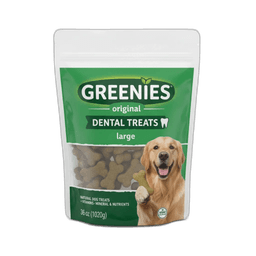
- VOHC accepted for plaque and tartar control
- #1 vet-recommended dental chew
- Dogs love the taste — doubles as a daily treat
VOHC-accepted for plaque and tartar, and the dental chew most dogs readily eat, which makes the daily habit easy to keep.
Our analysis of 4,090 buyer mentions on Greenies Original Dental Treats: buyers consistently praised value for money, dental health, breath quality.
Also Great
Budget: Milk-Bone Brushing Chews ($12) — Clinical evidence for tartar reduction at half the price
On this page12 sections
Our Verdict
Greenies is our top pick among VOHC-accepted dental chews: most dogs eat it happily and it is sized by weight. Choose Whimzees for a grain-free chew and OraVet for heavy tartar, and give one daily for meaningful plaque reduction.
Greenies Original Dental Treats Owner rating4.8 Top pick | Whimzees Natural Dental Chews Owner rating4.7 Top pick | OraVet Dental Hygiene Chews Owner rating4.5 Top pick | Greenies Original Dental Treats (Large, 36oz) Owner rating4.8 Greenies are the #1 vet-recommended dental treat for a reason — they're one of only a handful of chews with the VOHC seal proving they actually reduce plaque and tartar. Most dogs go absolutely nuts for them, making daily dental care feel like treat time rather than a chore. Just account for the calories in your dog's daily intake and supervise heavy chewers. | TropiClean Fresh Breath Water Additive Owner rating4.3 TropiClean is the easiest dental care product you can buy — pour a capful into the water bowl and you're done. It won't replace brushing or dental chews, but it measurably reduces plaque buildup and kills the bacteria behind dog breath. For owners who can't brush their dog's teeth, this is the bare minimum you should be doing. | |
|---|---|---|---|---|---|
| Price | $33.12Buy on Amazon | $27.79Buy on Amazon | $37.99Buy on Amazon | $36.97Buy on Amazon | $23.99Buy on Amazon |
| Buyer sentiment | Value for money Dental health Breath quality Quality Buyers praise value for money, dental health, breath quality and quality. Based on 4,090 user mentions | Pet preference Dental health Value for money Quality Buyers praise pet preference, dental health, value for money and quality. Based on 450 user mentions | Taste Dental health Breath quality Chewability Value for money Digestion Buyers praise taste, dental health, breath quality and chewability. Some flag value for money and digestion. Based on 2,039 user mentions | Value for money Dental health Quality Pet taste Buyers praise value for money, dental health, quality and pet taste. Based on 2,432 user mentions | Odorless Value for money Ease of use Plaque removal Drinkability Side effects Buyers praise odorless, value for money, ease of use and plaque removal. Some flag drinkability and side effects. Based on 1,712 user mentions |
| Pros |
|
|
|
|
|
| Cons |
|
|
|
|
|
| Package Size | — | — | — | 36 oz (24 treats) | — |
| Dog Size | — | — | — | 50–100 lbs | — |
| VOHC Accepted | — | — | — | Yes | — |
| Calories per Treat | — | — | — | ~140 kcal | — |
| Main Ingredients | — | — | — | Wheat flour, Glycerin, Wheat gluten | — |
| Volume | — | — | — | — | 33.8 oz |
| Daily Dose | — | — | — | — | 1 capful per bowl |
| Active Ingredient | — | — | — | — | Cetylpyridinium Chloride |
| Taste/Odor | — | — | — | — | Flavorless |
| Supply Duration | — | — | — | — | ~4 months |
* Prices are approximate and may vary. Please check the latest price on Amazon.
Dog Dental Chews: VOHC Seal, Texture & Nutrition Matrix
Veterinary Oral Health Council (VOHC) acceptance, texture class, calorie load, and ingredient base for the three most-searched dental chews of 2026.
| Product | VOHC Seal | Texture Class | Calories per Chew | Size Range | Main Ingredient | Grain-Free? | Recommended Frequency |
|---|---|---|---|---|---|---|---|
| Greenies Original Dental Treats | Yes (Plaque + Tartar) — VOHC seal awarded 2007 | Abrasive fibrous (chewy, toothbrush-shaped) | ~90 kcal (Medium) | Teenie / Petite / Regular / Large / Jumbo | Wheat flour + wheat gluten + glycerin | No (grain-free variant available) | Once daily |
| Whimzees Natural Dental Chews | Yes (Plaque + Tartar) — VOHC seal awarded 2019 | Soft, rawhide-free (shapes like brushzees, alligators, stix) | ~95 kcal (Medium brushzees) | XS / S / M / L / XL | Potato starch + glycerin + powdered cellulose | Yes | Once daily |
| OraVet Dental Hygiene Chews | Yes (Tartar) — VOHC seal awarded 2016 | Abrasive with delmopinol coating (anti-plaque barrier) | ~105 kcal (Medium) | XS-S / S-M / M / L | Wheat starch + delmopinol hydrochloride | No | Once daily |
Active ingredients, FDA approval status, and kill-time data from official product labels and FDA summaries as of April 2026.

How PawBench is paid: we earn an Amazon Associates commission on qualifying purchases. We don’t accept sponsored placements, paid reviews, or free products in exchange for coverage. Picks are ranked on documented owner outcomes and primary-source research, never on commission rate. Read the full methodology.
Dental disease affects over 80% of dogs by age three, according to the American Veterinary Medical Association. It's the most common health problem in dogs — and one of the most preventable. Left untreated, periodontal disease doesn't just cause bad breath and tooth loss — it can lead to systemic infections affecting the heart, kidneys, and liver. A 2024 study published in the Journal of Veterinary Dentistry found that dogs with advanced periodontal disease had a 28% higher risk of developing chronic kidney disease compared to dogs with clean teeth.
Daily brushing is the gold standard, but let's be honest: most owners don't brush their dog's teeth every day. According to a 2023 AVMA pet owner survey, only 2% of dog owners brush daily, and fewer than 10% brush even weekly. That's where dental chews come in — they provide passive dental care during an activity dogs already love: chewing.
The dental chew market has exploded in 2026, with dozens of brands claiming to clean teeth, freshen breath, and prevent gum disease. But not all dental chews are created equal. Some genuinely reduce plaque and tartar buildup through proven mechanisms. Others are basically expensive dog treats with "dental" slapped on the label and no clinical evidence behind their claims.
We compared the most popular dental chews on the market against the Veterinary Oral Health Council's accepted-product list and the published clinical literature on canine plaque and tartar control, to bring you this 2026 comparison. Whether you have a small breed prone to crowded teeth or a large breed that inhales everything in seconds, this guide will help you find the right dental chew for your dog's needs and budget. Here's our research-based breakdown of what actually works.
What Makes a Dental Chew Effective?
The key indicator is the VOHC Seal of Acceptance — the Veterinary Oral Health Council independently tests products and awards their seal only to those proven to reduce plaque or tartar by a meaningful percentage. Think of it as the dental equivalent of AAFCO approval for dog food.
Effective dental chews work through two mechanisms:
- Mechanical abrasion — the chewing action physically scrapes plaque off teeth
- Chemical agents — ingredients like delmopinol or sodium hexametaphosphate actively prevent plaque from adhering to tooth surfaces
The best products combine both approaches.
The filter that matters: if a dental chew doesn't carry the VOHC seal, its dental claims are essentially unverified marketing. Check the seal before you compare anything else — price, shape, flavor, or ingredient story.
Which Dental Chew Is Right For You?
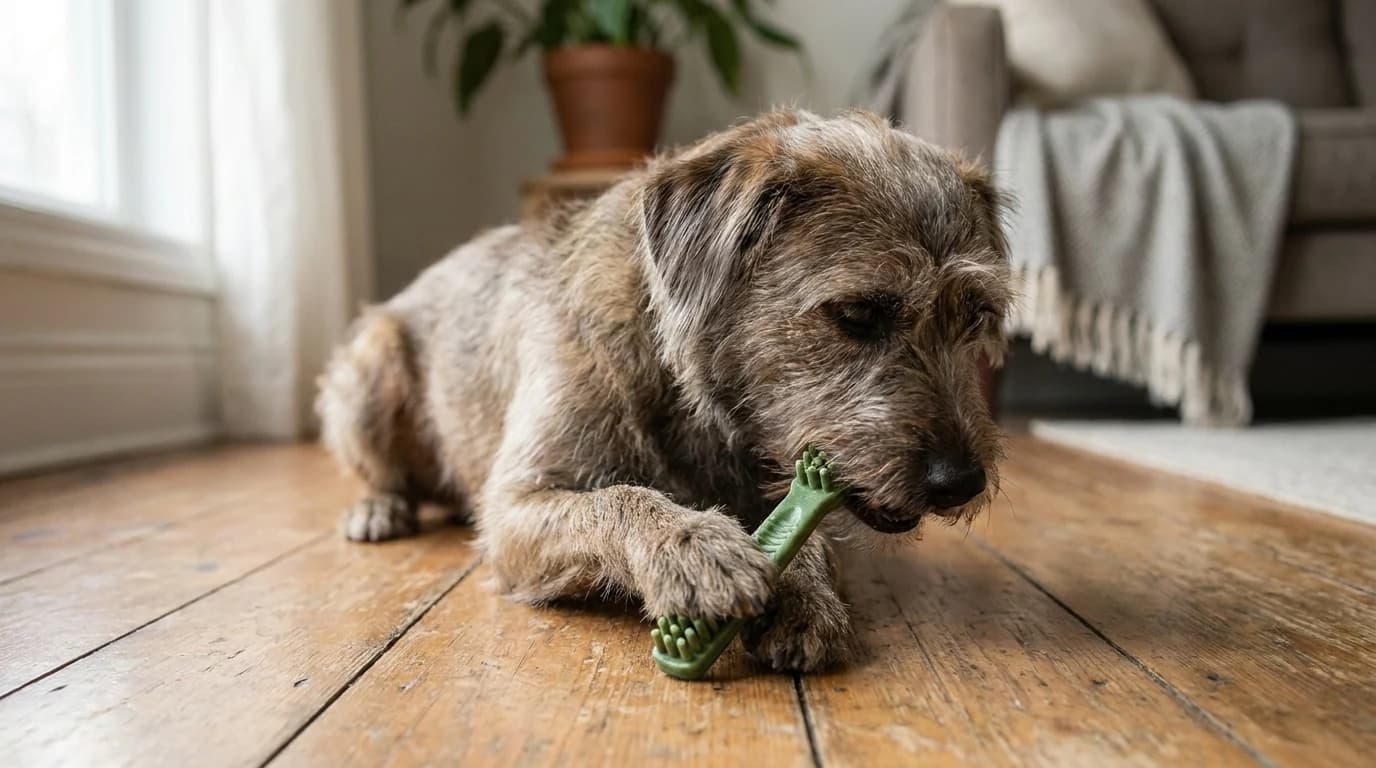
- Best overall: Greenies Original ($25/month) — VOHC-approved, most dogs love the taste, widely available
- Sensitive stomachs: Whimzees ($20/month) — limited ingredient, grain-free, vegetable-based, also VOHC-approved
- Heavy tartar buildup: OraVet ($30/month) — uses delmopinol to create a protective barrier, strongest clinical evidence
- Budget pick: Purina DentaLife ($12/month) — also VOHC-accepted, effective for maintenance, great price-to-quality ratio
Head-to-Head Comparison
Greenies Original Dental Treats (~$33/36-count regular)
Greenies are the best-selling dental chew in America, and they've earned the position. They carry the VOHC seal for plaque and tartar control, the distinctive toothbrush shape is designed to reach back molars where tartar builds up fastest, and they're highly digestible (a past concern with earlier Greenies formulations has been addressed — the current formula breaks down normally in the digestive tract).
Ingredients: Wheat flour, glycerin, wheat protein isolate, gelatin, oat fiber, water, natural poultry flavor, lecithin, minerals, chlorophyll.
Pros:
- VOHC-accepted for plaque and tartar
- Highly palatable — most dogs love them
- Available in sizes from Teenie to Large
- Added vitamins and minerals
- ~$0.70 per chew (Regular size)
Cons:
- Contains wheat (not suitable for grain-sensitive dogs)
- Higher calorie content (70 cal for Regular size)
- Some dogs swallow large pieces without adequate chewing
Best for: Dogs without grain sensitivities who enjoy moderate chewing.
Whimzees Natural Dental Chews (~$22/30-count medium)
Whimzees take a different approach with a firm, vegetable-based composition that forces extended chewing time. The unique shapes (alligators, hedgehogs, sticks) aren't just novelty — the ridges, grooves, and bumps are designed to maximize tooth contact from multiple angles. They also carry the VOHC seal.
Ingredients: Potato starch, glycerin, powdered cellulose, lecithin, malt extract, yeast, lupine, dried annatto.
Pros:
- VOHC-accepted
- Grain-free and limited ingredient
- Longer chewing time than Greenies (based on reviews, 10-15 min vs 3-5 min)
- Lower calorie (typically 30-40% fewer calories than Greenies)
- Vegetarian/vegan
- ~$0.73 per chew
Cons:
- Firmer texture isn't ideal for senior dogs or dogs with dental issues
- Some dogs find the taste less appealing than meat-based chews
- Can be a choking risk for aggressive gulpers
Best for: Grain-sensitive dogs, calorie-conscious feeding plans, dogs who chew thoroughly.
OraVet Dental Hygiene Chews (~$35/30-count medium)
ORAVET Dental Chews for Dogs is the premium option, and the only dental chew that uses delmopinol — a clinical-grade ingredient that creates an invisible barrier on tooth surfaces to prevent bacteria from attaching. This is the same active ingredient used in human prescription mouth rinses. OraVet carries the VOHC seal.
Ingredients: Delmopinol hydrochloride (active ingredient), rice flour, corn starch, pork hide, natural poultry flavor, glycerin, sodium hexametaphosphate.
Pros:
- VOHC-accepted
- Dual-action: mechanical + chemical barrier
- Delmopinol is the most research-backed anti-plaque ingredient available in a chew
- Developed by Boehringer Ingelheim (major veterinary pharmaceutical company)
- ~$1.17 per chew
Cons:
- Most expensive option by a significant margin
- Contains pork — not suitable for dogs with pork allergies
- Some dogs experience soft stool when first introduced
- Less widely available in retail stores
Best for: Dogs prone to heavy tartar buildup, breeds predisposed to dental disease (small breeds, Greyhounds, Dachshunds).
Comparison Table
| Feature | Greenies | Whimzees | OraVet |
|---|---|---|---|
| VOHC Seal | ✅ Yes | ✅ Yes | ✅ Yes |
| Price/chew | ~$0.70 | ~$0.73 | ~$1.17 |
| Chew time | 3-5 min | 10-15 min | 5-8 min |
| Grain-free | ❌ No | ✅ Yes | ❌ No |
| Chemical agent | No | No | Delmopinol |
| Calories (med) | ~70 | ~45 | ~55 |
| Best for | General use | Sensitive dogs | Heavy tartar |
Other Notable Options
Purina DentaLife (~$12/36-count)
Affordable, VOHC-accepted, with a unique porous texture that gives easily under pressure. Not as effective as the top three but excellent value at ~$0.33 per chew. Good for budget-conscious owners who want VOHC-backed effectiveness.
Blue Buffalo Dental Bones (~$18/27-count)
No VOHC seal, but natural ingredients and decent mechanical cleaning action. A reasonable choice if ingredient quality is your top priority.
Safety Considerations
Dental chews are generally safe, but follow these guidelines:
- Always size appropriately. A chew that's too small can be swallowed whole. Follow the weight guidelines on every package.
- Supervise initially. Watch how your dog handles a new dental chew before leaving them unsupervised with one.
- Account for calories. A daily Greenies Regular adds 70 calories — adjust your dog's meal portions accordingly. Use our feeding guide to recalculate.
- Not a replacement for vet dental care. Annual professional dental cleanings are still recommended, especially for breeds prone to periodontal disease.
- Check for allergies. Greenies contain wheat, OraVet contains pork. If your dog has food sensitivities, choose accordingly or check our allergy-friendly food guide.
Do Dental Chews Really Work?
Yes — but with realistic expectations.
What the evidence supports:
- Research-based evidence shows VOHC-accepted chews can reduce plaque by 15-25% and tartar by 10-20% compared to a standard diet alone
- That's meaningful — and it happens passively, during an activity dogs already enjoy
- Daily consistency is what produces it; a premium chew given sporadically doesn't
What they don't do:
- Replace professional dental care — annual cleanings are still recommended
- Treat existing periodontal disease, which needs professional treatment first
- Beat daily brushing, which remains the gold standard
Think of dental chews as the canine equivalent of mouthwash: a valuable addition to an oral health routine, not a replacement for brushing and professional cleanings.
The Bottom Line
For most dogs, Greenies offer the best combination of effectiveness, palatability, and value. For grain-sensitive dogs or those on calorie-restricted diets, Whimzees are the clear winner. For dogs with significant tartar issues or breeds prone to dental disease, OraVet is worth the premium for its delmopinol barrier technology.
Whatever you choose, daily consistency matters more than which brand you pick. One dental chew every day beats a premium chew given sporadically.
Note: Links to Amazon may earn us an affiliate commission at no extra cost to you.
Buying Guide: How to Choose the Right Dental Chew in 2026
With so many options on the market, here's a systematic approach to picking the right dental chew for your dog:
- Step 1: Check for the VOHC seal. This is your quality filter. If a product doesn't have VOHC acceptance, its dental claims are unverified marketing. All three products we review above carry the VOHC seal.
- Step 2: Match the size to your dog. Chews that are too small become choking hazards; too large and your dog won't chew them effectively. Greenies and Whimzees both offer size-matched options from teacup to large breed. OraVet uses weight-based sizing.
- Step 3: Check the ingredients. If your dog has food allergies or sensitivities, Whimzees is the safest bet — plant-based with minimal ingredients. Greenies contain wheat and poultry, which are common allergens. OraVet uses delmopinol, which is generally well-tolerated.
- Step 4: Consider your dog's chewing style. Aggressive chewers who gulp treats whole need larger sizes and supervision. Gentle chewers get more dental benefit from softer chews they work on longer. If your dog is an aggressive chewer, also consider durable chew toys as a complement.
- Step 5: Factor in the daily cost. At $0.50-$1.50 per chew, you're looking at $15-$45/month. Compare this to a professional dental cleaning ($300-$800 under anesthesia) that you might avoid or delay with consistent daily chewing.
- Step 6: Don't skip veterinary dental care. Think of chews like flossing — valuable daily maintenance that works alongside annual professional care. Your vet should examine your dog's teeth at every annual checkup and recommend cleanings as needed.
For dogs with existing dental disease, start with a vet visit before relying on dental chews. Advanced periodontal disease requires professional treatment first. For overall health maintenance, pair dental chews with quality dog food and regular health supplements.
🏆 Bottom Line: Look for the VOHC (Veterinary Oral Health Council) seal — it's the only meaningful third-party validation for dental product claims. Greenies and Whimzees both carry it. Daily use of VOHC-accepted dental chews can reduce plaque and tartar buildup meaningfully between professional cleanings.
Related Reading
- Dog Health — Supplements, dental care, and wellness products
- Best Grooming Tools — Complete grooming gear guide
- How Often Should You Bathe Your Dog? — Grooming frequency by breed
Sources
- Veterinary Oral Health Council (VOHC) — VOHC seal product list and acceptance criteria. vohc.org.
- American Veterinary Dental College (AVDC) — Periodontal disease prevalence and dental care guidelines. avdc.org.
- Greenies / Mars Petcare — Dental chew efficacy data and VOHC-accepted product documentation.
- Whimzees — Natural starch ingredient formulation and texture design documentation.
- Tufts University Clinical Nutrition Service — "Dental Chews: What Works and What Doesn't." 2023.
Dental Chews vs. Toothbrushing vs. Water Additives
How do dental chews stack up against the other at-home options?
| Method | Plaque reduction | The catch |
|---|---|---|
| Daily toothbrushing | 25-40% | Fewer than 5% of owners do it consistently |
| VOHC-approved dental chew | 15-25% (tartar 10-20%) | Passive, but no substitute for cleanings |
| Water additive | 5-15% | Supplemental only, not a primary strategy |
Brushing is the gold standard, and if you can commit to doing it daily, do it. Most people can't — which is what makes chews the realistic middle ground. Dogs enjoy them, owners remember to give them, and the clinical evidence is solid.
The realistic minimum: One VOHC-approved dental chew daily + annual professional cleaning. Methods stack — dogs who get daily chews plus water additives show better outcomes than either alone.
Frequently Asked Questions
- Do dental chews really work for dogs?
- Yes, dental chews with the VOHC (Veterinary Oral Health Council) Seal of Acceptance are clinically proven to reduce plaque and tartar buildup. They work through mechanical abrasion from chewing and, in some products, chemical agents that prevent plaque adhesion. However, they supplement — not replace — professional dental cleanings and daily brushing.
- How often should I give my dog a dental chew?
- For maximum dental benefit, give one appropriately-sized dental chew daily. Consistency is key — occasional use provides minimal benefit. All three brands we researched (Greenies, Whimzees, and OraVet) are formulated for daily use and account for the added calories in their feeding guidelines.
- Are Greenies safe for dogs?
- Greenies are generally safe when given in the correct size for your dog's weight. Early versions had digestibility concerns, but the current formula (reformulated in 2006) is highly digestible. The main safety consideration is choosing the right size — a chew that's too small can be swallowed whole and become a choking hazard. Always supervise your dog with any dental chew.
- What is the VOHC Seal of Acceptance?
- The VOHC (Veterinary Oral Health Council) Seal of Acceptance is awarded to dental products that meet pre-set standards for reducing plaque or tartar in dogs and cats. Products must submit clinical trial data proving effectiveness. Think of it as the dental equivalent of AAFCO approval for dog food. Products without this seal have not been independently verified for dental efficacy.
- Can dental chews replace brushing my dog's teeth?
- Dental chews are a valuable supplement but do not fully replace brushing. Brushing reaches areas dental chews cannot, particularly the inner surfaces of teeth and along the gumline. The ideal dental care routine combines daily brushing, daily dental chews, and annual professional cleanings. If you can only do one, daily dental chews are better than no dental care at all.
- Are dental chews safe for puppies?
- Most dental chew brands recommend waiting until your puppy is at least 6 months old and has their adult teeth before starting dental chews. Puppy teeth are softer and more prone to fracture. Greenies offers a specific puppy formula for dogs 6 months and older. Always choose the appropriate size for your puppy's current weight, not their expected adult weight.
- Which dental chew is best for small dogs?
- Whimzees and Greenies both offer petite and extra-small sizes specifically designed for small breeds. Small dogs are particularly prone to dental disease due to tooth crowding, making daily dental chews especially important. OraVet also offers small-dog sizes. Choose the size that matches your dog's weight and always supervise to prevent choking.
- How many calories are in dental chews?
- Calorie content varies by brand and size. A regular-sized Greenies has about 90 calories, a medium Whimzees has about 44 calories, and a medium OraVet has about 71 calories. For weight-conscious dogs, Whimzees offers the lowest calorie option. Reduce your dog's regular food portion by the calorie equivalent of the dental chew to prevent weight gain.
- What do vets recommend most for dog dental care?
- The gold standard, according to most veterinary dental specialists, is daily toothbrushing with a dog-specific enzymatic toothpaste. It's the most effective method for removing plaque before it hardens into tartar. However, most dogs tolerate dental chews more readily than brushing — so VOHC-approved chews daily are often the pragmatic recommendation for dogs who resist brushing.
- What is the VOHC seal and why does it matter?
- The VOHC (Veterinary Oral Health Council) seal is awarded to products that submit clinical trial data proving they reduce plaque or tartar by at least 20% compared to a control. Think of it as the dental equivalent of AAFCO approval for food. Only products with this seal have independent verification — everything else is marketing claims.
- Do water additives actually work for dog teeth?
- VOHC-approved water additives (like Oxyfresh) do show measurable reductions in plaque and bacteria in clinical studies. They work chemically rather than mechanically — enzymes and antibacterial compounds dissolve plaque at the molecular level. They're significantly less effective than daily brushing but more effective than doing nothing. Best used as a supplement to other methods.
- How often should I brush my dog's teeth?
- Daily brushing is the vet-recommended frequency. Plaque starts mineralizing into tartar within 24–72 hours, so less frequent brushing allows tartar to accumulate faster than brushing removes it. Even 3x per week is significantly less effective than daily. The key is making it a habit early — dogs introduced to toothbrushing as puppies tolerate it much better as adults.
- Can I use human toothpaste on my dog?
- Never. Human toothpaste contains fluoride and xylitol, both of which are toxic to dogs. Dogs swallow toothpaste rather than spitting it out, so everything that goes in their mouth goes into their system. Use only dog-specific enzymatic toothpaste — it's safe to swallow and usually comes in flavors dogs enjoy (poultry, peanut butter, vanilla mint).
Research Sources
- VOHC Accepted Products for Dogs — Veterinary Oral Health Council, 2024
- Pet Dental Care — Prevention and Home Care — American Veterinary Medical Association, 2024
- 2019 AAHA Dental Care Guidelines for Dogs and Cats — American Animal Hospital Association (via AVMA/JAVMA News), 2019
- Periodontal Disease in Dogs — Cornell University College of Veterinary Medicine, 2023
- Revisiting Periodontal Disease in Dogs: How to Manage This New Old Problem? — NCBI / PubMed Central (peer-reviewed review), 2022
- Periodontal Disease in Dogs and Cats — Merck Veterinary Manual, 2024
Your next step
Chews handle teeth. Automate the rest of the routine.

PawBench Editorial
Published by Hilly Shore LabsPawBench’s editorial team researches dog products from primary veterinary sources, manufacturer specifications and aggregated buyer sentiment, alongside the lived ownership of Maggie, an Australian Labradoodle. We do not run hands-on product tests.
254 dog products scored · 1,160,974 buyer review-aspect mentions aggregated · cites AVMA, FDA, AAFCO, Cornell, WSAVA, AKC, ASPCA.
Recommendations are based on published veterinary guidelines, manufacturer specifications, and verified customer feedback. See our editorial standards.