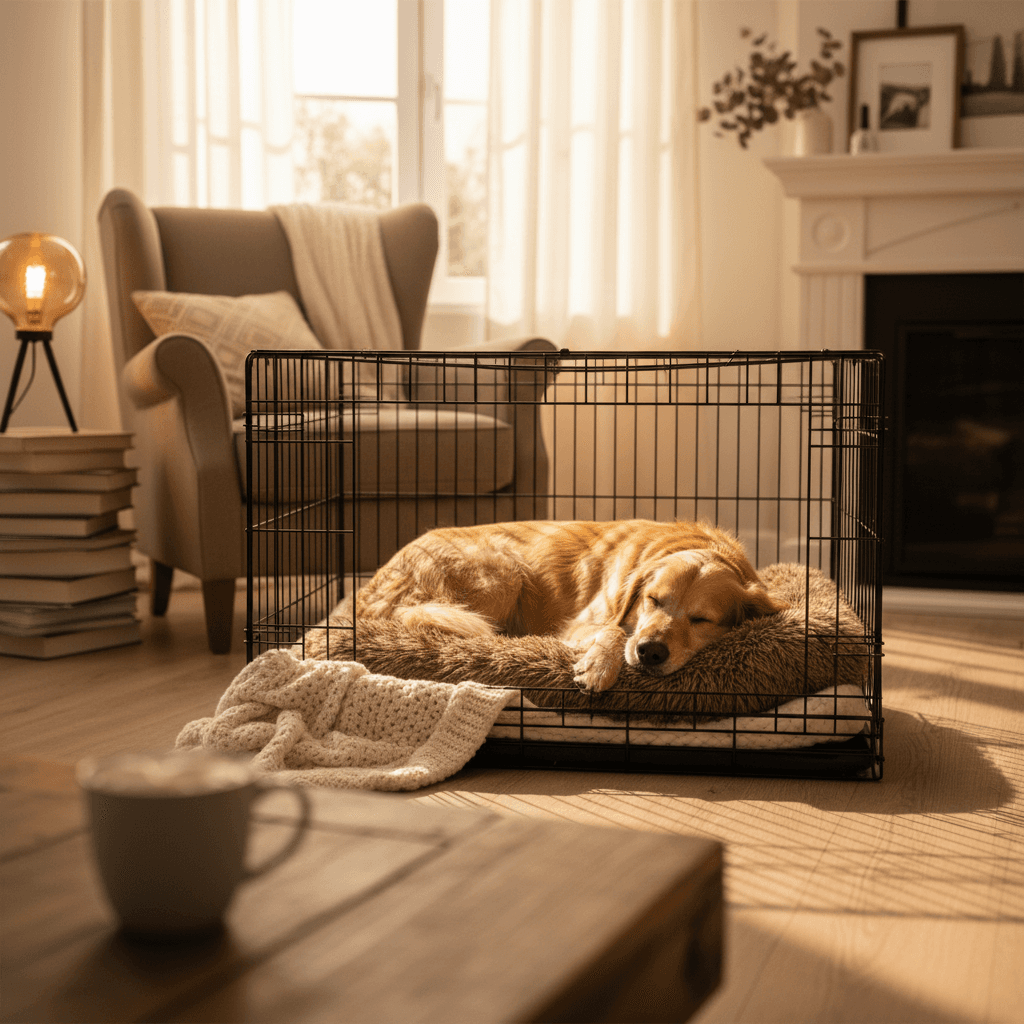
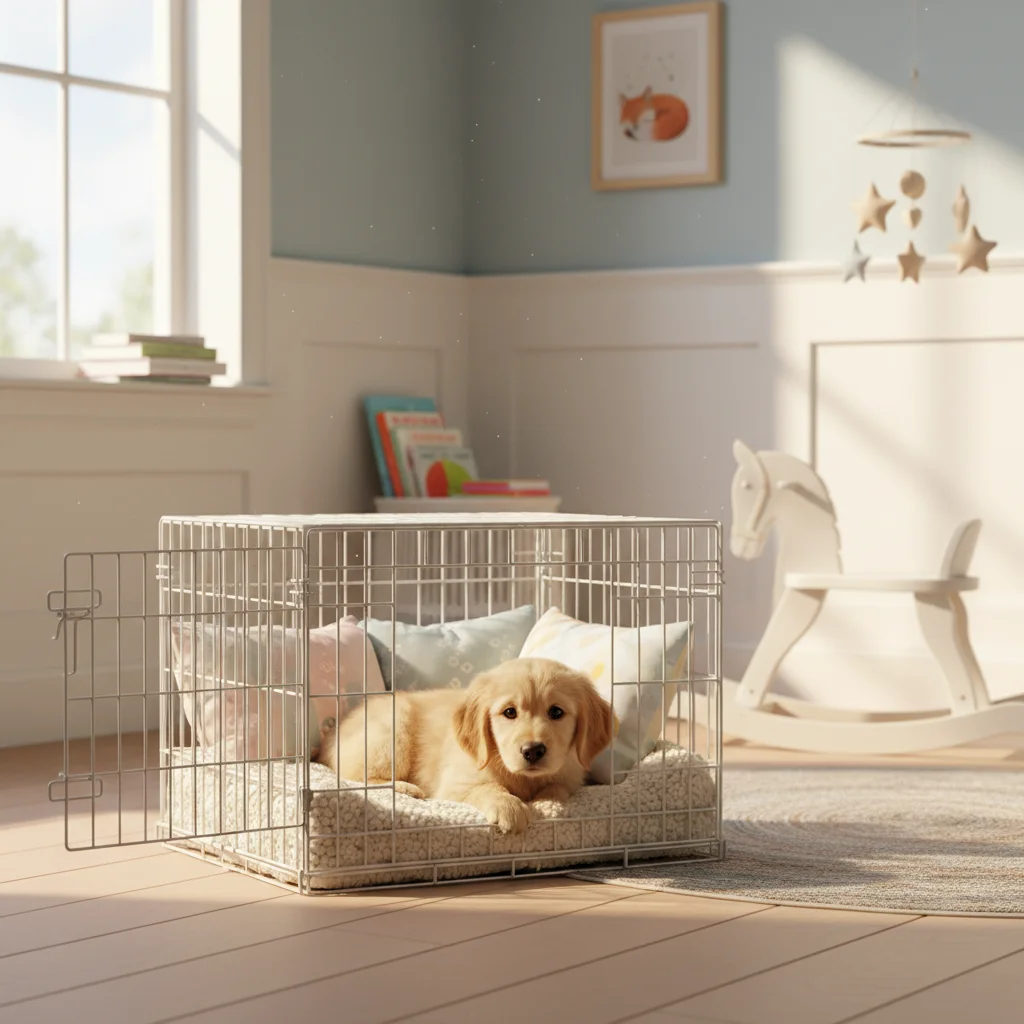
How to Choose the Right Dog Crate Size
Quick Answer
Your dog should be able to stand, turn around, and lie down comfortably. Measure standing height plus 2-4 inches and nose-to-tail length plus 2-4 inches. Buy the adult size with a divider for puppies.
On this page11 sections
Our Verdict
Measure your dog standing (nose to tail base + 2-4 inches for length, top of head + 2-4 inches for height). Buy the adult size with a divider panel for puppies.
How PawBench is paid: we earn an Amazon Associates commission on qualifying purchases. We don’t accept sponsored placements, paid reviews, or free products in exchange for coverage. Picks are ranked on documented owner outcomes and primary-source research, never on commission rate. Read the full methodology.
Choosing the wrong crate size is the most common crate training mistake owners make — and it undermines the entire process. A crate that's too large removes the denning instinct that makes crates useful: dogs won't soil their sleeping space, but if the crate is big enough to designate a bathroom corner, they will. A crate that's too small causes physical discomfort and distress, which creates negative associations that make training harder.
Getting the size right is simple once you know the formula. This guide covers how to measure, what to buy for puppies (who grow), and how crate types affect size decisions.
The Sizing Formula
The correct crate size gives your dog just enough room to:
- Stand up fully without their head touching the ceiling
- Turn around completely in a circle
- Lie down in their natural sleeping position (stretched out or curled, depending on the dog)
Here's how to measure:
For length: Measure your dog from the tip of their nose to the base of their tail (not tip). Add 2-4 inches. That's your minimum crate length.
For height: Measure from the floor to the top of your dog's head while standing. Add 2-4 inches. That's your minimum crate height.
The goal is "just enough" space. More than 4 inches of headroom or 6 inches of extra length starts to undermine the den instinct.
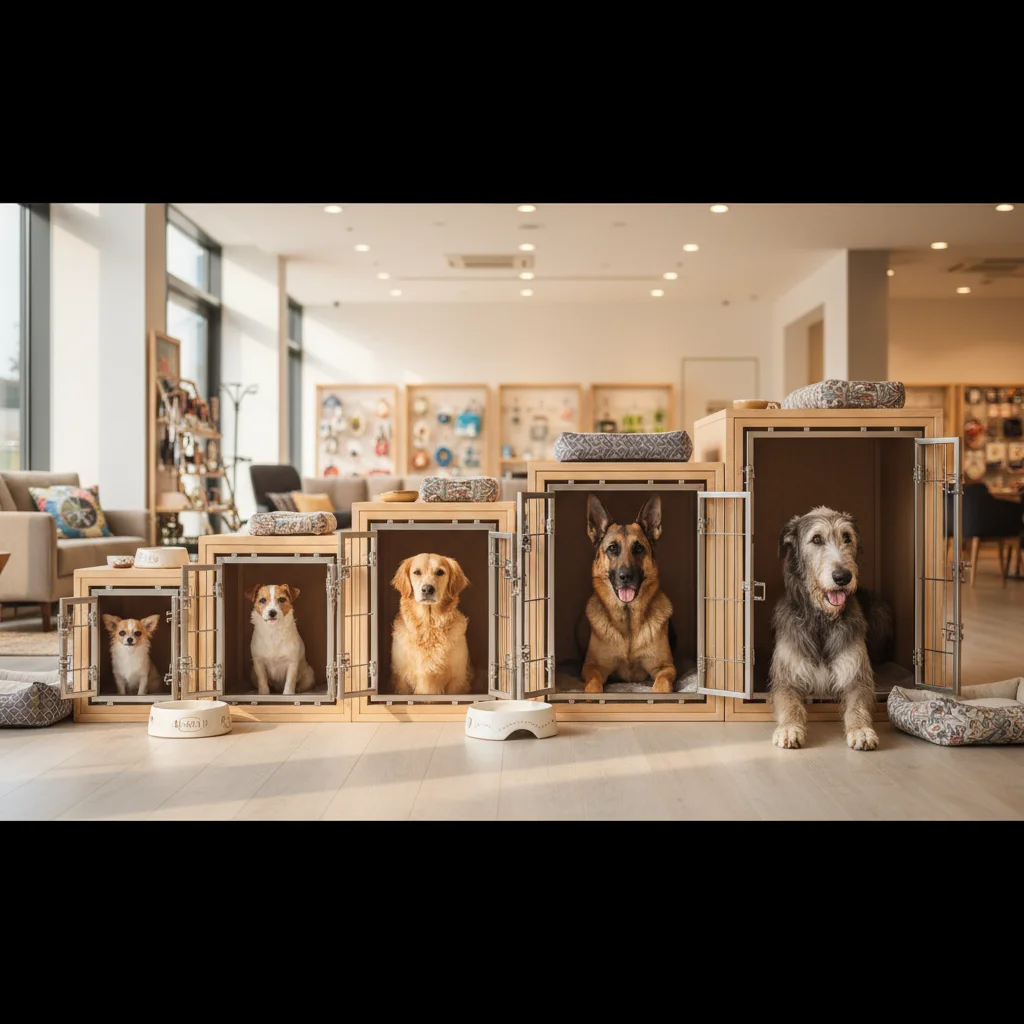
Standard Crate Sizes and Which Breeds They Fit
| Crate Size | Interior Dimensions | Typical Breeds |
|---|---|---|
| 18" | 18" L x 12" W x 14" H | Chihuahua, Yorkshire Terrier, small cat |
| 24" | 24" L x 18" W x 19" H | Shih Tzu, Pug, small Dachshund |
| 30" | 30" L x 19" W x 21" H | Beagle, French Bulldog, Cocker Spaniel |
| 36" | 36" L x 23" W x 25" H | Border Collie, Bulldog, medium Labrador |
| 42" | 42" L x 28" W x 30" H | Golden Retriever, German Shepherd, full Labrador |
| 48" | 48" L x 30" W x 33" H | Rottweiler, Boxer, Standard Poodle |
| 54" | 54" L x 37" W x 45" H | Great Dane, Saint Bernard, Mastiff |
Sizing for Puppies: The Divider Strategy
The biggest challenge with puppies is that they'll grow — sometimes dramatically. Buying the right adult-size crate from day one and using a divider panel is the most cost-effective approach.
- Buy the adult-appropriate crate size based on your dog's expected adult weight and measurements
- Use the included divider (most quality crates include one) to reduce the interior space to match your puppy's current size
- Expand the divider every few weeks as the puppy grows
For a Golden Retriever puppy, you'd buy a 42" crate and initially set the divider at roughly 24-28" of usable space, expanding it every 3-4 weeks until the dog reaches adult size around 18-24 months.
Recommended crate with divider: MidWest Homes iCrate is the most popular choice — it includes a divider, double door access, and a removable floor tray. MidWest Homes for Pets 36-Inch iCrate for Medium-Large (available in all sizes, ~$45-$100 depending on size).
Crate Type Affects Size Perception
Wire Crates
The most versatile option. Good airflow, easy to clean, dividers usually included. Dogs can see their surroundings, which reduces anxiety for social dogs but can over-stimulate reactive ones. A cover (blanket or purpose-made crate cover) makes a wire crate more den-like for anxious dogs.
Plastic/Airline Crates
More enclosed, darker interior creates a stronger den feel. Required for air travel. Often slightly smaller interior for the same exterior footprint versus wire crates. For flights, check your specific airline's approved crate dimensions before purchasing.
Soft-Sided Crates
Lightweight and portable, but not suitable for dogs that push or chew. Good for travel with calm, crate-trained adults. Never use for crate training a new puppy.
Heavy-Duty Crates
For anxious, escape-artist, or destructive dogs, heavy-duty welded steel crates like the ProSelect Empire provide containment that standard wire crates can't. Significantly more expensive ($150-$350), but necessary for dogs that break out of standard crates — which is a safety issue, not just a training issue.
Signs Your Crate Is the Wrong Size
Too small:
- Dog can't fully stand, turn, or stretch
- Dog seems reluctant to enter or exits immediately
- Dog seems cramped or distressed
Too large:
- Dog is having accidents in one corner of the crate
- Dog paces within the crate rather than settling
- Puppy is not using the full space as a bed
The Crate Training Connection
Size is just the first variable. Proper crate training — the process of building positive associations and gradually increasing alone time — is equally important. A correctly sized crate combined with poor training still produces a stressed dog.
For our full crate training guide including timing, rewards, and how to handle crying, see How to Crate Train a Puppy. For dogs with anxiety issues that make crating harder, see our best crates for anxiety guide, which covers covered crates, heavy-duty options, and calming strategies.
Crate Bedding
Once your dog is reliably not having accidents in the crate, add bedding for comfort. Good options:
- MidWest QuietTime Deluxe Ombré Bed — sized to match MidWest crates exactly
- K&H Self-Warming Crate Pad — no electricity required, reflects body heat, machine washable
- Gorilla Grip Non-Slip Dog Crate Mat — durable, chew-resistant option for puppies still in training
Don't add bedding until your puppy has demonstrated 2+ weeks of clean crating. Bedding gives puppies something to push into a corner and toilet on top of.
Our Verdict
For most puppies and adult dogs, a 42" MidWest iCrate covers Golden Retrievers, Labs, German Shepherds, and similarly sized breeds at an excellent price-to-quality ratio. Go up to a 48" for Rottweilers and Boxers; down to a 36" for Border Collies and mid-sized breeds.
When in doubt, measure your dog using the formula above rather than guessing by breed. Individual dogs vary significantly within breeds, and getting the size right from the start makes the entire crate training process easier.
For specific product recommendations, see our best dog crates for puppies guide.
Note: Links to Amazon may earn us an affiliate commission at no extra cost to you.
🏆 Bottom Line: The right crate size lets your dog stand, turn around, and lie stretched out — nothing more for housetraining. Buy adult size with a divider for puppies. When in doubt, check the manufacturer's weight guide and go up one size if your dog is at the top of a range.
Related Reading
- How to Crate Train a Puppy — Step-by-step training guide
- Best Dog Crates for Puppies — Top-rated crates tested and reviewed
- Best Dog Crates for Anxiety — Covered and heavy-duty options
Sources
- American Veterinary Medical Association (AVMA) — Crate sizing and animal welfare guidelines. avma.org.
- American Kennel Club (AKC) — Breed-specific size and weight charts. akc.org.
- MidWest Homes for Pets — Crate sizing guide by dog weight. midwesthomes4pets.com.
- Association of Professional Dog Trainers (APDT) — Crate selection best practices. apdt.com.
- PetMD — "How to Choose the Right Size Crate for Your Dog." petmd.com.
Common Sizing Mistakes
- Buying for the adult size before measuring: Estimate adult weight from parents or breed standard, but always measure the actual dog at 6+ months before buying a permanent crate
- Ignoring crate type differences: Wire crates measure interior differently than plastic airline crates — always check interior dimensions, not exterior
- Forgetting about crate pads: A thick bed or pad reduces interior height by 2-3 inches — factor this into your height measurement
- Too big for puppies: An oversized crate defeats housetraining — puppies will use one end as a bathroom. Use a divider panel to resize as they grow
Research Sources
- Crates for Dogs: How to Choose the Best Dog Crate — American Kennel Club
- Safe and Stress-Free Crate Training: A Step-by-Step Guide — American Kennel Club
- AAHA Canine Life Stage Guidelines: New Puppy Checklist — American Animal Hospital Association
- IATA Pet Container Requirements — International Air Transport Association
- IATA Traveler's Pet Corner — International Air Transport Association

Hilly Shore Labs
Editorial teamIndependent product research team behind PawBench. Reviews are grounded in primary veterinary sources, aggregated buyer sentiment, and the lived ownership of Maggie, an Australian Labradoodle.
200+ dog products researched · 1.1M+ Amazon review-aspect mentions analyzed · cites AVMA, FDA, AAFCO, Cornell, WSAVA, AKC, ASPCA.
All product reviews are independently researched. Recommendations are based on published veterinary guidelines, manufacturer specifications, and verified customer feedback. See our editorial standards.