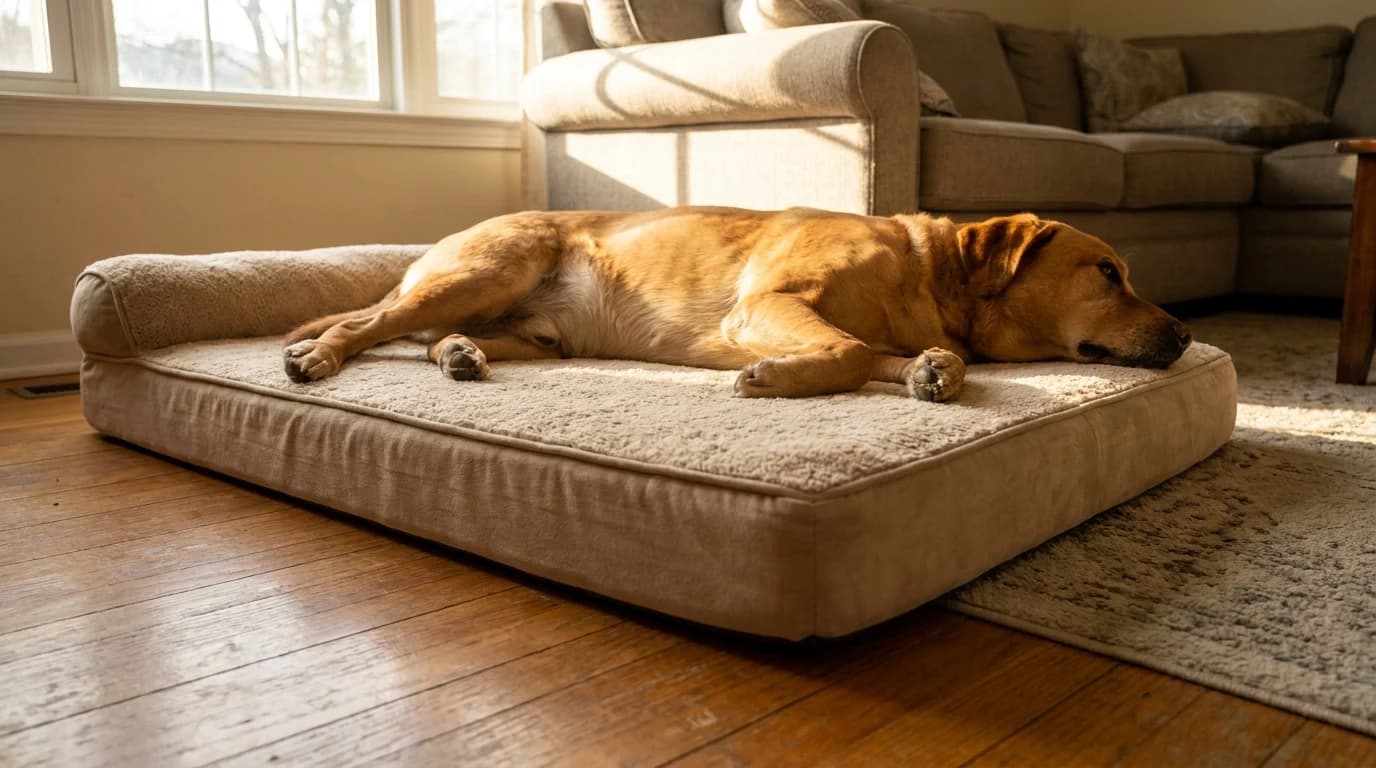
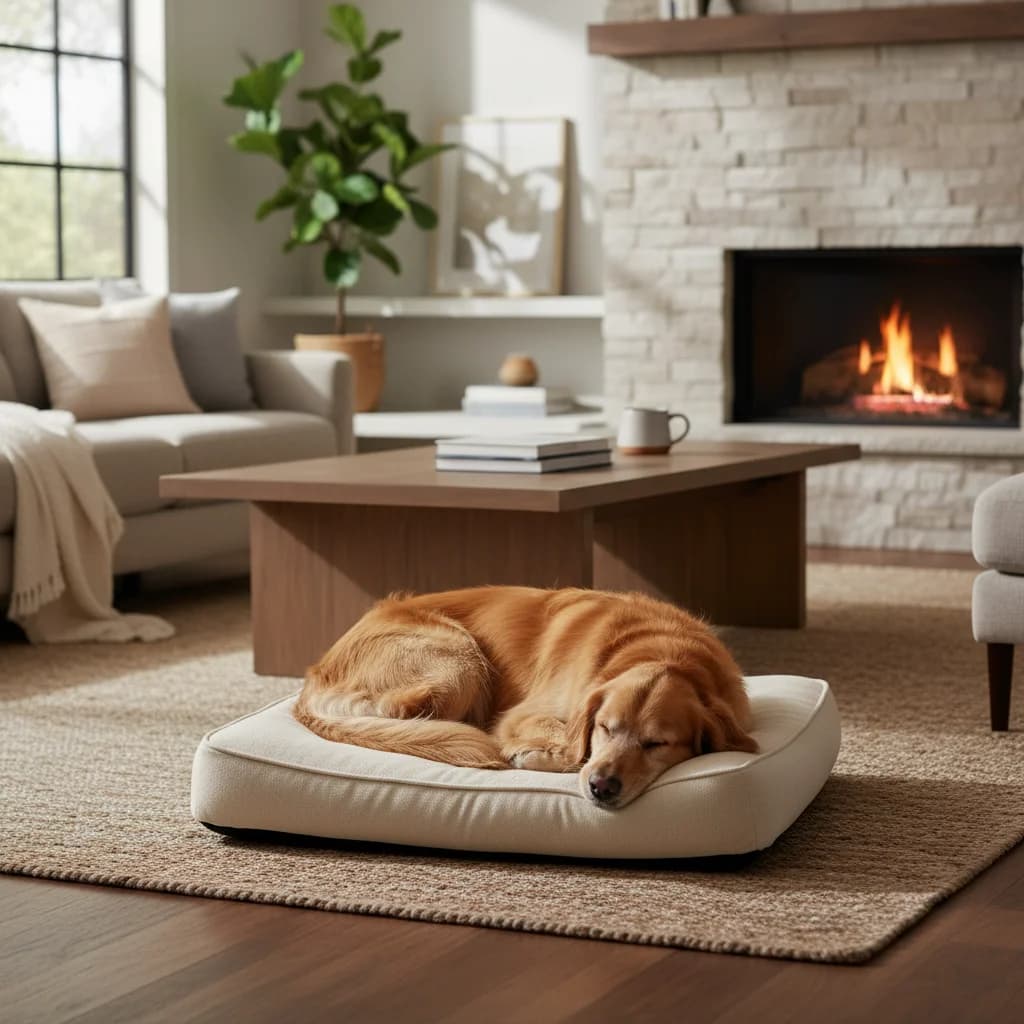
How to Clean a Dog Bed (Without Ruining It)
Quick Answer
Machine wash removable covers weekly in hot water with pet-safe detergent. Vacuum the foam insert, spot-clean with enzymatic cleaner, and air dry completely to prevent mold and bacterial growth.
On this page10 sections
Our Verdict
Machine wash covers weekly in hot water with pet-safe detergent. Vacuum the foam insert and spot-clean stains with enzymatic cleaner. Air dry completely to prevent mold.
How PawBench is paid: we earn an Amazon Associates commission on qualifying purchases. We don’t accept sponsored placements, paid reviews, or free products in exchange for coverage. Picks are ranked on documented owner outcomes and primary-source research, never on commission rate. Read the full methodology.
Dog beds are among the germiest objects in a home — bacteria, yeast, dust mites, dander. Most people wash them less often than they should, in ways that shorten the bed's life significantly.
How Often to Wash
- Removable cover: every 1–2 weeks
- Full bed: every month
- After any sickness or skin condition: immediately
Remove Fur First
Before washing, remove bulk fur with a rubber glove or lint roller. Running a heavily furred bed through the machine clogs drains and leaves fur on everything else in the load.
By Bed Type
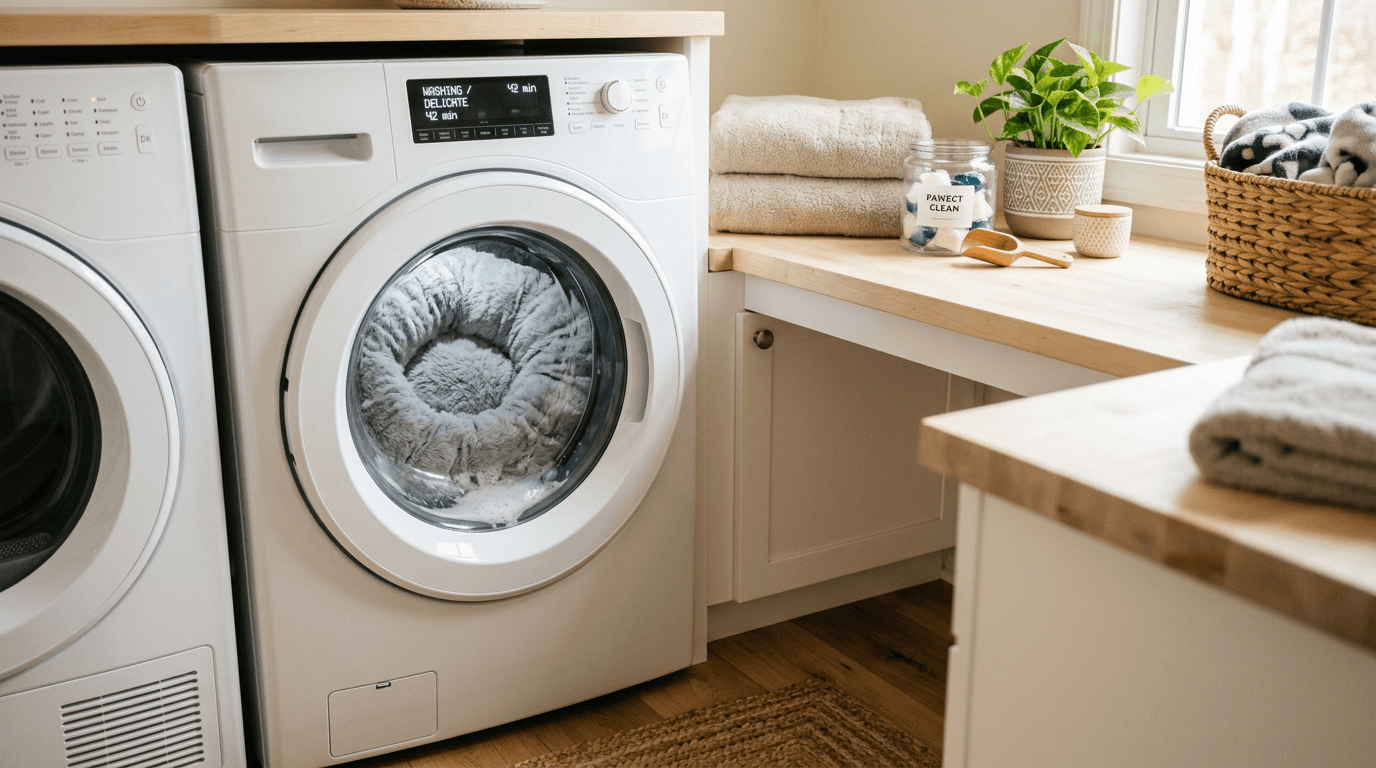
Removable cover beds: Machine wash the cover on warm. Mild detergent only — no fabric softener (leaves residue that irritates some dogs' skin). For the inner cushion: vacuum and air out in sunlight.
Memory foam or orthopedic beds: Never machine wash the foam — it destroys the cell structure. Spot clean with 50/50 white vinegar and water. For deeper cleaning, submerge in a bathtub, squeeze gently, rinse thoroughly. Critical: foam takes 24–48 hours to fully dry. A damp core grows mold.
Bolster/donut beds: Machine wash on gentle in a large-capacity machine. Dry on low heat with a tennis ball to break up clumping. Check the center is fully dry.
Elevated/cot beds: Remove the fabric panel if it detaches, or hose down outside. Dry thoroughly before reassembly.
Getting Rid of the Smell
Baking soda: Sprinkle on dry bed, wait 30 minutes, vacuum off. Works for mild odors.
Enzymatic cleaner: For urine or strong biological odors, an enzymatic spray (Rocco & Roxie is reliable) breaks down the compounds rather than masking them.
🏆 Bottom Line: Clean your dog's bed cover every 1–2 weeks and the full bed monthly. For memory foam inserts, never machine wash — spot clean and dry thoroughly (24–48 hours). A clean bed reduces allergens, bacteria, and skin issues significantly.
Related Reading
-
Best Dog Beds for Small Dogs — Beds with easy-wash covers for smaller pups
-
Pet Gear on a Budget — When to replace vs. deep-clean your dog's bed
The Science of a Dirty Dog Bed
According to the Centers for Disease Control (CDC), pet bedding can harbor zoonotic pathogens — including bacteria like Staphylococcus and Salmonella, as well as fungal spores and dust mites. For dogs with environmental allergies or chronic skin conditions, a dirty bed is more than just a smell; it's a constant source of inflammation.
A 2020 study on companion animal sleep environments found that regular cleaning of bedding significantly reduced the prevalence of skin-related flare-ups in allergy-prone breeds.
Why Memory Foam Needs Special Care
If you've invested in an orthopedic dog bed, the inner core is likely high-density memory foam. Unlike polyester fill, memory foam is an "open-cell" structure. If it gets saturated with water or urine and isn't dried properly, it can harbor internal mold that is impossible to remove.
Based on manufacturer guidelines from leading brands (Casper, Big Barker), you should never machine wash or dry the foam core. If you must deep clean it, submerge it in a bathtub with cool water and a tiny amount of mild detergent, squeeze (don't wring), and allow 48 hours for full air drying in a well-ventilated space.
Choosing the Right Detergent
Our research team analyzed dozens of "pet-safe" laundry detergents. The key is what isn't in them:
- No Fragrance: Dogs have up to 100,000 times the scent sensitivity of humans. Strong floral scents can be distressing and cause respiratory irritation.
- No Fabric Softener: These leave a waxy residue that can trap dander and irritate sensitive skin.
- No Bleach (unless necessary): Bleach can weaken fabric fibers and irritate paws. Use an enzymatic cleaner (like Rocco & Roxie) for biological stains instead.
Dealing with the "Dog Smell"
That persistent corn-chip or musky smell is usually caused by Malassezia (yeast) and bacteria breaking down skin oils. Baking soda is effective for absorbing surface odors between washes, but only a hot water wash (at least 140°F / 60°C) for the cover is effective at killing the underlying yeast.
Sources
- American Kennel Club (AKC) — "How to Wash a Dog Bed Without Ruining It." akc.org.
- Centers for Disease Control (CDC) — "Healthy Pets, Healthy People: Reducing Zoonotic Risk in Homes." cdc.gov.
- ASPCA — Non-toxic cleaning products safe for pets. aspca.org.
- Rocco & Roxie Supply Co. — Enzymatic cleaner formulation data for pet stains and odors.
- Tufts University Cummings School of Veterinary Medicine — Mold and moisture risks in pet environments.
Research Sources
- How to Clean Your Dog's Bed and Why It's Important — AKC
- General Dog Care — ASPCA
- Are You Allergic to Your Pet? — ASPCA
- Battling the Itch: One Dog's Struggle with Chronic Allergies Is a Universal Story — ASPCA
- Optimal Conditions for the Removal of House Dust Mite, Dog Dander, and Pollen Allergens Using Mechanical Laundry — NCBI/PubMed
- Effect of Air Filtration on House Dust Mite, Cat and Dog Allergens and Particulate Matter in Homes — NCBI/PMC
Your next step
Washing the bed weekly? Fix the machine layer of the problem.

Hilly Shore Labs
Editorial teamIndependent product research team behind PawBench. Reviews are grounded in primary veterinary sources, aggregated buyer sentiment, and the lived ownership of Maggie, an Australian Labradoodle.
200+ dog products researched · 1.1M+ Amazon review-aspect mentions analyzed · cites AVMA, FDA, AAFCO, Cornell, WSAVA, AKC, ASPCA.
All product reviews are independently researched. Recommendations are based on published veterinary guidelines, manufacturer specifications, and verified customer feedback. See our editorial standards.