How to Get Rid of Fleas in Your House (Not Just the Dog)
Quick Answer
Most of a flea infestation is not on your dog — according to Cornell's Riney Canine Health Center, the bulk of the flea population lives in the environment as eggs, larvae, and cocooned pupae in carpet, bedding, and floor cracks. The adults you see biting are roughly the visible 5%. To clear a house you have to treat the environment at the same time you treat the dog, and you have to keep at it for two to four weeks because the pupae stage survives insecticides and can lie dormant for up to five months, hatching in waves that look like treatment failure. The plan: wash all pet bedding hot, vacuum carpets and floors every one to two days (vacuuming removes up to 30% of larvae and 60% of eggs and triggers pupae out of their insecticide-proof cocoons), then treat the vacuumed surfaces with an indoor-safe flea spray, removing pets until it dries. A home spray is a support tool only — it never replaces the vet-recommended oral, topical, or collar flea control your dog needs.
On this page7 sections
Our Verdict
Treating the dog alone never clears a flea problem because ~95% of the population lives in your home as eggs, larvae, and insecticide-proof pupae. Run a 2-4 week campaign on the same day you dose the dog: wash bedding hot, vacuum every 1-2 days (it removes eggs/larvae and triggers pupae out of their cocoons), then treat carpets and floors with an indoor-safe spray. A home spray is an adjunct to vet-recommended flea control, never a replacement for it.
The Flea Life Cycle: Where the Other 95% Hides
Only the adult stage lives on your dog. The eggs, larvae, and pupae are spread through your home — which is why treating the dog alone never finishes the job. The pupa is the one stage nothing can kill, so the home campaign has to outlast it.
| Product | Where it lives | Can you kill it? |
|---|---|---|
| Eggs (~half of the population) | Roll off the dog into carpet, bedding, and floor cracks; hatch within days | Yes — vacuuming removes ~60%; hot washing kills them |
| Larvae | Burrow deep into carpet fibers and under furniture, away from light; feed on dried-blood 'flea dirt' | Partly — vacuuming removes ~30%; washing and drying bedding kills them |
| Pupae | Sealed in cocoons in carpet and cracks; dormant up to 5 months | No — resist insecticide, freezing, and drying. Only vacuum vibration triggers them out into the open |
| Adults (~5%, the ones you see) | On the dog, biting | Yes — the dog's vet-recommended preventative plus a home spray on the few that jump off |

How PawBench is paid: we earn an Amazon Associates commission on qualifying purchases. We don’t accept sponsored placements, paid reviews, or free products in exchange for coverage. Picks are ranked on documented owner outcomes and primary-source research, never on commission rate. Read the full methodology.
Here is the part that surprises almost every owner mid-infestation: the fleas you can see on your dog are a tiny fraction of the problem. According to Cornell University's Riney Canine Health Center, most of the flea population lives in the environment — not on the animal. The adults biting your dog are the visible 5%; the eggs, larvae, and cocooned pupae carpeting your home are the other 95%.
That single fact rewrites the whole battle plan. Treating only the dog while ignoring the carpet, bedding, and floors is why infestations come roaring back two weeks after you think you've won. This is a guide to the other 95% — the part that lives in your house.
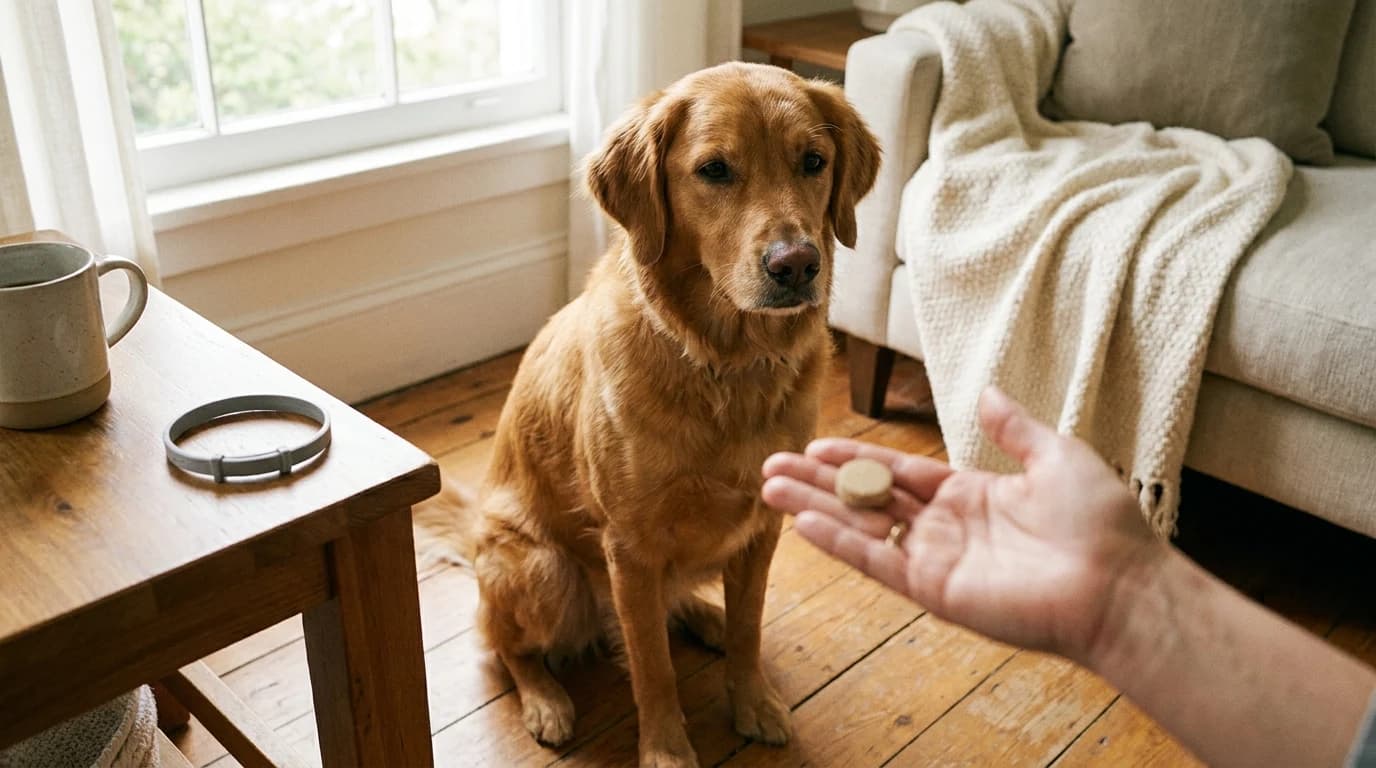
One honest caveat first: a home spray is a supporting tool, never a substitute for the vet-recommended oral or topical flea control your dog wears. Killing fleas in the carpet does nothing for the ones jumping back on a dog with no preventative. You need both: the dog protected, and the environment knocked down at the same time.
Key takeaways
- About 95% of a flea problem is off the dog — eggs, larvae, and pupae living in carpet, bedding, and floor cracks (Cornell Riney Canine Health Center).
- You can't kill the pupae stage. Cocooned pupae shrug off insecticides, freezing, and drying — and can lie dormant for up to 5 months (Texas A&M AgriLife Extension). That dormant reservoir is why infestations "come back."
- Vacuuming is your highest-leverage move. It removes up to 30% of larvae and 60% of eggs from carpet, and the vibration triggers pupae to hatch into the open where treatment can reach them (NC State Extension).
- Treat dog and home on the same day, then keep at it for weeks — because the cycle is staggered, one pass never finishes the job.
Why "I treated the dog, why are there still fleas?"
A flea infestation is not a swarm of adults — it's a staggered factory running four overlapping stages. Cornell describes the four-stage, roughly 3-week life cycle: egg, larva, pupa, adult. Only the adult lives on your dog. Each female lays about 40 eggs a day right on the animal's skin, and those eggs roll off into wherever the dog walks, sleeps, and rests.
So the dog is the breeding ground; the house is the nursery. Here is where each stage actually is:
The crucial villain is the pupa. Texas A&M notes the adult flea can stay sealed in its cocoon for up to 5 months, emerging only when it senses a host's heat, vibration, or carbon dioxide. Nothing you spray penetrates that cocoon. So even a "perfect" treatment leaves a hidden, protected reserve that will hatch days or weeks later — and look exactly like a treatment failure.
The 95% you can't see: where each stage lives
| Stage | Where it is | Can you kill it? |
|---|---|---|
| Eggs (~50%) | Roll off the dog into carpet, bedding, floor cracks; hatch in days | Yes — vacuuming removes ~60%; washing bedding kills them |
| Larvae (~35%) | Burrow deep into carpet fibers, under furniture, away from light; eat "flea dirt" | Partly — vacuuming removes ~30%; washing + drying kills them |
| Pupae (~10%) | Sealed in cocoons; dormant up to 5 months | No — resist insecticide, freezing, drying. Only vacuum vibration triggers them out |
| Adults (~5%) | On the dog, biting | Yes — the dog's preventative + a home spray on the few that jump off |
(Stage proportions are the widely cited rule of thumb in entomology extension literature; the takeaway, not the exact percent, is the point: the dog is the smallest piece.)
The home knockdown plan
There is no one-and-done. Because the pupae keep hatching, you're running a campaign over two to four weeks, not a single afternoon. Do these in order, the same day you dose the dog:
1. Wash everything washable, hot. Strip the dog's bedding, throw blankets, washable couch covers, and your own sheets if the dog sleeps with you. Cornell and Texas A&M both flag pet bedding as the single most flea-infested object in the house. Wash hot, dry hot. Repeat weekly through the campaign.
2. Vacuum like it's your job — then empty it outside. This is the highest-leverage step. Per NC State Extension, vacuuming pulls up to 30% of larvae and 60% of eggs, removes the dried-blood "flea dirt" the larvae eat, and the vibration jolts dormant pupae out of their insecticide-proof cocoons — turning them into killable adults. Hit carpets, rugs, cracks, baseboards, under furniture, and the car if the dog rides along. Empty the canister or bag into an outdoor trash bin immediately so escapees don't re-colonize. Vacuum every 1–2 days for at least two weeks.
3. Then — and only then — treat the surfaces. With eggs and larvae reduced and pupae provoked into the open, a home spray can do real work on what's left. This is where a plant-based indoor spray like Vet's Best Flea & Tick Home Spray earns its place: it targets adults and larvae on carpets, bedding, and floors, and (unlike harsh foggers) is formulated for indoor use around pets and people. Spray the same high-traffic zones you just vacuumed. Cornell's exact sequence is the model: "Wash all bedding and vacuum frequently (to trigger the release of pupae) followed by use of a spray intended to kill adult fleas... Remove pets from the area prior to use." Follow the label's drying and ventilation directions, and keep pets off treated surfaces until dry.
4. Don't forget the yard's shady spots. Texas A&M notes fleas die fast in hot, dry, sunny lawns but thrive in moist, shaded resting areas — under decks, along the house, where the dog naps outside. You usually don't need to treat open sun-baked lawn; focus on the cool, shaded zones.
What most people get wrong
The single biggest mistake is stopping too early. You spray once, the visible adults die, and three days later there are fleas again — so you assume the product failed. It didn't. That second wave is pupae hatching out of cocoons that nothing could have killed. The campaign has to outlast the pupal stage, which means staying on it for the full 2–4 weeks even when the house looks clean.
The second myth: that the home spray replaces the dog's prevention. It does the opposite — it's the other half of a pincer. The dog's oral/topical/collar product stops fleas from completing their cycle on the animal; the home work clears the reservoir already in the carpet. Drop either side and the cycle simply restarts. If you're choosing the dog's side of that equation, our best flea & tick prevention guide and oral vs topical vs collar breakdown cover what actually works.
And a real one to skip: flea bombs/foggers as a first move. They drench a room in pesticide but can't reach the carpet-deep larvae or cocooned pupae where the population actually hides — which is exactly why the vacuum-first, targeted-spray sequence the extension labs recommend out-performs a blanket fog.
When to loop in your vet
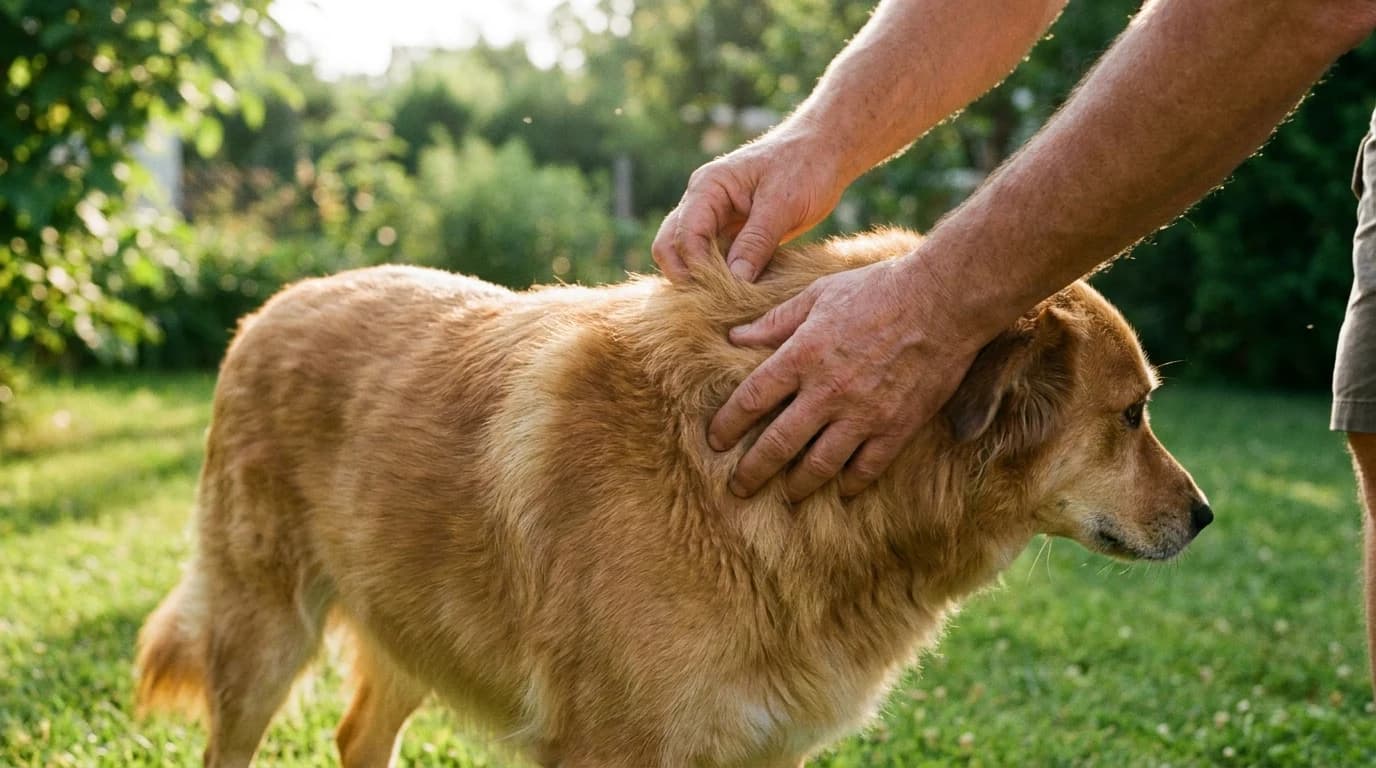
A home that won't clear after a few weeks of diligent washing, vacuuming, and treating usually means one of two things: a dog whose preventative isn't actually working (or was skipped), or a heavier infestation that needs a professional. Fleas also carry real health risks — tapeworm, flea-allergy dermatitis, and anemia in puppies and small dogs — so if your dog is scratching raw, losing hair, or has pale gums, that's a vet visit, not a vacuuming problem.
Sources
- Fleas — Cornell University Riney Canine Health Center — most of the flea population lives in the environment; four-stage 3-week cycle; ~40 eggs/day; wash + vacuum-to-trigger-pupae + spray sequence.
- How to Get Rid of Fleas — Texas A&M AgriLife Extension — pupae dormant up to 5 months and insecticide-resistant; bedding most-infested; shaded-yard biology.
- Biology and Control of Fleas — NC State Extension — vacuuming removes up to 30% of larvae and 60% of eggs; washing and drying bedding.
- About Fleas — CDC — fleas feed on blood and locate hosts by heat, movement, and breathing.
Research Sources
- Fleas — Cornell University Riney Canine Health Center
- How to Get Rid of Fleas — Texas A&M AgriLife Extension
- Biology and Control of Fleas — NC State Extension
- About Fleas — Centers for Disease Control and Prevention
Your next step
Treated the dog? The carpet is where the eggs are.

Hilly Shore Labs
Editorial teamIndependent product research team behind PawBench. Reviews are grounded in primary veterinary sources, aggregated buyer sentiment, and the lived ownership of Maggie, an Australian Labradoodle.
200+ dog products researched · 1.1M+ Amazon review-aspect mentions analyzed · cites AVMA, FDA, AAFCO, Cornell, WSAVA, AKC, ASPCA.
All product reviews are independently researched. Recommendations are based on published veterinary guidelines, manufacturer specifications, and verified customer feedback. See our editorial standards.