Is My Dog's Shedding Normal? When to Worry
Quick Answer
Heavy shedding is usually normal — it's the coat renewing itself through its natural growth cycle, and many healthy dogs (especially short-haired and double-coated breeds) shed a lot, particularly in spring and fall. Judge shedding by your own dog's baseline, not by how much fur is on the floor; short-haired dogs often shed more than long-haired ones, just less visibly. Shedding is normal when it's even across the body and leaves healthy skin and a glossy coat behind. It becomes a reason to see your veterinarian when you notice bald or patchy spots, red, crusted, or irritated skin, a dull or brittle coat, itching alongside the hair loss, or a sudden dramatic increase in shedding. Those signs point to allergies, parasites, infections, poor nutrition, or a hormonal or systemic illness rather than ordinary shedding, and the hair loss won't resolve until the underlying cause is treated. When you can't tell normal shedding from abnormal hair loss, have your vet take a look.
On this page6 sections
Our Verdict
Normal shedding is even, all-over, and leaves healthy skin and a glossy coat behind — it's the coat renewing itself and never needs a vet. Don't judge it by how much fur is on the floor; short-haired dogs often shed more than long-haired ones, just less visibly. What matters is your dog's own baseline plus the condition of the skin and coat. Treat shedding as a medical sign — not a grooming task — the moment you see bald or patchy spots, red or crusted skin, a dull or brittle coat, itching alongside the hair loss, or a sudden dramatic increase. Those point to allergies, parasites, infection, poor diet, or a hormonal or systemic disorder, and the hair loss won't resolve until the underlying cause is found. Brushing, a coat-appropriate tool, sensible bathing, and a complete AAFCO-standard diet keep normal shedding manageable, but they can't fix abnormal hair loss. When you can't tell normal shedding from hair loss, that uncertainty is itself a good reason to have your veterinarian take a look.
Normal Shedding vs. a Sign to See the Vet
The line isn't about how much fur there is — it's about the pattern and the skin underneath. Anything in the right-hand column is a reason to have your veterinarian examine your dog rather than reach for a brush.
| Product | Looks normal | See the vet | Why it matters |
|---|---|---|---|
| Distribution | Even, all over the body | Patchy spots or bald areas | Localized loss (alopecia) usually means a specific cause — a parasite, infection, or hot spot — not normal renewal |
| Skin underneath | Clean, pale pink, no irritation | Red, flaky, crusted, or discolored | Healthy skin = cosmetic shedding; inflamed skin points to infection, allergy, or mites |
| Coat quality | Glossy, hair intact | Dull, dry, or breaking hair | PetMD flags dull, dry, broken hair as a sign of an underlying medical condition |
| Itching | None — dog is comfortable | Scratching, licking, or chewing the area | Merck notes self-trauma from itching is a common cause of patchy loss; the itch should be investigated first |
| Timing | Seasonal (spring/fall) or steady baseline | Sudden, dramatic increase | A sharp change from your dog's normal pattern is a red flag, even if the skin looks okay |
How PawBench is paid: we earn an Amazon Associates commission on qualifying purchases. We don’t accept sponsored placements, paid reviews, or free products in exchange for coverage. Picks are ranked on documented owner outcomes and primary-source research, never on commission rate. Read the full methodology.
A dog that sheds a lot is not automatically a dog with a problem. The hard part for most owners is telling the difference between normal shedding — which is just the coat doing its job — and abnormal hair loss, which is a medical sign that needs a veterinarian. They look similar from across the room, but up close they behave very differently.
This guide explains what normal shedding actually is, the specific red flags that turn shedding into a reason to call the vet, and the single biggest myth that leads owners to worry about the wrong dogs entirely.
What normal shedding actually is
Every hair on your dog moves through a growth cycle. According to AAHA, that cycle has three phases:
- Anagen — active growth
- Catagen — a brief transition
- Telogen — a resting phase before the hair falls out and a new one replaces it Shedding is simply old telogen hairs being released so new ones can grow. It is the coat renewing itself, not breaking down.
How much a dog sheds is mostly genetics. Breeds with thick double coats — Siberian Huskies, German Shepherds, Akitas, Chow Chows — shed heavily and dramatically. Continuously growing coats like those on Poodles and Shih Tzus stay in the anagen phase for years, which is why they "don't shed" much but need regular grooming instead.
On top of genetics, most dogs go through seasonal shedding. As AAHA describes it:
- A thicker coat grows in winter for warmth
- That coat is "blown" in spring to prepare for warm weather
- Another shed follows in fall as the winter coat comes back in Indoor dogs, living under artificial light and stable temperatures, often shed a little year-round instead of in big seasonal bursts.
The most useful thing you can do is learn your own dog's baseline early. A heavy-shedding Lab that leaves a layer of fur on the couch every spring is doing exactly what its coat is built to do. The number that matters is not "how much" — it's "how much for this dog."
The myth that makes owners worry about the wrong dogs
Here is what most owners get wrong: they assume long-haired dogs shed the most, so they panic about the fluffy ones and relax about the short-haired ones.
It's backwards.
The myth: That long-haired dogs shed the most. Per PetMD, short-haired dogs often have denser coats and actually shed more — the hair is just shorter, so you notice it less. The hair is just shorter, so it's far less visible on the floor and the furniture. A sleek-coated Lab or Dalmatian can out-shed a long-haired dog easily; you simply notice it less.
Don't judge by the floor. Judge by your dog's individual baseline and by the condition of the skin and coat — which is where the real warning signs live.
Normal shedding vs. a sign to see the vet
The line between normal and abnormal isn't about volume — it's about pattern and skin health. Normal shedding is even, all over the body, and leaves healthy skin and a glossy coat behind. Abnormal hair loss (alopecia) tends to be patchy, exposes irritated skin, or comes with a sudden change from your dog's usual pattern.
Use the comparison above to tell them apart. When in doubt, the safest read is always to have your veterinarian look.
A simple gut check from PetMD: look at the hair itself. If the coat has a healthy sheen and the skin underneath looks normal, ongoing shedding is almost always fine. If the hair is dull, dry, or breaking, or the skin is flaky, red, or discolored, that points to an underlying problem and is worth a vet visit.
What's behind abnormal hair loss
When shedding crosses into true hair loss, the cause is medical, not cosmetic. AAHA lists the common drivers of abnormal hair loss as:
- Stress
- Poor nutrition
- Skin infections, bacterial or fungal
- Parasites such as fleas and mites
- Allergies, environmental or food-related
- Hormonal and endocrine disorders
- Systemic disease of the liver or kidneys
- Immune conditions
- Less commonly, cancer
Hair loss is a sign, not a diagnosis. Per the Merck Veterinary Manual, "its underlying cause must be determined for the condition to be successfully treated." There is no single "fix shedding" answer for a balding dog. In other words, there is no single "fix shedding" answer for a balding dog — the job is to find what's causing it. Merck also notes that if a dog is losing hair and scratching the area, the itching should be investigated first, because self-trauma from itching is a common reason patches of fur disappear.
This is exactly why bald spots and irritated skin belong in a vet's hands, not a grooming routine. Brushing a dog with mange, an infection, or an endocrine disorder doesn't help the coat and can delay the diagnosis the dog actually needs.
What genuinely reduces normal shedding
You cannot stop a healthy dog from shedding, but you can manage it. AAHA's guidance is consistent and unglamorous:
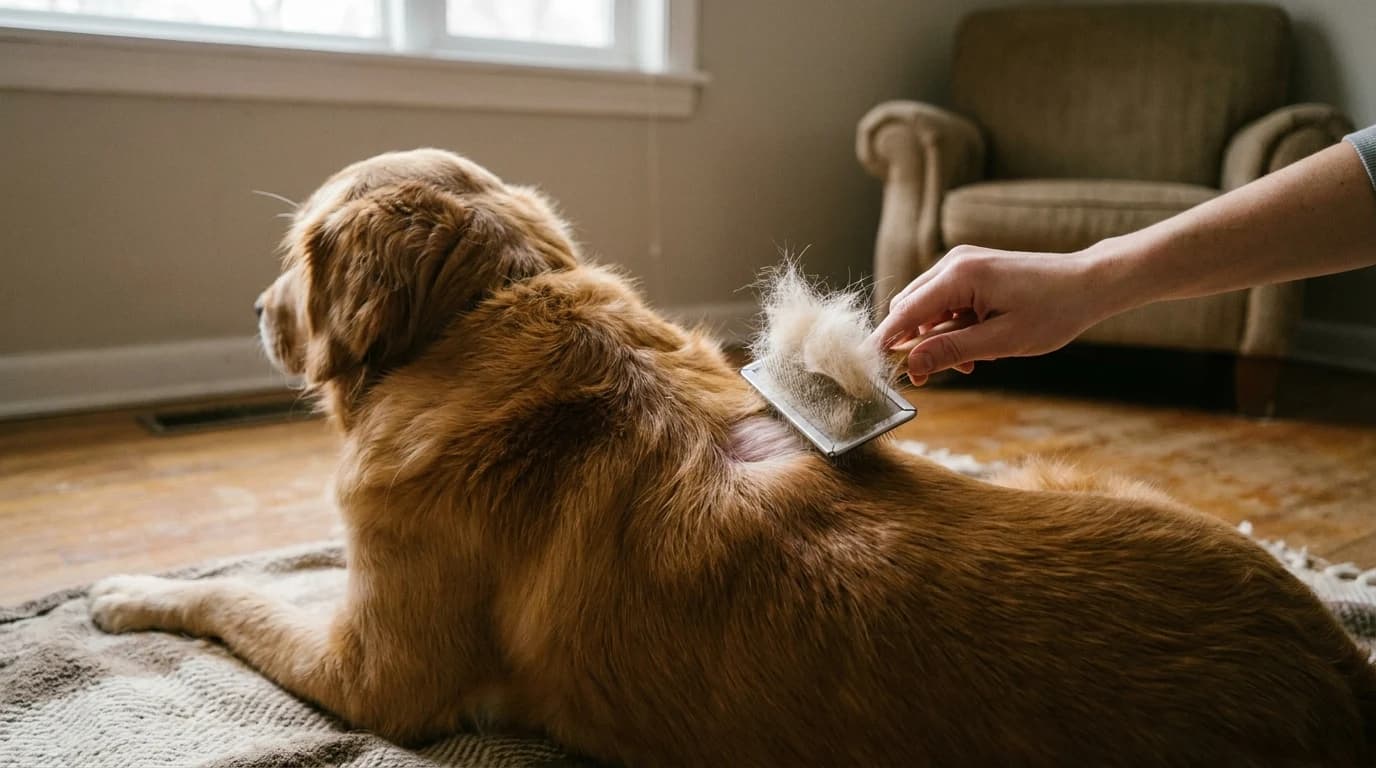
- Brush regularly — daily for heavy shedders, but even 5–10 minutes two or three times a week noticeably cuts loose hair. Brush all the way down to the skin to pull out the loose undercoat and spread the natural oils that keep the coat healthy.
- Use the right tool for the coat type — a brush built for a double coat does little on a sleek single coat, and vice versa.
- Bathe as needed, not constantly — overbathing strips the skin's natural oils and can cause dryness and more shedding, not less.
- Feed a complete, balanced diet — PetMD cites a poor-quality diet as a leading cause of excess shedding; a food that meets AAFCO standards for your dog's life stage supports a healthier coat.
- Never use human shampoo — it's too harsh for canine skin and can trigger flaking, irritation, and shedding on its own.
For help matching a tool to your dog, see our best dog grooming tools and grooming schedule by coat type guides. None of this stops normal shedding — it just keeps it manageable and the coat in good shape.
When to call your veterinarian
Per AAHA, contact your vet if you notice:
- Bald spots or thinning fur
- Patchy hair loss
- Red, irritated or crusted skin
- A sudden, dramatic jump in shedding
Add to that any shedding paired with itching, a dull or brittle coat, or hair loss that's worse in one spot than the rest of the body.
Normal shedding is the coat renewing itself and never needs a vet. Abnormal hair loss is a symptom of something else — and the sooner that cause is identified, the easier it usually is to treat. When the two are hard to tell apart, that uncertainty itself is a good reason to book the exam.
Research Sources
- Why Does My Pet Shed? — American Animal Hospital Association (AAHA)
- Why Is My Dog Shedding So Much? — PetMD (reviewed by Barri J. Morrison, DVM)
- Hair Loss (Alopecia) in Dogs — Merck Veterinary Manual
- Managing Dog Shedding — American Kennel Club

PawBench Editorial
Published by Hilly Shore LabsPawBench’s editorial team researches dog products from primary veterinary sources, manufacturer specifications and aggregated buyer sentiment, alongside the lived ownership of Maggie, an Australian Labradoodle. We do not run hands-on product tests.
331 dog products scored · 1,222,724 buyer review-aspect mentions aggregated · cites AVMA, FDA, AAFCO, Cornell, WSAVA, AKC, ASPCA.
Recommendations are based on published veterinary guidelines, manufacturer specifications, and verified customer feedback. See our editorial standards.