Puppy's First Vet Visit: What to Expect and How to Prepare
Quick Answer
Schedule within 48-72 hours of bringing your puppy home. The vet will do a full physical exam, start vaccinations, discuss deworming, and set up a parasite prevention schedule. Bring any paperwork from the breeder or shelter.
On this page9 sections
Our Verdict
Schedule your puppy's first vet visit within 48–72 hours of bringing them home. Bring records, a stool sample, treats, and a list of questions. Making this visit positive shapes your dog's relationship with veterinary care for life.
How PawBench is paid: we earn an Amazon Associates commission on qualifying purchases. We don’t accept sponsored placements, paid reviews, or free products in exchange for coverage. Picks are ranked on documented owner outcomes and primary-source research, never on commission rate. Read the full methodology.
Your puppy's first vet visit should happen within the first week of bringing them home — ideally within 48–72 hours. This initial checkup establishes a health baseline, starts the vaccination schedule, and gives you a chance to ask every question you've been stockpiling since you decided to get a dog.
It's also your puppy's first experience with the vet, which means how it goes shapes their feelings about veterinary care for life. Here's how to make it a good one.
Before the Visit: What to Bring
Documentation from the breeder or shelter:
- Vaccination records (what's been given and when)
- Deworming history
- Microchip information (if already chipped)
- Any health guarantees or genetic testing results
- Diet information (what food, how much, how often)
A fresh stool sample in a sealed bag — your vet will test for intestinal parasites, which are extremely common in puppies.
Your puppy in a carrier or on a leash. Never carry a puppy into a vet clinic without containment — there are sick animals in waiting rooms, and unvaccinated puppies are vulnerable.
A list of questions. You'll forget everything you wanted to ask once you're in the exam room. Write them down.
High-value treats. You want your puppy to associate the vet with good things from day one.
What Happens During the Exam
A thorough first visit typically takes 30–45 minutes and includes:
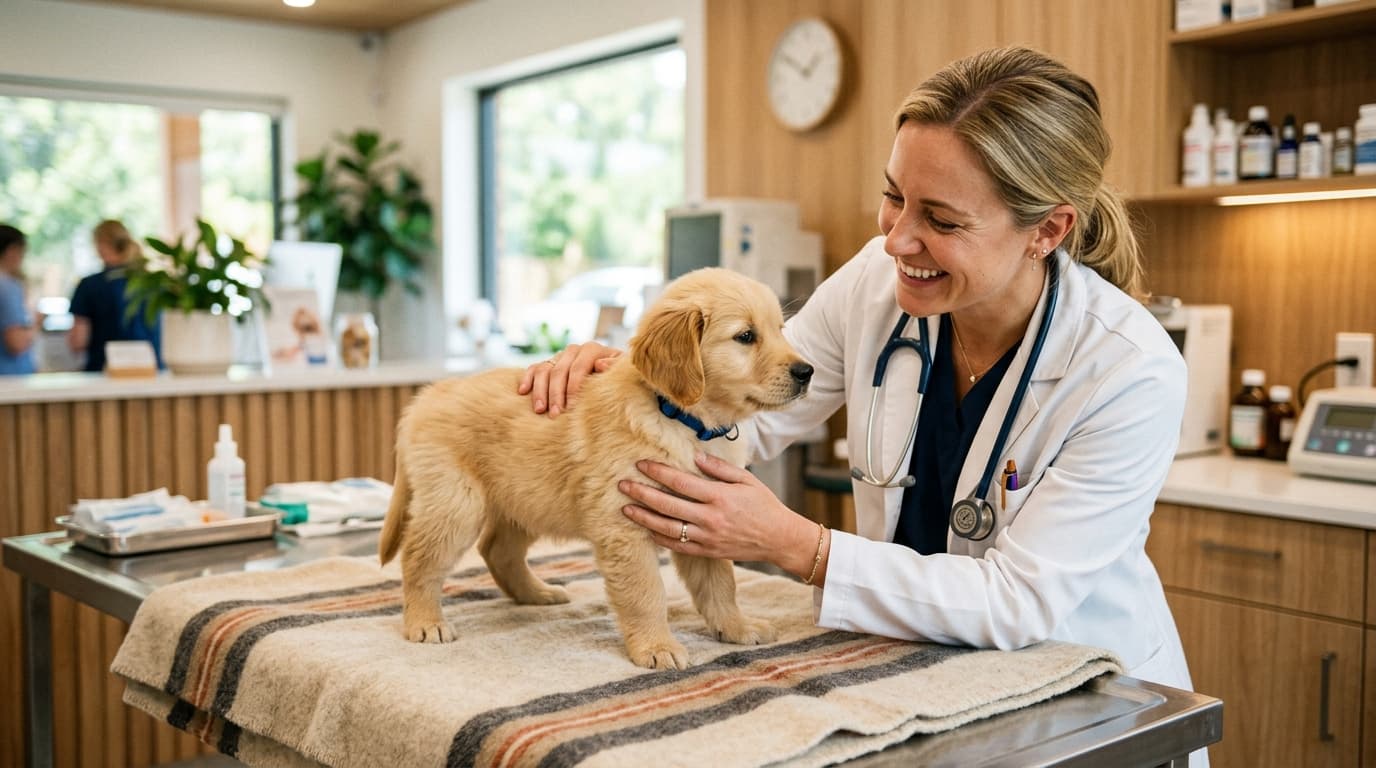
Physical examination. The vet will check your puppy from nose to tail:
- Eyes, ears, and nose for discharge or abnormalities
- Mouth for bite alignment, palate defects, and baby tooth health
- Heart and lungs via stethoscope (checking for murmurs and respiratory issues)
- Abdomen palpation for organ abnormalities or hernias
- Skin and coat for parasites, fungal infections, or allergies
- Joints and limbs for structural soundness
- Lymph nodes for swelling
- Genital area for abnormalities
Weight and body condition. This establishes the baseline for tracking healthy growth. Your vet will tell you your puppy's ideal weight trajectory based on breed and current size.
Fecal analysis. The stool sample you brought will be tested for roundworms, hookworms, coccidia, giardia, and other common parasites. Most puppies have some parasite load — it's treatable and expected.
Vaccinations. Depending on age and what's already been given, your puppy will receive their next round of core vaccines.
The Puppy Vaccination Schedule
Core vaccines protect against diseases that are severe, highly contagious, or fatal. The American Animal Hospital Association (AAHA) recommends:
6–8 weeks: DHPP (distemper, hepatitis, parvovirus, parainfluenza) — first dose 10–12 weeks: DHPP — second dose; Leptospirosis — first dose 14–16 weeks: DHPP — third dose; Leptospirosis — second dose; Rabies 12–16 months: DHPP and Rabies boosters
Non-core vaccines (recommended based on lifestyle and location):
- Bordetella (kennel cough) — required for daycare, boarding, and grooming
- Canine influenza — recommended for social dogs
- Lyme disease — recommended in tick-endemic areas
Your vet will customize this schedule based on your puppy's age, breed, and risk factors.
Questions to Ask at the First Visit
Nutrition:
- Is our current food appropriate? Should we switch?
- How much should we feed at this age, and how often?
- When should we transition from puppy to adult food?
Preventive care:
- When should we start flea and tick prevention?
- When should we start heartworm prevention?
- What's the full vaccination schedule?
Development:
- Is our puppy's growth on track for their breed?
- Are there any breed-specific health concerns to watch for?
- When should we schedule spaying/neutering?
Behavior:
- When is it safe to start socialization classes?
- When can our puppy go to dog parks and public spaces?
- Any early behavior concerns?
Making the Visit Positive
Puppies who have negative first vet experiences develop lasting fear of veterinary care, making every future visit stressful for everyone. Here's how to set the right tone:
Stay calm yourself. Puppies read your energy. If you're anxious, they'll be anxious.
Bring treats and offer them throughout. During the exam, on the scale, after shots — treats create positive associations with every part of the experience.
Don't force comfort. If your puppy wants to hide behind you, let them. Forcing them to be brave creates more fear, not less.
Ask about Fear Free practices. Many modern veterinary clinics are certified in Fear Free techniques — low-stress handling, pheromone diffusers, and gentle restraint methods that make visits less traumatic.
After the First Visit: What Comes Next
Schedule follow-up appointments for remaining vaccinations (typically at 10–12 and 14–16 weeks).
Start preventive medications as prescribed — flea/tick and heartworm prevention are critical and should begin as early as your vet recommends.
Begin socialization in controlled environments. Until fully vaccinated (around 16 weeks), avoid dog parks, pet stores, and areas with unknown dogs. Puppy socialization classes with vaccination requirements are safe and invaluable.
Monitor your puppy for any reactions to vaccines in the 24–48 hours after the visit. Mild lethargy and soreness are normal. Facial swelling, vomiting, difficulty breathing, or collapse require immediate emergency care.
How to Choose a Veterinarian
If you haven't selected a vet yet:
- Look for AAHA-accredited hospitals (higher standards than state minimums)
- Choose a clinic close to home — proximity matters in emergencies
- Ask about after-hours emergency protocols
- Visit the clinic before your first appointment to get a feel for the staff and environment
- Ask other local dog owners for recommendations
Cost Expectations
First puppy visits typically cost $100–$300, depending on location and what's included. This usually covers the exam, first round of vaccines, fecal testing, and deworming if needed. Budget for 3–4 visits in the first year to complete the vaccination series.
Pet insurance purchased before the first visit can cover unexpected findings. Most policies have waiting periods, so enroll as early as possible.
Sources
- American Animal Hospital Association (AAHA) — 2022 Canine Vaccination Guidelines. aaha.org.
- American Veterinary Medical Association (AVMA) — Puppy care guidelines. avma.org.
- American Kennel Club (AKC) — "Your Puppy's First Vet Visit: What to Expect." akc.org.
- Fear Free Pets — Low-stress veterinary visit certification and practices. fearfreepets.com.
Research Sources
- What to Expect at Your Puppy's First Vet Visit — American Kennel Club
- 2022 AAHA Canine Vaccination Guidelines — American Animal Hospital Association, 2022
- Vaccine Recommendation Schedule Based on Age and Lifestyle of Dog — American Animal Hospital Association
- Your Complete Guide to First-Year Puppy Vaccinations — American Kennel Club
- AVSAB Position Statement on Puppy Socialization — American Veterinary Society of Animal Behavior
- AAHA-AVMA canine preventive healthcare guidelines — American Veterinary Medical Association

PawBench Editorial
Published by Hilly Shore LabsPawBench’s editorial team researches dog products from primary veterinary sources, manufacturer specifications and aggregated buyer sentiment, alongside the lived ownership of Maggie, an Australian Labradoodle. We do not run hands-on product tests.
254 dog products scored · 1,160,974 buyer review-aspect mentions aggregated · cites AVMA, FDA, AAFCO, Cornell, WSAVA, AKC, ASPCA.
Recommendations are based on published veterinary guidelines, manufacturer specifications, and verified customer feedback. See our editorial standards.