What Size Dog Crate Do You Actually Need?
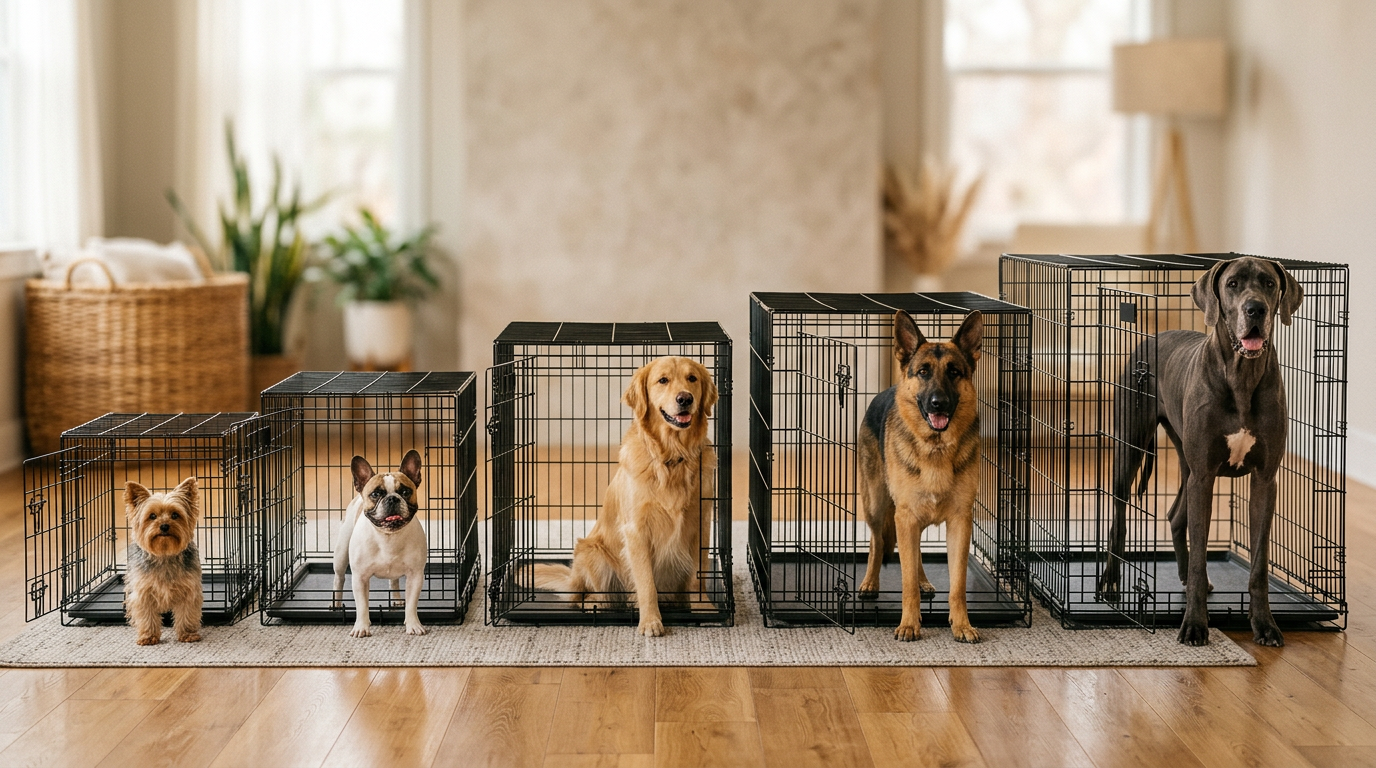
The most common crate mistake is the wrong size. Too large and your dog has a built-in bathroom. Too small and you're causing stress instead of security.
The Basic Rule
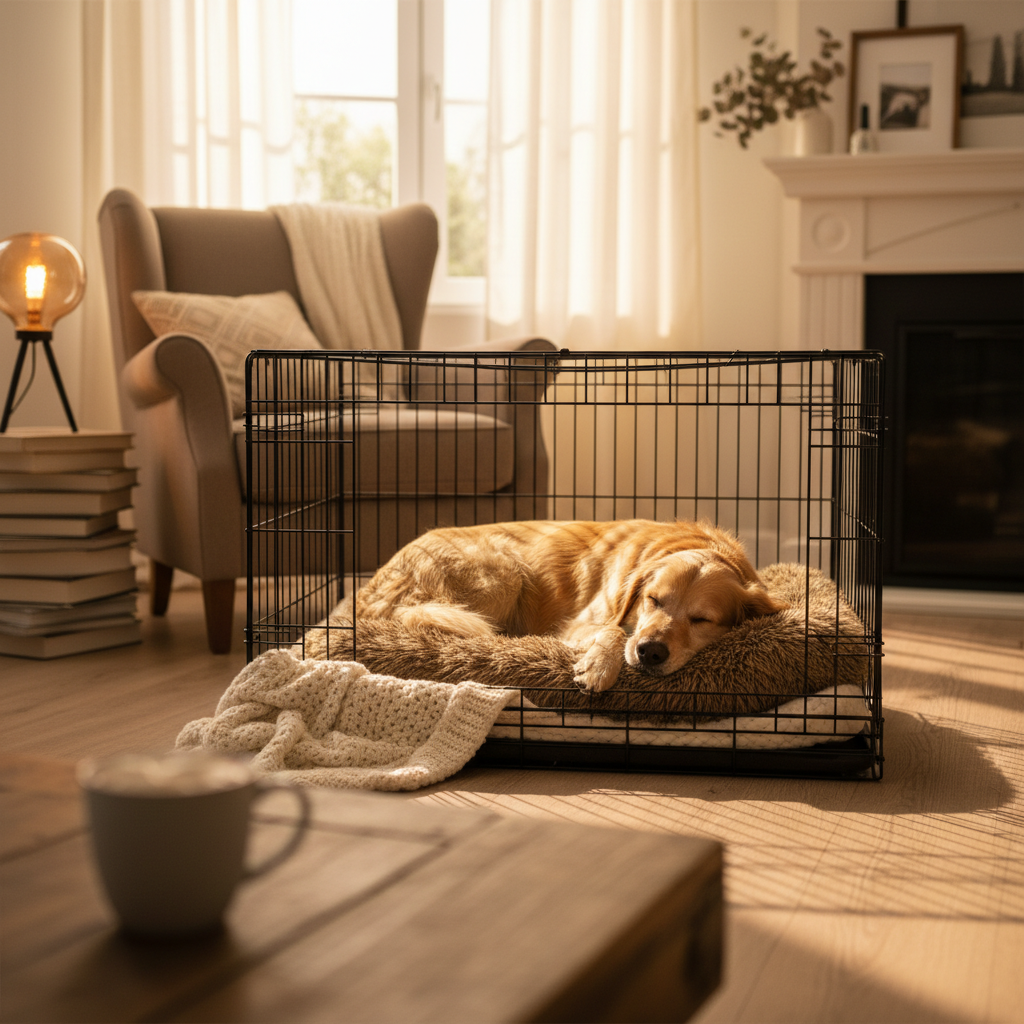
Your dog should be able to stand fully, turn around, and lie down stretched out. Nothing more.
How to Measure
Length: Nose to base of tail + 2–4 inches = minimum crate length.
Height: Floor to top of head + 2–4 inches = minimum crate height.
The larger number determines the crate size you need.
Size Reference
| Weight | Crate Size |
|---|---|
| Under 10 lbs | 18"–22" |
| 10–25 lbs | 24" |
| 25–40 lbs | 30" |
| 40–70 lbs | 36" |
| 70–90 lbs | 42" |
| 90–110 lbs | 48" |
| 110+ lbs | 54" |
Puppies: Use a Divider
Buy adult size and use a divider panel to section off the right amount of space now. Move it back as they grow. One crate, one purchase.
Warning Signs
Too small: Dog can't stand or turn around, avoids going in. Too large: Dog eliminates in one corner and sleeps in another.
Related Reading
Lloyd
5-year dog ownerI've spent five years learning everything the hard way with Maggie — my Australian Labradoodle who is equal parts chaos, charm, and pickiness at the food bowl. Mini/medium sized, absurdly high energy, and firmly convinced that most dog food is beneath her. PawBench is what I wish had existed when I was Googling “why won't my doodle eat anything” at midnight. Everything I recommend has survived Maggie's very exacting standards.