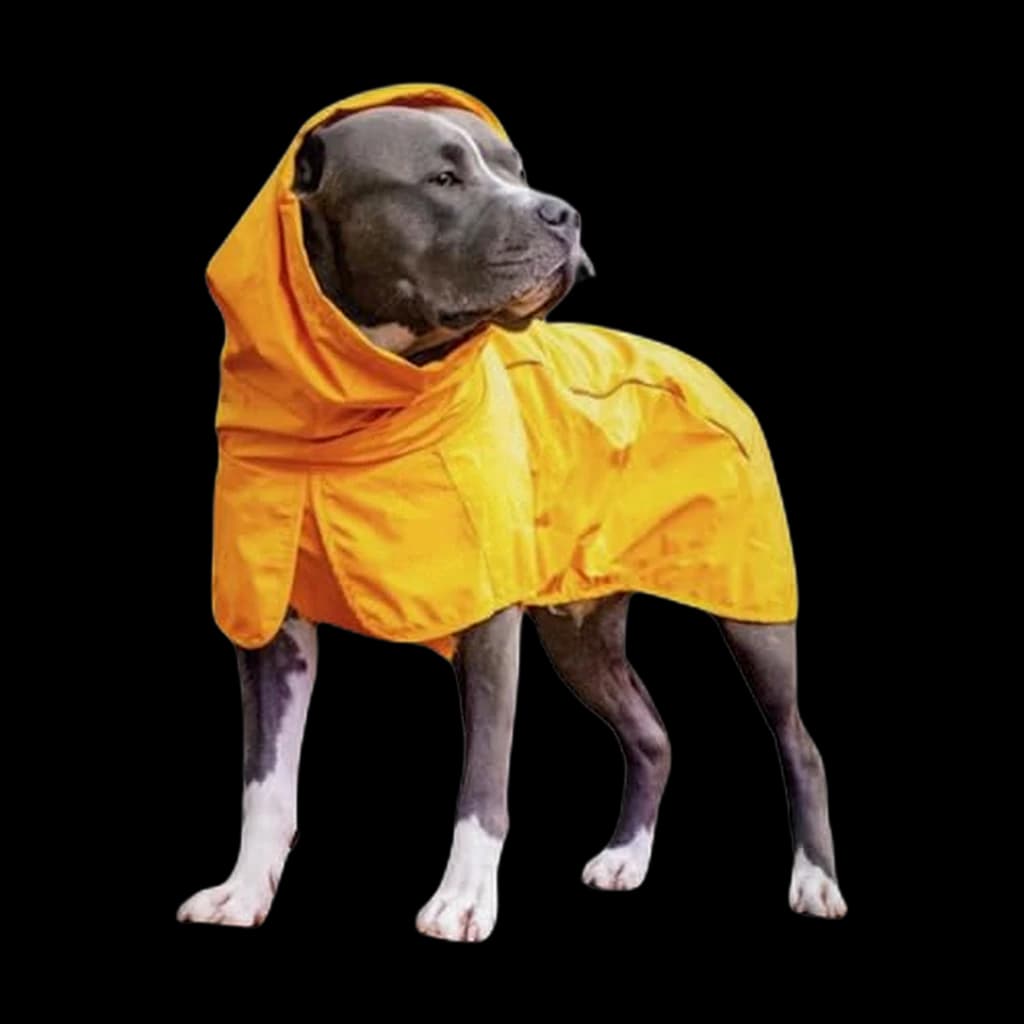
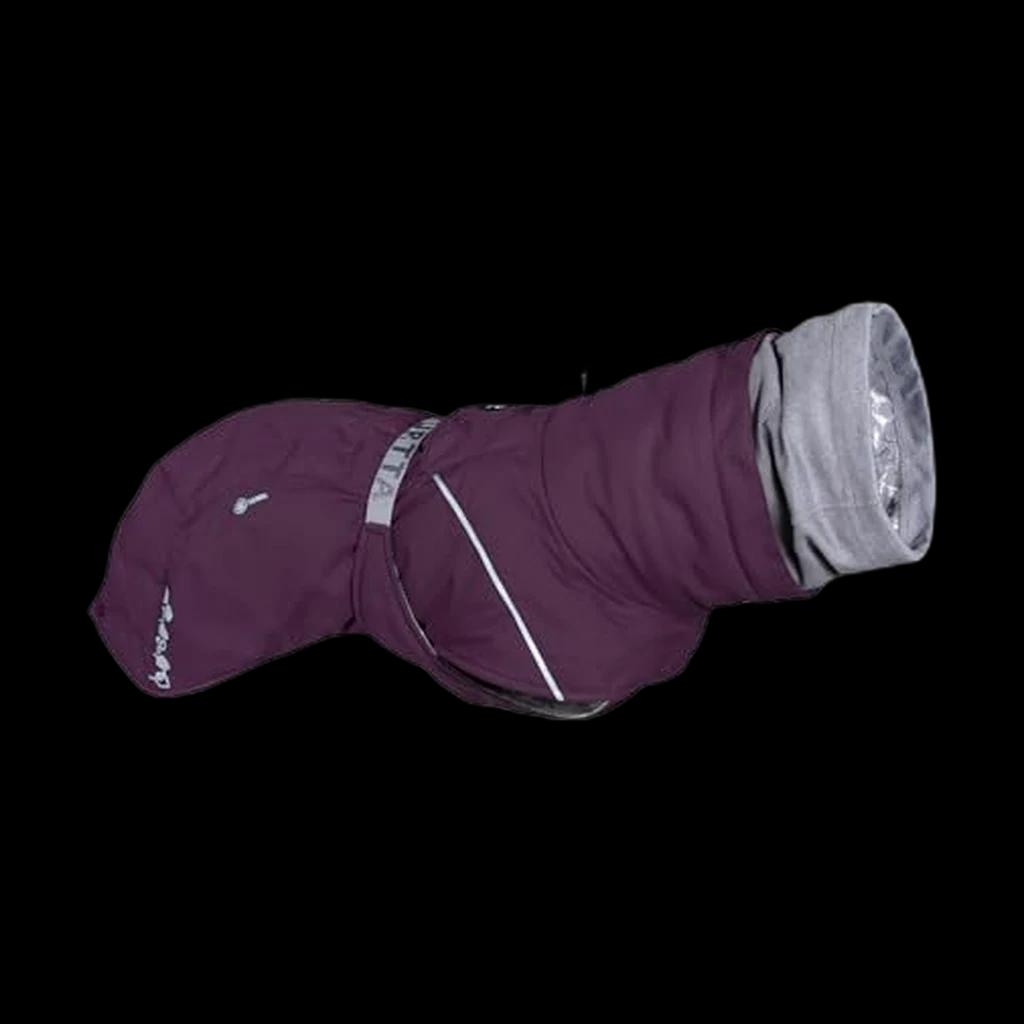
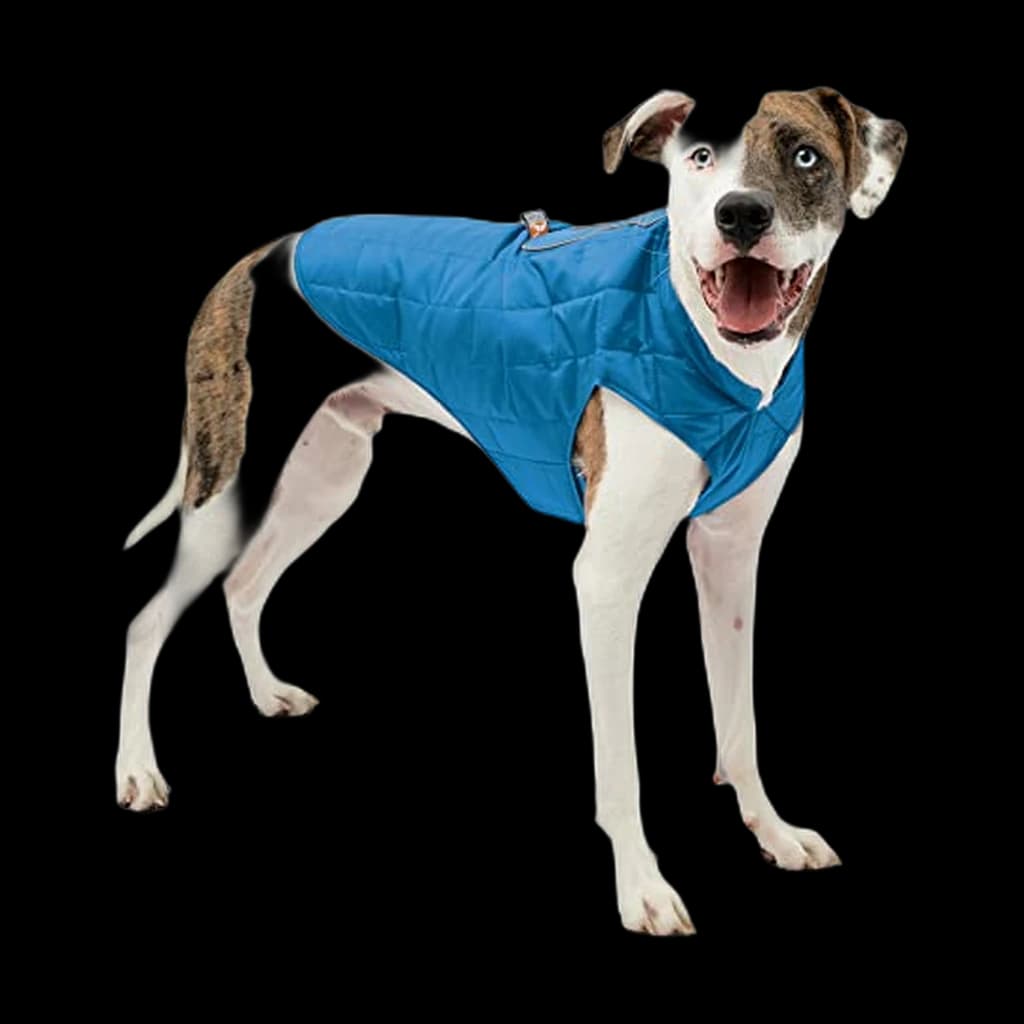
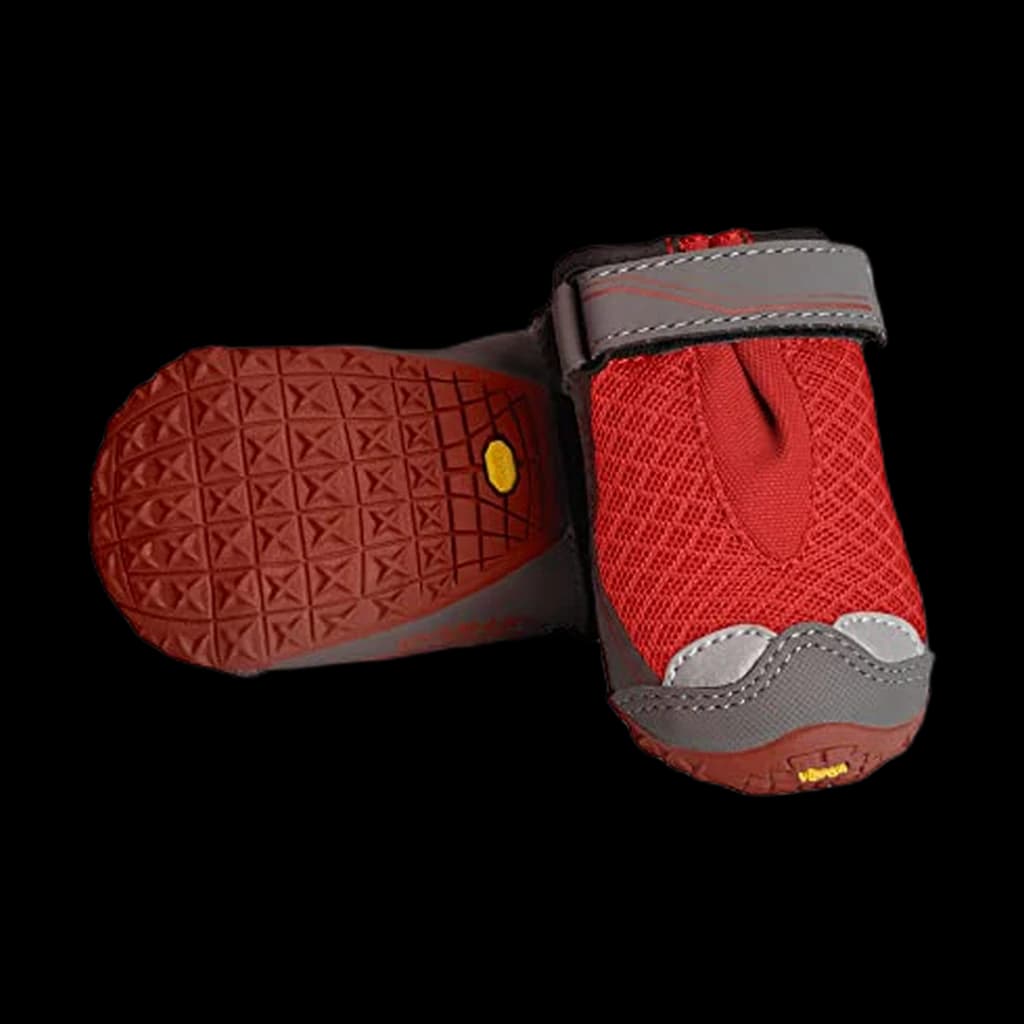
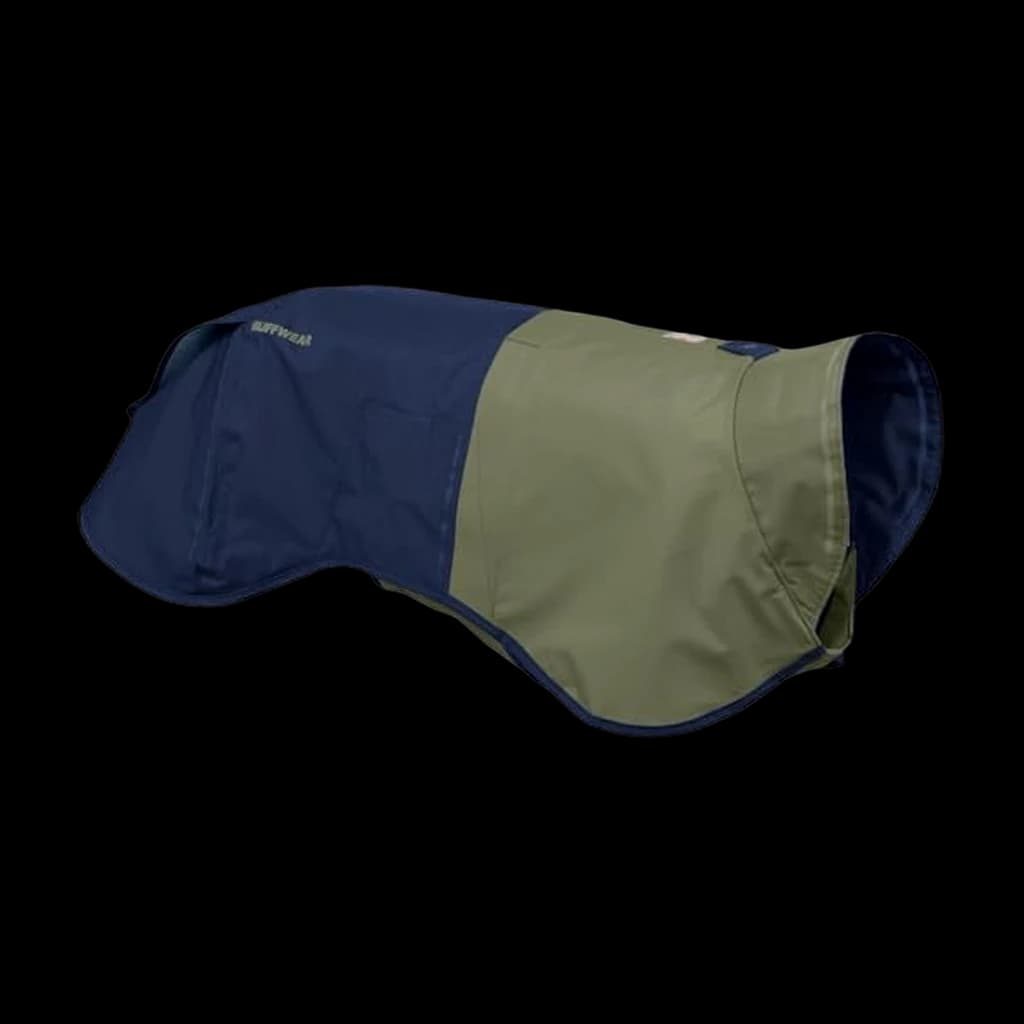
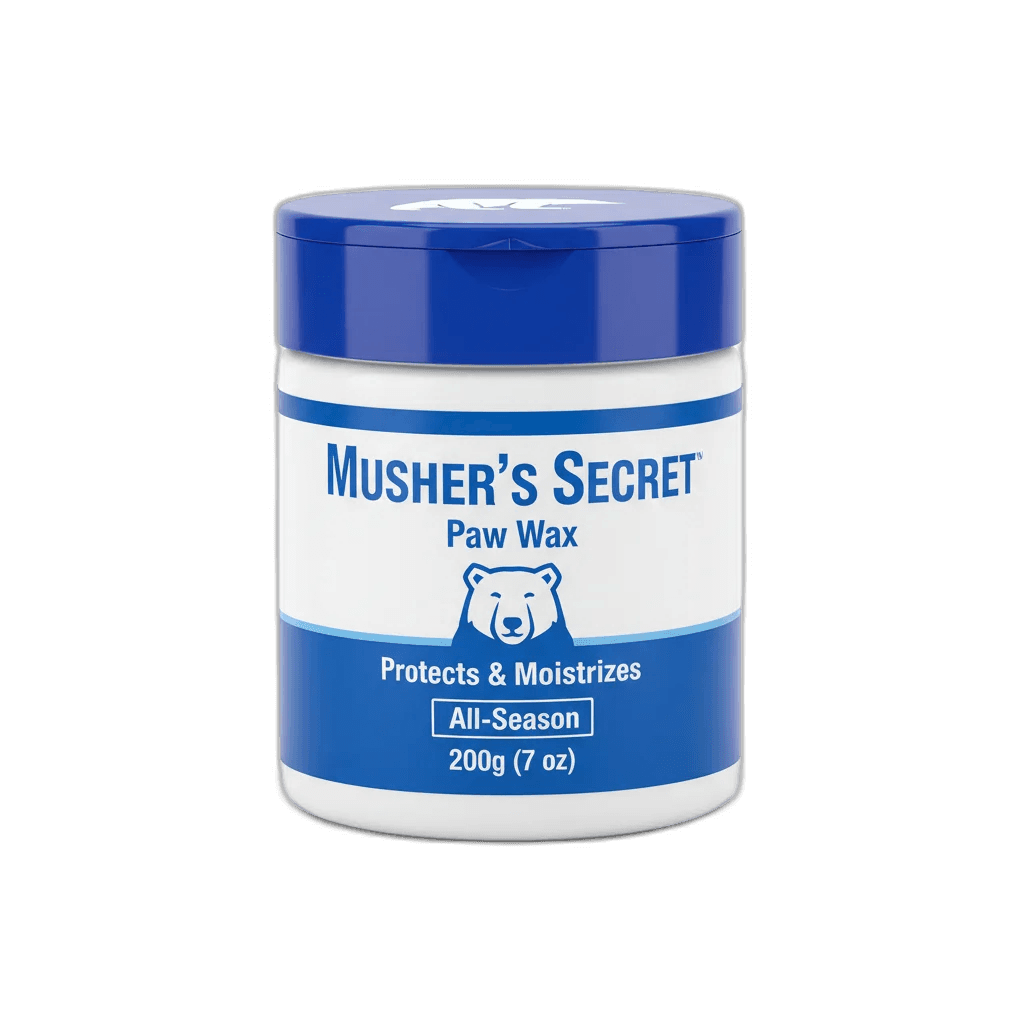
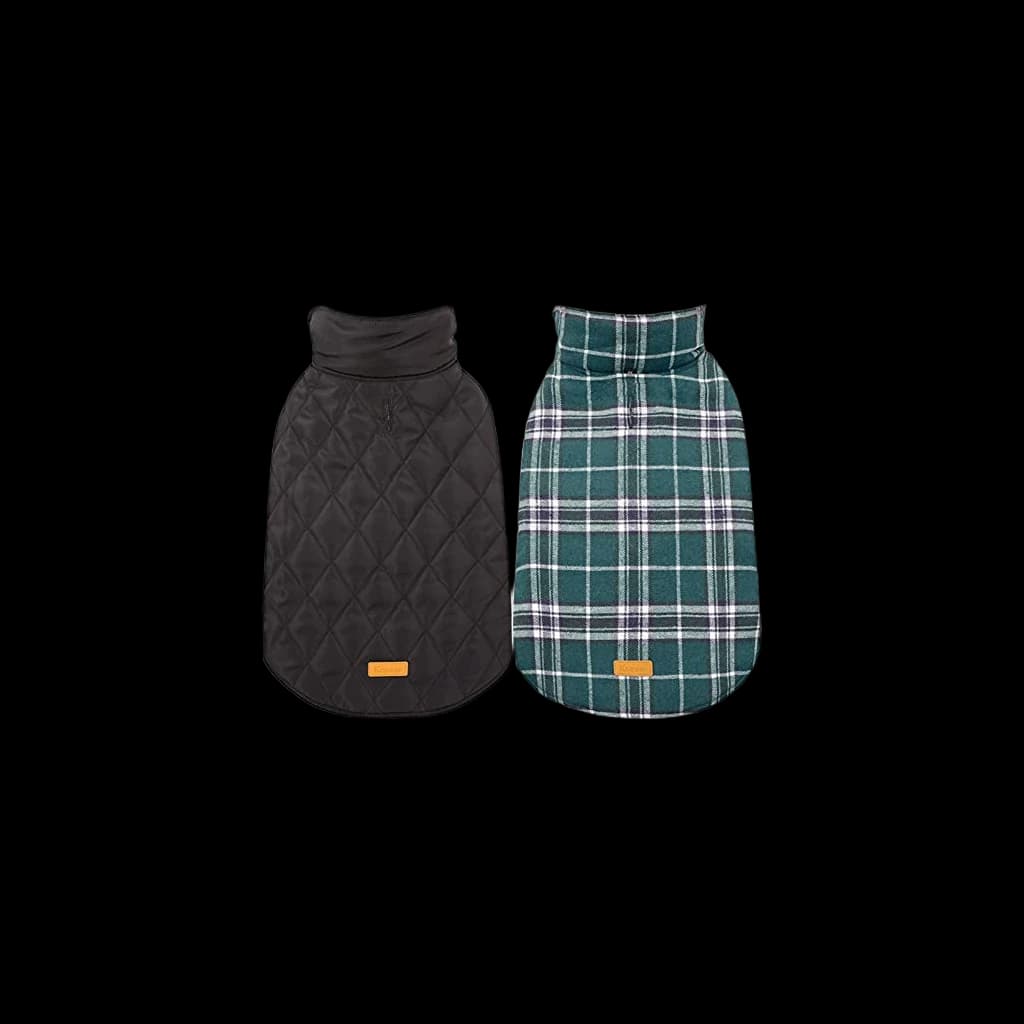
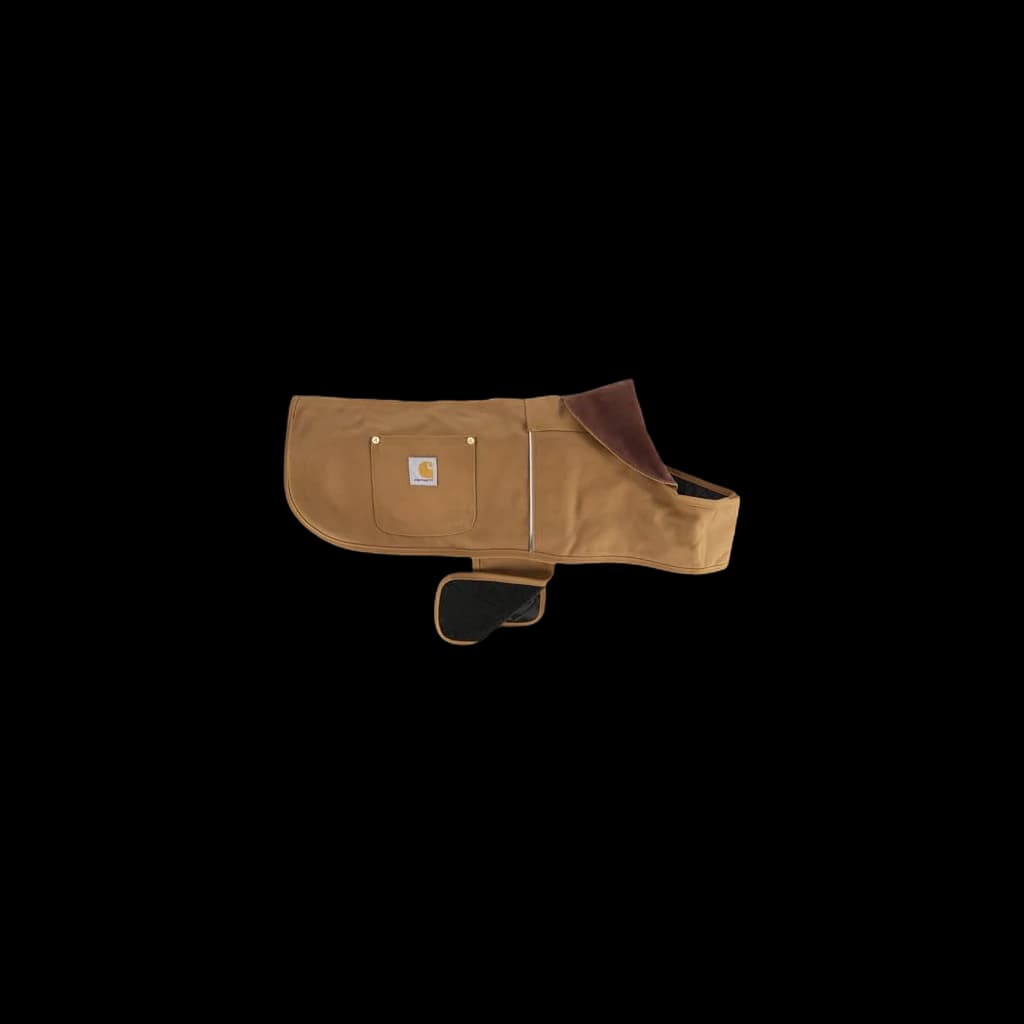
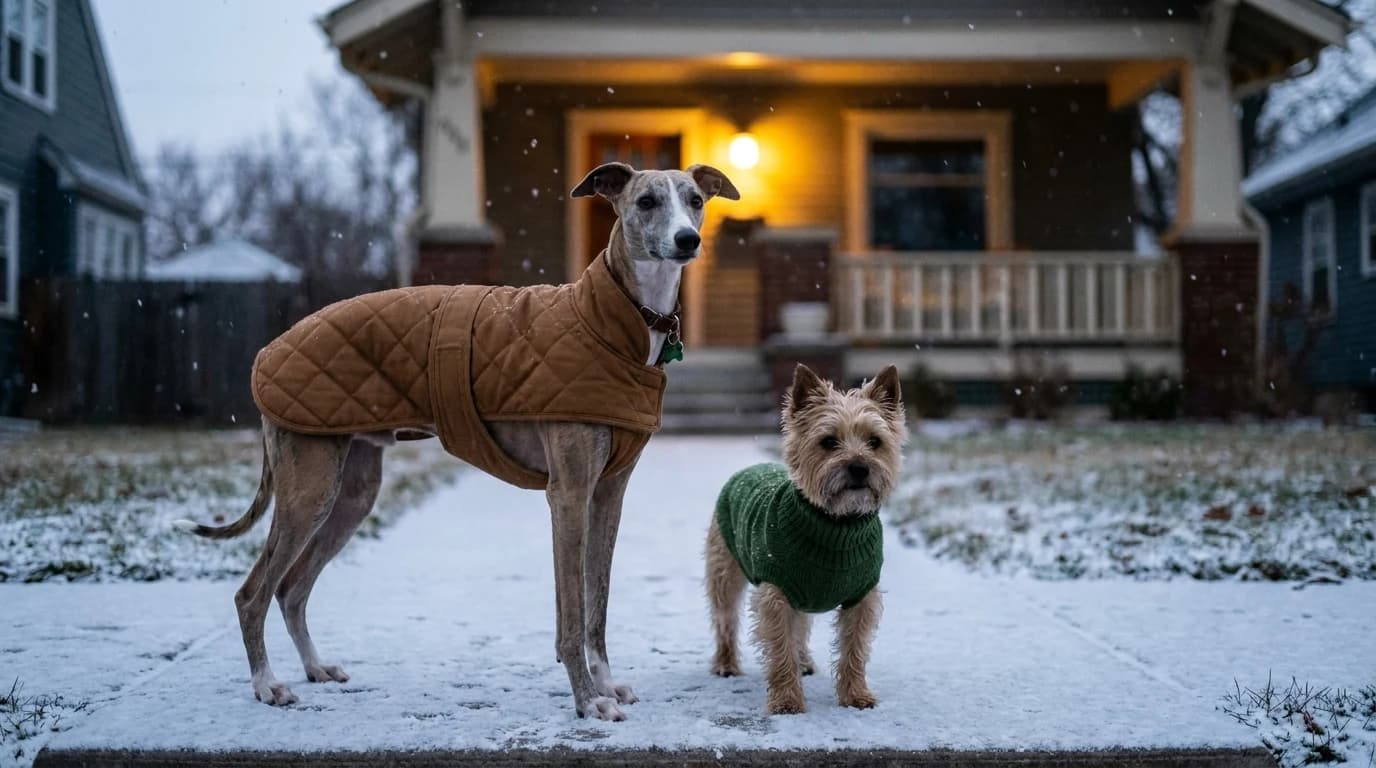
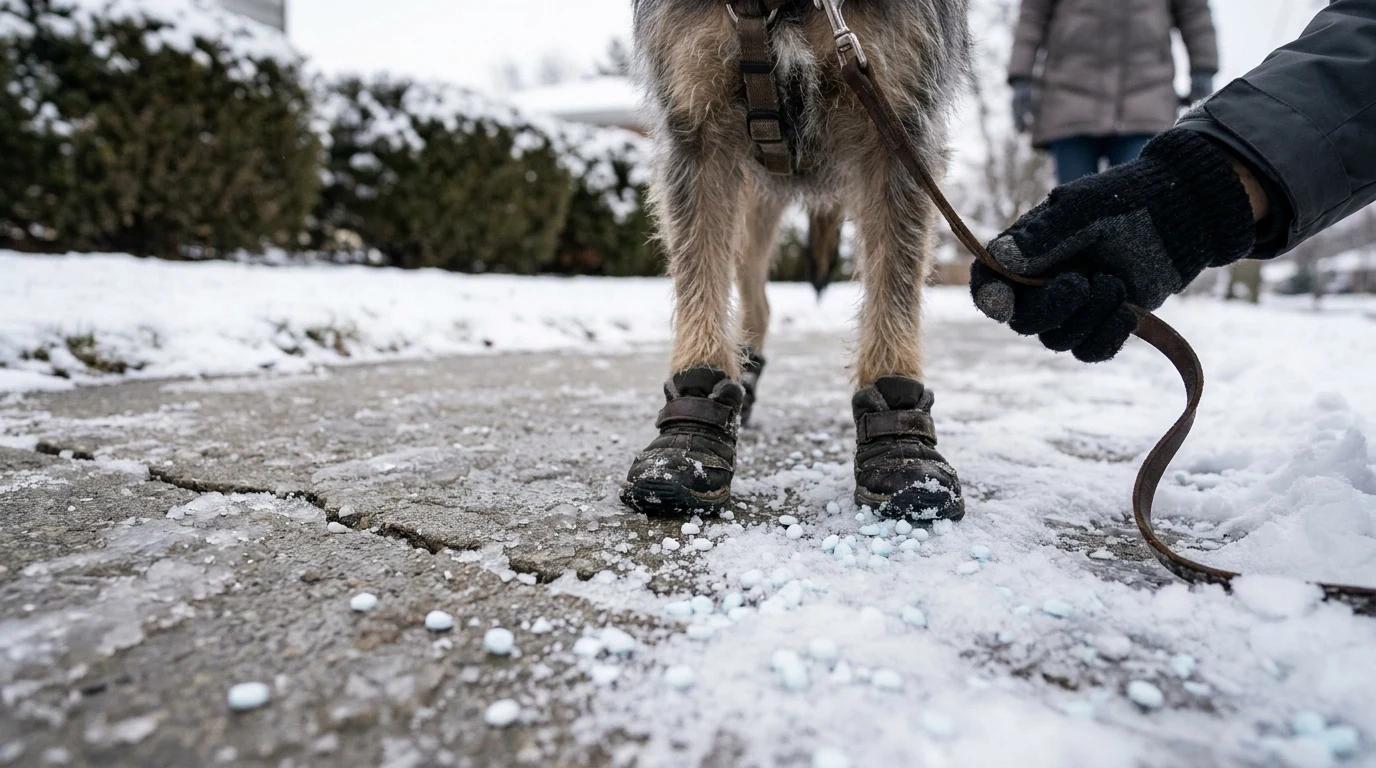
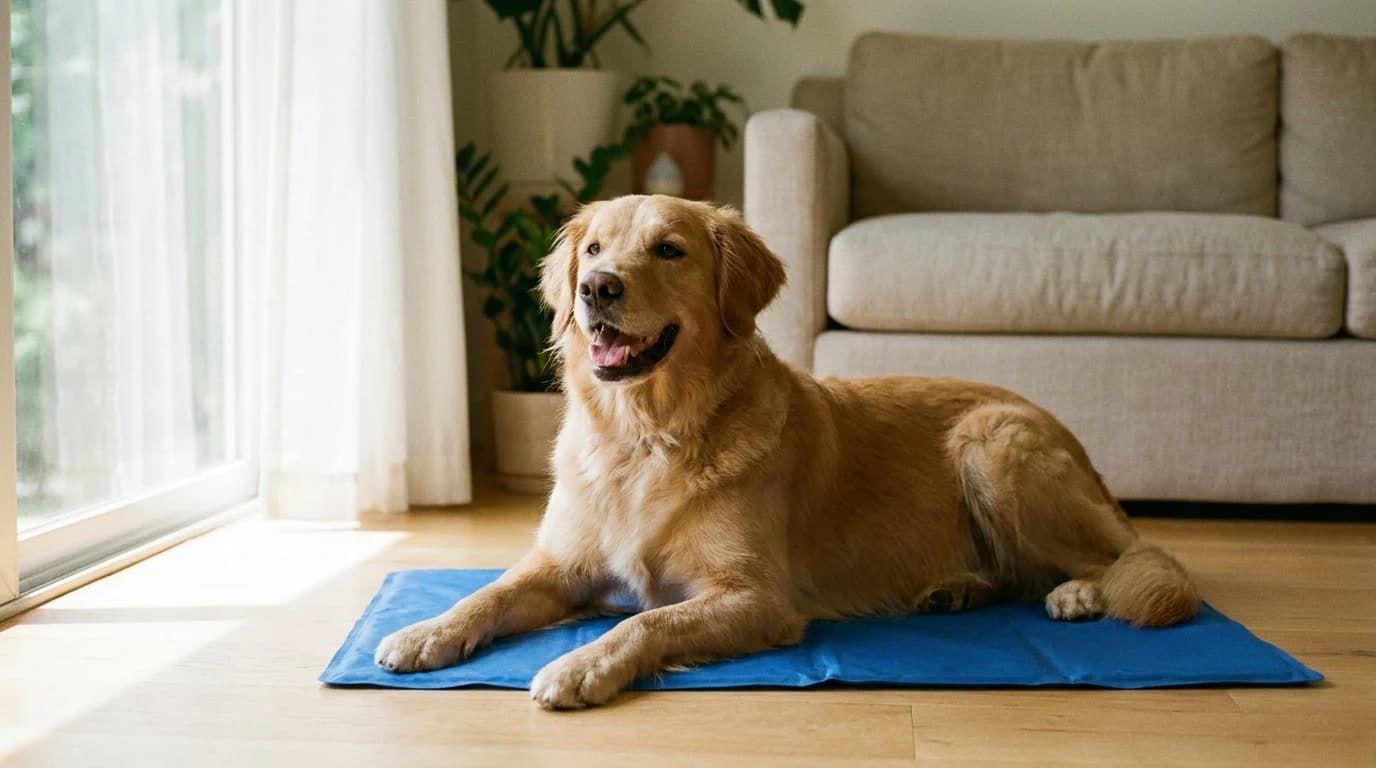
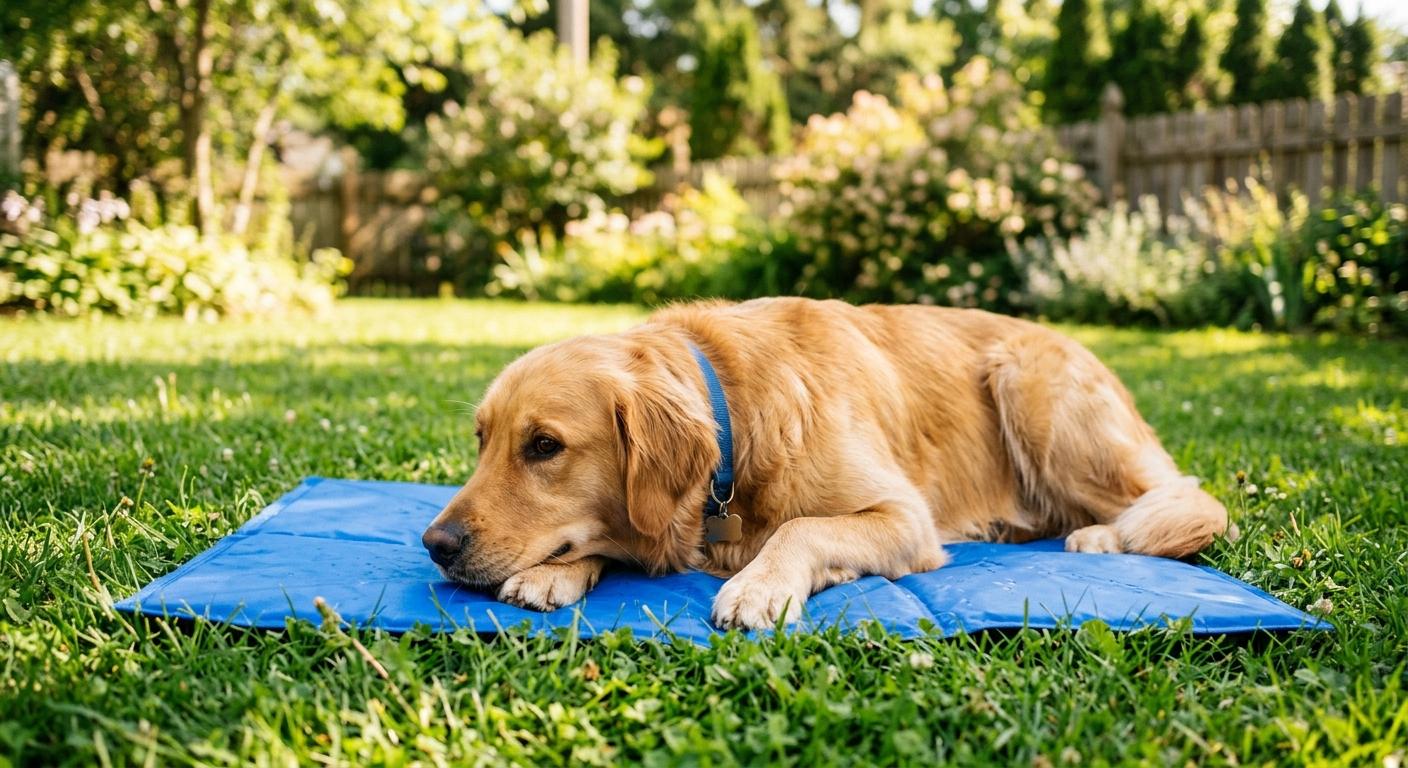
Match the gear to the welfare risk, not to the season's aesthetic. The most useful framework is to start from what AVMA, AKC, and Cornell Riney all converge on: dogs lose body heat below roughly 45 °F, and short-hair, small, senior, sick, and brachycephalic dogs lose it fastest. For those dogs, a coat with a published insulation construction (shell weight, lining material, water resistance) is genuinely protective, not decorative. Carhartt's current Firm Duck Dog Chore Coat is the workhorse pick: firm duck canvas over an insulated lining, weather-resistant per Carhartt, 4.8 stars across 877 reviews. For sustained sub-freezing climates (Minneapolis, Calgary, Buffalo, much of New England), the Hurtta Extreme Warmer III ECO's heat-reflective foil lining is the consistent forum recommendation. Kurgo's Loft is the budget reversible alternative when the coat will see harness-over-coat use. Paw protection splits along a clean line. Disposable rubber booties are the cheap way to test whether a dog tolerates boots, but the best-known 12-pack rates 3.6 stars and we no longer list it; a paw wax covers salt and hot pavement on short walks. If you want durable hiking boots that survive technical terrain, Ruffwear Grip Trex with a Vibram outsole is the standard, listed as a stated 4.1-star exception. Skip the rigid mid-tier no-name boots — owners report sizing inconsistency and velcro failure repeatedly. Raincoats matter less than buyers expect for the rain itself; they matter more for keeping a wet, muddy dog out of the house and for reducing post-walk hotspots in long-haired breeds. Ruffwear Sun Shower is the lightweight all-weather shell, and Hurtta Downpour is the full body suit when leg coverage is needed. Cooling vests address a genuinely different welfare problem — heat stroke risk in brachycephalic and short-nosed breeds above ~85 °F per Cornell Riney's hyperthermia guidance. Ruffwear's Swamp Cooler uses evaporative cooling (you soak it, the dog wears it wet) and is the consistent forum recommendation for French Bulldogs, Pugs, Boxers, Bulldogs, and Cavaliers in summer. Two cautions: don't buy too small (manufacturer charts run snug — measure chest girth and round up), and don't expect a single coat to cover every climate — a single waterproof shell over a base insulated coat is more flexible than one all-in-one suit that's overkill in October and underkill in February.