The Complete Dog Gear Guide: Everything Your Dog Actually Needs
Quick Answer
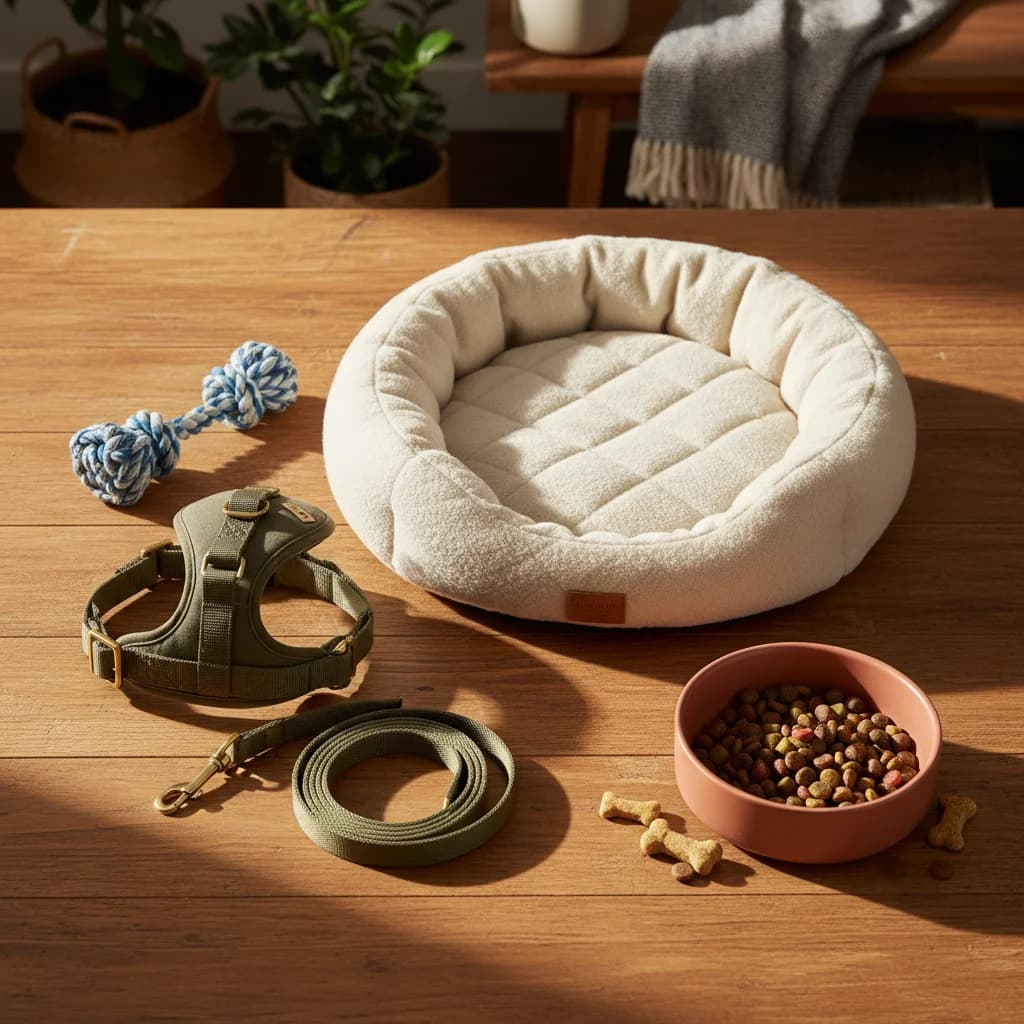
Start with quality food, a good bed, a leash and harness, and a crate. Add everything else as you learn what your specific dog needs.
On this page14 sections
Our Verdict
Start with quality food, a good bed, a leash and harness, and a crate. Add everything else as you learn what your specific dog needs. This guide links to our detailed reviews in every category.

How PawBench is paid: we earn an Amazon Associates commission on qualifying purchases. We don’t accept sponsored placements, paid reviews, or free products in exchange for coverage. Picks are ranked on documented owner outcomes and primary-source research, never on commission rate. Read the full methodology.
Bringing home a new dog is exciting — and overwhelming. Pet stores have entire aisles of products engineered to separate you from your money, and online shopping makes impulse buying even easier. After researching hundreds of products across every category, we've learned one thing: most dogs need far less than the industry wants you to buy, but the things they do need matter a lot.
This guide covers every gear category, explains what's actually essential versus what's marketing, and links to our detailed reviews so you can make informed decisions without wading through pages of affiliate-driven fluff.
How to Think About Buying Gear for a New Dog
Before you buy anything, consider three things:
- 1. Your dog's size, age, and breed: A Great Dane puppy has completely different needs than a senior Chihuahua. Breed-specific considerations affect food formulation, bed size, toy durability, and harness fit. Our breed-specific guides cover the most popular breeds in detail.
- 2. Buy quality where it matters, save where it doesn't: Spend more on food, beds, and harnesses — these directly affect your dog's health and safety. Save on toys (they get destroyed), bowls (stainless steel is cheap and lasts forever), and accessories. Our budget gear guide breaks down exactly where to splurge and where to save.
- 3. Start with essentials, add later: You don't need everything on day one. Get the basics — food, a bed, a leash, and a crate — and figure out what else your specific dog needs as you learn their personality. Dogs who never chew don't need indestructible toys. Dogs who love water need different gear than couch potatoes.
If you're bringing home a puppy specifically, our puppy essentials checklist covers the first-year basics in detail.
Feeding: The Foundation of Everything
Nutrition is the single most important investment you'll make in your dog's health. Good food prevents more problems than any supplement or vet visit can fix.
- What you need: A high-quality dog food appropriate for your dog's life stage (puppy, adult, or senior) and size. A stainless steel or ceramic bowl. That's it.
- What to look for: Named animal protein as the first ingredient, AAFCO-validated through feeding trials (not just formulation), and a brand with veterinary nutritionists on staff. Purina Pro Plan, Hill's Science Diet, and Royal Canin consistently rank highest in our research and veterinary recommendations.
- Common mistakes: Buying grain-free food without a medical reason (see the grain-free vs grain-inclusive breakdown), choosing food based on marketing instead of ingredients (learn to read labels here), and overfeeding — our feeding guide by weight and age helps you get portions right.
- Explore the category: Dog Food & Nutrition — including dry food, wet food, puppy food, and fresh & raw options.
Sleeping: Where Your Dog Spends Half Their Life
Dogs sleep 12–14 hours a day. A good bed isn't a luxury — it's joint protection, anxiety reduction, and recovery support rolled into one.
- What you need: A bed sized correctly for your dog with enough foam density to support their weight without bottoming out. Our dog bed sizing guide helps you get the dimensions right.
- What to look for: At least 4 inches of foam for medium dogs, 6+ inches for large breeds. A removable, machine-washable cover is non-negotiable — dog beds get disgusting fast (here's how to keep them clean). For senior dogs or large breeds, orthopedic beds with real memory foam are worth the investment.
- Our top picks: The Casper Dog Bed is the best all-around choice for most dogs. For large breeds with joint concerns, our top Amazon pick is the K9 Ballistics Orthopedic Bed — a chew-proof ripstop bed over solid orthopedic foam. Big Barker, the bed backed by a University of Pennsylvania clinical study, is available on Amazon. Read the full Casper vs Big Barker comparison for a deep dive.
- Explore the category: Dog Beds & Crates — including orthopedic, bolster, elevated, and waterproof beds.
Leashes, Collars & Harnesses: Control and Safety
Every dog needs a way to be walked safely and a collar for ID. The right setup depends on your dog's size, pulling habits, and your walking style.
- What you need: A 6-foot flat leash, a collar with ID tags, and — for most dogs — a harness. Harnesses distribute pressure across the chest instead of the neck, which is safer and more comfortable for almost every dog.
- What to look for: Front-clip harnesses redirect pulling momentum and are the best training tool for dogs who pull. Back-clip harnesses are more comfortable for dogs who already walk nicely. Fit matters enormously — our harness measurement guide and complete harness buying guide walk you through getting it right.
- If your dog pulls: Before buying an expensive no-pull harnessno-pull harnessA harness with a leash attachment point on the chest (front-clip), rather than the back. When the dog pulls, the front-clip mechanically rotates them sideways, killing forward momentum. AVSAB recommends front-clip harnesses over prong, choke, and shock collars for everyday loose-leash walking., read our guide to stopping leash pulling — the right technique matters more than the right equipment.
- Our top picks: See our full harness rankings and hiking leash picks for detailed recommendations.
- Explore the category: Leashes, Collars & Harnesses — including harnesses, collars, leashes, and ID tags.
Toys: Mental and Physical Enrichment
Toys aren't just entertainment — they're essential for mental stimulation, physical exercise, anxiety management, and preventing destructive behavior.
- What you need: At minimum, one chew toy, one interactive/puzzle toy, and one fetch or tug toy. Rotate toys weekly to keep things interesting.
- What to look for: Match the toy to your dog's play style. Heavy chewers need dense rubber like the Kong Classic — read our Kong vs Nylabone vs Benebone comparison to pick the right chew toy. For dogs who need mental challenges, puzzle toys are a game-changer. High-energy dogs benefit from toys designed to tire them out.
- Our top picks: The Kong Classic is the single most useful dog toy ever made — it's a chew toy, food puzzle, and anxiety management tool in one. See our complete toy rankings for 2026 and heavy chewer picks.
- Explore the category: Dog Toys — including chew toys, puzzle toys, fetch toys, and plush toys.
Grooming: Health You Can See
Regular grooming prevents matting, reduces shedding, catches skin issues early, and keeps your dog comfortable. The tools you need depend entirely on your dog's coat type.
- What you need: A brush appropriate for your coat type, nail clippers or a grinder, dog-specific shampoo, and a grooming schedule. Our grooming schedule by coat type tells you exactly what to do and how often.
- What to look for: Double-coated breeds (Huskies, Goldens, German Shepherds) need a deshedding tool — our Furminator vs Hertzko vs SleekEZ comparison covers the top three options. For bathing, always use dog-specific shampoo (never human shampoo) — see our shampoo guide by coat type and bathing frequency guide.
- Don't skip nails: Long nails change your dog's gait and cause joint problems. Our nail clipper and grinder guide helps you find a tool your dog will tolerate.
- Explore the category: Grooming Tools — including brushes & deshedding, shampoos, nail care, and clippers.
Training: Setting Your Dog Up for Success
Training isn't just obedience — it's communication. The right tools make training more effective and more fun for both of you.
- What you need: A crate (the most versatile training tool you'll own), high-value treats, and patience. If you're crate training a puppy, our step-by-step crate training guide covers everything, and the crate sizing guide ensures you get the right fit.
- For anxious dogs: Anxiety is more common than most owners realize. Before buying products, understand what actually works — our complete anxiety solutions guide separates evidence-based approaches from marketing. Calming treats and anxiety-specific crates can both be part of the solution.
- Explore the category: Training & Behavior
Travel: Taking Your Dog Along Safely
Whether it's a car ride to the vet or a cross-country road trip, safe travel gear protects your dog and everyone in the vehicle.
- What you need: At minimum, a crash-tested car harness or a secured crate for car travel. An unrestrained 60-lb dog becomes a 2,700-lb projectile in a 35mph crash. Our complete travel gear guide covers everything from car seats to airline carriers.
- What to look for: Only harnesses certified by the Center for Pet Safety (CPS) are proven to work in a crash. For airline travel, carrier dimensions vary by airline — always verify before buying. See our full carrier reviews and car seat cover guide for specific recommendations.
- Explore the category: Travel & Carriers — including carriers, car seats, crates, and ramps.
Health & Supplements: Preventive Care
Prevention is cheaper and easier than treatment. A few key products keep your dog healthy long-term.
- What you need: Flea and tick prevention (non-negotiable for any dog that goes outside), and potentially joint supplements for large breeds or seniors. Our flea and tick prevention comparison and Seresto vs NexGard vs Frontline breakdown help you choose the right approach.
- What's actually worth supplementing: Omega-3 fish oil is the most universally beneficial supplement. Joint supplements (glucosamine/chondroitin) should start before symptoms appear in large breeds. Beyond that, most dogs on a complete diet don't need additional supplements. Our supplement guide separates what works from what's marketing.
- Don't forget dental care: By age 3, most dogs have periodontal disease. Dental chews with VOHC approval are the easiest way to maintain oral health between brushings.
- Explore the category: Dog Health & Supplements — including flea & tick, supplements, dental care, and joint support.
Pet Tech: Nice-to-Have, Not Need-to-Have
Tech products are the most over-marketed category in pet gear. That said, a few are genuinely useful.
- Worth it: A GPS trackerGPS trackerCellular-network collar that reports a dog's position via LTE in near-real-time. Range is unlimited as long as there's cell coverage. Brands like Tractive, Fi, and Whistle use this approach. Requires a paid monthly subscription on top of hardware cost. if your dog is an escape artist or you hike off-leash — see our GPS collar comparison. A pet camera if you work long hours and want to monitor (and treat) your dog remotely — see our pet camera reviews. An automatic feeder if your schedule is irregular. Our pet tech roundup for busy owners covers all the options.
- Skip it: Smart collars and GPS fences for average suburban dogs (overkill), subscription-based tech with features you won't use, and anything marketed as "AI-powered" that's really just a camera with motion detection.
- Explore the category: Pet Tech & Monitors — including cameras, GPS trackers, auto feeders, and smart collars.
Most Popular Reviews
These are the most-read product reviews on PawBench — the gear dog owners search for most:
- Best Dog Food 2026 — Our #1 most-read guide, updated quarterly
- Best Dog Beds 2026 — Memory foam, orthopedic, and budget picks
- Best Dog Toys That Actually Last — Tested by real dogs, ranked by durability
- Best Dog Harnesses 2026 — No-pull picks for every size
- Best Grooming Tools 2026 — What professional groomers actually use
- PawBench Gear of the Year 2026 — Our annual best-of-the-best awards
The Bottom Line
You don't need to buy everything at once, and you don't need the most expensive option in every category. Start with quality food, a good bed, a leash and harness, and a crate. Add toys, grooming tools, and tech as you learn what your specific dog actually needs.
The most important thing isn't which brand you buy — it's that you're making informed choices based on your dog's actual needs rather than marketing pressure. Every guide linked above is based on real testing and honest assessment, not paid placements.
Your dog doesn't care about brand names. They care about being fed well, sleeping comfortably, exercised properly, and loved unconditionally. The gear just makes all of that easier.
Related Reading
- Best Puppy Essentials 2026 — The first-year checklist for new puppy owners
- Pet Gear on a Budget — Where to save and where to splurge
- Dog Exercise Guide by Breed — How much activity your specific breed needs
- PawBench Gear of the Year 2026 — Our annual awards for the best products we evaluated
Sources
- American Pet Products Association (APPA) — National Pet Owners Survey: gear categories and spending. americanpetproducts.org.
- American Veterinary Medical Association (AVMA) — Essential pet care guidelines. avma.org.
- American Kennel Club (AKC) — New dog owner checklists and breed-specific gear guides. akc.org.
- Association of Professional Dog Trainers (APDT) — Essential training tools and recommendations. apdt.com.
- ASPCA — "New Pet Owner Guide: What to Buy and What to Skip." aspca.org.
Research Sources
- General Dog Care — ASPCA
- Choosing the Right Dog Bed — American Kennel Club
- Dog Grooming Tips — ASPCA
- Choosing the Right Dog Harness — American Kennel Club
- WSAVA Global Nutrition Guidelines — World Small Animal Veterinary Association
- Selecting the Right Pet Food — AAFCO

Hilly Shore Labs
Editorial teamIndependent product research team behind PawBench. Reviews are grounded in primary veterinary sources, aggregated buyer sentiment, and the lived ownership of Maggie, an Australian Labradoodle.
200+ dog products researched · 1.1M+ Amazon review-aspect mentions analyzed · cites AVMA, FDA, AAFCO, Cornell, WSAVA, AKC, ASPCA.
All product reviews are independently researched. Recommendations are based on published veterinary guidelines, manufacturer specifications, and verified customer feedback. See our editorial standards.