Best Dog Doors (2026): Door, Glass & Microchip Picks Ranked
Our #1 Pick
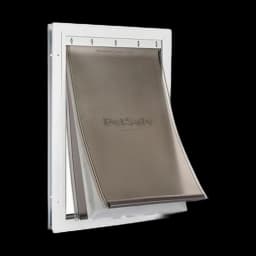
- Triple-flap design with magnetic seals — best draft control in the under-$150 tier
- Reinforced aluminum exterior frame holds up to multi-dog use over multiple years
- Manual flap closure insert plus slide-in locking panel for full security when away
Triple-flap insulation with magnetic seals at a mid-tier price — the safest buy for most homeowners, backed by 6,000+ reviews at 4.6 stars.
Our analysis of 1,218 buyer mentions on PetSafe Extreme Weather Aluminum Pet Door: buyers consistently praised quality, installation, functionality, with some flagging durability, closure.
Also Great
Renters: PetSafe 1-Piece Sliding Glass Pet Door ($179.95) — No-cut install into the patio door track in under 30 minutes — comes out clean when you move
On this page6 sections
Our Verdict
For homeowners, the PetSafe Extreme Weather Aluminum Pet Door is the safest buy in the category — triple-flap insulation at a mid-tier price with 6,000+ owners behind it. Renters should go straight to the PetSafe sliding-glass insert. Only pay for microchip or motorized entry if something actually needs to be kept out.
PetSafe Extreme Weather Aluminum Pet Door Owner rating4.5 Best overall — triple-flap insulation justifies the price over any single-flap door. | PetSafe 1-Piece Sliding Glass Pet Door Owner rating4.4 The default for renters — no-cut install into the patio door track in under 30 minutes. | PetSafe Freedom Aluminum Pet Door (Large) Owner rating4.6 Best budget aluminum flap — the proven workhorse if you don't need premium insulation. | SureFlap Microchip Pet Door Owner rating3.9 The selective-entry pick for small dogs — reads the implanted chip, blocks raccoons and strays. | Endura Flap Double Flap Pet Door Owner rating4.5 The premium insulation pick — dual weatherproof flaps for extreme cold and high heating bills. | High Tech Pet Power Pet PX-1 Electronic Door Owner rating4.2 The motorized option — fully air-sealed when closed, opens only for your dog's collar tag. | |
|---|---|---|---|---|---|---|
| Price | $85.46Buy on Amazon | $179.95Buy on Amazon | $77.12Buy on Amazon | $230.17Buy on Amazon | $469.99Buy on Amazon | $419.00Buy on Amazon |
| Buyer sentiment | Quality Installation Functionality Insulation Durability Closure Buyers praise quality, installation, functionality and insulation. Some flag durability and closure. Based on 1,218 user mentions | Fit Sturdiness Security Value for money Closure Buyers praise fit, sturdiness, security and value for money. Some flag closure. Based on 3,717 user mentions | Quality Installation Functionality Value for money Durability Sealing Screws Buyers praise quality, installation, functionality and value for money. Some flag durability and sealing. Based on 1,252 user mentions | Functionality Raccoon resistance Quality Installation Ease of use Noise Buyers praise functionality, raccoon resistance, quality and installation. Some flag ease of use and noise. Based on 861 user mentions | Quality Sealing Durability Value for money Buyers praise quality, sealing, durability and value for money. Based on 44 user mentions | Functionality Quality Installation Security Value for money Durability Battery life Buyers praise functionality, quality, installation and security. Some flag value for money and durability. Based on 1,205 user mentions |
| Pros |
|
|
|
|
|
|
| Cons |
|
|
|
|
|
|
| Install | Door-mount (cut required) | Patio track insert (no cut) | Door-mount (cut required) | Door-mount | Door-mount (wall kit available) | Door-mount, needs power |
| Flap | Triple flap, magnetic seal | — | Single flap, magnetic strip | — | Dual-layer weatherproof | — |
| Security | Slide-in locking panel | — | — | — | — | — |
| Height | — | Adjustable to ~80.7 in. | — | — | — | — |
| Renter-friendly | — | Yes | — | — | — | — |
| Max dog | — | — | 100 lb (Large) | Small breeds only | — | 30 lb (PX-1) |
| Entry | — | — | — | Microchip-selective | — | Ultrasonic collar tag |
| Climate | — | — | — | — | Four-season / extreme | — |
* Prices are approximate and may vary. Please check the latest price on Amazon.
Dog-door installation decision matrix
Pick the installation type first — it eliminates most of the market before brand even matters.
| Product | Door-mounted | Sliding-glass insert | Selective entry (chip/motorized) |
|---|---|---|---|
| Install effort | Jigsaw + template, 1–2 hours, permanent | Slides into patio track, <30 min, no tools | Same cut as door-mount, plus batteries/power |
| Renter-friendly | No — you cut the door | Yes — removes clean when you move | No |
| Insulation | Best available (triple/double flap options) | Good, but panel narrows the patio opening | Motorized panel = full air-seal; chip flap = ordinary |
| Keeps wildlife out | No — anything dog-sized fits | No | Yes — the entire point |
| Our pick | PetSafe Extreme Weather ($85.46, 4.6★) | PetSafe 1-Piece Sliding Glass ($179.95, 4.4★) | SureFlap chip ($230.17) / Power Pet PX-1 ($419) |
How PawBench is paid: we earn an Amazon Associates commission on qualifying purchases. We don’t accept sponsored placements, paid reviews, or free products in exchange for coverage. Picks are ranked on documented owner outcomes and primary-source research, never on commission rate. Read the full methodology.
A dog door is one of the few purchases on this site that changes your day as much as your dog's — no more 3 p.m. dash home, no more scratched door frames, no more guilt about the dog crossing its legs until 7. But it's also a hole you cut in your house, so the order of decisions matters:
- Installation type
- Insulation
- Security
- Brand, last
Here's how we'd walk a friend through it.
Decision one: what are you willing to cut?
Every dog door is really one of three installation stories, and this single question eliminates most of the market for you.
Door-mounted (you cut a hole in an exterior door). The classic. A jigsaw, a template, and 1–2 hours gets you a permanent, weather-sealed entry. This is the cheapest path to a genuinely good door and the right default for homeowners. Our top overall pick, the PetSafe Extreme Weather Aluminum Pet Door, lives here.
Sliding-glass insert (you cut nothing). A full-height aluminum panel slides into your patio door track and the pet flap is built into it. Installation is under 30 minutes with no tools beyond a screwdriver, and it comes out clean when you move. If you rent, this is realistically your only option — and at 25,000+ reviews, the PetSafe 1-Piece Sliding Glass Pet Door is by far the most-validated install in the category.
Wall-mounted (you cut through the wall). For homes where no exterior door faces the yard. It's a bigger job — framing, weatherproofing, often a contractor — but the through-wall tunnel is also the best-insulated option. Most of the door-mounted picks below sell wall-install kits; decide on the door first, then add the kit.
Decision two: how much insulation do you actually need?
Flap quality, not frame material, is what separates a draft from a seal — the AKC's dog-door guidance is blunt about it.
- Mild climates — a single vinyl flap with a magnetic strip, the PetSafe Freedom at $105, is honestly fine and the best budget buy in the category
- Four-season climates — the Extreme Weather model's triple-flap system, two flaps with an insulating air pocket between them, is the whole reason it costs $30 more. Owners in cold states consistently call it the difference-maker
- Expensive fuel, prevailing wind, or genuinely cold — the Endura Flap Double Flap at $470: a dual-layer weatherproof flap in a heavy aluminum frame, among the best-insulating residential pet doors made
It's overkill in San Diego; it pays for itself in Minnesota.
Decision three: does anything need to be kept OUT?
A passive flap lets anything dog-sized through — including raccoons, opossums, and the neighbor's cat. If that's a live problem at your address, you have two selective-entry options, each with an honest catch.
The SureFlap Microchip Pet Door ($210) reads your pet's implanted microchip, so there's no collar tag to lose.
- Stores up to 32 pet identities
- Curfew mode for time-of-day control
- The catch: the flap aperture is sized for cats and small dogs only, and its 3.9-star rating reflects real battery-life and scan-position complaints
Buy it for the selectivity, not the polish.
The High Tech Pet Power Pet PX-1 ($419) takes the other approach: a motorized panel that slides open only for your dog's ultrasonic collar tag, and seals fully airtight when closed — better insulation than any flap.
- The catch: your dog must wear the tag
- The panel needs power
- The PX-1 size tops out around 30 lb; the larger PX-2 handles bigger dogs
For most households without a wildlife problem, skip both and put the money into flap quality instead.
Sizing: measure the dog, not the doorway
Measure the dog, not the doorway. Height at the withers, plus about an inch of clearance.
The flap's top edge should sit at least that high, and the step-over should be low enough for the dog to clear comfortably — especially seniors, who will balk at a high step long before they balk at a flap. Every manufacturer publishes a size chart; when your dog is between sizes, size up.
A bad first experience is the main reason dogs reject doors entirely. Per the AKC's flap-training guidance, prop the flap open with tape for the first few days and let the dog earn confidence before it has to push through.
Security, since everyone asks
Every pick here ships with a slide-in locking panel that fully blocks the opening when you're away or on vacation — treat it like locking a window. A medium or large flap is an entry point a determined human could use, which is why the CPSC's childproofing guidance logic applies: a barrier is only as good as the habit of using it. If security is a top-three concern for your address, the motorized Power Pet panel is the only pick that locks itself.
The honest bottom line
- Homeowner, mild climate — PetSafe Freedom, $105, done
- Homeowner, real winter — PetSafe Extreme Weather, and Endura Flap if the heating bill justifies it
- Renter or patio-door household — the sliding-glass insert, no contest
- Wildlife problem — microchip or motorized, eyes open about the trade-offs Whatever you buy, train the flap gently the first week — the door only pays for itself once the dog uses it without you.
Frequently Asked Questions
- What's the best dog door for renters?
- A sliding-glass insert like the PetSafe 1-Piece panel. It slides into the patio door track in under 30 minutes with no cutting, and it comes out clean when you move. Door-mounted and wall-mounted doors require cutting a permanent hole, which rules them out for most leases.
- Do dog doors let burglars in?
- A medium or large flap is a real opening, so treat it like a window: every pick here ships with a slide-in locking panel for when you're away, and using it has to become a habit. The only door that locks itself is a motorized model like the Power Pet, whose panel stays sealed unless your dog's collar tag triggers it.
- How do I size a dog door?
- Measure your dog's height at the withers (top of the shoulders) and add about an inch of clearance, then check the manufacturer's size chart. When a dog is between sizes, size up — and keep the step-over low for seniors, who refuse high steps long before they refuse flaps.
- Will my dog actually use a dog door?
- Almost all dogs learn within days if the first experience is gentle. The AKC's training guidance is to prop the flap fully open at first, lure the dog through a few times with treats, and only let the flap touch the dog's back once it's moving through confidently. A bad first push is the main reason dogs reject doors.
- Are microchip dog doors worth it?
- Only if something needs to be kept out — raccoons, strays, or neighborhood cats coming through a passive flap. The SureFlap reads your pet's implanted chip and blocks everything else, but its flap only fits cats and small dogs, and battery life is a known weak point. Without a wildlife problem, put the money into flap insulation instead.
Research Sources
- Finding the Right Dog Door for Your Home — American Kennel Club
- How To Train A Dog To Go Through The Dog Door — American Kennel Club
- Childproofing Your Home — Safety Devices Guidance — U.S. Consumer Product Safety Commission

PawBench Editorial
Published by Hilly Shore LabsPawBench’s editorial team researches dog products from primary veterinary sources, manufacturer specifications and aggregated buyer sentiment, alongside the lived ownership of Maggie, an Australian Labradoodle. We do not run hands-on product tests.
254 dog products scored · 1,160,091 buyer review-aspect mentions aggregated · cites AVMA, FDA, AAFCO, Cornell, WSAVA, AKC, ASPCA.
Recommendations are based on published veterinary guidelines, manufacturer specifications, and verified customer feedback. See our editorial standards.