Working From Home With a Dog: Routines That Prevent Anxiety
Quick Answer
The routine that works: exercise the dog before your first meeting, run settle-on-a-mat reps across the room during deep work, hand over a frozen foraging toy five minutes before call-heavy stretches, and schedule real alone time daily — because per VCA veterinary guidance, building alone time into a predictable routine is what protects work-from-home dogs from separation anxiety.
On this page7 sections
Our Verdict
A work-from-home dog routine has four moving parts: breed-appropriate exercise before your first meeting, settle-on-a-mat independence reps during deep-work blocks, a foraging or puzzle project handed over five minutes before call-heavy stretches, and — the part that prevents separation anxiety — alone time deliberately scheduled into days when you never technically have to leave. Per VCA veterinary guidance, a predictable routine that includes being alone is what protects dogs from separation distress; attention delivered on demand reinforces the velcro-dog behaviors that feed it.
A meeting-proof WFH dog schedule
Anchor each block to something already on your calendar. The times are examples — the predictable pattern is what lowers the dog's stress.
| Product | Your workday block | What the dog gets | Why it works |
|---|---|---|---|
| Pre-work exercise | Before the first meeting | A walk or fetch session sized to breed and age, not to your inbox | A dog whose physical needs are met can actually rest; morning is the block you control |
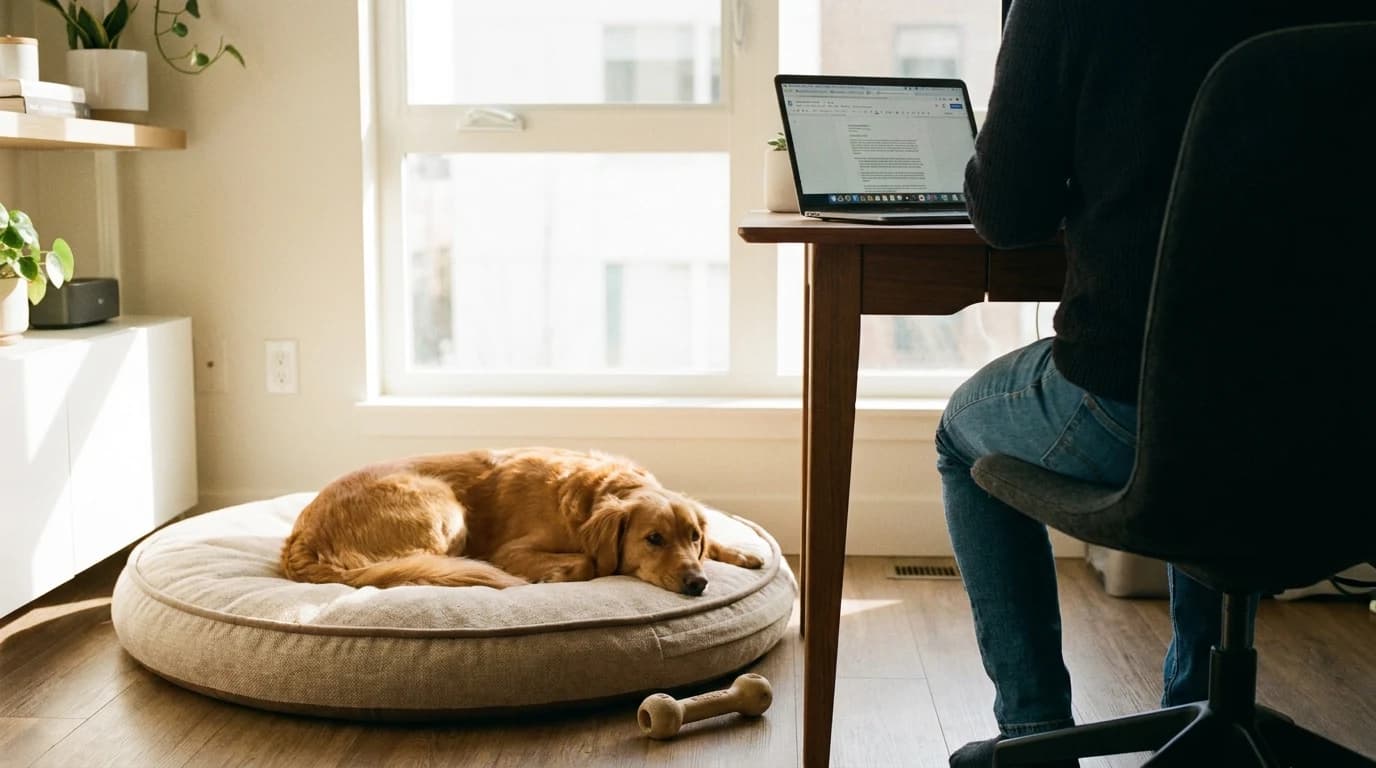
| Deep-work settle | Your first focus block | Settle on a mat across the room; calm gets quiet rewards, following gets ignored | Independence training happening while you work — the rep that prevents velcro-dog |
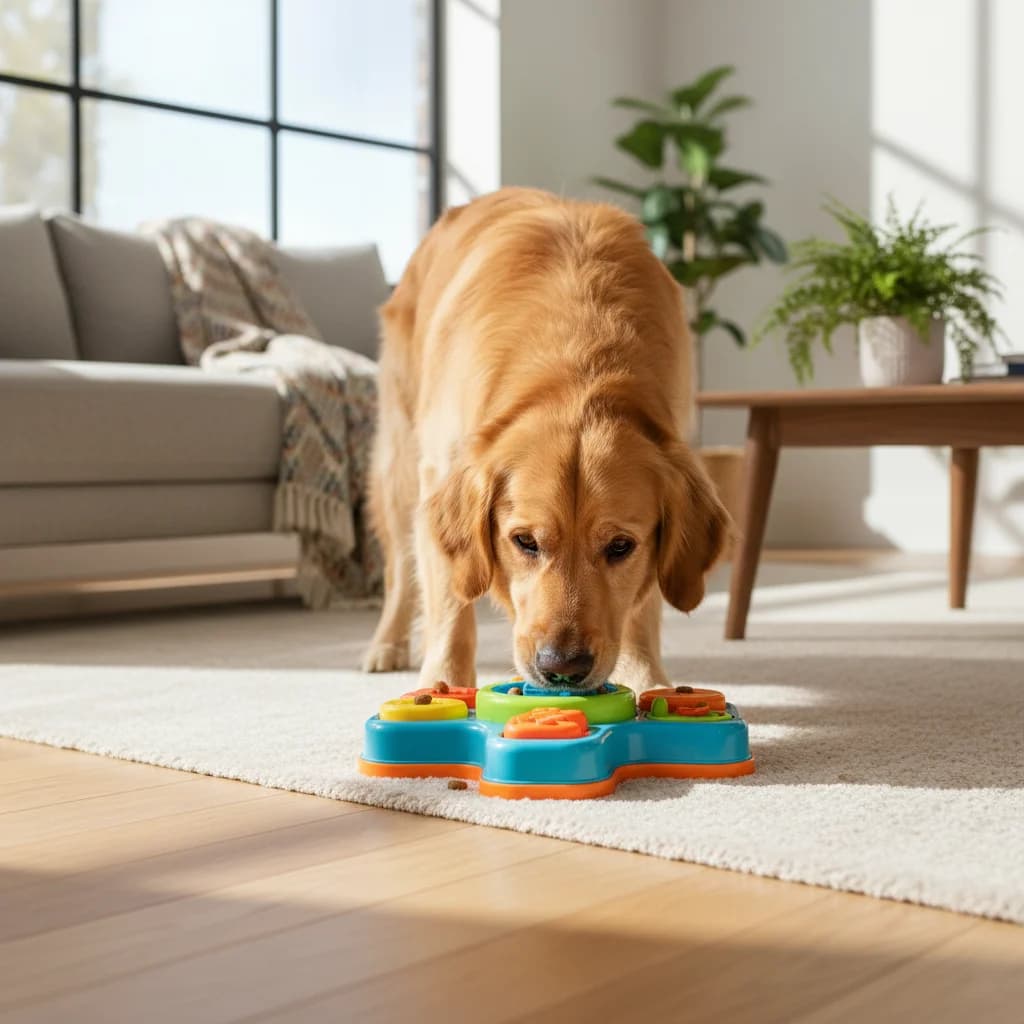
| Meeting insurance | Call-heavy stretch | Frozen stuffed toy or puzzle feeder, handed over 5 minutes before the call | Foraging and licking work is self-rewarding and quietly occupies most of a call |
| Midday break | Lunch | Potty, a 10-minute sniff walk, brief play | Splits the day predictably; sniffing is mental work, not just mileage |
| Scheduled alone time | One daily errand | Stays home; low-key exit, casual return, camera on | Alone time inside the routine is what lets dogs predict — and tolerate — being left |
| Evening off-duty | After close | Play, training games, couch time — attention on your schedule | Generous attention at predictable times, instead of on demand all day |
How PawBench is paid: we earn an Amazon Associates commission on qualifying purchases. We don’t accept sponsored placements, paid reviews, or free products in exchange for coverage. Picks are ranked on documented owner outcomes and primary-source research, never on commission rate. Read the full methodology.
Working from home with a dog looks like the dream setup — and it's quietly the riskiest one. A dog that gets your company all day, every day, is a dog learning that being alone is abnormal. Veterinary behavior guidance is consistent on this: the fix isn't more attention, it's a predictable routine that includes alone time — built now, while you're still home. Here's the routine that keeps your meetings quiet today and prevents the separation-anxiety bill from coming due later.
Key Takeaways
- All-day togetherness is the risk factor, not the cure. Per VCA veterinary guidance, building alone time into the daily routine is what lets dogs predict — and tolerate — being left, and may protect them from separation distress.
- Predictability beats quantity. A predictable daily routine reduces a dog's stress; it doesn't need to be rigid, it needs to be a pattern the dog can read.
- Your deep-work blocks are free training reps. A dog settling on a mat across the room while you work is independence training happening in the background.
- Meeting insurance is needs-first, then enrichment: exercise before your first call, a long-lasting foraging project during the call-heavy stretch.
The Velcro-Dog Trap
The profile of a dog with separation anxiety, as VCA describes it, is a dog that is overly attached:
- Follows you room to room.
- Rarely spends time alone.
- Starts showing distress the moment departure preparations begin.
Full-time WFH manufactures exactly that attachment by default: every hour rewarded with proximity, zero practice being alone. VCA's guidance on preventing separation distress — written for the wave of owners returning to offices — notes that when an active lifestyle resumes, pets are suddenly faced with being alone and can experience real distress from the loss of companionship.
Prevention is dramatically easier than treatment. If your dog already panics when you leave — destruction at exits, howling, soiling only on departures — that's beyond routine-building; start with our dog anxiety guide and talk to your veterinarian, because true separation anxiety is treatable but needs a real program.
Anchor the Dog's Day to Your Calendar
You already live by your calendar; the trick is letting the dog live by it too. The schedule above maps a standard meeting-day to the dog's needs.
The times are examples, the pattern is the point. It doesn't need to be rigid — it needs to be a pattern the dog can read.
Size the morning exercise honestly to your dog using our exercise chart by breed and age: a Border Collie's "walked" and a Bulldog's "walked" are different numbers.
The physical side of this arrangement — where the dog's bed sits relative to your desk, cable and cord safety, keeping the dog off camera — is its own problem, and this guide to working from home with pets covers that workspace half well. This post is about the dog's half: the routine.
Turn Deep-Work Blocks Into Independence Reps
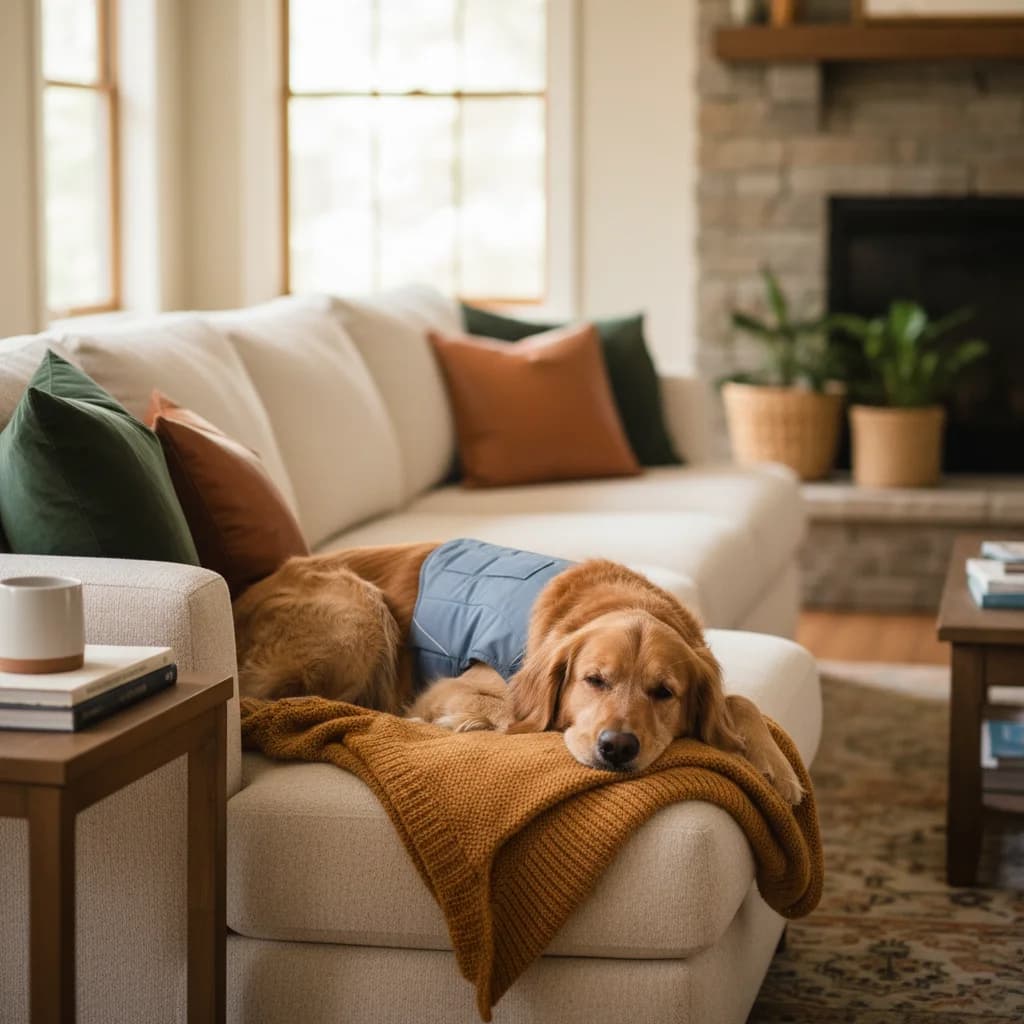
VCA's independence-training model is almost tailor-made for focus blocks: teach the dog to settle on a mat or bed away from you — start across the room, later behind a baby gate — and quietly reward the calm, not the approach.
The rule that makes it work: reinforce settling, never reinforce following or nudging for attention.
Ignore the attention-seeking, then reward generously once the dog is relaxed on its spot. Over weeks, the dog learns that calm independence is what produces good things — while you got your work done.
During call-heavy stretches, swap the mat for a project: veterinary behavior guidance puts foraging, puzzle-solving, and licking-based work high on the mental-stimulation list, and a frozen stuffed toy or puzzle feeder handed over five minutes before the meeting buys a long, quiet, self-rewarding stretch — often the length of the call. Rotate two or three so they stay novel.
Practice Leaving While You Still Work From Home
This is the step WFH owners skip because they can. Three VCA-backed habits, a few minutes each:
- Decouple your departure cues. Dogs read shoes, keys, and bags as alarms. Put your shoes on and then… make coffee. Pick up keys, sit back down. The cues stop predicting abandonment.
- Keep exits and returns boring. A quiet goodbye, a casual hello. Drama on either end teaches the dog that departures are events.
- Schedule real absences. One errand a day where the dog stays home, starting short. A cheap camera tells you the truth about how it went — relaxed napping and you extend; pacing and vocalizing and you shorten the next rep.
What Most People Get Wrong
"A clingy dog needs more attention." It's backwards. The dog doesn't need less love — it needs the love pointed somewhere else.
- What feeds the problem: attention delivered on demand. With separation-prone dogs, VCA's guidance is explicit that it reinforces the following and the nudging — the exact behaviors that feed the problem.
- What actually helps: attention on a schedule the dog can predict, and rewards aimed at calm independence instead of contact-seeking.
- The second miss: treating exercise as the whole answer. A tired dog with zero alone-time practice is still a dog that panics when the car leaves — fatigue isn't independence.
The Bottom Line
A WFH dog routine has four moving parts:
- Real exercise before the first meeting.
- Settle-on-a-mat reps during deep work.
- A foraging project as meeting insurance.
- The one that matters most — alone time deliberately scheduled into a week when you technically never have to leave.
Build it now and the eventual return to offices, travel, or a hybrid week is a non-event. If the anxiety is already here, start with what actually works for dog anxiety and loop in your vet early.
Frequently Asked Questions
- How do I keep my dog quiet during video meetings?
- Meet the physical needs first — real exercise before your first call — then hand over a long-lasting foraging project like a frozen stuffed toy or puzzle feeder about five minutes before the meeting starts. A dog mid-project doesn't bark at the doorbell in your speakers. Scolding mid-call teaches nothing; the fix happens before the meeting.
- Can a dog develop separation anxiety while I work from home?
- Yes — full-time WFH is the classic setup for it. A dog that is never alone becomes overly attached, and per VCA guidance the distress appears when the routine changes and the dog is suddenly left. Scheduling short daily alone time now, while you're home, is the prevention.
- Should I ignore my dog while I'm working?
- Ignore the attention-seeking, not the dog. VCA's guidance for separation-prone dogs is to never reinforce following and nudging, and instead reward calm, settled behavior — then give generous attention at predictable scheduled times like lunch and after work.
Research Sources
- Separation Anxiety in Dogs — VCA Animal Hospitals
- Preventing Separation Distress During and After a Pandemic — VCA Animal Hospitals
Your next step
The single biggest WFH-with-dog upgrade is the door.

PawBench Editorial
Published by Hilly Shore LabsPawBench’s editorial team researches dog products from primary veterinary sources, manufacturer specifications and aggregated buyer sentiment, alongside the lived ownership of Maggie, an Australian Labradoodle. We do not run hands-on product tests.
254 dog products scored · 1,160,974 buyer review-aspect mentions aggregated · cites AVMA, FDA, AAFCO, Cornell, WSAVA, AKC, ASPCA.
Recommendations are based on published veterinary guidelines, manufacturer specifications, and verified customer feedback. See our editorial standards.