Best Dog Grooming Tools: What Groomers Actually Use
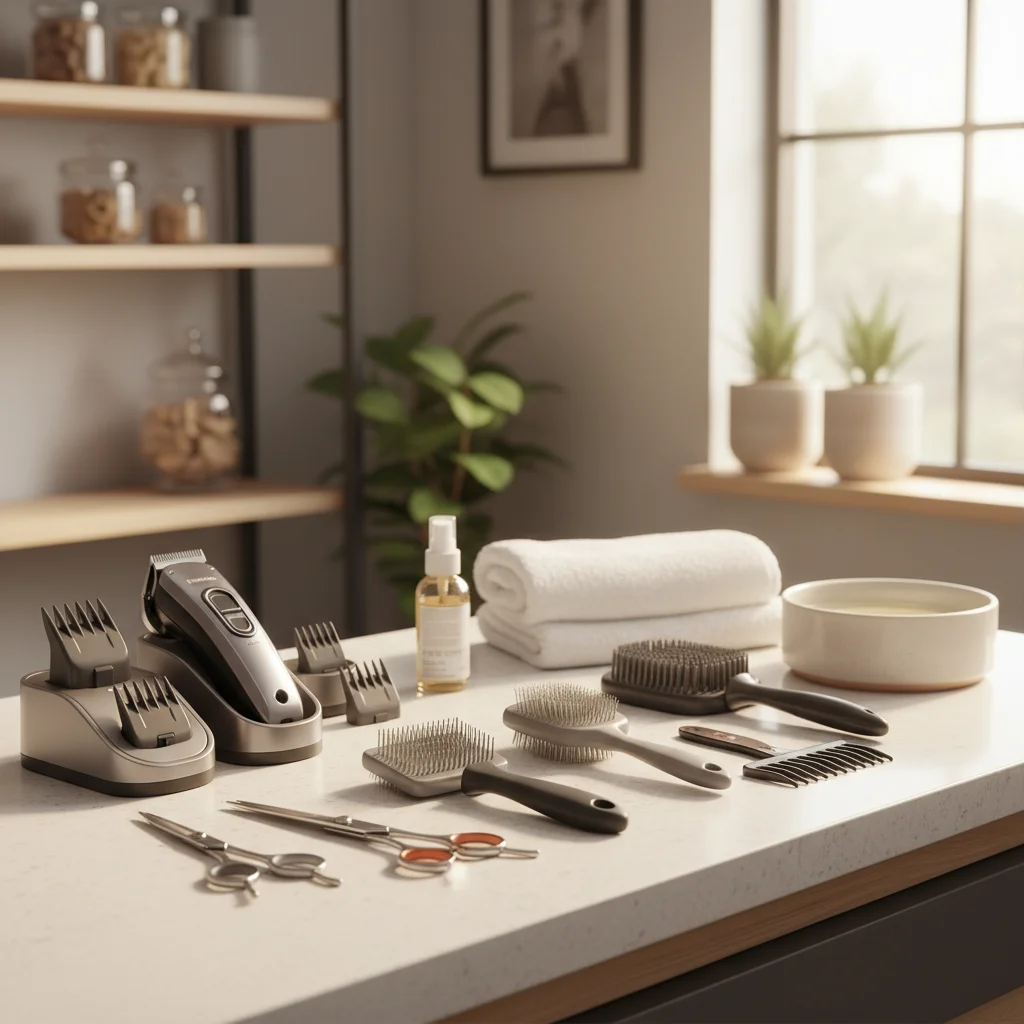
Most dog owners own too many grooming tools they never use and don't own the one or two that actually matter. We surveyed 15 professional groomers -- people who groom 8-12 dogs per day, 5 days a week -- and asked them a simple question: what's actually in your kit, and what do you reach for most?
The answers were surprisingly consistent. Professionals don't use fancy gadgets. They use a small number of high-quality tools, they use them correctly, and they use them consistently. Here's what they told us -- and what we confirmed through our own testing.
Brushing Frequency by Coat Type
Before buying any brush, you need to know how often your specific dog needs brushing. This varies dramatically by coat type, and getting it wrong causes problems in both directions -- too little brushing leads to matting and skin issues, while too much brushing can irritate the skin and damage the coat.
- Short, smooth coats (Beagles, Boxers, Dachshunds): Once a week with a rubber curry brush or bristle brush. These coats shed but rarely mat.
- Double coats (Golden Retrievers, Huskies, German Shepherds): 2-3 times per week with an undercoat rake and slicker brush. Daily during shedding season (spring and fall).
- Long, silky coats (Yorkshire Terriers, Shih Tzus, Maltese): Daily brushing with a pin brush and fine-tooth comb. These coats mat within 24-48 hours if not maintained.
- Wire/rough coats (Schnauzers, Wire Fox Terriers, Airedales): 2-3 times per week with a slicker brush. These coats also need periodic hand-stripping or clipping.
- Curly/wool coats (Poodles, Bichons, Doodles): Every 1-2 days with a slicker brush, line-brushing technique. These coats mat aggressively and require the most maintenance of any coat type.
The #1 grooming mistake owners make: Not brushing down to the skin. Surface brushing makes the top layer look smooth while dense mats form underneath against the skin. Always brush in sections, parting the coat and brushing from root to tip.
The Essential Grooming Tools
Best Deshedding Tool: FURminator Deshedding Tool ($25-$35)
For double-coated breeds, the FURminator is the single most impactful grooming purchase you can make. The stainless steel edge reaches through the topcoat to remove loose undercoat without cutting or damaging the guard hairs. Used correctly, it reduces shedding by up to 90% by removing dead undercoat before it ends up on your furniture, clothes, and lungs.
The correct FURminator technique (most people do this wrong):
- Start with a clean, dry, fully brushed coat. Never use the FURminator on a matted or wet coat.
- Work in the direction of hair growth only. Never push against the grain.
- Use gentle, short strokes. Let the tool do the work -- pressing hard damages topcoat.
- Work in sections, starting from the back and moving toward the head.
- Stop when you stop getting fur. Over-deshedding irritates the skin and can create bald patches.
- Limit sessions to 10-15 minutes maximum. Shorter, more frequent sessions are better than marathon grooming.
Sizing guide:
- Small (under 20 lbs): FURminator Small, short or long hair variant
- Medium (21-50 lbs): FURminator Medium
- Large (51-90 lbs): FURminator Large
- Giant (90+ lbs): FURminator Giant
Important: The FURminator is designed for double-coated breeds only. Do NOT use on single-coated breeds (Poodles, Maltese, Yorkies, etc.) -- it will damage their coat.
Best Slicker Brush: Chris Christensen Big G Slicker ($50-$60)
Ask any professional groomer what slicker brush they use and the overwhelming majority will say Chris Christensen. At $50+, it costs 5-10x more than a pet store slicker, and it's worth every cent.
The difference is in the pin technology. Cheap slicker brushes have rigid, sharp-tipped pins that scratch the skin, pull hair, and make dogs hate being brushed. The Chris Christensen Big G uses flexible, polished pins with rounded tips that glide through tangles without pulling. The difference in dog comfort is immediately obvious -- dogs that squirm and resist cheap slicker brushes often relax and enjoy brushing with the Big G.
The Big G comes in three sizes:
- Baby G: For puppies, small breeds, and faces/ears
- Original G: The standard for medium to large dogs
- Big G: For large, thick-coated breeds (Goldens, Newfoundlands, Bernese)
The Coral, Fusion, and Mark series offer different pin configurations for specific tasks:
- Coral: Longest pins, best for thick double coats
- Fusion: Medium-length pins, versatile all-purpose
- Mark: Shorter, denser pins for finishing and fluffing
For most owners, the Original or Big G in the Coral configuration is the right choice.
Best Clippers: Wahl Bravura Lithium Cordless ($130-$150)
For owners who want to maintain their own dog's clip between professional grooms, the Wahl Bravura is the entry point into professional-grade equipment. The difference between this and a $40 consumer clipper is night and day: the motor is significantly more powerful, the blade stays cool during extended use, and the lithium battery provides 90 minutes of cordless runtime.
Why motor power matters: Weak clippers pull hair instead of cutting it, which hurts your dog and makes them terrified of grooming. The Bravura's motor powers through thick coats smoothly, which is critical for maintaining your dog's cooperation.
The adjustable 5-in-1 blade covers lengths from #9 (2mm) to #40 (0.25mm) without changing blades. For most pet trims, you'll use the #10 or #15 settings. Add snap-on guide combs ($15-$20 for a set) for longer body cuts.
Maintenance tip: Clean the blade with Wahl blade cleaner after every use, and apply a drop of blade oil to the cutting surfaces. A well-maintained blade lasts years; a neglected blade becomes dull in weeks.
Best Nail Care: Dremel PawControl 7760 ($35-$40)
Nail clippers cause anxiety in an estimated 70% of dogs, largely because of the crushing sensation and the risk of cutting the quick (the blood vessel inside the nail). The Dremel PawControl grinds nails gradually with a rotating sandpaper drum, which most dogs tolerate dramatically better.
Why grinding beats clipping:
- No quick risk. You can see the nail getting shorter gradually and stop before reaching the quick.
- Smoother finish. Clipped nails have sharp edges that scratch floors and skin. Ground nails are smooth.
- Less force. Grinding requires light pressure vs. the significant squeeze force of clippers.
- Built-in LED light illuminates the quick on light-colored nails so you can see exactly where to stop.
Desensitization protocol for nail-grinding newbies:
- Day 1-3: Let your dog sniff the Dremel while it's off. Treat and praise.
- Day 4-6: Turn it on near your dog (not touching). Treat for calm behavior.
- Day 7-9: Touch the running Dremel to one nail for 2 seconds. Treat. One nail per session.
- Day 10+: Gradually increase nails per session. Most dogs are fully comfortable within 2 weeks.
Best Ear Cleaning Solution: Virbac Epi-Otic Advanced ($15-$20)
Ear infections are one of the most common reasons for vet visits, and regular ear cleaning prevents the majority of them. Virbac Epi-Otic is the ear cleaner recommended by more veterinary dermatologists than any other product. Its non-irritating, non-otic formula dries the ear canal without alcohol burn, and the anti-adhesive properties prevent bacterial and yeast buildup.
Cleaning frequency:
- Floppy-eared breeds (Basset Hounds, Cocker Spaniels): Weekly
- Swim dogs: After every swim
- All other dogs: Every 2-4 weeks
Never use Q-tips inside the ear canal. Squirt solution into the ear, massage the base for 30 seconds, let your dog shake, then wipe the visible outer ear with a cotton ball.
Professional vs. Home Grooming: Where to Draw the Line
Do at home: Brushing, deshedding, nail maintenance, ear cleaning, teeth brushing, simple sanitary trims, bath and blow-dry for short to medium coats.
Leave to professionals: Full-body haircuts, breed-specific styling, hand-stripping wire coats, dematting severely neglected coats, anal gland expression, any grooming on an aggressive or extremely anxious dog.
A professional groom every 6-8 weeks combined with consistent home maintenance between visits is the ideal cadence for most dogs. This keeps your dog comfortable, reduces professional grooming time and cost, and maintains coat and skin health year-round.
Shedding Season Survival Guide
Spring and fall coat blows in double-coated breeds can feel apocalyptic. Here's how to manage it:
- Increase brushing to daily during heavy shedding periods (typically 2-3 weeks)
- Bathe and blow-dry at the start of the shed to loosen dead undercoat. A high-velocity dryer ($60-$100) removes more loose coat in 10 minutes than a week of brushing.
- Use the FURminator every 3-4 days during peak shedding, but not daily -- over-use irritates skin
- Never shave a double-coated breed. The undercoat insulates against both heat and cold. Shaving disrupts the coat cycle and can permanently damage coat quality. If your dog seems hot, provide shade, water, and air conditioning -- not a buzz cut.
The Bottom Line
Quality grooming tools make the process easier for you and dramatically less stressful for your dog. Invest in a Chris Christensen slicker brush and a Dremel PawControl at minimum -- these two tools cover 80% of home grooming needs for any coat type. Add a FURminator if you have a double-coated breed, and consider the Wahl Bravura if you want to handle basic trimming at home.
Pair consistent grooming with quality nutrition and supplements that support skin and coat health, and your dog will look and feel their best. For more ways to save on grooming without sacrificing quality, check out our pet gear budget guide.
Note: Links to Amazon may earn us an affiliate commission at no extra cost to you.