Dog Nail Grinder vs Clipper: Which Is Safer for Anxious Dogs?
The Verdict
On this page8 sections
Our Verdict
Nail grinders are better for anxious dogs because they are gentler, more gradual, and less likely to quick. The Dremel PawControl at $30 is the best grinder for most dogs.
Dremel 7350-PET Pet Nail Grinder Owner rating4.5 Best grinder overall | Casfuy Dog Nail Grinder Owner rating4.4 Best for small/anxious dogs | Millers Forge Pro Nail Clipper Owner rating4.5 Best clipper for calm dogs | Zen Clipper Owner rating4.3 Safest clipper for beginners | |
|---|---|---|---|---|
| Price | $35.98Buy on Amazon | $18.98Buy on Amazon | $18.58Buy on Amazon | $22.95Buy on Amazon |
| Buyer sentiment | Noise level Functionality Quality Nail clipping Durability Buyers praise noise level, functionality, quality and nail clipping. Some flag durability. Based on 1,304 user mentions | Noise Level Effectiveness Ease Of Use Quality Buyers praise noise level, effectiveness, ease of use and quality. Based on 43,605 user mentions | Quality Sharpness Effectiveness Cutting performance Buyers praise quality, sharpness, effectiveness and cutting performance. Based on 157 user mentions | Quality Functionality Ease of use Adjustability Durability Size Buyers praise quality, functionality, ease of use and adjustability. Some flag durability and size. Based on 902 user mentions |
| Pros |
|
|
|
|
| Cons |
|
|
|
|
| Type | Rotary grinder | Rotary grinder | Scissor-style clipper | Conical precision clipper |
| Speed | 2 speeds (6,500 / 13,000 RPM) | 3 speeds | — | — |
| Power | Battery | USB rechargeable | — | — |
| Noise Level | ~65 dB | ~50 dB | — | — |
| Blade | — | — | Stainless steel | — |
| Safety guard | — | — | Yes | — |
| Noise | — | — | Click/snap | Minimal click |
| Safety | — | — | — | Physically guards quick |
* Prices are approximate and may vary. Please check the latest price on Amazon.

How PawBench is paid: we earn an Amazon Associates commission on qualifying purchases. We don’t accept sponsored placements, paid reviews, or free products in exchange for coverage. Picks are ranked on documented owner outcomes and primary-source research, never on commission rate. Read the full methodology.
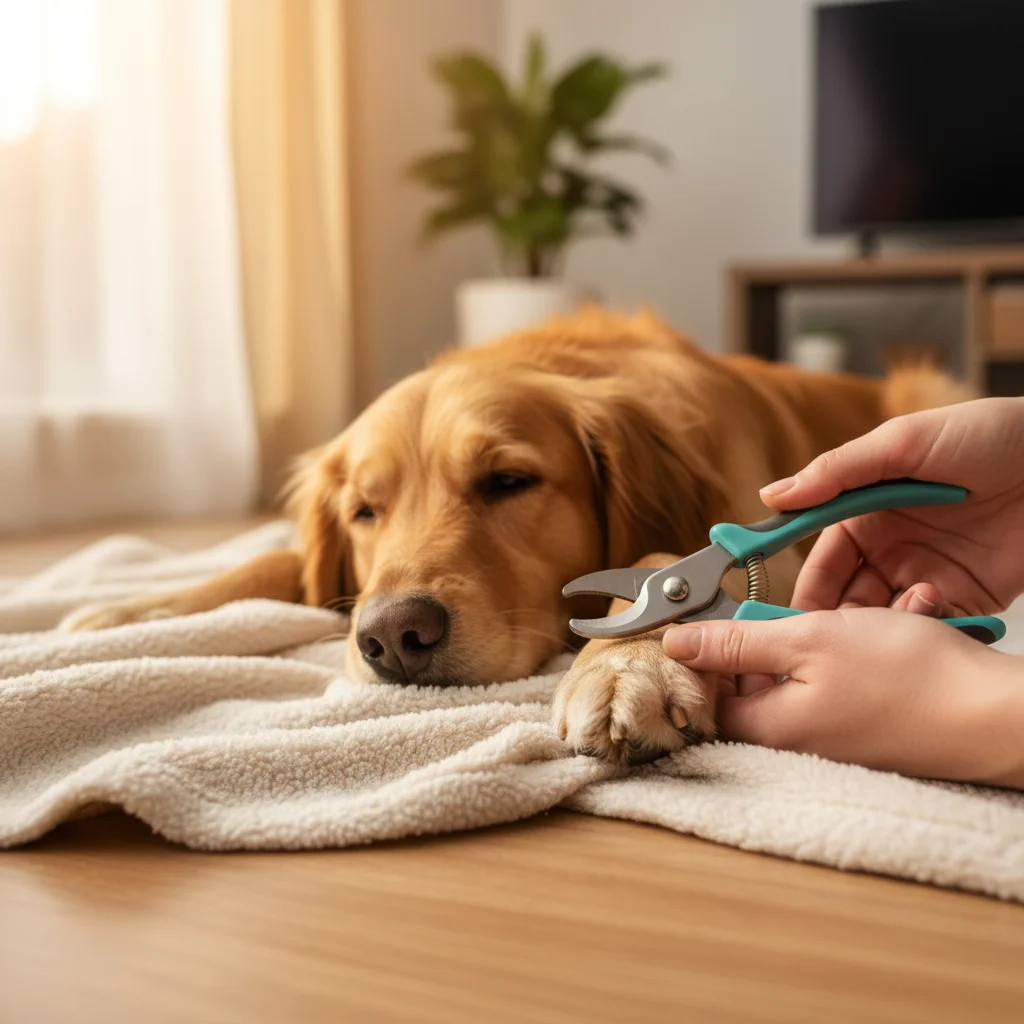
Nail trimming is the grooming task most likely to create lasting anxiety in dogs — and in their owners. Once a dog has had a bad nail experience (especially a quick cut), the sight of clippers can trigger a full stress response before you've even approached them.
Grinders and clippers are different tools that create completely different sensory experiences. Understanding that difference is the key to choosing the right tool for your dog.
How They Feel to Your Dog
Clippers create a two-part sensation:
- Gradual pressure as the blade compresses the nail
- A sharp crunch/snap as the nail shears through
For dogs with negative associations, the pressure sensation alone (before the cut) can trigger anxiety. The loud snap is startling. If the blade is dull (very common with discount clippers), the pressure is prolonged and more uncomfortable.
Grinders create a fundamentally different experience:
- Continuous vibration from the motor
- A gentle sanding/filing sensation as the nail shortens
- Motor noise (varies by model: 50–75 dB)
No snap. No sudden pressure. But there is noise and vibration, which some dogs find equally distressing. The sensory profile is just different — not universally better.
Which is right for your dog depends on whether they're more averse to:
- Sudden pressure and snapping sounds → Try a grinder
- Continuous motor noise and vibration → Try clippers with better blades (or the Zen Clipper)
The Best Grinder: Dremel 7300-PT vs Casfuy
For most dogs, the choice comes down to power vs. noise.
Dremel 7300-PT — ~$35
The industry standard for dog nail grinding. Professional groomers use full-size Dremels; the 7300-PT Pet is a gentler version with two speeds. It grinds efficiently, handles large thick nails easily, and the cordless design lets you work from any position.
Best for: Medium and large dogs, dogs where speed matters (less time = less stress), experienced owners.
Casfuy Dog Nail Grinder — ~$26
Specifically designed to be quieter (~50 dB vs the Dremel's ~65 dB). The lower noise level makes it meaningfully less stressful for sensitive dogs during the desensitization process. It's slightly less powerful, which means more passes per nail — but that's actually useful for building comfort incrementally.
Best for: Small dogs, dogs with severe noise sensitivity, owners doing desensitization training.
The Best Clippers: When to Use Them
For dogs that tolerate clippers, they're faster and don't require the noise/vibration of a grinder.
Millers Forge Pro — ~$14
A genuinely sharp scissor-style clipper that makes a cleaner cut with less pressure than dull blades. Many nail-averse dogs are actually reacting to the prolonged compression of dull clippers rather than clipping itself. Sharp blades reduce compression time dramatically.
Zen Clipper — ~$22
The Zen Clipper has a conical tip that physically only removes the pointed nail tip — it cannot cut deep enough to reach the quick. This makes it excellent for:
- Dogs with dark nails (no guessing where the quick is)
- Anxious dogs whose owners are nervous about quicking them
- Puppies being introduced to nail care for the first time
It takes longer per nail because you're removing less material per cut. For overgrown nails, use it in many small sessions rather than one long one.
Quick Reference: Which Tool for Which Situation
| Situation | Best Tool |
|---|---|
| Anxious dog, hates snapping sound | Casfuy grinder |
| Anxious dog, hates noise/vibration | Zen Clipper |
| Large dog with thick nails | Dremel 7300-PT |
| Dark nails, owner nervous about quick | Zen Clipper |
| Professional-speed for cooperative dogs | Millers Forge Pro + Dremel |
| First-time puppy | Casfuy grinder (gentlest intro) |
| Dog with previous bad clipper experience | Start with Casfuy grinder |
Desensitization: The Most Important Part
No tool choice replaces proper desensitization. A dog that has been gradually, positively introduced to nail tools tolerates them far better than one who has it forced on them.
The two-week protocol:
Week 1:
- Day 1–2: Grinder/clippers on table. Dog investigates, gets treats.
- Day 3–4: Touch tool to paw (off). Treats for calm behavior.
- Day 5–7: Tool running/open near dog. More treats.
Week 2:
- Day 8–10: Touch grinder to paw pad (not nail) while running. One treat per second.
- Day 11–12: One nail. Stop. Big treat.
- Day 13–14: Two nails per session, building slowly.
The goal is an emotional association with the tool that is neutral or positive before you ever do a full nail session. Dogs introduced this way show dramatically lower stress during nail care long-term.
For Our Full Nail Care Guide
See our complete dog nail clipper and grinder guide for product specs, size charts, and step-by-step trimming technique.
Related Reading
- Best Dog Nail Clippers 2026 — full product roundup
- How to Trim Dog Nails at Home — step-by-step technique
- Best Grooming Tools 2026 — complete grooming toolkit
- Dog Grooming Schedule by Coat Type — full grooming calendar
Sources
- American College of Veterinary Behaviorists — Desensitization protocols for grooming procedures.
- National Dog Groomers Association of America — Tool recommendations for anxious dogs.
- Journal of Veterinary Behavior — Studies on fear responses during routine veterinary procedures.
- ASPCA — Nail trimming guidelines and quick anatomy diagrams.
Frequently Asked Questions
- Why do dogs hate nail clipping so much?
- Nail clippers create two sensory experiences dogs dislike: the pressure/squeezing sensation before the cut, and the sharp crunch/snap of the cut itself. For dogs that have had the quick cut (painful and bloody), the anxiety becomes a conditioned response to the tool itself. Many dogs can smell blood even from past owners' stories — olfactory memory is powerful in dogs. Grinders eliminate the snap sensation but introduce motor noise and vibration.
- What is 'quicking' a dog and how do I avoid it?
- The quick is the blood vessel and nerve tissue inside the nail. Cutting into it causes pain, bleeding, and long-term aversion to nail care. In light-colored nails, you can see the pink quick. In dark nails, cut in small increments and look for a dark circle in the center of the cut surface — that's the edge of the quick. Stop cutting before you see that circle. Styptic powder (or cornstarch in a pinch) stops bleeding if you do nick it.
- Are grinders safer than clippers for dark nails?
- Yes — grinders let you remove nail material incrementally and see the center of the nail clearly at each pass. You can stop the moment you see the quick approaching (the nail center will start to look lighter or show a small oval). With clippers, especially guillotine-style, you're making a single cut decision that's harder to adjust. The Zen Clipper is the safer clipper option for dark nails because its conical design physically guards the quick.
- How do I desensitize a dog to nail grinders?
- Start with the grinder off. Let your dog sniff and touch it; reward calm behavior. Turn it on near (not touching) your dog for several sessions. Touch the running grinder lightly to your dog's paw pad (not nail) so they feel the vibration. Then try one nail. Build up gradually over 1–2 weeks rather than forcing through a full nail session. Dogs that have been desensitized properly tolerate grinders much better than those introduced abruptly.
- How often should I trim my dog's nails?
- Every 2–4 weeks for most dogs. The key indicator: if you can hear the nails clicking on hard floors, they're too long. Long nails change your dog's gait and weight distribution, eventually causing joint pain. If nails are very long (curling, touching the floor at rest), they need immediate trimming and may need vet assistance if overgrown.
Research Sources
- Next Level Nail Trims: Cooperative Care Behaviors — Fear Free
- AVSAB Position Statement on Humane Dog Training (2021) — American Veterinary Society of Animal Behavior, 2021
- Position Statements and Handouts (for the public) — American Veterinary Society of Animal Behavior
- How to Trim Your Dog's Nails Safely — American Kennel Club
- Good Grooming - Improving Your Dog's Nail-Care Routine — American Kennel Club, 2024

PawBench Editorial
Published by Hilly Shore LabsPawBench’s editorial team researches dog products from primary veterinary sources, manufacturer specifications and aggregated buyer sentiment, alongside the lived ownership of Maggie, an Australian Labradoodle. We do not run hands-on product tests.
254 dog products scored · 1,160,974 buyer review-aspect mentions aggregated · cites AVMA, FDA, AAFCO, Cornell, WSAVA, AKC, ASPCA.
Recommendations are based on published veterinary guidelines, manufacturer specifications, and verified customer feedback. See our editorial standards.