Fi vs Tractive vs AirTag: GPS Dog Collar Comparison 2026
Fi Series 3+ is the best GPS dog collar for owners who hate charging, with the longest battery life of any tracker here plus escape alerts and live tracking. The Tractive tracker is the pick for lowest total cost and the only plan you can cancel anytime. An Apple AirTag is only a cheap backup, never the main tracker.
Our #1 Pick
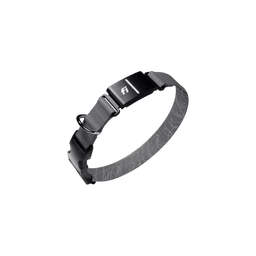
- Live GPS tracking on nationwide cellular, no range limit
- Wireless charging base and a built-in LED light, per Fi
- Manufacturer-stated up to 3 months of battery between charges
Up to 3 months per charge, the longest of any tracker here, with escape alerts and live tracking. Budget for the $189-a-year membership.
Our analysis of 681 buyer mentions on Fi Series 3+: buyers consistently praised collar, tracking, ease of use.
Also Great
Lowest cost: Tractive DOG 6 ($47.40) — Basic plan from $108 a year, cancel any time, up to 2 weeks per charge
On this page7 sections
Our Verdict
Buy the Fi Series 3+ if you want to charge a tracker a few times a year, and the Tractive DOG 6 if total cost and flexible terms matter more than battery. Whistle trackers stopped working on 31 August 2025, so any comparison still recommending one is out of date. An AirTag is a useful backup on the collar, never the primary tracker.
Fi Series 3+ Owner rating4.1 Best battery life: up to 3 months per charge, in an all-in-one collar. | Fi Mini Owner rating4.2 Fi's tracker for the collar or harness your dog already wears. | Tractive DOG 6 Owner rating4.2 Lowest total cost, and the only one here with a cancel-anytime plan. | Apple AirTag (2nd generation) Owner rating4.6 A cheap backup, not a tracker: Apple says it is not designed for pets. | |
|---|---|---|---|---|
| Price | $90.30Buy on Amazon | $89.10Buy on Amazon | $47.40Buy on Amazon | |
| Buyer sentiment | Collar Tracking Ease Of Use Peace Of Mind Buyers praise collar, tracking, ease of use and peace of mind. Mixed feedback on functionality and battery life. Based on 681 user mentions | — | Real Time Tracking Ease Of Use Health Monitoring Peace Of Mind Buyers praise real time tracking, ease of use, health monitoring and peace of mind. Mixed feedback on reliability and battery life. Based on 1,162 user mentions | Accuracy Quality Setup Buyers praise accuracy, quality and setup. Mixed feedback on functionality and compatibility. Based on 1,341 user mentions |
| Pros |
|
|
|
|
| Cons |
|
|
|
|
| Battery (Fi claim) | Up to 3 months | Up to 2 months | — | — |
| Format | Collar with built-in tracker | Clip-on tracker | Clip-on tracker | Needs a collar holder |
| Plan | $189/yr or $339/2 yrs at Fi | Same Fi membership pricing | Basic $108/yr; Premium $120/yr | None |
| Network | LTE-M + GPS | Verizon LTE-M + GPS | Multi-carrier 2G/LTE-M + GPS | Bluetooth + Find My |
| Battery (Tractive claim) | — | — | Up to 2 weeks | — |
| Battery | — | — | — | Replaceable coin cell |
* Prices are approximate and may vary. Please check the latest price on Amazon.
Battery life and running cost, by tracker
Battery figures are each maker's own maximum claim, and real-world life is shorter with frequent live tracking. Prices are list prices on the brand's own site on 23 September 2026, before promotions.
| Tracker | Battery (maker's claim) | Hardware | Plan | 2-year cost | Commitment |
|---|---|---|---|---|---|
| Fi Series 3+ | Up to 3 months | $129 | $99 / 6 mo, $189 / yr, $339 / 2 yrs | $468 | 6-month minimum; auto-renews |
| Fi Mini | Up to 2 months | $99 | Same as Series 3+ | $438 | 6-month minimum; auto-renews |
| Fi Ultra (satellite) | Up to 5 days | $299 | Same as Series 3+ | $638 | 6-month minimum; auto-renews |
| Tractive DOG 6 | Up to 2 weeks | $79 | Basic $108 / yr or $144 / 2 yrs; Premium $120 / yr | $223 (Basic) | Cancel any time; 30-day refund |
| Tractive DOG 6 XL | Up to 6 weeks | See Tractive | Same as DOG 6 | — | Cancel any time; 30-day refund |
| Halo Collar 5 | Up to 48 hours | $599 list | About $9 to $18 a month by tier | — | Plan required; 90-day satisfaction guarantee |
| Garmin Alpha LTE | 18 hours at dynamic tracking; up to 75 hours at 2-minute updates | $299.99 | $49.99 / yr | $400 | Annual or monthly plan |
| Apple AirTag (2nd gen) | Replaceable coin cell | $29 | None | $29 plus a holder | None; not designed for pets |
Sources: Fi shop and Fi Membership Billing help page; Tractive dog tracker and plans pages; Halo Collar plans page and Halo Collar 5 support article; Garmin Alpha LTE and LTE Dog Tracking Plans pages; Apple Newsroom, January 2026. Checked 23 September 2026.

How PawBench is paid: we earn an Amazon Associates commission on qualifying purchases. We don’t accept sponsored placements, paid reviews, or free products in exchange for coverage. Picks are ranked on documented owner outcomes and primary-source research, never on commission rate. Read the full methodology.
Short answer: the Fi Series 3+ wins on battery life, the Tractive DOG 6 wins on total cost and flexible terms, and an Apple AirTag is a backup rather than a tracker. If you arrived looking for Whistle: Tractive bought the brand and shut Whistle trackers off on 31 August 2025. They no longer work, and the free Tractive replacement offer closed on 30 September 2025.
A microchip helps a shelter identify your dog once someone has found it. A GPS tracker is for the part before that, when you are the one searching. That makes battery life, running cost and the fine print on the subscription the three things worth comparing, and all three are published by the brands themselves.
The contenders in 2026
- Fi Series 3+ is Fi's all-in-one collar with the tracker built in. Fi claims up to 3 months per charge, the longest in this comparison.
- Fi Mini is Fi's clip-on tracker for the collar or harness your dog already wears, with up to 2 months per charge, per Fi. Its Amazon listing is new, with only a handful of ratings so far.
- Fi Ultra adds satellite coverage through T-Satellite with Starlink for dogs that roam beyond cell service, at the cost of up to 5 days of battery.
- Tractive DOG 6 clips onto an existing collar. Tractive claims up to 2 weeks per charge, and up to 6 weeks for the XL edition for dogs over 44 lb.
- Apple AirTag (2nd generation) launched in January 2026 at $29. Apple's own announcement says it is designed exclusively for tracking objects and not people or pets.
Battery life: the gap is real, and it is a claim
The matrix above lists each maker's maximum. Two things matter more than the headline number.
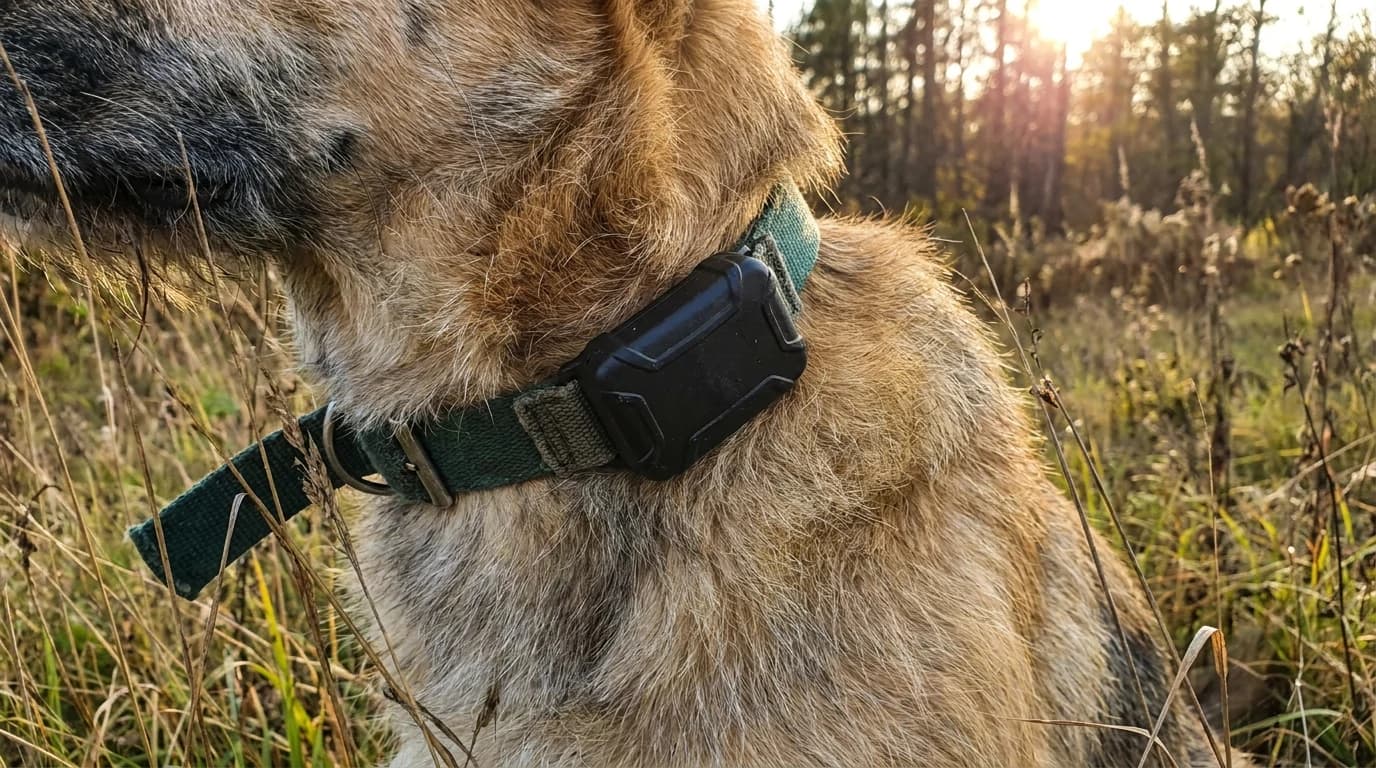
- Every figure is a best case. Each is the maker's maximum for ordinary use, and Tractive states its figures "with Power Saving Zones" switched on. Live tracking during an actual search drains all of them far faster.
- A dead tracker is the most common way a tracker fails. A collar you charge four times a year is a collar that is more likely to be charged on the day the gate is left open. That is the real case for the Series 3+, more than any feature.
The outliers are specialised. The Halo Collar 5 claims up to 48 hours because it keeps GPS on constantly to run a virtual fence. Garmin's Alpha LTE, built for sporting dogs, lists 18 hours at dynamic tracking and up to 75 hours at 2-minute updates when paired with a handheld.
What it costs to own one
The hardware is the small number. Every cellular tracker needs a plan, because the tracker is sending its location over a mobile network.
| Tracker | Hardware (brand site) | Cheapest 2-year plan | 2-year total cost |
|---|---|---|---|
| Tractive DOG 6 (Basic) | $79 at Tractive | $144 | $223 |
| Fi Mini | $99 at Fi | $339 | $438 |
| Fi Series 3+ | $129 at Fi | $339 | $468 |
| Garmin Alpha LTE | $299.99 at Garmin | 2 × $49.99 | $400 |
| Apple AirTag | $29 at Apple | none | $29 plus a holder |
Brand-site list prices on 23 September 2026, before promotions. Amazon prices, shown in the table at the top, can differ. Fi's listings there are hardware only and say the membership is required, so add the plan before comparing.
Fi's membership pricing is the same across the Mini, Series 3+ and Ultra: $99 for 6 months, $189 a year or $339 for two years. Tractive's plans page lists Basic at $108 a year or $144 for two, and Premium at $120 a year, $168 for two or $300 for five. Basic already includes live tracking every 2 to 3 seconds; Premium adds worldwide coverage, family sharing and a 365-day location history instead of 24 hours.
The fine print: minimums, renewals and refunds
We can't measure a company's customer service from the outside, and star ratings mix support complaints with everything else. What you can compare before buying is the written terms.
| Brand | Commitment | Cancelling | Hardware cover |
|---|---|---|---|
| Fi | 6-month minimum on the first term; auto-renews at the standard price | Full refund of a renewal if you cancel within 30 days of the charge | 30-day returns, 1-year warranty |
| Tractive | None beyond the plan you pick | Cancel any time; full refund within 30 days of purchase, otherwise runs to period end without renewing | 30-day refund guarantee; optional Tractive Care add-on for loss or damage |
| Halo | A plan is required to keep the collar active | See Halo's plan terms | 90-day satisfaction guarantee |
| Garmin | Annual or monthly LTE plan, bought through the Alpha app | See Garmin's plan terms | See Garmin |
If flexibility matters to you, Tractive's terms are the most forgiving here. If you would rather set it and forget it, Fi's multi-year membership is cheaper per month, but know that it renews automatically.
An AirTag is not a GPS tracker
The appeal is obvious: $29 and no subscription. The limits are structural rather than a matter of quality.
- No GPS and no cellular radio. An AirTag is located when a nearby Apple device passes within Bluetooth range and relays its position. In a dense city that happens constantly; on a trail or a farm road it may not happen at all.
- No escape alerts. Nothing tells you the dog has left the yard. You find out when you notice.
- Anti-stalking alerts work against you. Apple's system warns a stranger's iPhone when an unknown AirTag travels with them, so the person who picks up your dog may be prompted to find and remove the tag.
- Apple says not to. Its January 2026 announcement describes the new AirTag as designed for objects, not people or pets.
The honest use is belt and braces: a real GPS tracker as the primary, and an AirTag in a collar holder as a second layer in case the tracker's battery is flat.
Which one to buy
Buy the Fi Series 3+ if:
- You want the longest time between charges
- Your dog has escaped before, or lives somewhere a search could take hours
- You are comfortable with an auto-renewing membership
Buy the Fi Mini if:
- You want Fi's app and alerts on the collar or harness your dog already wears
- Up to two months between charges is enough for you
Buy the Tractive DOG 6 if:
- Total cost and cancel-anytime terms matter more than battery life
- You travel abroad with your dog (that needs the Premium plan)
- Your dog is large enough for the XL edition's 6-week battery
Add an AirTag if:
- You want a cheap second layer alongside one of the above, not instead of it
If your dog's escapes are anxiety-driven, trackers treat the symptom; our dog anxiety solutions post covers the cause. For indoor monitoring, see the best pet cameras.
Bottom line: The Fi Series 3+ is the tracker you are most likely to have charged when it matters. The Tractive DOG 6 is the cheapest to own and the easiest to cancel. Keep a microchip registered either way, because a tracker only helps the person holding the phone. And check the contact details on the chip record: most failed reunions break after the chip has already been read.
If you're shopping rather than comparing, the full ranking is in best GPS dog collars.
Related Reading
- How to Choose a GPS Dog Tracker: the specs that matter before you buy
- Pet Tech: GPS trackers, cameras and smart gear
- Leashes & Collars: collars and collar accessories
Frequently Asked Questions
- Which GPS dog tracker has the best battery life?
- Among the trackers compared here, the Fi Series 3+ makes the longest claim: up to 3 months per charge, per Fi. The Fi Mini claims up to 2 months, the Tractive DOG 6 XL up to 6 weeks, the standard Tractive DOG 6 up to 2 weeks, the satellite Fi Ultra up to 5 days and the Halo Collar 5 up to 48 hours. These are maximums, and frequent live tracking during a search drains any of them faster.
- How much does a GPS dog collar really cost?
- Add the plan to the hardware. On the brands' own sites in September 2026, two years came to about $223 for a Tractive DOG 6 on the Basic plan, $438 for a Fi Mini and $468 for a Fi Series 3+ on Fi's two-year membership. Fi's membership auto-renews with a 6-month minimum on the first term; Tractive lets you cancel any time.
- What happened to Whistle GPS trackers?
- Tractive bought Whistle from Mars and shut the service down on 31 August 2025, so Whistle trackers no longer work and cannot be activated. Owners were offered a free Tractive replacement until 30 September 2025. Any guide still recommending a Whistle is out of date.
- Can I use an Apple AirTag to track my dog?
- Only as a backup. Apple says the AirTag is designed exclusively for tracking objects, not people or pets. It has no GPS or cellular radio; it is located when a nearby Apple device passes within Bluetooth range, so it has no escape alerts, no live tracking, and works worst in the rural and wooded places lost dogs often end up.
- Can I cancel a GPS collar subscription?
- The terms differ, so read them before you buy. Tractive lets you cancel any time, with a full refund within 30 days of purchase; after that the plan runs to the end of the period without renewing. Fi memberships auto-renew, carry a 6-month minimum on the first term, and a renewal is refundable in full if you cancel within 30 days of the charge.
Research Sources
- How Many Pets are Lost? How Many Find Their Way Home? ASPCA Survey Has Answers — ASPCA, 2012
- Dog Microchip: Why Microchipping Your Dog Is a Major Safety Measure — American Kennel Club (AKC), 2023
- AKC Reunite Fast Facts — American Kennel Club (AKC), 2024
- Whistle pet trackers are shutting down next month — Engadget, 2025
- Fi Membership Billing — plan prices, minimum commitment and refunds — Fi, 2026
- Fi Mini, Series 3+ and Ultra — prices and battery claims — Fi, 2026
- Which Plan Is Right for You? — Tractive plans and cancellation — Tractive, 2026
- Tractive DOG 6 GPS tracker — models and battery life — Tractive, 2026
- Apple introduces new AirTag with expanded range and improved findability — Apple Newsroom, 2026
- What's New with the Halo Collar 5? — Halo Collar, 2026
- Garmin Alpha LTE — battery life by tracking mode — Garmin, 2026
What changed in this review(3 entries)
- PricesBody copy
Fi relisted the Series 3+ and Fi Mini as hardware-only listings with the membership required and sold separately; links, the Fi Mini price and the membership note were updated. The Fi Mini battery figure was corrected to Fi's current claim of up to 2 months per charge.
- PicksBody copyPrices
Rebuilt around the trackers you can buy now. Whistle was shut down on 31 August 2025 and is no longer recommended; the Fi Series 3+, Fi Mini and Tractive DOG 6 are compared on battery life, two-year cost and subscription terms from each brand's own pages, with a comparison table added.
- Body copy
Added one contextual line pointing readers who are shopping to the GPS collar roundup and its named pick.

PawBench Editorial
Published by Hilly Shore LabsPawBench’s editorial team researches dog products from primary veterinary sources, manufacturer specifications and aggregated buyer sentiment, alongside the lived ownership of Maggie, an Australian Labradoodle. We do not run hands-on product tests.
331 dog products scored · 1,222,724 buyer review-aspect mentions aggregated · cites AVMA, FDA, AAFCO, Cornell, WSAVA, AKC, ASPCA.
Recommendations are based on published veterinary guidelines, manufacturer specifications, and verified customer feedback. See our editorial standards.