Human Foods Safe vs. Toxic for Dogs: Quick List
Quick Answer
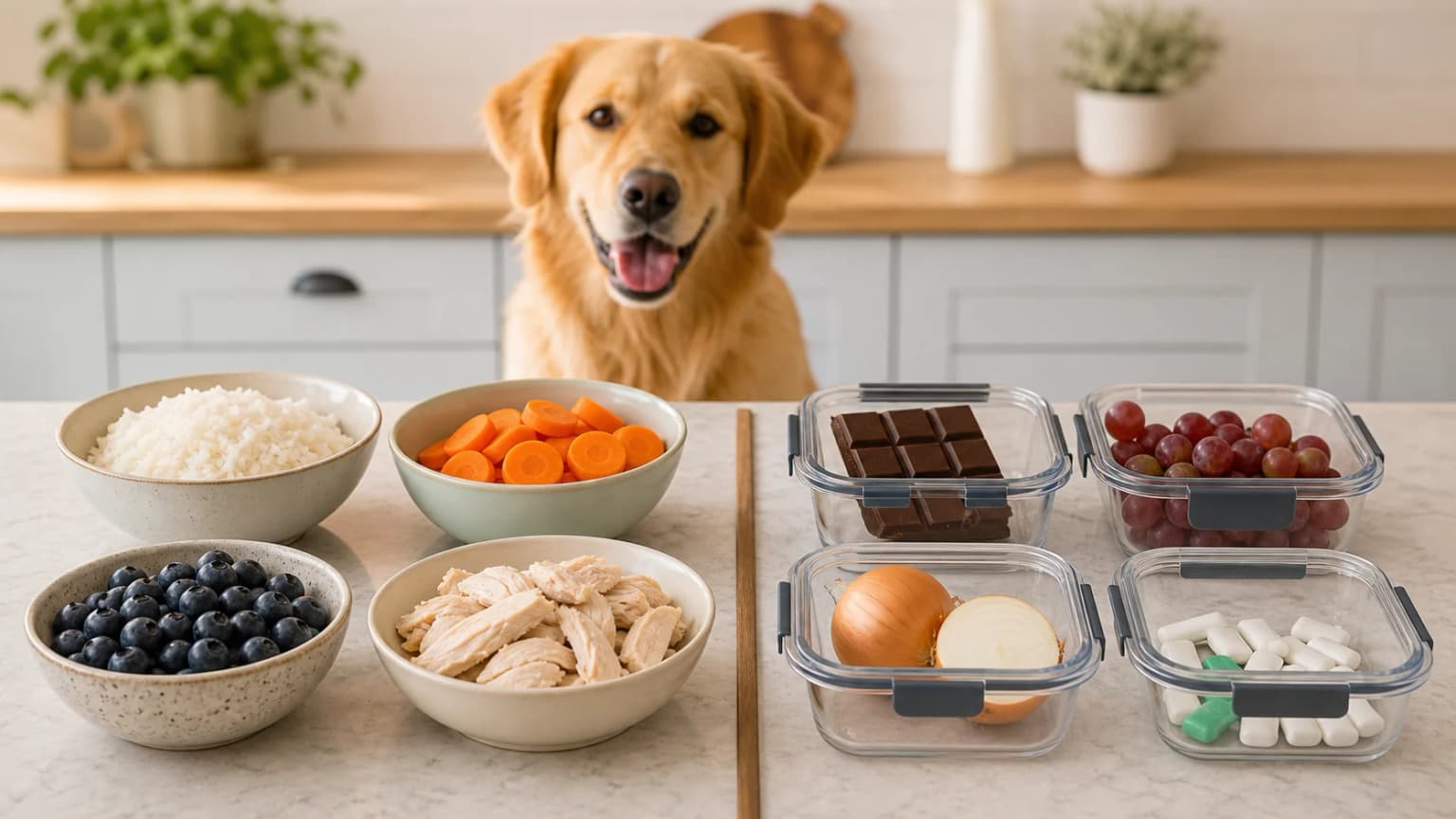
Safe human foods for most dogs include plain cooked chicken, rice, carrots, pumpkin, blueberries, and apples without seeds. Never feed xylitol, grapes or raisins, onion/garlic, chocolate, macadamia nuts, alcohol, caffeine, or cooked bones. Call a vet or poison hotline if a toxin was eaten.
On this page5 sections
Our Verdict
The most dangerous human foods are not always the obvious ones. Xylitol, grapes or raisins, onion/garlic powder, chocolate, macadamia nuts, alcohol, caffeine, and cooked bones belong in the never tier. Plain cooked chicken, rice, carrots, pumpkin, and blueberries can be safe in small portions when they fit your dog.
Human foods safe vs. toxic for dogs
The useful split is not yes/no. It is safe, small-only, or call-now toxic.
| Food | Verdict | Why | If eaten |
|---|---|---|---|
| Plain cooked chicken | Safe | Lean protein if unseasoned | Serve small pieces; avoid skin, bones, seasoning |
| Plain rice | Safe | Bland carbohydrate often used short term | Small portions; not a complete diet |
| Carrots / blueberries | Safe | Low-calorie snacks for many dogs | Cut to size; watch choking risk |
| Plain pumpkin | Safe in small amounts | Fiber can help stool quality | Use plain puree, not pie filling |
| Peanut butter | Check label | Safe only if xylitol/birch sugar free | If xylitol is present, call poison control now |
| Avocado | Avoid / moderation risk | High fat; pit and skin are hazards | Call vet for pit ingestion or symptoms |
| Chocolate | Never | Theobromine and caffeine toxicity varies by type and dose | Call vet/poison hotline with weight and amount |
| Grapes / raisins | Never | No reliable safe dose; kidney injury can occur | Call poison hotline even for small exposures |
| Onion / garlic / chives | Never | Can damage red blood cells; powders are concentrated | Call vet, especially for powders or repeated exposure |
| Macadamia nuts | Never | Can cause weakness, vomiting, tremors | Call vet/poison hotline |
| Alcohol / caffeine | Never | Neurologic and cardiac risks | Emergency vet/poison hotline |
| Cooked bones | Never | Splinter, obstruction, perforation risk | Call vet if swallowed or if choking/vomiting |
How PawBench is paid: we earn an Amazon Associates commission on qualifying purchases. We don’t accept sponsored placements, paid reviews, or free products in exchange for coverage. Picks are ranked on documented owner outcomes and primary-source research, never on commission rate. Read the full methodology.
Quick answer
Some human foods are fine for dogs in small, plain portions. Others are call-the-vet foods even if the amount looks tiny.
The mistake: Treating every "can dogs eat X?" question as a yes/no list. The useful version is a risk tier — safe, small-only, or never.
Stop searching and call your veterinarian, an emergency clinic, or ASPCA Animal Poison Control at 888-426-4435 if your dog ate:
- Xylitol
- Grapes or raisins
- Onion or garlic powder
- Chocolate
- Macadamia nuts
- Alcohol
- Caffeine
- Cooked bones
The quick-reference matrix
Use the table above as the fast answer. Plain cooked chicken, rice, carrots, blueberries, and plain pumpkin are the easy yes tier for many dogs. Peanut butter is only safe after the label check. Xylitol or "birch sugar" turns it into an emergency.
The original trick is the why column: dogs do not get sick from these foods for the same reason.
- Chocolate — risk depends on type and dose
- Onion powder — worse than a few dropped onion flakes, because it is concentrated
- Grapes and raisins — scarier, because there is no reliable safe dose
The five toxins owners miss
1. Xylitol in sugar-free foods
Xylitol is not just in gum. The FDA warns it can appear in sugar-free products and some nut butters. That is why "peanut butter is safe" is incomplete advice. The real rule is: peanut butter is safe only when the ingredient list is free of xylitol and birch sugar.
2. Grapes and raisins
Do not calculate a safe snack portion. Merck and veterinary toxicology sources treat grapes and raisins as unpredictable. Some dogs develop kidney injury after amounts that look trivial.
3. Onion and garlic powder
A bite of plain meat is different from meat rubbed with onion powder. Allium foods can damage red blood cells, and powders concentrate the exposure. Seasoning blends are the hidden source.
4. Chocolate by type
Dark chocolate and baking chocolate are more dangerous than milk chocolate because they contain more methylxanthines. The useful call to a vet includes your dog's weight, chocolate type, and estimated amount.
5. Macadamia nuts
Macadamias are easy to forget because they feel like a normal snack food. In dogs they can trigger weakness, vomiting, tremors, and overheating signs.
What to do right now
Four things, in order:
- Keep the package
- Estimate the amount
- Write down the time
- Call
Do not induce vomiting unless a veterinarian or poison-control professional tells you to. If your dog is collapsing, having trouble breathing, seizuring, or repeatedly vomiting, go to an emergency veterinarian.
For less dramatic foods in the safe tier, keep portions small. Human food should be a treat, not a balanced diet. If your dog is picky about regular meals, start with our guide to why dogs become picky eaters. If you are trying to judge commercial food rather than snacks, read how to read dog food labels.
Bottom line
The safest owner habit is boring: Plain foods, tiny portions, no seasoning. The highest-risk habit is assuming one bite is harmless because the food is safe for people. Dogs are not small humans, and some of the worst toxins are exactly the foods that look ordinary on a kitchen counter.
Frequently Asked Questions
- What human foods are safest for dogs?
- Plain cooked chicken, plain rice, carrots, blueberries, apples without seeds, and plain pumpkin are common safe options for many dogs in small amounts. Keep them unseasoned and treat-size.
- What is the most missed dog food toxin?
- Xylitol, also labeled birch sugar, is the one many owners miss because it can hide in sugar-free gum, candy, toothpaste, and some peanut butter. If your dog ate xylitol, call a vet or poison hotline immediately.
- Can one grape hurt a dog?
- Yes, it can. Grapes and raisins have no established safe dose for dogs, so treat any exposure as a call-your-vet situation rather than a wait-and-see snack mistake.
Research Sources
- People Foods to Avoid Feeding Your Pets — ASPCA Animal Poison Control
- Animal Poison Control Center — ASPCA
- Paws Off Xylitol; It is Dangerous for Dogs — U.S. Food and Drug Administration
- Food Hazards — Merck Veterinary Manual
- Fruits and Vegetables Dogs Can or Cannot Eat — American Kennel Club

PawBench Editorial
Published by Hilly Shore LabsPawBench’s editorial team researches dog products from primary veterinary sources, manufacturer specifications and aggregated buyer sentiment, alongside the lived ownership of Maggie, an Australian Labradoodle. We do not run hands-on product tests.
254 dog products scored · 1,160,974 buyer review-aspect mentions aggregated · cites AVMA, FDA, AAFCO, Cornell, WSAVA, AKC, ASPCA.
Recommendations are based on published veterinary guidelines, manufacturer specifications, and verified customer feedback. See our editorial standards.